
Restaurant Kitchen Equipment Cost: What Shapes the Final Budget
Understanding restaurant kitchen equipment cost is essential for finance approvers who need to balance operational efficiency, food safety, and long-term ROI. From equipment type and kitchen size to energy-saving features, automation, and installation requirements, several factors shape the final budget. This guide outlines the key cost drivers to support smarter planning, risk control, and more confident investment decisions.
What really drives restaurant kitchen equipment cost?
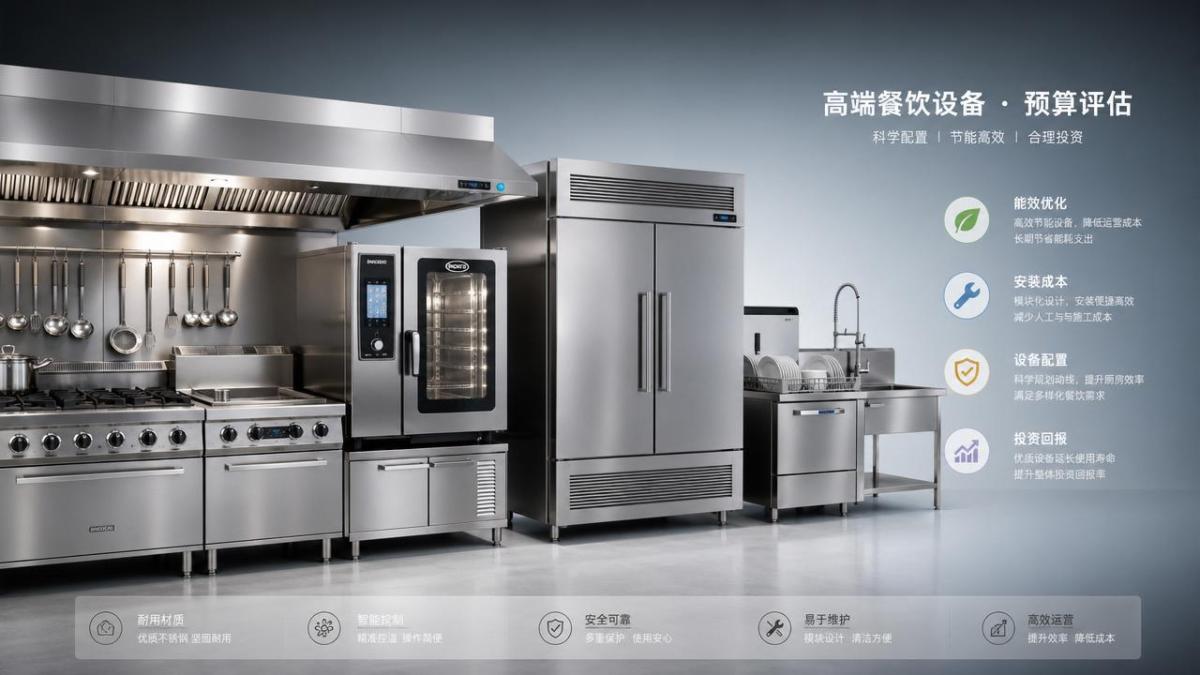
For finance teams, restaurant kitchen equipment cost is not just a supplier quote. It is a layered investment that includes core appliances, ventilation, utility connections, workflow design, compliance, maintenance, and replacement planning. A low purchase price can still lead to a high total cost if the kitchen layout causes labor waste, if energy use is excessive, or if the equipment cannot meet production demand.
This matters even more in a market where commercial kitchens are moving toward automation, intelligent controls, and energy-efficient systems. Restaurants, hotels, central kitchens, and food processing operations increasingly expect better consistency, traceability, and food safety. As a result, the final budget reflects not only what the equipment does today, but also how well it supports growth, compliance, and operating resilience over time.
- Menu complexity affects equipment count, production capacity, and specialized cooking functions.
- Kitchen size and layout influence ventilation, installation, drainage, and workflow efficiency.
- Utility requirements such as gas, electric load, water pressure, and grease management add hidden project costs.
- Automation and smart controls may raise upfront cost but reduce labor variation and energy waste.
- After-sales service, spare parts access, and expected downtime risk directly affect financial exposure.
Why finance approvers should look beyond the purchase price
A capital request for kitchen equipment often arrives with urgency: store opening dates are fixed, contractors need final dimensions, and operations teams want immediate approval. But rushed approval can hide gaps. The right review approach compares total ownership cost, expected service life, payback period, utility consumption, and maintenance burden instead of focusing on the initial invoice alone.
How equipment category changes the final budget
Restaurant kitchen equipment cost varies sharply by category because each system serves a different operational role. Cooking equipment usually attracts the most attention, but refrigeration, preparation, warewashing, and exhaust systems can collectively equal or exceed cooking line spending depending on the concept. A finance approver should review the kitchen as one connected system rather than as separate line items.
The table below shows how budget pressure often shifts across common equipment groups in commercial kitchen projects.
This comparison helps explain why restaurant kitchen equipment cost cannot be benchmarked with a single average number. A fast-casual outlet, a hotel banquet kitchen, and a central production kitchen may each buy ovens and refrigeration, but their capacity, duty cycle, and compliance needs are very different.
Typical category questions worth asking
- Does the equipment match peak-hour production, not just average volume?
- Can one multifunction unit replace several single-purpose machines?
- Will sanitation and maintenance downtime reduce practical utilization?
- Are there local power, gas, and water constraints that change the specification?
Which hidden costs are often missed during budget approval?
Many approval delays happen because the first quote excludes project-linked expenses. In restaurant kitchen equipment cost planning, hidden items often appear after the procurement team has already compared suppliers. At that stage, switching specifications can disrupt delivery schedules and force redesign.
The table below highlights common budget elements that should be checked before final approval.
A disciplined approval process should request a total delivered and operational cost, not only an ex-works or unit price quotation. That single change often exposes the real budget gap early enough to prevent procurement rework.
A practical hidden-cost checklist
- Confirm whether prices include freight, import duties, and local handling if the project uses international sourcing.
- Check if installation requires third-party contractors for ducting, electrical work, or plumbing.
- Review warranty terms carefully to understand what parts, labor, and travel costs are covered.
- Ask for expected consumables and routine maintenance intervals by equipment type.
How should finance approvers compare standard, efficient, and smart options?
In today’s kitchen equipment market, the cheapest configuration is not always the most economical. Energy-efficient and smart equipment often enters the discussion because labor costs, food safety control, and utility prices continue to rise. For finance approvers, the key question is whether the premium produces measurable operational value within an acceptable payback period.
Comparison logic for better capital decisions
Standard equipment may suit small or stable operations where menu variation is limited and labor is experienced. Efficient equipment becomes attractive when kitchens run long hours, energy prices are high, or cooling load is a concern. Smart systems are stronger candidates when consistency, traceability, remote monitoring, and staffing variability affect service quality or compliance.
- Choose standard configurations when usage intensity is modest and flexibility needs are low.
- Choose energy-efficient models when utilities form a visible share of operating cost.
- Choose smart systems when process control, repeatability, and centralized management are strategic priorities.
For example, a programmable combi oven may cost more upfront than a basic oven, but it can reduce recipe variation, shorten training time, and improve yield. Likewise, efficient refrigeration with better insulation and controls may lower electricity consumption and reduce compressor stress, which improves asset life. These gains should be translated into numbers the approval team can test: labor hours saved, reduced food loss, lower rework, and avoided downtime.
What selection criteria matter most in different kitchen scenarios?
Restaurant kitchen equipment cost should always be reviewed in context. The same fryer, oven, or dishwasher may be affordable in one project and wasteful in another. Scenario-based selection helps finance teams challenge assumptions and avoid buying for the wrong operating model.
The following table connects common foodservice scenarios with the selection logic behind the budget.
This kind of scenario mapping is useful when reviewing competing quotations. A lower quote may be attractive on paper, but if it ignores wash capacity in a banquet kitchen or omits production control features in a central kitchen, the downstream operating cost can be much higher.
What compliance and technical points affect restaurant kitchen equipment cost?
Compliance-related costs are often justified because they reduce business interruption risk. Depending on market and application, equipment selection may need to consider food-contact material suitability, electrical safety, sanitation-friendly construction, ventilation safety, and local installation codes. Even when exact certification needs differ by region, the finance approver should ensure the procurement team confirms them before order placement.
Technical and compliance checkpoints
- Stainless steel grade and hygiene-friendly construction influence durability and cleaning time.
- Temperature control accuracy matters for food safety, holding quality, and waste reduction.
- Ingress protection, control panel design, and service accessibility affect maintenance practicality.
- Electrical, gas, and fire-safety compatibility should be verified against local project conditions.
These points may not always change the visible list price dramatically, but they can significantly influence lifecycle risk. An equipment package that aligns with operating demands, sanitation expectations, and local technical requirements usually supports smoother audits, fewer emergency repairs, and better uptime.
Common mistakes that distort budget planning
Mistake 1: Approving by brand impression alone
A familiar brand can reduce perceived risk, but finance teams still need to validate configuration fit, service coverage, spare parts lead time, and actual operating cost. Brand recognition does not automatically guarantee the right economic outcome for every project.
Mistake 2: Ignoring kitchen process flow
Restaurant kitchen equipment cost can increase later if receiving, storage, prep, cooking, pass, and dish return zones are not considered together. Poor flow creates labor inefficiency and safety problems that no single equipment upgrade can fully solve.
Mistake 3: Treating maintenance as an afterthought
Low maintenance visibility during approval often leads to high unplanned service cost after opening. Finance approvers should ask for preventive maintenance recommendations, routine cleaning requirements, and expected wear parts so lifecycle budgeting is realistic.
FAQ about restaurant kitchen equipment cost
How can I evaluate restaurant kitchen equipment cost when suppliers use different specifications?
Use a normalized comparison sheet. Match suppliers by output capacity, energy source, material grade, controls, installation scope, warranty coverage, and lead time. Without normalization, a cheaper quotation may simply exclude necessary functions or services.
Is energy-efficient equipment always worth the premium?
Not always. The value depends on operating hours, utility tariffs, kitchen heat load, and maintenance conditions. The premium is easier to justify in high-volume or long-hour environments where lower power or water use creates measurable savings year after year.
What should finance approvers request before signing off?
Request a full equipment list, utility schedule, installation responsibility matrix, project exclusions, service terms, expected delivery timeline, and an explanation of why each major item matches the menu and volume forecast. This reduces approval ambiguity and helps control change orders.
How long is the usual delivery and implementation cycle?
The timeline varies by equipment type, project scale, and sourcing route. Standard stock items may move faster, while imported, customized, or integrated systems often take longer due to production, shipment, site readiness, and commissioning dependencies. Approval should be linked to the project schedule, not only to the price.
Why choose us for budget planning and equipment selection support?
If you are reviewing restaurant kitchen equipment cost and need a clearer basis for approval, we can support the decision with structured pre-sales information rather than generic quotations. Our focus is to help buyers and finance teams align technical selection with operational targets, compliance needs, and total cost logic.
- Parameter confirmation for cooking, refrigeration, preparation, and washing equipment based on menu, output, and utility conditions.
- Product selection guidance comparing standard, efficient, and smart configurations for different foodservice scenarios.
- Delivery timeline discussion, including sourcing route, installation dependencies, and project handover coordination.
- Customized solution support for restaurants, hotels, central kitchens, and food processing environments with different budget priorities.
- Certification and compliance communication based on target market expectations and project documentation needs.
- Quotation review support to identify hidden cost items, scope gaps, and lifecycle cost risks before approval.
Contact us to discuss your project scope, required parameters, target opening date, compliance considerations, and quotation structure. With the right inputs, restaurant kitchen equipment cost becomes easier to evaluate, compare, and approve with confidence.
Popular Tags
Kitchen Industry Research Team
Dedicated to analyzing emerging trends and technological shifts in the global hospitality and foodservice infrastructure sector.
Industry Insights
Join 15,000+ industry professionals. Get the latest market trends and tech news delivered weekly.
No spam. Unsubscribe anytime.
Contact With us
Contact:
Anne Yin (Ceramics Dinnerware/Glassware)
Lucky Zhai(Flatware)