
Kitchen design price gaps between basic and turnkey projects
Kitchen design price differences between basic layouts and turnkey solutions can significantly affect project value, efficiency, and long-term operating costs. Whether you need custom kitchen design for hotels, cafes, schools, hospitals, or food processing sites, understanding kitchen design cost is essential. This guide explores kitchen design price factors, smart kitchen design options, and energy efficient kitchen design trends while helping buyers compare commercial restaurant supplies and restaurant supplies wholesale solutions.
For researchers, operators, procurement teams, and business decision-makers, the real issue is not simply the lowest quotation. The more important question is what is included, what is excluded, and how the final kitchen will perform over 3 to 10 years of daily use. In commercial kitchens, design errors can quickly increase labor pressure, energy bills, hygiene risks, and maintenance costs.
In the kitchen equipment industry, pricing is shaped by layout complexity, equipment integration, ventilation, utility planning, workflow engineering, installation scope, testing, and after-sales support. A basic project may look affordable at the beginning, while a turnkey kitchen project often delivers stronger control over schedule, compliance, and total cost of ownership.
Basic kitchen design vs turnkey kitchen projects
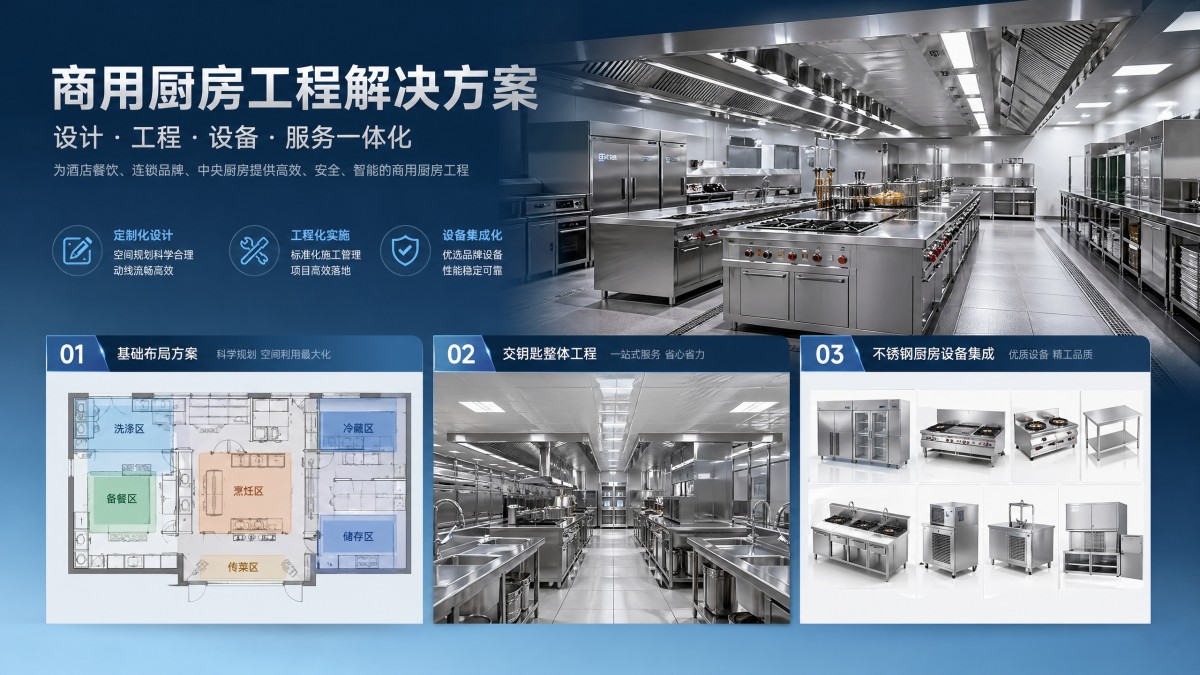
A basic kitchen design project usually covers core layout planning, standard equipment selection, and limited technical coordination. It often suits smaller restaurants, quick-service outlets, compact cafes, or renovation projects where the site utilities are already available and the menu is relatively stable. In many cases, the supplier delivers drawings and a list of recommended commercial kitchen equipment, while installation and coordination are handled by separate contractors.
A turnkey kitchen project is broader in scope. It may include concept planning, process flow design, detailed equipment scheduling, plumbing and electrical interfaces, ventilation and exhaust planning, cold storage, on-site installation, commissioning, staff training, and acceptance support. For hotels, hospitals, schools, central kitchens, and food processing facilities, this model reduces interface risk because one project team manages 5 to 8 critical stages instead of leaving them to multiple vendors.
The price gap between the two models can range from 15% to 40% in common projects, and in highly customized kitchens it can be even higher. However, the visible price difference does not always represent the true cost gap. If a basic design requires rework of exhaust ducts, drainage slopes, gas points, or workflow paths after installation, the total spend can rise quickly within 2 to 6 weeks.
What basic design typically includes
Basic design is usually suitable when the operation has a clear menu, limited cooking methods, and low process variation. A compact kitchen serving 100 to 200 meals per day may not need a full turnkey package if the site already has compliant ventilation, grease management, and power capacity.
- Initial layout plan based on kitchen area and workflow zones
- Standard equipment recommendation from available product ranges
- Limited revision cycles, often 1 to 2 rounds
- Basic utility indication rather than full-site coordination
What turnkey design usually adds
Turnkey projects are more valuable when output volume, compliance pressure, and uptime are critical. A central kitchen producing 1,000 to 5,000 meals per day or a hotel operating breakfast, banqueting, and à la carte service needs much tighter coordination between design and equipment delivery.
- Detailed process mapping from receiving to storage, prep, cooking, plating, and waste flow
- Cross-discipline coordination for gas, water, drainage, HVAC, and electrical loads
- Installation supervision, testing, commissioning, and operator training
- Post-handover support, spare parts planning, and maintenance guidance
The table below helps clarify where the price gap often comes from in practical procurement decisions.
The key takeaway is that a turnkey kitchen project costs more upfront because it includes more responsibilities and more risk control. For decision-makers comparing quotations, the right comparison is not design fee versus design fee, but total project exposure versus operational reliability.
Main factors that create kitchen design price gaps
Kitchen design cost is shaped by far more than floor area. Two kitchens of 150 square meters can vary widely in price if one only handles light reheating while the other supports fresh prep, hot line cooking, bakery, dishwashing, blast chilling, and waste segregation. In practice, price gaps often come from the interaction between menu complexity, production capacity, compliance requirements, and the degree of customization.
Equipment density is one of the first drivers. A project with 12 to 18 standard units has a very different engineering burden compared with a kitchen that integrates combi ovens, tilting pans, induction suites, walk-in cold rooms, conveyor dishwashers, and digital monitoring systems. Once power demand moves from 30kW to 120kW or more, design coordination becomes more intensive and more expensive.
Site condition is another major variable. New-build kitchens usually allow cleaner routing for drainage, gas, fresh air, and exhaust. Retrofit projects are often more expensive because ceiling heights, column positions, and old utility lines create hidden constraints. A supplier may need 2 to 3 site surveys before finalizing a design, especially in hotels and legacy restaurant properties.
High-impact cost variables
- Production volume: 100 meals per day and 2,000 meals per day require very different storage, preparation, and hot holding capacity.
- Workflow zoning: separation of raw and cooked areas, allergen control, and clean-to-dirty flow can add equipment and partitioning requirements.
- Utility intensity: gas, 3-phase power, water treatment, grease traps, and drainage slopes all affect engineering cost.
- Material and finish level: 304 stainless steel is common, but finish quality, edge treatment, and thickness can alter both budget and durability.
Smart and energy-efficient features
Smart kitchen design and energy efficient kitchen design can increase initial investment by 8% to 25%, depending on the level of automation. However, the return can be meaningful for businesses with long operating hours. Features such as heat recovery, demand-controlled ventilation, programmable cooking cycles, and remote fault alerts can improve uptime and reduce avoidable waste.
For operations running 12 to 16 hours per day, energy use should be evaluated over at least a 36-month period rather than only the purchase month. Procurement teams that focus only on the lowest equipment price often miss the real cost impact of utility consumption, maintenance intervals, and operator productivity.
The following table summarizes the most common pricing drivers in commercial kitchen design.
For buyers comparing commercial restaurant supplies and restaurant supplies wholesale packages, this means one quote may appear lower simply because several critical interfaces are not included. A detailed scope review is often more valuable than a fast price comparison.
How different application scenarios change the budget
Not every foodservice project needs the same design depth. Hotels, cafés, hospitals, schools, and food processing kitchens have distinct flow patterns, hygiene controls, and production rhythms. Understanding these scenario differences is essential when evaluating basic versus turnkey kitchen design price levels.
A café with 40 seats may prioritize beverage workflow, undercounter refrigeration, display integration, and quick service speed. A hospital kitchen, by contrast, may require strict separation of clean and dirty circulation, controlled meal assembly, high-capacity dishwashing, and resilient hot holding. Even when floor area looks similar, the project scope can be significantly different.
Food processing kitchens and central kitchens often show the largest price gap between basic and turnkey models because they depend on batch flow, cold chain management, and production consistency. Once operations include blast chilling, vacuum packing, traceability points, or multi-shift output, the value of integrated planning rises quickly.
Typical scenario-based design considerations
- Hotels often need 3 to 6 linked production areas, including banquet, all-day dining, pastry, room service, and stewarding.
- Schools may focus on batch efficiency, safety, and serving speed for fixed meal windows of 30 to 90 minutes.
- Hospitals require stable hygiene control, dependable holding temperatures, and easy-to-clean surfaces for repeated sanitation.
- Food processing sites need stronger attention to raw material receiving, prep zones, chilled transfer, and packaging flow.
The table below shows how design priorities shift by application type and why pricing changes accordingly.
This comparison shows why a single kitchen design cost benchmark is rarely useful. Buyers should evaluate by production model, service pressure, and operational risk rather than area alone. A 20% higher design package can be justified if it prevents daily bottlenecks or repeated hygiene failures.
Procurement strategy: how to compare quotes without missing hidden costs
When reviewing quotations, procurement teams should ask whether they are comparing equal scope. One supplier may include detailed MEP coordination, installation, startup testing, and training, while another may only provide equipment supply and a schematic layout. The difference in headline price can be misleading if the scope matrix is not transparent.
A strong comparison process usually includes at least 4 dimensions: design scope, equipment specification, project execution responsibility, and after-sales support. If any of these dimensions are vague, the final budget can expand through variations, delays, or compatibility issues. This is common in commercial kitchen projects where several subcontractors overlap in a tight construction window.
Procurement also needs to align design choice with business model. If the operation expects menu expansion within 12 to 24 months, a very basic kitchen plan may create expensive limitations later. Capacity reserve, modularity, and service access are often worth paying for at the design stage because retrofitting after opening is far more disruptive.
A practical 6-point quote review checklist
- Confirm whether the drawing package is conceptual or construction-ready.
- Check if exhaust, makeup air, drainage, grease handling, and electrical loads are coordinated.
- Verify the number of revisions included before design freeze.
- Review commissioning scope, testing procedures, and operator training hours.
- Ask about spare parts lead times, usually 7 to 30 days depending on product type.
- Clarify warranty boundaries between equipment, installation, and third-party utility work.
Common buying mistakes
The first mistake is choosing a design package purely by initial price. The second is accepting an equipment list without checking utility compatibility. The third is assuming restaurant supplies wholesale bundles automatically fit the workflow of a specific kitchen. Standard packages can be useful, but they should still be adjusted for output volume, menu, and cleaning sequence.
Another mistake is underestimating installation and handover complexity. Even for a medium project, final delivery may involve 5 to 7 coordination points, including floor drains, hood position, cold room sealing, power isolation, water pressure, and test cooking. A turnkey structure often reduces the cost of these final-stage corrections.
Implementation, lifecycle cost, and long-term value
The best way to judge kitchen design price is to connect it to operating performance. A lower upfront spend may be acceptable for low-volume kitchens with predictable menus, but large or high-pressure operations need to evaluate labor efficiency, maintenance downtime, and energy use over time. In many kitchens, layout decisions made before installation influence productivity every day after opening.
For example, poor adjacency between cold prep, cook line, and pass can add 10 to 20 seconds to repeated tasks. Across hundreds of service actions per day, that lost time becomes material. Similarly, inadequate drainage or cleaning access may increase sanitation labor and increase the chance of service disruption. These hidden costs rarely appear in a basic design quotation, but they directly affect profitability.
Energy efficient kitchen design is particularly relevant for kitchens operating more than 300 days per year. Equipment such as induction cookers, high-efficiency combi ovens, insulated holding cabinets, and demand-based ventilation can reduce wasted energy and improve thermal comfort. While exact savings vary by local utility rates and usage patterns, the operational impact is often more important than the initial premium alone.
Recommended implementation stages
- Needs assessment: define menu, daily output, staffing, and service windows.
- Concept and layout: establish process flow, zoning, and equipment logic.
- Technical coordination: confirm power, water, drainage, exhaust, and structural conditions.
- Installation and commissioning: complete setup, testing, adjustments, and training.
- Post-launch review: evaluate bottlenecks within the first 30 to 90 days.
FAQ for buyers and operators
How long does a turnkey kitchen project usually take? For a moderate commercial project, the combined design, procurement, and installation cycle often falls within 6 to 12 weeks. Larger hotel or institutional kitchens may take longer if utility works and site readiness are delayed.
Is a basic kitchen design enough for a new restaurant? It can be enough for a compact operation with limited cooking methods, stable menu planning, and ready site utilities. If the site is unfinished or the concept expects rapid scaling, a broader turnkey model is usually safer.
What should operators focus on after handover? The first priorities are workflow validation, cleaning access, equipment response time, and preventive maintenance scheduling. Reviewing these items in the first 2 to 4 weeks can help catch issues before they affect service quality.
Kitchen design price gaps between basic and turnkey projects reflect differences in scope, accountability, engineering depth, and long-term operational control. For small and simple kitchens, a basic package may be efficient and cost-conscious. For hotels, institutions, central kitchens, and food processing environments, turnkey delivery often offers stronger value by reducing rework risk, improving coordination, and supporting better performance over the full lifecycle.
If you are comparing custom kitchen design options, commercial restaurant supplies, or restaurant supplies wholesale packages, focus on total project suitability rather than headline price alone. To evaluate the right solution for your application, operating volume, and budget, contact us now to get a tailored kitchen design proposal, discuss product details, and explore more integrated kitchen equipment solutions.
- commercial kitchen equipment
- smart kitchen
- central kitchen
- kitchen design
- restaurant supplies
- kitchen equipment
- commercial kitchen design
- kitchen design for hotels
- energy efficient kitchen design
- smart kitchen design
- kitchen design price
- custom kitchen design
- kitchen design cost
- restaurant supplies wholesale
- commercial restaurant supplies
Popular Tags
Kitchen Industry Research Team
Dedicated to analyzing emerging trends and technological shifts in the global hospitality and foodservice infrastructure sector.
Industry Insights
Join 15,000+ industry professionals. Get the latest market trends and tech news delivered weekly.
No spam. Unsubscribe anytime.
Contact With us
Contact:
Anne Yin (Ceramics Dinnerware/Glassware)
Lucky Zhai(Flatware)