
Food warmer equipment energy use is rising in 2026
In 2026, rising energy costs are pushing foodservice businesses to rethink how food warmer equipment fits into overall kitchen efficiency. From buffet warmer equipment to commercial freezer systems, every appliance affects operating costs, workflow, and sustainability goals. For buyers, operators, and decision-makers, understanding energy trends in modern kitchen preparation equipment is becoming essential for smarter investment and long-term performance.
Across restaurants, hotels, central kitchens, and food processing environments, food warmer equipment is no longer treated as a minor line item. Holding cabinets, soup kettles, display warmers, heated shelves, and pass-through warming stations often run for 6 to 16 hours per day, which makes their energy profile highly relevant in 2026. For many operations, even a 10% to 15% increase in electricity or gas rates can change equipment ROI calculations.
This shift matters to several groups at once. Operators want stable holding temperatures and easier workflows. Procurement teams want lower lifecycle cost, not just a lower purchase price. Business leaders want kitchen equipment that supports sustainability targets and avoids utility waste. Information researchers, meanwhile, need a practical view of what is changing, what specifications matter, and which upgrades actually improve performance.
The broader kitchen equipment industry is already moving toward automation, digital monitoring, and energy-efficient design. Food warmer equipment sits at the center of that transition because it directly links food safety, serving speed, and ongoing power consumption. In 2026, the companies that review warming systems as part of total kitchen preparation equipment strategy are likely to make better purchasing and operating decisions.
Why food warmer equipment energy use is drawing more attention in 2026
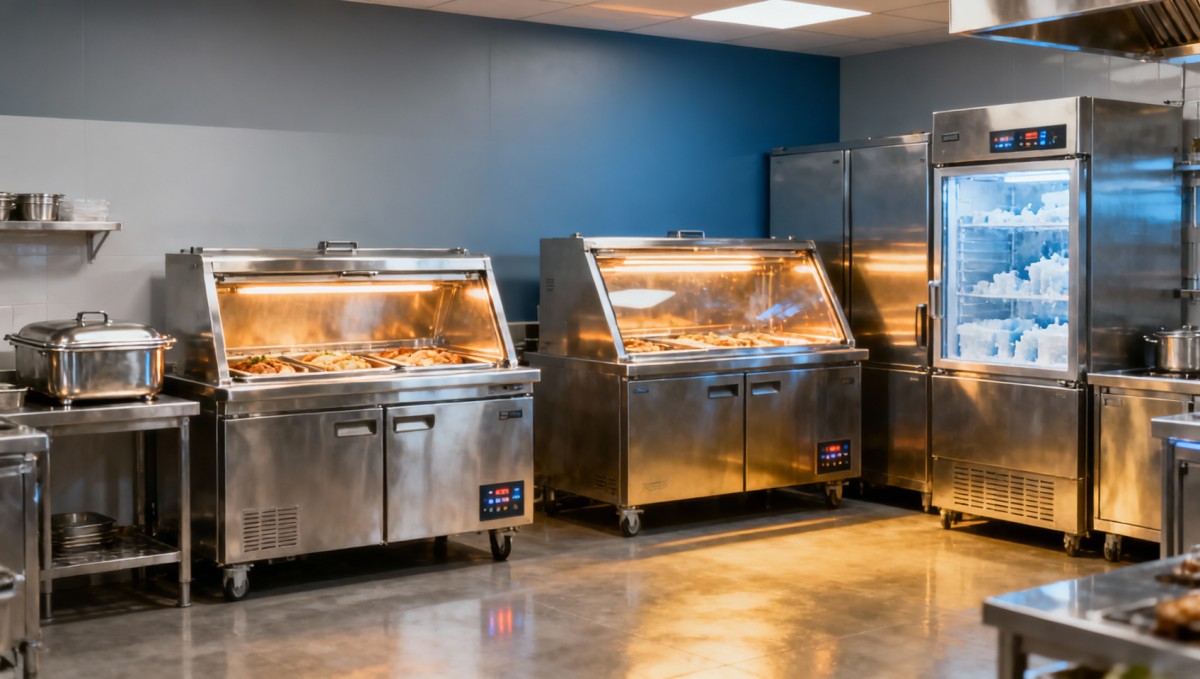
Food warmer equipment consumes energy in a different way than high-heat cooking appliances. Ovens and fryers may have higher peak demand, but warmers often operate continuously during service windows, prep periods, and holding cycles. In a buffet line, banquet kitchen, or quick-service assembly area, one unit can stay active for 8 to 12 hours, while a full warming system may run across breakfast, lunch, and dinner.
That operating pattern means small inefficiencies add up. Heat loss through poor insulation, inaccurate thermostats, open display designs, and idle-time operation all increase energy use. In facilities with 5 to 20 warming points, even a modest excess load per unit can produce a noticeable monthly utility difference. This is especially true when warmers are paired with refrigeration, ventilation, and dishwashing equipment that already strain the kitchen’s power profile.
Another reason energy use is rising in 2026 is the wider adoption of display-based service and prepared food retail formats. Supermarkets, convenience food outlets, hotel breakfast areas, and delivery-focused kitchens increasingly use heated display cases and holding cabinets to improve speed and availability. These applications support revenue, but they also expand the number of hours that food warmer equipment stays energized.
The issue is not only cost. Holding equipment must keep food within safe temperature ranges, often above 60°C in common hot-holding practice, without drying out products or creating uneven heat zones. When a warmer cycles inefficiently or lacks precise control, operators may compensate by raising setpoints higher than necessary, which increases energy use and can reduce food quality at the same time.
Key operating drivers behind higher consumption
Several operational factors explain why food warmer equipment energy use is becoming a board-level concern instead of a maintenance-only topic:
- Long daily runtime, often 6–16 hours depending on service model.
- Frequent door opening or open-front designs that release stored heat.
- Temperature overshoot caused by outdated mechanical controls.
- Underloaded or oversized units operating outside efficient holding conditions.
- Poor coordination between warming, prep, and service schedules.
For procurement teams, the main lesson is straightforward: evaluating food warmer equipment by upfront price alone is increasingly risky. The operating pattern of the unit matters almost as much as the rated power input, and in some kitchens it matters more.
Where energy costs increase most across warming and adjacent kitchen equipment
Food warmer equipment should be assessed as part of a wider kitchen equipment ecosystem. A holding cabinet that seems efficient on paper may drive hidden waste if it is placed near a commercial freezer discharge area, under unbalanced ventilation, or in a workflow that causes repeated door openings. In 2026, energy planning increasingly focuses on appliance interaction rather than isolated machine performance.
For example, buffet warmer equipment in hospitality settings often sits under lighting, near traffic-intensive serving lines, and close to air-conditioned guest zones. These conditions increase heat exchange and force the unit to cycle more often. In central kitchens, pass-through warmers may lose efficiency if loading patterns are irregular or if products enter the cabinet at inconsistent temperatures.
Commercial freezer systems also shape the warming energy equation. Freezers and warmers create opposite thermal demands, and poor zoning raises utility load on both sides. If hot holding equipment is installed too close to cold storage or prep chillers, the kitchen pays twice: once in warmer recovery time and again in refrigeration compression effort.
The table below outlines common equipment categories and where energy pressure tends to rise most in real operating environments.
The main takeaway is that energy use rises fastest when warming equipment is selected without reference to layout, menu type, holding duration, and neighboring systems. For decision-makers, reviewing appliance interaction can uncover savings that are missed when teams compare only nameplate wattage.
Common high-cost scenarios
- Large holding cabinet used for small batches during off-peak service.
- Buffet line warmers kept fully active 60–90 minutes before food is loaded.
- Display warmer located near entrance drafts or strong HVAC airflow.
- Hot-hold stations installed directly beside refrigerated prep counters.
In each case, the energy problem is operational as much as technical. That is why 2026 purchasing conversations increasingly include kitchen planners, operators, maintenance staff, and finance teams together.
How buyers should compare food warmer equipment in a higher-cost energy market
Choosing food warmer equipment in 2026 requires a lifecycle view. Purchase price still matters, but buyers should weigh at least four additional factors: daily runtime, heat retention design, control accuracy, and serviceability. In many commercial kitchens, a unit with a slightly higher initial cost can recover the price gap within 12 to 24 months if it runs more efficiently and reduces product loss.
Control precision is especially important. Digital thermostats, staged heating, and sensor-based holding functions typically support tighter temperature management than basic on/off systems. A realistic evaluation point is how consistently the equipment maintains target holding temperature under actual loading conditions, not only in empty-cabinet test conditions. Stability within a narrow operating range can reduce unnecessary reheating cycles.
Capacity matching is another common selection error. A warmer that is too small may force faster turnover and repeated recovery heating. A unit that is too large for the menu mix may waste energy every day. Buyers should map product volume, pan count, holding duration, and peak service intervals before finalizing specification. Even a difference of 2 to 4 extra pan positions can affect both utility cost and labor flow.
The comparison matrix below can help procurement teams, chefs, and operations managers evaluate food warmer equipment more systematically.
The practical conclusion is that buyers should request operating-condition information, not just brochure specifications. When comparing quotes, ask suppliers to clarify warm-up time, recommended loading rate, cleaning intervals, spare parts lead time, and expected performance under partial loads.
A simple 5-step procurement checklist
- Define menu type and required holding window, such as 30 minutes, 2 hours, or 4 hours.
- Measure actual service peaks by batch size, tray count, or portions per hour.
- Confirm utility conditions, including voltage, phase, gas availability, and ventilation impact.
- Compare total ownership cost over 3 to 5 years, including maintenance and downtime risk.
- Validate after-sales support response time, especially for multi-site operations.
Operational strategies to reduce energy waste without hurting food quality
Even before replacing equipment, many kitchens can lower the energy burden of food warmer equipment through better operating discipline. The first area is startup timing. In some sites, staff power on all warming stations 45 to 90 minutes before service because procedures were never revised after menu or staffing changes. Standardizing staggered startup can cut avoidable idle heating without compromising readiness.
Load management is equally important. Hot-holding equipment performs best when product enters at the intended transfer temperature and when pans or trays are arranged to support airflow. Overcrowding slows recovery, but underloading also wastes energy if a large cabinet is used to hold minimal volume. Operators should define minimum and maximum batch sizes for each station based on real service patterns.
Maintenance practices also affect energy use more than many teams expect. Worn gaskets, misaligned doors, scale buildup in humidified units, and inaccurate thermostats can gradually increase power consumption while reducing holding consistency. A simple inspection cycle every 30 days, with a deeper preventive check every 90 to 180 days, can prevent efficiency losses from becoming normalized.
Digital kitchen management is becoming a useful tool here. Some operators now connect food warmer equipment to monitoring platforms that track setpoint changes, runtime, alarms, and service intervals. Even if full automation is not yet practical, basic usage logging can reveal whether equipment is left running beyond scheduled need or operating at higher temperatures than required for the product category.
High-impact actions for operators and site managers
- Set warm-up schedules by service period instead of powering all units at opening time.
- Use separate holding zones for short-hold and long-hold menu items.
- Calibrate controls and verify actual cabinet temperature at least once per quarter.
- Replace damaged seals and inspect hinges before heat leakage becomes visible.
- Review placement to keep hot-hold stations away from freezer doors and strong HVAC drafts.
What operations teams should measure
Useful KPIs include average daily runtime, warm-up duration, temperature deviation, number of door openings per service cycle, and maintenance exceptions per month. For multi-location chains, comparing these metrics across 10 or more sites can help identify whether the main issue is equipment specification, training, layout, or maintenance quality.
The benefit of this approach is not limited to utilities. Better warmer control often improves food texture, reduces shrinkage, and lowers the need for emergency reheat steps, which means labor efficiency and guest experience can improve alongside energy performance.
Implementation risks, common mistakes, and FAQ for 2026 planning
A common mistake in kitchen equipment planning is assuming that all energy-efficient food warmer equipment performs the same way in every setting. In reality, performance depends heavily on product type, loading behavior, ambient conditions, and service rhythm. A model suited to banquet holding may not be ideal for grab-and-go display, even if both are marketed as efficient solutions.
Another risk is focusing only on the warmer while ignoring the rest of the line. If kitchen preparation equipment, refrigerated storage, and service counters are not coordinated, one efficient appliance may still operate inside an inefficient process. Decision-makers should treat warming upgrades as part of integrated kitchen system planning, particularly in renovation projects or new outlet launches.
Lead time and support planning also matter. Depending on configuration and market region, standard commercial units may ship in 2 to 6 weeks, while customized formats or imported systems may require 8 to 14 weeks. Procurement teams should confirm installation conditions, spare parts availability, and commissioning responsibilities before purchase approval.
Below are several practical questions that frequently arise when companies review food warmer equipment in a higher-cost energy environment.
How do I know whether to replace or optimize existing food warmer equipment?
Start with three checks: actual holding performance, monthly runtime, and maintenance history. If a unit cannot maintain stable temperatures, requires repeated repair, or shows visible heat leakage after seal replacement and calibration, replacement may be justified. If performance is still stable, optimization through scheduling, maintenance, and zoning may deliver useful savings at lower cost.
Which sites benefit most from energy-focused warmer upgrades?
The strongest candidates are operations with long service windows, multiple holding points, or all-day display formats. Hotels, buffet restaurants, institutional catering, supermarkets, and central kitchens often gain more than small outlets because their warmers run longer and interact with more adjacent kitchen equipment.
What specifications deserve the closest review during procurement?
Check rated power, insulation quality, temperature range, recovery behavior, humidity control if needed, cleaning access, and whether the unit matches your expected batch volume. Also verify service intervals, parts lead time, and whether the equipment supports monitoring or alarm functions for multi-site management.
How long does implementation usually take?
For standard replacement projects, planning and installation may be completed in 2 to 4 weeks once the unit is available. Broader line redesign involving electrical work, layout adjustments, and coordination with refrigeration or ventilation can extend the timeline to 6 to 12 weeks.
Food warmer equipment energy use is rising in 2026 because kitchens are operating longer, energy prices remain under pressure, and holding systems are now central to speed, safety, and quality. The most effective response is not simply buying a cheaper unit or turning equipment off more often. It is building a smarter warming strategy based on realistic runtime, accurate controls, proper sizing, coordinated kitchen layout, and reliable maintenance.
For researchers, operators, procurement teams, and business leaders, the opportunity is clear: review warming equipment as part of the full kitchen preparation equipment system and compare solutions by lifecycle value. If you are evaluating upgrades, replacements, or new project specifications, contact us to discuss your application, request a tailored equipment plan, or learn more about efficient kitchen solutions for foodservice and food processing operations.
Popular Tags
Kitchen Industry Research Team
Dedicated to analyzing emerging trends and technological shifts in the global hospitality and foodservice infrastructure sector.
Industry Insights
Join 15,000+ industry professionals. Get the latest market trends and tech news delivered weekly.
No spam. Unsubscribe anytime.
Contact With us
Contact:
Anne Yin (Ceramics Dinnerware/Glassware)
Lucky Zhai(Flatware)