
Kitchen Innovation Trends That Are Actually Saving Labor
From Heated Display and Refrigerated Worktable systems to Charbroiler and Wok Range upgrades, today’s kitchen innovation is focused on real labor savings. As kitchen automation reshapes foodservice operations, buyers and operators are also rethinking serving essentials like ceramic breakfast bowl, porcelain cereal bowl, glass jam jar, and stoneware mug choices to improve workflow, consistency, and efficiency across commercial and hospitality kitchens.
What does labor-saving kitchen innovation really mean in commercial operations?
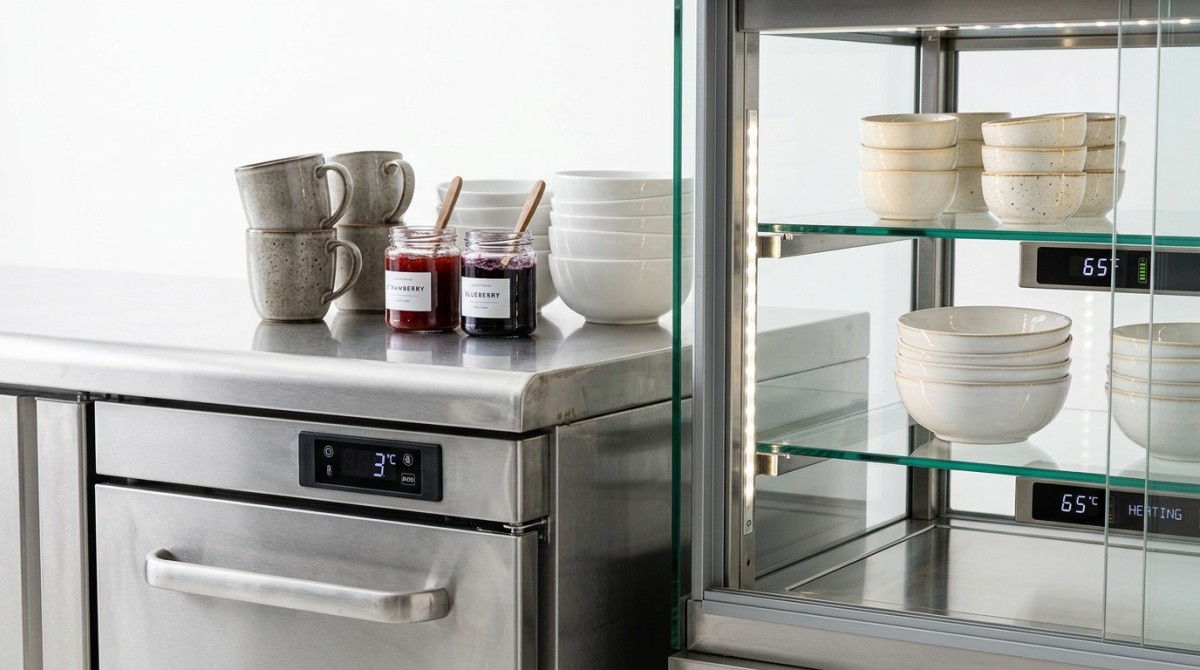
In the kitchen equipment industry, labor-saving innovation does not simply mean replacing people with machines. It usually means reducing repetitive motion, shortening prep-to-service time, lowering training difficulty, and making output more consistent across a 6-hour, 10-hour, or even multi-shift production cycle. For restaurants, hotels, central kitchens, and food processing facilities, that difference directly affects labor cost, food safety control, and service speed.
This is why more operators are investing in practical equipment upgrades rather than chasing novelty. A Refrigerated Worktable can cut back-and-forth walking between cold storage and prep stations. A Heated Display can reduce re-plating pressure during peak service windows of 30–90 minutes. A better Charbroiler or Wok Range can shorten cooking recovery time between batches. These are operational improvements, not just technical upgrades.
Labor savings also extend to smaller items that procurement teams often overlook. Stackable porcelain cereal bowl options, easy-clean ceramic breakfast bowl formats, standardized glass jam jar sizes, and durable stoneware mug selections can improve storage density, washing workflow, and portion consistency. In high-volume hospitality settings, small handling improvements repeated 200–500 times per day become meaningful labor savings.
For decision-makers, the key question is not whether kitchen automation is trending. The real question is which kitchen innovation trends reduce labor dependency without creating new maintenance, training, or compliance burdens. That is where selection discipline matters.
Why labor pressure is pushing change across the kitchen equipment industry
Across the global kitchen equipment sector, labor pressure is coming from several directions at the same time: rising wage costs, turnover in front-line kitchen staff, tighter hygiene requirements, and demand for faster service. In many operations, managers now expect equipment to support at least 3 goals at once: output consistency, easier cleaning, and lower operator dependence.
This is especially relevant in operations serving breakfast, buffet, quick service, delivery kitchens, and central production units. These environments often handle high repetition and narrow service windows. Equipment that saves even 10–20 seconds per task can produce a measurable operational difference over 100–300 orders or servings.
- Prep efficiency: reducing movement between cold holding, cutting, assembly, and cooking.
- Service efficiency: maintaining temperature and presentation with fewer manual interventions.
- Cleaning efficiency: selecting surfaces, utensils, and tableware that shorten wash cycles and reduce breakage risk.
Because of this, practical labor-saving kitchen innovation now covers both heavy equipment and serviceware systems. The most effective solutions improve workflow as a whole, not just one isolated station.
Which kitchen equipment upgrades are delivering the most practical labor savings?
For most buyers, the best starting point is not a full smart kitchen rebuild. It is identifying where labor is repeatedly consumed: cold prep, line cooking, hot holding, assembly, and washing. In many commercial kitchens, 4 equipment categories stand out as high-impact upgrades because they influence both staff movement and output timing.
The table below compares several common kitchen innovation trends that are actually saving labor in real foodservice settings. The purpose is not to declare one product universally better, but to show where each solution fits based on production rhythm, staffing level, and menu type.
A useful pattern emerges from this comparison. The most valuable kitchen equipment upgrades are usually the ones that remove wasted motion, reduce wait time between batches, or simplify holding and assembly. If an upgrade only adds features but does not remove a labor bottleneck, its return is often weaker than expected.
Heavy equipment is only half of the labor-saving story
Operators often focus on cooking appliances and overlook tableware and serving essentials. Yet in hospitality kitchens, breakfast service, buffet operations, room service, and café environments, repeated handling of bowls, jars, and mugs can affect speed, breakage, replenishment, and washing labor.
Where serving essentials support kitchen workflow
A ceramic breakfast bowl with a stable stack profile can help reduce shelf clutter and improve pass-line replenishment. A porcelain cereal bowl with consistent size supports portion control and easier plating training. A glass jam jar in standardized capacity helps central kitchens and hotels manage condiment presentation with less filling error. A stoneware mug with durable glaze and balanced handle geometry can reduce chipping and handling fatigue over repeated service cycles.
In practical terms, these items matter most when operations run repeated service periods 2–3 times per day, or where dishwashing staff must process several racks per hour. Choosing serviceware for stackability, washability, and replacement consistency often saves more labor over 12 months than selecting based on appearance alone.
- Prefer standardized dimensions to reduce storage mismatch.
- Check whether rims, handles, and bases are compatible with existing dishwashing and shelving systems.
- Review replacement continuity for 6–12 month procurement cycles, especially in hotel and chain environments.
How should buyers compare labor-saving solutions before making a purchase?
Procurement mistakes often happen when teams compare products by price alone or by isolated specifications. A labor-saving kitchen solution should be evaluated through at least 5 dimensions: workflow fit, training burden, cleaning time, maintenance accessibility, and integration with existing kitchen layout. This applies equally to commercial kitchen equipment and to serviceware used in repeated foodservice operations.
The next table can be used as a practical selection tool for information researchers, operators, purchasing staff, and business decision-makers. It is especially useful when comparing two or three shortlisted options across restaurants, hotels, central kitchens, or food processing support areas.
This kind of side-by-side review helps teams move beyond brochure language. A cheaper unit may cost more in labor if it requires extra movement, slower cleaning, or more operator attention. In contrast, a moderately higher upfront cost can make sense if it reduces daily touchpoints and supports more stable output over time.
A simple 4-step procurement process for labor-saving kitchen equipment
- Identify the bottleneck: prep congestion, cooking delay, holding loss, or washing overload.
- Measure the current condition for 7–14 days, including staff movement, queue periods, and daily cleaning time.
- Compare 2–3 equipment options using the same workflow, maintenance, and training criteria.
- Validate installation conditions such as utility load, ventilation, drainage, shelving fit, and replacement lead time.
This process is practical because it ties procurement decisions to operational facts. It also helps internal teams explain the purchase to finance, management, and site operators in a shared language.
What implementation risks and compliance points are often missed?
Even when the right equipment is selected, labor-saving outcomes can be weakened by poor implementation. In the kitchen equipment industry, common issues include utility mismatch, weak ventilation planning, poor operator handover, unsuitable cleaning chemicals, and serviceware specifications that do not match dishwashing or storage systems. These are small details with operational consequences.
For example, a Wok Range upgrade may require gas, water, drainage, and exhaust coordination before installation. A Heated Display may need review of holding temperature behavior, customer access direction, and cleaning frequency. A Refrigerated Worktable should be checked for airflow clearance and whether pans, covers, and prep accessories are standardized across shifts.
On the compliance side, buyers should work with suppliers that understand common market expectations for food-contact safety, electrical safety where applicable, and general hygiene-oriented design. Specific requirements differ by country and application, but it is reasonable to ask for material information, operating documentation, cleaning guidance, and packaging details for export or cross-border supply.
Typical checkpoints before final approval
- Confirm site readiness in 3 parts: utilities, footprint, and access route for delivery.
- Review cleaning frequency: per shift, daily, weekly, and quarterly maintenance tasks.
- Check tableware compatibility with racks, shelves, and dishwashing cycles before bulk purchase.
- Request replacement parts and replenishment planning for at least one normal ordering cycle.
Common misconceptions that lead to poor results
One common misconception is that more automation always means more labor savings. In reality, over-complex controls can create training problems, especially where turnover is high. Another mistake is evaluating only cooking speed while ignoring cleaning time and batch reset time. A third is treating tableware as an afterthought, even though bowl, jar, and mug handling may be repeated hundreds of times every day.
A more balanced approach is to prioritize labor-saving kitchen innovation that operators can use confidently within 1–2 weeks, maintain with routine tools, and integrate into existing service patterns without major disruption.
FAQ: how do buyers and operators judge whether a kitchen innovation is worth it?
How do I know whether a Refrigerated Worktable will actually save labor?
Start by observing how often staff move between undercounter storage, upright refrigeration, and the prep bench. If those trips happen continuously during a 2–4 hour prep block, a Refrigerated Worktable may reduce unnecessary motion and shorten assembly time. The strongest fit is when ingredients are accessed repeatedly and must remain within a stable chilled range during active prep.
Are serving items like ceramic breakfast bowl or stoneware mug really part of labor-saving planning?
Yes, especially in hotel breakfast, buffet, café, and room service operations. Stackability, durability, standardized capacity, and washing compatibility influence replenishment speed, storage efficiency, and breakage control. When these items circulate in large daily volumes, small design differences create measurable labor impact over months of use.
What should procurement teams ask suppliers before ordering labor-saving kitchen equipment?
Ask about 5 points: operating requirements, cleaning method, maintenance access, spare part availability, and normal delivery lead time. For export or multi-site projects, also confirm packaging approach, installation support scope, and whether dimensions match local site constraints. For tableware, ask about replenishment consistency and whether future batches remain size-compatible.
How long does implementation usually take?
It depends on complexity. A simple serviceware standardization project may move in 1–3 weeks. A cooking line or refrigeration upgrade often takes longer when utility work, ventilation, and scheduling are involved. For many B2B kitchen projects, planning, confirmation, and delivery are best handled in clear phases rather than rushed into a single purchase decision.
Why choose us for labor-saving kitchen equipment and workflow-oriented sourcing support?
We focus on practical kitchen innovation trends that match real operating conditions in restaurants, hotels, food processing environments, central kitchens, and hospitality service lines. That means we do not treat labor savings as a slogan. We help buyers review equipment function, serviceware compatibility, workflow fit, and supply considerations together, so the final decision supports both daily use and procurement efficiency.
If you are comparing Heated Display options, Refrigerated Worktable layouts, Charbroiler or Wok Range configurations, or supporting items such as ceramic breakfast bowl, porcelain cereal bowl, glass jam jar, and stoneware mug programs, you can contact us for targeted discussion. We can support parameter confirmation, product selection, matching by use scenario, packaging and replenishment planning, and quotation communication based on your project needs.
For teams with tight delivery requirements, we can also discuss typical lead-time planning, sample support where appropriate, and how to prioritize 3 categories first: core cooking equipment, cold prep systems, and high-frequency serviceware. This helps reduce decision risk when budgets are limited or rollout schedules are compressed.
Contact us with your menu type, service volume, kitchen layout, target market, and compliance expectations. We can help you narrow suitable kitchen equipment options, compare alternatives, and build a more efficient sourcing plan around labor savings, cleaning practicality, and long-term operational stability.
Popular Tags
Kitchen Industry Research Team
Dedicated to analyzing emerging trends and technological shifts in the global hospitality and foodservice infrastructure sector.
Industry Insights
Join 15,000+ industry professionals. Get the latest market trends and tech news delivered weekly.
No spam. Unsubscribe anytime.



Contact With us
Contact:
Anne Yin (Ceramics Dinnerware/Glassware)
Lucky Zhai(Flatware)