
Glass party vase demand shifts with event styling trends
As event styling trends reshape table presentation and venue aesthetics, demand for the glass party vase is rising alongside complementary pieces such as the glass home decor vase, glass salad jar, and glass cappuccino cup. For buyers, operators, and decision-makers, understanding how decorative and functional tabletop products align with hospitality and kitchen equipment needs is essential to meeting evolving market expectations.
Why is glass party vase demand changing across hospitality and foodservice settings?
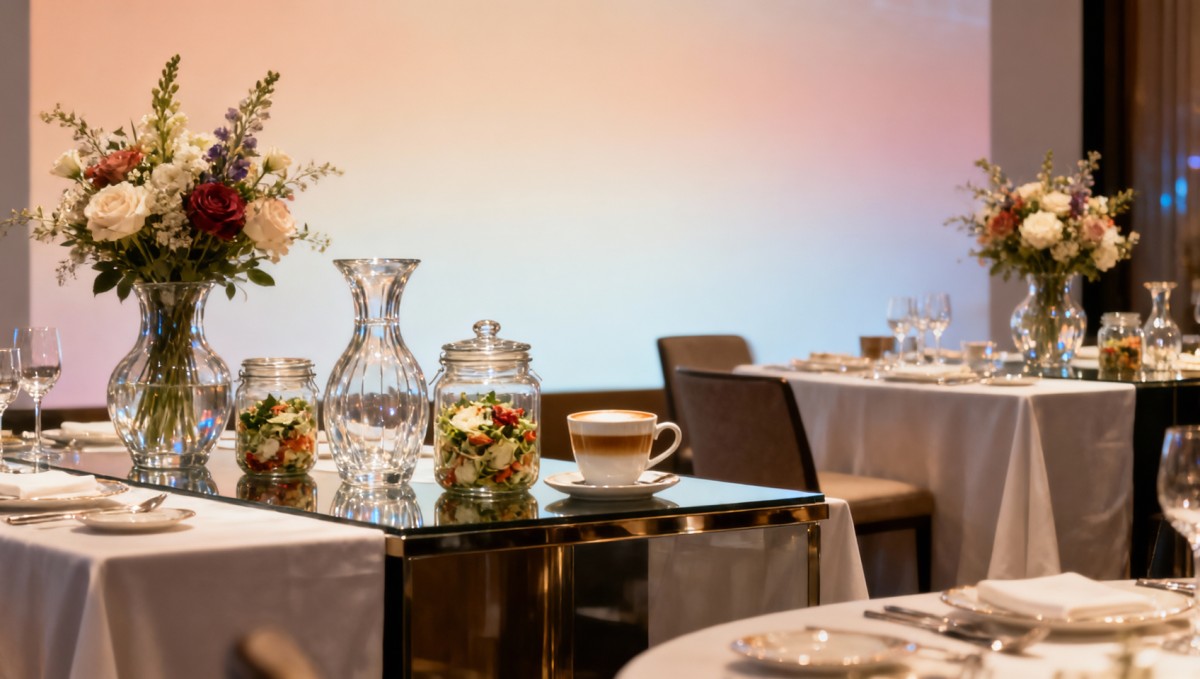
The shift is not only about decoration. In restaurants, hotels, event venues, and premium catering operations, tabletop presentation now supports brand positioning, customer experience, and operational consistency at the same time. A glass party vase is increasingly selected as part of a coordinated tableware and service ecosystem that may also include beverage glassware, dessert containers, condiment jars, and display pieces used in front-of-house environments.
For procurement teams, this means demand no longer follows a simple seasonal pattern. Instead, it moves with event styling cycles, wedding and banquet themes, festive dining programs, and commercial refresh schedules that often run every 2–4 quarters. A venue may update centerpiece styles faster than it replaces heavy kitchen equipment, but the buying logic is now connected: durability, cleaning efficiency, stock planning, and visual compatibility all matter.
Operators also face a practical issue. Decorative items must work with real service conditions. A vase that looks elegant but is unstable on narrow banquet tables, difficult to clean during fast turnover, or too fragile for high-frequency handling becomes a hidden cost. This is why many buyers compare glass party vase options using the same disciplined approach applied to small kitchen tools and restaurant appliances.
The broader kitchen equipment industry provides useful context here. As foodservice operations become more automated, energy conscious, and quality driven, non-cooking tabletop products are also expected to support efficiency. In practical terms, that means choosing items that can survive repeated handling, fit standardized storage systems, and match the aesthetic of modern commercial kitchens, open service counters, and premium dining spaces.
What is driving the buying shift?
Several drivers are shaping current sourcing decisions for a glass party vase and related tabletop products:
- Event styling is more theme-based, so buyers need 3–5 coordinated visual directions rather than one universal centerpiece style.
- Venue operators want products that move across weddings, corporate dinners, hotel brunches, and private dining events without creating excessive SKU complexity.
- Foodservice teams increasingly prefer items that can be cleaned, stored, and reissued within short turnover windows such as 2–6 hours between events.
- Purchasing managers are under pressure to balance breakage risk, replacement frequency, and presentation quality within fixed quarterly budgets.
As a result, decorative glassware is now evaluated less as a standalone accessory and more as a controlled operational asset. That perspective is especially relevant in integrated hospitality businesses where banquet operations, restaurant service, and kitchen logistics must work together.
Which product combinations work best for different application scenarios?
A glass party vase rarely performs alone in commercial use. Buyers often assess it together with a glass home decor vase, glass salad jar, and glass cappuccino cup because these products shape a consistent visual language across service zones. In hotels, for example, the lobby café, buffet line, banqueting room, and private dining area may each require a different balance between decoration and practical service function.
Scenario planning helps reduce poor purchasing decisions. A slim centerpiece vase may suit a fine dining layout where table space is tight and guest interaction is formal. A wider glass home decor vase may work better in reception areas, lounge tables, or buffet islands where visibility and floral volume matter more than compactness. Meanwhile, glass salad jar applications often support buffet merchandising, ingredient display, or grab-and-go concepts rather than pure decoration.
For operators, the key is not to over-specify every item. Instead, define 3 categories: display-led pieces, mixed-use pieces, and service-led pieces. This simplifies stock management and avoids purchasing too many styles that sit idle outside one event season. In many foodservice environments, SKU rationalization can be more valuable than chasing trend-driven novelty every few months.
The table below compares common
Popular Tags
Kitchen Industry Research Team
Dedicated to analyzing emerging trends and technological shifts in the global hospitality and foodservice infrastructure sector.
Industry Insights
Join 15,000+ industry professionals. Get the latest market trends and tech news delivered weekly.
No spam. Unsubscribe anytime.

Contact With us
Contact:
Anne Yin (Ceramics Dinnerware/Glassware)
Lucky Zhai(Flatware)