
Glass drinkware trends shifting from looks to durability
Glass drinkware is no longer judged by appearance alone. As restaurants, hotels, and modern kitchens demand products that balance style, safety, and long-term value, durability is becoming a defining factor in purchasing decisions. This shift reflects broader changes in the kitchen equipment industry, where performance, efficiency, and reliability now matter as much as visual appeal.
Why scenario-based selection matters more than ever
For information researchers, the most useful way to understand today’s glass drinkware market is not by asking which style is fashionable, but by asking which product performs best in a specific use case. A cocktail bar, a hotel breakfast buffet, a high-volume restaurant, and a household kitchen may all use glass drinkware, yet their priorities differ greatly. One may focus on impact resistance, another on stackability, another on thermal performance, and another on replacement cost.
This is especially relevant in the broader kitchen equipment industry, where buyers increasingly compare products by lifecycle value rather than initial appearance. In practical terms, durable glass drinkware supports smoother operations, reduces breakage-related waste, improves service consistency, and lowers hidden costs tied to storage, handling, and replacement. As smart and efficient kitchen systems become more common, every item on the table is also being evaluated through an operational lens.
The result is a clear market shift: glass drinkware still needs to look attractive, but it must also survive repeated washing, transport, stacking, temperature changes, and frequent customer contact. For businesses and households alike, durability is no longer a secondary feature. It is part of product suitability.
Where the durability trend is showing up first
The move toward stronger, longer-lasting glass drinkware is most visible in settings where usage intensity is high and presentation still matters. In these scenarios, visual appeal alone cannot justify frequent breakage or inconsistent performance.
- Restaurants that need dependable drink service across lunch and dinner peaks
- Hotels that require a unified look across guest rooms, buffets, and banquets
- Bars and cafés where glass shape matters, but rim strength and handling safety are critical
- Catering and event businesses that move drinkware frequently between locations
- Residential buyers seeking premium-looking products that also fit daily family use
Across all of these applications, the same question appears: can the chosen glass drinkware deliver style without creating operational friction? That question is shaping purchasing standards in both commercial and consumer channels.
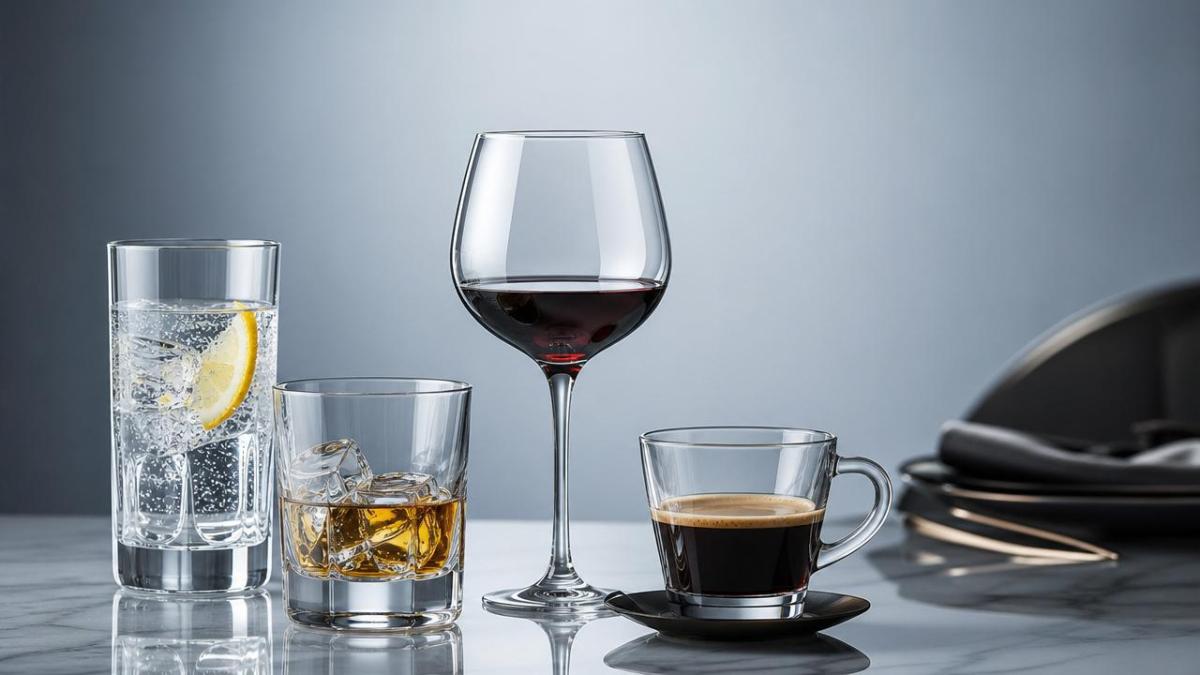
Typical application scenarios for glass drinkware and what each one values
The following comparison helps show why the same glass drinkware product may succeed in one environment and fail in another. Decision-making becomes clearer when selection criteria are linked to actual working conditions.
Restaurant scenarios: when appearance must support workflow
In restaurant settings, glass drinkware is handled by multiple staff members, moved quickly between kitchen, bar, and dining floor, and washed continuously. Here, a beautiful but fragile glass can create repeated problems: chips at the rim, unstable stacking, and frequent replacement. That means the true cost is not just the purchase price, but the labor disruption and waste that follow.
For casual dining and high-turnover concepts, operators often prefer durable glass drinkware with clean lines, moderate weight, and broad usability. A single range may need to serve water, soft drinks, juice, and simple cocktails. In this case, versatility and resilience usually outperform highly decorative designs.
For premium restaurants, the balance is more nuanced. Presentation still plays a major role, especially in wine, cocktail, and tasting service. Yet even upscale operations increasingly expect reinforced stems, stronger rims, and manufacturing consistency that supports repeated polishing and washing. The trend is not toward plain products, but toward design that works harder.
Hotel and banquet scenarios: the hidden value of standardization
Hotels face a more complex environment for glass drinkware because they operate across guest rooms, breakfast areas, banquet halls, bars, and room service. A product that looks elegant in a suite may be inefficient in a banquet operation if it breaks too easily or complicates storage. Durability in this scenario is closely linked to standardization.
When hotel procurement teams evaluate glass drinkware, they increasingly consider whether a line can be replenished consistently, whether it nests or stores efficiently, and whether it keeps a uniform appearance after hundreds of wash cycles. Minor differences in shape or thickness can affect tray stability, housekeeping efficiency, and replacement planning.
For banquet service in particular, durable glass drinkware reduces the risk of operational losses during setup, clearing, and transport. Large events amplify every weakness in a product. If breakage rises even slightly, costs escalate quickly. That is why many hotel buyers now prefer dependable product families with a strong service life over purely decorative items with limited operational tolerance.
Bars, cafés, and beverage-focused venues: durability with product identity
Bars and cafés present a different challenge. In these spaces, glass drinkware contributes directly to brand identity, menu storytelling, and perceived beverage quality. A cocktail coupe, latte glass, or whiskey tumbler communicates as much about the venue as the drink itself. However, these businesses also face constant handling, rapid turnover, and frequent washing.
The best-fit solution often depends on menu structure. A craft cocktail bar may accept some specialization, but still needs enough durability to survive service pressure. A café serving both hot and cold beverages may favor glass drinkware with stronger thermal tolerance and a shape that remains comfortable for staff and customers. In both cases, the right question is not “Which glass looks best?” but “Which glass keeps its look after real use?”
This is where material quality, thickness balance, and finishing consistency become more important than trend-driven novelty. Businesses that replace damaged items less often preserve both brand image and margin.
Household and modern kitchen scenarios: everyday durability becomes a premium feature
In residential kitchens, the shift from looks to durability is also gaining momentum. Consumers still want stylish glass drinkware for entertaining, but they increasingly expect it to support dishwasher cleaning, children or family use, compact storage, and multiple beverage types. For many buyers, durability is now part of premium value rather than a trade-off against design.
This aligns with the wider kitchen equipment industry trend toward practical innovation. Just as appliances are expected to be energy-efficient and smart, smaller tabletop products are expected to be functional, safe, and long-lasting. Buyers often prefer glass drinkware that can move from breakfast juice to sparkling water to evening cocktails without feeling disposable or overly delicate.
For household-focused brands and retailers, this means that product messaging should address daily use conditions, not only styling themes. Information researchers comparing options often look for clues around breakage resistance, dishwasher suitability, and all-purpose usability before making a purchase decision.
How to judge whether glass drinkware is suitable for your scenario
A practical evaluation framework can help narrow choices faster. Instead of starting with shape or decoration, begin with the operating environment and likely stress points.
- Usage frequency: How many times per day will the glass drinkware be handled and washed?
- Service style: Will staff carry it on trays, stack it, or move it in bulk?
- Beverage range: Is it used for hot, cold, sparkling, or specialty drinks?
- Storage conditions: Does the site need nesting efficiency or shelf stability?
- Replacement planning: Can the same line be reordered reliably in the future?
- Brand expectations: Is the look understated, premium, contemporary, or highly specialized?
When these factors are reviewed together, the best glass drinkware choice often becomes more obvious. Durability is not a standalone feature; it is part of compatibility with workflow, service image, and total ownership cost.
Common mistakes when comparing glass drinkware across scenarios
One common mistake is assuming that heavier glass drinkware is always more durable. Weight can create a perception of quality, but balance, production consistency, and rim design are equally important. An unnecessarily heavy product may even increase staff fatigue or transport risk.
Another mistake is choosing highly specialized glass shapes for environments that need flexibility. What works in a signature cocktail program may not suit a multi-purpose restaurant or hotel buffet. Some buyers also overlook wash performance, only to find that clouding, scratching, or edge wear undermines the product’s appearance over time.
A final misjudgment is treating glass drinkware as separate from overall kitchen and service operations. In reality, it is part of a larger equipment and workflow ecosystem. If the product complicates handling, storage, cleaning, or replenishment, it affects efficiency just like any other operational tool.
FAQ: what information researchers often want to know
Is durable glass drinkware still stylish?
Yes. The market trend is not replacing style with utility, but combining the two. Many modern products are designed to retain visual appeal while improving resistance to breakage and repeated cleaning.
Which scenario benefits most from durable glass drinkware?
High-volume restaurants, hotels, and event operations usually see the fastest return because breakage and replacement costs accumulate quickly there. However, households also benefit through longer service life and safer daily use.
Should buyers prioritize one universal line or multiple specialized options?
That depends on the scenario. Multi-purpose venues often gain efficiency from a smaller number of versatile glass drinkware types. Beverage-led venues may need more specialized forms, but durability should still remain part of the selection criteria.
Final takeaway: match the trend to your actual use case
The shift in glass drinkware trends from looks to durability reflects a broader market reality: products are increasingly judged by how well they perform in real conditions. For restaurants, hotels, cafés, catering businesses, and home kitchens, the right choice depends on the interaction between design, service intensity, safety, and replacement strategy.
If you are researching glass drinkware options, start by defining your scenario clearly. Review usage frequency, handling pressure, beverage type, washing conditions, and visual expectations together. That approach leads to better comparisons, more relevant supplier discussions, and smarter long-term decisions. In a market shaped by efficiency and reliability, the most valuable glass drinkware is not simply the one that looks impressive on day one, but the one that continues to perform day after day.
Popular Tags
Kitchen Industry Research Team
Dedicated to analyzing emerging trends and technological shifts in the global hospitality and foodservice infrastructure sector.
Industry Insights
Join 15,000+ industry professionals. Get the latest market trends and tech news delivered weekly.
No spam. Unsubscribe anytime.
Contact With us
Contact:
Anne Yin (Ceramics Dinnerware/Glassware)
Lucky Zhai(Flatware)