
Planetary mixer machine capacity claims vs actual output
When evaluating a planetary mixer machine, advertised bowl capacity does not always match actual output in daily production. For bakeries, restaurants, and food processors comparing a planetary mixer machine with a dough mixer machine, bakery oven machine, or dough divider machine, understanding real batch volume, dough type, and operating limits is essential for smarter equipment selection and better workflow efficiency.
This issue matters to more than technical users. Operators need stable mixing results across every shift, purchasing teams want realistic capacity data before placing orders, and business decision-makers need to know whether a 20 L, 40 L, or 60 L machine will actually support target output per hour. In commercial kitchen equipment selection, nominal bowl size is only one part of the decision.
In practice, the actual output of a planetary mixer machine depends on at least 5 variables: ingredient density, dough hydration, tool type, batch duration, and allowable fill ratio. A machine promoted as suitable for 10 kg may only handle 6–7 kg of stiff dough without overheating or sacrificing consistency. That gap directly affects labor planning, proofing rhythm, baking schedule, and total line efficiency.
For companies building or upgrading a bakery, central kitchen, hotel pastry room, or small food processing line, the most useful question is not “What is the bowl capacity?” but “What is the real production capacity for my product mix?” That is the benchmark that supports better equipment matching and lower operating risk.
Why stated bowl capacity and actual mixer output are often different
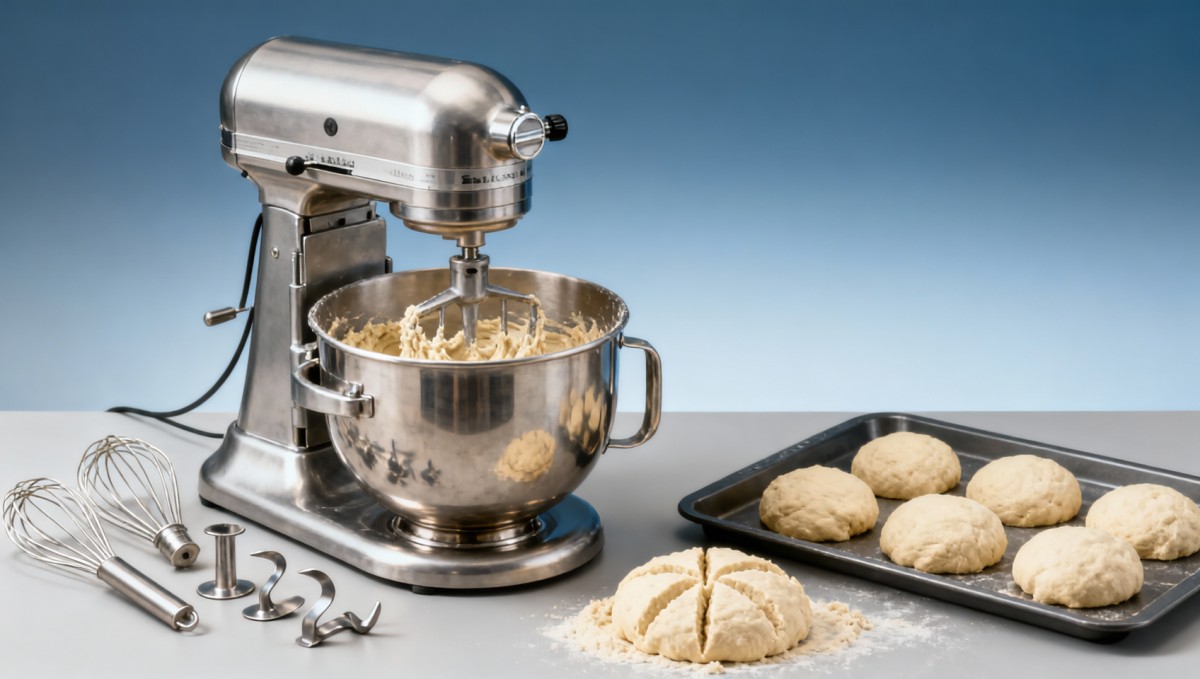
A planetary mixer machine is usually marketed by bowl size, such as 10 L, 20 L, 30 L, 40 L, or 60 L. However, bowl volume is not equal to productive batch volume. In real use, many kitchens can only load 50%–80% of nominal capacity, depending on whether they are mixing cream, cake batter, mashed fillings, medium dough, or heavy bread dough.
The difference starts with product type. Light materials such as whipped cream may allow a higher fill level, but dense dough creates stronger resistance. A 40 L planetary mixer machine may process 8–10 kg of batter comfortably, while the same machine may only manage 4–6 kg of low-hydration dough. If operators push beyond this range, the result can be unstable mixing, motor stress, or excessive gear wear.
Another factor is the planetary mixing mechanism itself. Compared with a dedicated dough mixer machine, a planetary system is more versatile but not always ideal for heavy dough at high batch frequency. In a bakery producing 100–300 kg of bread dough per day, selecting a planetary mixer machine only by bowl size can create a mismatch between equipment design and production demand.
Manufacturers may also define capacity under different assumptions. One supplier may rate a 20 L machine based on liquid or egg whipping, while another may refer to flour content, and a third may present total mixture weight. Without confirming the exact testing basis, buyers can easily compare two machines with the same nominal size but very different real output.
Common reasons for capacity mismatch
- The rated capacity is based on bowl volume rather than workable ingredient weight.
- Mixing tools differ: whisk, beater, and dough hook each support different load ranges.
- Product viscosity changes motor load significantly, especially with dough below 60% hydration.
- Continuous operation for 2–4 hours reduces practical batch size compared with occasional use.
- Operators often need headspace for ingredient rise, mixing circulation, and splash control.
A practical rule for first-stage evaluation
As a preliminary check, many buyers use a simple rule: assume the effective working load of a planetary mixer machine is around 60%–70% of bowl volume for general batter and significantly lower for stiff dough. This is not a universal formula, but it is a more reliable starting point than treating stated bowl capacity as actual output.
How product type changes the real working capacity of a planetary mixer machine
The most important purchasing mistake is treating all recipes as equal. In commercial kitchen equipment planning, 10 liters of cream, 10 liters of cake batter, and 10 liters of bread dough are completely different workloads. Mixing resistance, required speed, air incorporation, and heat build-up all affect how much product can be processed safely in one cycle.
For whipped products, the concern is not only weight but also expansion. Cream and egg whites can increase in volume by 1.5–3 times during mixing. If the bowl is overfilled at the start, spillage and uneven aeration are likely. For batter, overloading may prevent uniform mixing at the bottom and edges. For dough, excessive loading can increase kneading time by 20%–40% and shorten component life.
This is why users comparing a planetary mixer machine with a dough mixer machine should define the production mix in advance. If more than 50% of daily output is heavy bread or pizza dough, a specialized dough mixer machine may be more efficient. If the kitchen handles cream, filling, batter, frosting, mashed ingredients, and moderate dough in smaller runs, a planetary mixer machine offers broader flexibility.
The table below shows how typical product categories influence the effective load ratio in daily use. These ranges are practical planning references for commercial kitchens and food processing rooms, not absolute technical limits.
The key takeaway is straightforward: actual output should be defined by recipe category, not by bowl label alone. For procurement teams comparing multiple quotes, asking each supplier for recommended load by product type is more useful than requesting only motor power or bowl size.
Questions operators and buyers should ask
- What is the recommended batch weight for cream, batter, and dough separately?
- How long can the machine run continuously in a 4-hour or 8-hour shift?
- Is the stated capacity based on total mixture weight, flour weight, or liquid volume?
- Does the supplier recommend this machine for daily bread dough production above 50 kg?
Planetary mixer machine versus dough mixer machine in production planning
Many businesses do not need to choose one machine category for every task. The real objective is to match equipment to process flow. A planetary mixer machine is strong in versatility, while a dough mixer machine is usually stronger in torque, dough development consistency, and repeatable performance with heavy loads. The wrong comparison can lead to under-capacity or unnecessary investment.
In a bakery line, the mixer is only one station. Its output must align with the dough divider machine, proofing cycle, and bakery oven machine throughput. If the mixer completes one batch every 12 minutes but the downstream line needs a fresh batch every 8 minutes, the bottleneck will appear before shaping or baking begins. A mismatch of even 15%–20% can disrupt the whole schedule during peak production hours.
For restaurants, hotels, and pastry kitchens, the decision may be different. If daily production includes cake base, whipped cream, mashed potato, frosting, filling, and occasional dough, a planetary mixer machine supports more tasks with fewer machines. For central kitchens or food processors making repeated dough batches over 6–10 cycles per shift, a dedicated dough mixer machine often delivers lower strain and more predictable output.
The following comparison helps clarify where each machine type fits best in a commercial kitchen equipment strategy.
The practical conclusion is not that one machine is better than the other. It is that capacity claims only make sense when tied to real product type, daily batch count, and line balance. A kitchen running 3 product categories requires a different selection logic than a bakery focused on one dough formula all day.
How to align mixer choice with downstream equipment
Check the 4 connection points
- Batch cycle time: compare mixer cycle length with dough divider machine demand.
- Thermal rhythm: ensure the bakery oven machine can absorb output without long holding time.
- Labor allocation: one operator can usually manage 1–2 machines efficiently, not 4 separate bottlenecks.
- Product variation: if recipes change more than 3 times per shift, versatility becomes more valuable.
How purchasers can verify real capacity before ordering
For procurement professionals, the best protection against misleading capacity claims is a structured evaluation process. Instead of accepting a catalog figure at face value, ask for application-based confirmation. That means verifying what the planetary mixer machine can do with your actual dough, batter, filling, or whipping process under expected shift conditions.
A useful purchasing workflow includes 3 stages: requirement mapping, test validation, and operating confirmation. Requirement mapping defines product categories, target batch size, daily frequency, and utility conditions. Test validation confirms whether the machine can process at least 80%–90% of the target batch repeatedly. Operating confirmation checks cleaning convenience, tool change time, and operator safety in real kitchen use.
Buyers should also evaluate the capacity claim in relation to shift planning. For example, if a facility needs 120 kg of batter in an 8-hour shift, a machine producing 8 kg every 20 minutes may look sufficient on paper but become tight once setup, ingredient loading, discharge, and cleaning time are included. Real output should be calculated using complete cycle time, not mixing time alone.
The table below provides a procurement checklist that can reduce selection errors and make supplier quotations easier to compare.
This approach helps both buyers and technical teams move from brochure-based purchasing to process-based purchasing. That shift is especially valuable in international sourcing, where specification wording and capacity definitions can vary between regions and manufacturers.
A simple pre-order validation method
- List your top 3 products by volume and by difficulty.
- Define target batch weight, target cycle time, and daily output.
- Ask the supplier to confirm recommended load for each product type.
- If possible, request a sample test, video proof, or comparable application reference.
- Check whether the machine still meets output after cleaning and changeover time is included.
Operating limits, maintenance impact, and common mistakes in daily use
Even a correctly selected planetary mixer machine can underperform if it is operated beyond its practical limits. Overloading is one of the most common causes of unstable output. When users try to increase batch size by 10%–20% above the recommended level, they often see longer mixing time, incomplete blending at the bowl wall, temperature rise, and faster wear on transmission parts.
Maintenance planning is closely linked to capacity realism. A machine used for light batter 4 times per day has a very different stress profile from one used for dense dough 12 times per day. For foodservice businesses, it is better to size the machine with a reasonable reserve than to run it at the edge of its limit every shift. That reserve supports durability, more stable product quality, and easier staff training.
Tool selection also matters. A whisk is designed for aeration, a flat beater for mixing and creaming, and a hook for dough handling. Using the wrong attachment can make a machine appear underpowered when the real issue is mismatch between tool and product. In many kitchens, 5–10 minutes of setup discipline prevents repeated quality variation.
For managers, the most effective operating policy is to set standard loads by recipe. Instead of allowing every operator to guess, define a documented range for each product, such as 3–4 kg whipped cream, 6–8 kg batter, or 4–5 kg medium dough, depending on machine size. This can reduce production inconsistency and help extend service intervals.
Frequent mistakes to avoid
- Choosing a mixer only by bowl liters, without checking product-specific load recommendations.
- Using a planetary mixer machine for heavy dough in continuous high-volume production without backup.
- Ignoring total cycle time and focusing only on advertised mixing minutes.
- Failing to coordinate mixer output with bakery oven machine and dough divider machine rhythm.
- Running the same load standard across cream, batter, and dough even though resistance differs sharply.
FAQ: How much reserve capacity is reasonable?
A practical target is to keep 10%–25% process reserve above your normal batch plan, especially if recipes change often or peak demand is seasonal. That reserve improves reliability without pushing capital cost too far. For stable single-product dough production, the better investment may be a dedicated dough mixer machine rather than oversizing a planetary unit.
The gap between capacity claims and actual output is not a minor specification issue. It influences product consistency, labor efficiency, equipment life, and the coordination of the entire kitchen or bakery line. For operators, the right load standard protects quality. For purchasing teams, application-based verification prevents costly mismatch. For decision-makers, real output planning supports better return on equipment investment.
If you are comparing a planetary mixer machine with a dough mixer machine, bakery oven machine, or dough divider machine as part of a larger commercial kitchen equipment project, focus on recipe type, effective batch weight, cycle time, and downstream workflow balance rather than bowl size alone. To get a more accurate equipment recommendation for your operation, contact us today to discuss your production goals, request a tailored solution, or learn more about practical mixer selection for your business.
Popular Tags
Kitchen Industry Research Team
Dedicated to analyzing emerging trends and technological shifts in the global hospitality and foodservice infrastructure sector.
Industry Insights
Join 15,000+ industry professionals. Get the latest market trends and tech news delivered weekly.
No spam. Unsubscribe anytime.
Contact With us
Contact:
Anne Yin (Ceramics Dinnerware/Glassware)
Lucky Zhai(Flatware)