
Ceramic Coffee Cup Materials Buyers Often Compare
When buyers compare a ceramic coffee cup, they often weigh durability, heat retention, aesthetics, and safety against options like a glass water cup, ceramic soup bowl, ceramic serving plate, and porcelain dinnerware. For procurement teams, operators, and decision-makers in hospitality and foodservice, understanding these material differences helps improve user experience, purchasing efficiency, and long-term value across modern kitchen equipment applications.
In commercial kitchens, cafés, hotels, and institutional dining settings, cup selection is rarely just about appearance. It affects beverage temperature stability, breakage rates, handling comfort, dishwasher performance, replacement cycles, and brand presentation. A ceramic coffee cup may seem like a simple item, but in high-volume service environments where 100 to 1,000 pieces can be purchased in a single cycle, material choice directly influences operating cost and customer perception.
This article examines the material factors buyers often compare when evaluating ceramic cups alongside glass, porcelain, and related tabletop items. It is designed for researchers, operators, purchasing teams, and business decision-makers who need practical criteria for sourcing, standardizing, and maintaining drinkware in modern kitchen equipment and foodservice operations.
Why Material Comparison Matters in Foodservice Purchasing
A ceramic coffee cup is used in very different ways depending on the business model. In a boutique café, visual identity and hand feel may be the top priorities. In a hotel breakfast operation, stackability, replacement frequency, and dishwasher resistance may rank higher. In staff canteens or central kitchens, durability over 12 to 24 months often matters more than decorative detail.
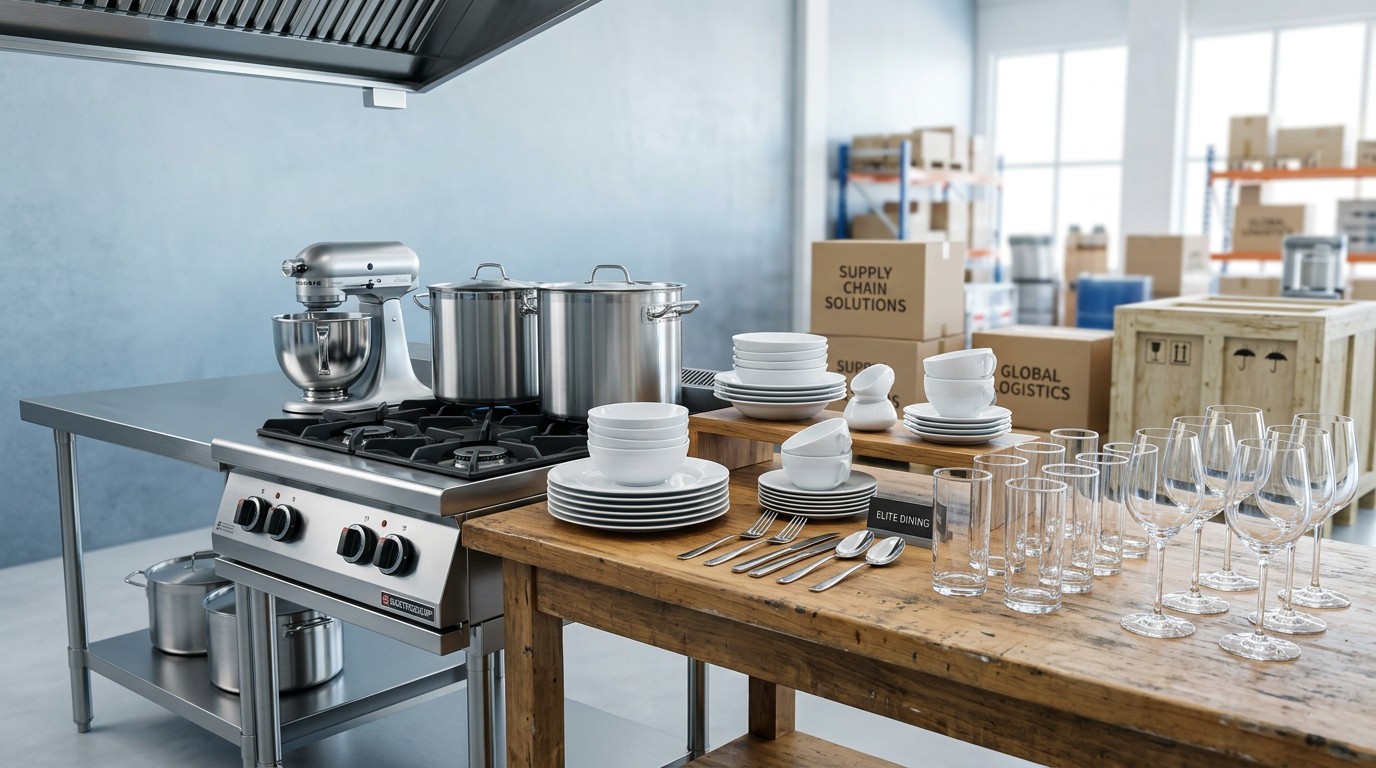
Buyers also compare ceramic products against adjacent categories because they are often sourced together. A purchasing team may evaluate a ceramic coffee cup, ceramic soup bowl, ceramic serving plate, and porcelain dinnerware within the same tabletop package. This bundled approach can simplify logistics, but it also raises the importance of understanding which material performs best for hot beverages, plated service, and repeated washing cycles.
Material differences affect at least 4 core operational areas: thermal behavior, chip resistance, weight, and user safety. For example, a cup that retains heat for 15 to 25 minutes longer may improve guest satisfaction, but if it is too heavy for fast-paced service staff, handling efficiency can fall. Likewise, a lightweight cup may reduce operator fatigue but become more vulnerable to edge chipping.
Core evaluation dimensions
Most professional buyers compare materials through a balanced framework rather than a single feature. Typical evaluation includes appearance, service life, maintenance fit, beverage compatibility, and procurement economics. The right answer depends on whether the cup will serve espresso, brewed coffee, milk-based drinks, or self-service beverages.
- Durability under repeated daily handling, often 20 to 80 uses per week per piece in busy operations.
- Heat retention and outer-wall comfort, especially for hot drinks served above 60°C.
- Dishwasher and storage performance, including stacking safety and glaze stability.
- Brand fit, color consistency, and compatibility with broader tabletop collections.
The table below outlines how buyers typically compare a ceramic coffee cup with other common tabletop materials in hospitality and kitchen equipment purchasing.
The key takeaway is that ceramic is often selected because it sits in the middle of performance, aesthetics, and cost. It may not be the most transparent like glass or the most refined like premium porcelain, but it is frequently the most practical choice for mixed-use beverage service.
How Ceramic Compares on Heat Retention, Durability, and Safety
For hot beverage service, heat behavior is one of the most important reasons buyers choose a ceramic coffee cup. Ceramic walls generally retain warmth better than standard soda-lime glass, which can help coffee remain at a preferable drinking temperature for an additional 10 to 20 minutes under normal indoor service conditions. This is useful in hotel lounges, restaurant table service, and office hospitality environments where beverages are not consumed immediately.
Durability is more nuanced. Ceramic is resistant to staining and suitable for repeated dishwasher cycles, but not all ceramic bodies perform equally. Dense, well-fired ceramic typically handles daily use better than low-density decorative ware. Buyers should ask about firing consistency, glaze finish, handle joint strength, and whether the cup is intended for commercial or household use. In many operations, the replacement rate difference between a well-specified cup and a generic one becomes visible within 3 to 6 months.
Safety is another reason ceramic stays popular in the kitchen equipment and tabletop supply chain. Food-contact glazes should be stable, surfaces should clean easily, and cup rims should remain smooth after repeated use. A well-designed ceramic coffee cup also reduces the chance of discomfort when handling hot drinks because the body and handle usually stay more manageable than thin-wall glass filled with freshly brewed coffee.
Where buyers often make mistakes
One common error is judging quality only by wall thickness. Thick cups may retain heat well, but they also increase weight and storage load. Another error is assuming that all ceramic products are microwave- and dishwasher-ready for commercial use. In real procurement, confirmation of usage conditions matters more than assumptions based on appearance.
Practical inspection checklist
- Check rim evenness and glaze smoothness across at least 5 to 10 random samples.
- Review handle comfort during 2-finger and 3-finger grip tests.
- Test dishwasher exposure over several cycles if the order volume exceeds 200 pieces.
- Confirm suitability for serving temperatures between 65°C and 90°C.
The table below summarizes operational comparison points that are especially relevant for restaurants, cafés, and hotel service teams.
For daily hot drink service, ceramic usually offers the best overall balance for durability, thermal performance, and handling comfort. Glass has strong presentation value, while porcelain is often chosen when a more premium table image is required.
Selection Criteria for Different Business Scenarios
A ceramic coffee cup should not be selected in isolation from the operating environment. The right cup for a 40-seat specialty café may be wrong for a 300-room hotel or a quick-service breakfast chain. Decision-makers should align cup specifications with service speed, storage conditions, beverage menu, replacement budget, and tabletop style consistency.
For cafés, capacity range is often a starting point. Espresso cups may be around 80 to 120 ml, cappuccino cups around 160 to 220 ml, and larger coffee service cups 250 to 350 ml. In hotel or buffet settings, standardization matters more, because consistent sizing helps portion control, storage planning, and replenishment forecasting. A standardized range of 2 to 3 cup sizes often works better than maintaining 6 or 7 different models.
For restaurant groups and institutional buyers, compatibility with other ceramic items is equally important. If the same supplier can provide the ceramic coffee cup, ceramic soup bowl, ceramic serving plate, and coordinated dinnerware tones, the procurement process becomes more efficient. This can reduce sourcing complexity, especially when replacement ordering occurs every quarter or every half-year.
Scenario-based decision points
Different operating models need different priorities. Buyers can simplify decision-making by defining the top 3 to 5 factors for each scenario before requesting samples or quotations.
- Café and bakery: prioritize cup profile, latte presentation, hand feel, and branding alignment.
- Hotel breakfast and banquet: prioritize stackability, replenishment speed, and consistent appearance in volume use.
- Office and institutional dining: prioritize durability, dishwasher survival, and easy replacement ordering.
- Fine dining or executive service: prioritize finish quality, refined glaze, and coordinated porcelain or ceramic table setting.
The following table gives a practical framework for matching cup material choices to typical business applications in the broader kitchen equipment and foodservice sector.
This comparison shows that there is no single universal winner. Ceramic performs particularly well when the buyer needs broad usability across coffee service, coordinated tabletop presentation, and manageable replacement cost.
Procurement, Quality Control, and Lifecycle Cost
For procurement teams, unit price is only one part of the decision. A ceramic coffee cup that costs slightly more at purchase may still offer a lower annual ownership cost if it reduces breakage, keeps a stable appearance after 200 to 500 dishwasher cycles, and integrates smoothly with the rest of the tabletop system. Lifecycle cost becomes especially important when an operation manages multiple branches or regular replacement orders.
A reliable sourcing process usually includes sample review, dimensional confirmation, packaging check, and delivery planning. In practical terms, lead times may range from 2 to 6 weeks depending on stock availability, customization needs, and order volume. If logos, custom colors, or coordinated product families are required, buyers should expect extra confirmation steps before production or shipment.
Quality control should focus on consistency rather than isolated perfection. A batch of 500 cups does not need every piece to be visually identical under magnification, but it should meet the operational tolerance required by the business. Common review points include color consistency, visible glaze defects, foot-ring smoothness, stack stability, and packaging protection for transport and storage.
5-step purchasing workflow
- Define application needs: beverage type, volume range, service frequency, and target style.
- Request samples: compare at least 2 to 4 materials or finishes under real-use conditions.
- Check compatibility: confirm fit with saucers, plates, racks, dishwashers, and storage systems.
- Review commercial terms: MOQ, lead time, packaging method, and replenishment options.
- Run acceptance inspection: assess appearance, quantity, damage rate, and dimensional consistency.
Common procurement risks
The most common risk is buying based on appearance photos alone. Another is ignoring how the cup behaves in dish racks, trolleys, and high-turnover service stations. In B2B foodservice purchasing, the real test is not only whether a ceramic coffee cup looks good on arrival, but whether it performs after 30, 60, and 90 days of continuous use.
- Overlooking packaging strength for long-distance transport can increase arrival damage.
- Choosing too many styles complicates replenishment and stock forecasting.
- Ignoring replacement availability can disrupt brand consistency across locations.
Well-managed procurement reduces not only direct purchasing risk but also operational disruption. For larger buyers, standardizing on a narrower product family often improves reorder efficiency and inventory control across 3, 5, or more service outlets.
Maintenance, Common Misconceptions, and Buyer FAQ
Proper maintenance extends the useful life of a ceramic coffee cup more effectively than many buyers expect. In commercial environments, breakage often comes from handling and storage issues rather than material weakness alone. Simple operational adjustments, such as reducing over-stacking, separating transport loads, and training staff on rack placement, can lower damage frequency within a few weeks.
A frequent misconception is that porcelain is always better than ceramic. In reality, the better option depends on service level, cost target, and visual requirements. Another misconception is that glass automatically signals premium quality. For coffee service, transparency is attractive, but it does not always deliver the thermal comfort, handling safety, or replacement economy needed in busy operations.
Maintenance planning should be practical and measurable. Teams should review breakage patterns monthly, inspect edge damage during washing or table reset, and reserve a replacement buffer of roughly 5% to 10% for high-turnover sites. This is especially useful for hotels, restaurant groups, and catering operations that cannot afford visible inconsistency during service.
How should buyers maintain ceramic cups in daily use?
Use dishwashing programs suitable for commercial ceramics, avoid abrupt thermal shock, and prevent metal-to-rim collision during loading. Cups should be stored in stable stacks that do not exceed the supplier’s practical handling recommendation. Even if no official stacking number is provided, limiting stacks to 6 to 10 pieces often reduces chipping risk.
What should operators check before bulk ordering?
Confirm capacity, handle comfort, saucer fit, dishwasher compatibility, and packaging. If the item will be used together with a ceramic soup bowl, ceramic serving plate, or porcelain dinnerware line, check color and finish consistency under actual lighting conditions in the dining area.
When is glass a better choice than ceramic?
Glass is often the better choice for cold drinks, infused water, layered beverages, and presentation-driven service where visibility is important. For hot coffee in high-frequency hospitality use, ceramic usually remains the safer and more operationally balanced option.
How often should replacement planning be reviewed?
For most commercial environments, review every 3 months is practical. High-volume cafés and buffet operations may benefit from monthly checks. This allows buyers to track whether breakage is linked to material quality, staff handling, storage layout, or transport between kitchen and service area.
For buyers balancing function, image, and long-term value, a ceramic coffee cup remains one of the most versatile tabletop choices in the wider kitchen equipment industry. It supports hot beverage service, integrates well with broader ceramic and porcelain collections, and performs reliably when selected with clear operational criteria. If you are evaluating cup materials, planning a new hospitality project, or standardizing tabletop items across multiple sites, contact us to discuss product details, compare sourcing options, and get a tailored solution for your application.
Popular Tags
Kitchen Industry Research Team
Dedicated to analyzing emerging trends and technological shifts in the global hospitality and foodservice infrastructure sector.
Industry Insights
Join 15,000+ industry professionals. Get the latest market trends and tech news delivered weekly.
No spam. Unsubscribe anytime.
Contact With us
Contact:
Anne Yin (Ceramics Dinnerware/Glassware)
Lucky Zhai(Flatware)