
Ceramic plate glazing defects still seen at recent trade shows
At recent trade shows, ceramic plate glazing defects remained a visible concern, raising questions for buyers, operators, and decision-makers across the kitchen equipment market. Whether sourcing a ceramic dinner set, dinner plate, ceramic bowl, coffee mug, or complementary products like glass beverage server and stainless steel cutlery, understanding quality risks is essential for safer purchasing, stronger brand reputation, and better long-term performance.
Why are ceramic plate glazing defects still showing up in the market?
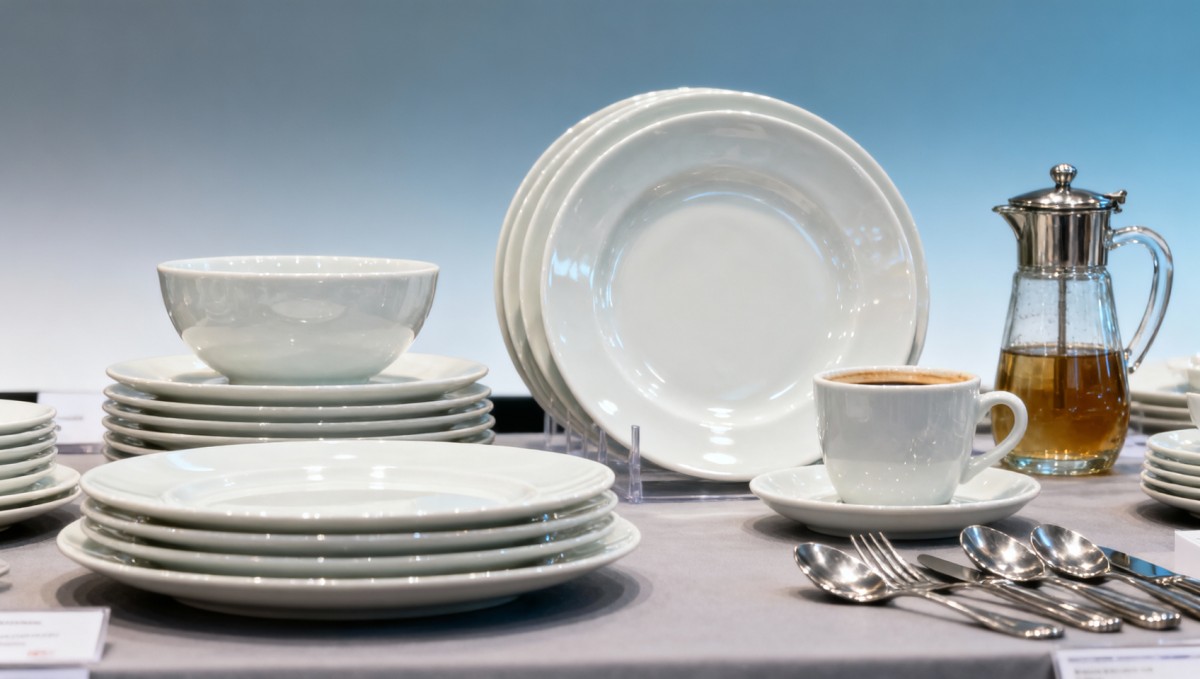
Trade shows often reveal what catalogs hide. Under strong lighting and close inspection, glazing defects on ceramic tableware become easier to spot, especially on dinner plates, ceramic bowls, coffee mugs, and serving pieces intended for hotels, restaurants, and retail distribution. In the kitchen equipment industry, where food contact safety, presentation quality, and repeated use matter, even small glaze issues can lead to customer complaints, replacement costs, and avoidable procurement risks.
These defects usually appear in several forms: pinholes, crawling, uneven gloss, color inconsistency, blistering, black specks, edge exposure, and warped surfaces that affect stacking. In many sourcing projects, buyers only notice the problem after the first sample review or after 2–4 weeks of pilot use in a restaurant or hotel environment. That delay can disrupt launch schedules and weaken confidence in the supplier.
For operators, glazing defects are not just cosmetic. A rough or unstable glazed surface can affect cleaning efficiency, stain resistance, and visual consistency across service. In high-turnover foodservice settings, plates may go through dishwashing cycles several times per day, often under elevated water temperatures and chemical detergents. If glaze quality is inconsistent, service life may shorten significantly within the first 3–6 months of intensive use.
For procurement teams and enterprise decision-makers, the issue also connects to supplier control, kiln process stability, raw material selection, inspection discipline, and packaging protection during international logistics. In a global market shaped by cost pressure, short lead times, and multi-country sourcing, ceramic plate glazing defects are often a sign that one or more upstream controls were not managed tightly enough.
Common root causes behind visible glazing defects
Most recurring defects come from a combination of process variables rather than a single mistake. Clay body moisture, glaze viscosity, spraying thickness, drying time, kiln temperature curve, and cooling speed all influence the finished surface. If one step moves outside a practical process range, such as uneven glaze application or unstable firing cycles, the final dinner plate may show defects even if the shape itself looks acceptable.
- Raw material inconsistency: particle size variation or contamination can create black specks, pinholes, or poor color uniformity.
- Application problems: over-spraying, under-spraying, or poor edge coverage often lead to thin glaze zones, exposed rims, or crawling.
- Kiln instability: temperature differences across firing zones can cause gloss variation, deformation, or incomplete glaze maturity.
- Handling and packing issues: even acceptable products can suffer edge chipping or hairline surface damage during transit if inner packaging is weak.
In practical sourcing, buyers should treat visible glaze defects as an early warning signal rather than an isolated appearance flaw. The same process weakness may also affect thermal shock performance, dishwasher durability, and dimensional repeatability. That is why experienced procurement teams review both aesthetics and manufacturing control before approving volume orders.
Which glazing defects matter most for restaurants, hotels, and foodservice buyers?
Not every defect carries the same business risk. A slight tone variation on a rustic ceramic dinner set may be commercially acceptable in some markets, while pinholes on a white hotel dinner plate may trigger immediate rejection. The key is to judge defects according to application scenario, customer expectation, cleaning intensity, and whether the item is used in front-of-house dining, buffet service, room service, or back-of-house operations.
For hotels and premium restaurants, appearance consistency is usually the first priority because table presentation directly affects guest perception. For central kitchens, canteens, and institutional buyers, the focus often shifts to stacking stability, edge durability, and repeat wash performance over 6–12 months. For distributors and importers, defect tolerance also depends on whether the product will be sold as a coordinated collection alongside coffee mugs, ceramic bowls, glass beverage server sets, and stainless steel cutlery.
The table below helps compare typical ceramic plate glazing defects by visibility, operational impact, and procurement response. It is useful for sample review, pre-shipment inspection, and supplier performance discussions.
A useful procurement principle is to separate critical defects from acceptable variation. Critical defects are those likely to influence food-contact perception, repeated cleaning, or brand presentation. Acceptable variation, by contrast, may include mild hand-crafted appearance differences if they are intentional, stable, and clearly defined during sampling. Without that distinction, many teams either over-reject cost-effective products or approve hidden risks that later become expensive.
How application scenario changes the quality threshold
Hotel and premium dining
In premium dining, a defect rate that seems minor in a warehouse may look serious on a set table. Buyers in this segment often expect close color matching, stable rim finish, and uniform gloss across at least 12–24 pieces per lot. Products used for plated dishes, tasting menus, and front-facing buffet presentations should undergo stricter visual review.
Institutional and high-volume foodservice
For schools, canteens, and central kitchens, appearance still matters, but durability usually ranks first. Buyers should look for consistent glaze coverage, stack fit, edge impact resistance, and wash endurance over repeated cycles. A plate that looks attractive at delivery but shows visible wear after every-day use is not a good lifecycle purchase.
Retail and mixed tableware programs
Retail collections often combine ceramic plate sets with ceramic bowls, coffee mugs, stainless steel cutlery, and glass beverage server pieces. In these cases, shade coordination and finish harmony become important. Even when the ceramic item passes functional checks, mismatch against companion products may reduce shelf appeal and increase return risk.
What should procurement teams check before placing a ceramic tableware order?
A reliable buying process reduces defects before production starts. Instead of relying only on showroom appearance, procurement teams should use a structured review path covering samples, specifications, quality tolerance, packaging, and inspection timing. In most B2B projects, 5 key checkpoints can prevent a large share of avoidable glazing claims, especially when sourcing from overseas manufacturers under compressed lead times of 30–60 days.
The first checkpoint is reference sample approval. A sealed sample should show the exact glaze color, gloss level, rim finish, underside quality, and acceptable variation range. The second is dimensional review, including plate diameter, height, and stacking stability. The third is surface inspection under direct light. The fourth is packaging confirmation. The fifth is production-stage verification, ideally before full carton sealing.
The table below can serve as a practical ceramic plate procurement checklist for importers, restaurant groups, hospitality buyers, and distributors comparing multiple suppliers.
This checklist is most effective when tied to a formal approval sequence. A common process is sample confirmation, revised sample if needed, pre-production alignment, in-process inspection, and pre-shipment review. Even a simple 4-step workflow can make supplier communication clearer and reduce disputes when quality expectations are documented from the beginning.
A practical 4-step sourcing workflow
- Define use scenario: restaurant, hotel, retail, central kitchen, or residential distribution. This determines the defect tolerance and packaging level.
- Approve sample and specification: record color, finish, shape, dimensions, and acceptable visual variation.
- Review production controls: confirm inspection points, lead time, and any special requirements for mixed sets or customized branding.
- Verify shipment readiness: check carton packing, quantity accuracy, and random visual inspection before dispatch.
If the order includes coordinated tableware, such as ceramic dinner plates with mugs, bowls, and glass beverage server components, buyers should ask for cross-category sample matching. This is especially important when products come from more than one production line or more than one supplier.
How do standards, testing, and compliance affect buying confidence?
In the kitchen equipment and foodservice supply chain, compliance is part of quality control, not a separate topic. Ceramic tableware used for food contact should be evaluated against relevant market requirements, especially when products are sold into regulated regions or supplied to hotel groups, chain restaurants, and large distributors. Buyers do not need to demand unnecessary paperwork, but they do need clarity on what is applicable and what is not.
For many import programs, the most important questions are whether the ceramic plate is suitable for food contact, whether glaze and decoration are managed responsibly, and whether the product specification matches the destination market. Depending on sales channel and country, buyers may also review migration-related requirements, labeling expectations, and packaging compliance. The exact requirement varies, so early confirmation can save 2–3 weeks of back-and-forth later.
Operational users should also connect compliance with performance. A plate that meets market-entry requirements but chips too easily or loses surface appeal quickly may still fail in real service. That is why good sourcing combines regulatory review with practical use testing, such as repeated washing observation, stain checks, and stack handling review across sample quantities.
Compliance topics buyers commonly review
- Food-contact suitability for the target market, including any relevant documentation requested by importers or retailers.
- Material and decoration consistency, especially when colored glazes, decals, or metallic details are used.
- Use-condition matching, such as dishwasher routine, microwave use where appropriate, and storage or stacking demands.
- Packaging accuracy, carton marking, and shipment identity control for international logistics.
A practical rule for enterprise buyers is to confirm compliance requirements before tooling adjustments, color development, or carton printing. If changes happen after mass production begins, rework costs increase quickly. This is especially relevant for OEM or private-label orders where branding, barcode, pack count, and user instruction details must align from the start.
Why trade show samples should not be your only quality proof
Trade show samples are useful for first screening, but they rarely tell the full production story. A booth sample may represent a carefully selected piece rather than batch consistency. Serious buyers should request batch-linked samples, production photos where appropriate, or inspection records tied to the actual order. This is one of the simplest ways to distinguish design appeal from manufacturing reliability.
What are the common sourcing mistakes, and how can buyers avoid them?
One frequent mistake is focusing too heavily on unit price while underestimating replacement rate, complaint handling, and image loss. A low-cost ceramic plate with unstable glaze may become more expensive after 1–2 damaged shipments, batch rejection, or early replacement in hospitality service. Total cost should include inspection effort, breakage risk, service life, and the commercial cost of inconsistent presentation.
Another mistake is approving a single sample without defining acceptable variation. Handmade or reactive glaze products naturally show some range, but that range must be specified. Without clear boundaries, a supplier may ship pieces that technically resemble the sample but fail to match a buyer’s expectation for gloss, tone, or rim finish. This creates disputes that could have been prevented through better pre-order alignment.
A third mistake is ignoring packaging as part of quality. Ceramic dinner sets, bowls, mugs, and beverage service items often travel long distances. Even a good glaze cannot compensate for poor carton structure or weak separators. For export orders, packaging review should cover drop-sensitive areas, internal movement, carton labeling, and pallet logic if used. This step is especially important when mixed-product sets are shipped together.
The final mistake is failing to match the product to the operating environment. A visually attractive plate intended for low-frequency residential use may not survive repeated commercial dishwashing in a hotel or restaurant. Buyers should evaluate whether the selected ceramic tableware fits high-frequency, medium-frequency, or occasional use. That simple classification often prevents specification mismatch.
FAQ for buyers, operators, and decision-makers
How many samples should we review before a bulk order?
For standard projects, reviewing one display sample is rarely enough. A practical approach is to evaluate at least 3 sample types when possible: a design approval sample, a production-like sample, and a packing sample if the order is export-oriented. For mixed collections, checking 6–12 pieces across the range gives a better view of glaze consistency and set harmony.
What delivery timeline is typical for ceramic tableware orders?
Lead time depends on decoration complexity, order quantity, and packaging format. For regular items, buyers often see production windows in the range of 30–60 days after final confirmation. Custom shapes, new glaze development, or multi-item gift sets may require longer planning. The safest approach is to confirm sample timing, mass production timing, and inspection timing separately.
Are minor glaze variations always a defect?
Not always. Rustic, artisanal, and reactive-glaze products may intentionally include moderate variation. The key question is whether the variation is controlled, repeatable, and commercially aligned with the product concept. For hotel whiteware and formal restaurant service, tolerance is usually narrower. For craft-style retail collections, some variation may be part of the intended look.
What should purchasing teams ask suppliers first?
Start with 5 direct questions: What visual defects are controlled during inspection? What sample becomes the approval reference? What packaging protects the rim and face? What use environment is the product designed for? What documents or market-specific compliance information can be provided if needed? These questions usually reveal whether the supplier understands B2B requirements or only focuses on quotation speed.
Why choose us for ceramic tableware and broader kitchen equipment sourcing?
In today’s kitchen equipment market, sourcing decisions are no longer based on appearance alone. Buyers need suppliers who understand product quality, foodservice use conditions, export packaging, and the commercial impact of defects on hospitality brands and distribution channels. That is especially true when ceramic tableware is part of a wider purchasing plan involving restaurant appliances, kitchen tools, glass beverage server items, and stainless steel cutlery.
We support customers with practical, decision-oriented communication rather than generic product descriptions. If you are comparing ceramic dinner sets, dinner plates, bowls, or mugs, we can help you review sample consistency, glaze appearance expectations, packaging details, application matching, and the likely trade-off between cost level and quality control. This helps shorten evaluation time and reduce avoidable sourcing errors.
For procurement teams, operators, and business decision-makers, the most valuable discussion usually covers 6 topics: product specification, use scenario, quality tolerance, packaging method, lead time, and destination-market requirements. Addressing these points early makes quotation clearer and project execution smoother, especially when your order includes coordinated tabletop products or custom-brand programs.
Contact us if you need support with parameter confirmation, product selection, sample review, lead-time planning, packaging advice, compliance discussion, or quotation alignment. Whether you are sourcing for a hotel project, restaurant chain, distributor program, or mixed kitchen equipment portfolio, a clearer specification process will help you buy with less risk and stronger long-term value.
Popular Tags
Kitchen Industry Research Team
Dedicated to analyzing emerging trends and technological shifts in the global hospitality and foodservice infrastructure sector.
Industry Insights
Join 15,000+ industry professionals. Get the latest market trends and tech news delivered weekly.
No spam. Unsubscribe anytime.



Contact With us
Contact:
Anne Yin (Ceramics Dinnerware/Glassware)
Lucky Zhai(Flatware)