
Space-saving kitchen tools that do not slow down cooking
In busy homes, every inch of counter and cabinet space matters. The right space-saving kitchen tools can help you stay organized, reduce clutter, and keep meal prep fast and efficient without sacrificing convenience. From collapsible gadgets to multi-use essentials, smart kitchen choices make cooking easier while creating a cleaner, more functional space for everyday use.
Most people searching for space-saving kitchen tools are not looking for novelty gadgets. They want practical tools that fit in small kitchens, reduce mess, and still help them cook quickly on a daily basis. The best options are not always the smallest ones. They are the tools that earn their place by doing more than one job, storing easily, and staying simple enough to use without adding extra steps.
If you cook often, the goal is not to own fewer tools at any cost. The goal is to choose tools that protect workflow. A compact kitchen should still let you chop, prep, cook, and clean efficiently. That is why the most useful space-saving kitchen tools are usually foldable, stackable, nestable, wall-mountable, or multi-functional. They save room while keeping essential tasks fast.
What people really need from space-saving kitchen tools
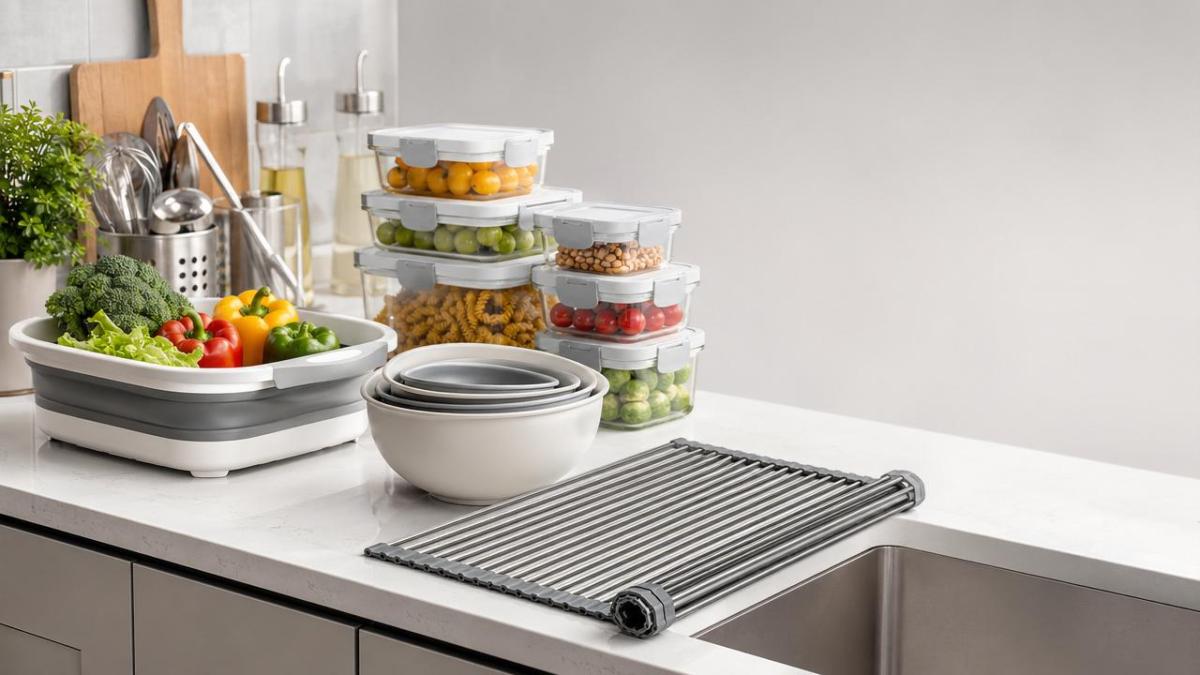
For most home cooks, the biggest concern is simple: will this tool actually save space without slowing down cooking? A small tool that is awkward to open, hard to clean, or frustrating to use often becomes drawer clutter. Real value comes from tools that improve storage and support daily habits at the same time.
That means the best choices usually meet four standards. First, they take up less room than traditional versions. Second, they are easy to grab and use. Third, they clean quickly or go in the dishwasher. Fourth, they replace at least one other item or make organization noticeably better.
When a product checks those boxes, it can make a small kitchen feel more capable. You do not need a full remodel to cook more comfortably. You need better tool selection.
How to tell whether a compact tool will help or hurt your cooking routine
Before buying any new gadget, think about your most common tasks. Do you cook quick breakfasts, weeknight dinners, meal-prep lunches, or occasional baking projects? The answer matters because a tool that works for one kitchen may be useless in another.
A good rule is to buy for frequency, not fantasy. If you chop vegetables every day, a compact cutting board set or over-the-sink prep station may be worth it. If you only spiralize zucchini twice a year, a dedicated spiralizer is probably not the best use of storage space.
Also pay attention to setup time. Some collapsible or multi-part tools look clever online but add friction in real life. If opening, locking, assembling, and cleaning the item takes longer than using a standard version, it may save cabinet room while costing you cooking speed.
Material quality matters too. Silicone, stainless steel, and sturdy BPA-free plastics are common in space-saving kitchen tools, but build quality varies. Hinges, folding joints, and stackable edges should feel secure. If a compact tool feels flimsy, it may not hold up under everyday use.
The most useful categories of space-saving kitchen tools for small kitchens
Not every compact gadget deserves space in your home, but some categories consistently offer real benefits. These are the ones that tend to improve both organization and workflow.
Collapsible prep and storage tools
Collapsible colanders, mixing bowls, salad spinners, and food containers are some of the easiest wins. They expand when needed and flatten when stored, making them ideal for apartments, RV kitchens, dorm-style spaces, and crowded family kitchens.
A collapsible colander is especially useful because standard colanders are bulky and awkward to store. If you regularly rinse produce or drain pasta, a folding version can save significant cabinet room without changing how you cook.
Nesting bowls, measuring cups, and food containers
Nesting designs make a big difference because they reduce wasted vertical and horizontal space. Mixing bowls that stack neatly, measuring cups that snap together, and food storage containers with shared lids can turn a chaotic cabinet into a usable one.
This category works best when pieces are clearly sized and easy to separate. If containers get stuck together or lids are confusing, the convenience disappears. Look for systems built for everyday use rather than decorative sets that only look tidy on a shelf.
Multi-use hand tools
Some of the best space-saving kitchen tools are simple handheld items that replace several others. Examples include a box grater with multiple blade sides, kitchen shears that cut herbs and open packages, a bench scraper that gathers chopped ingredients and helps clean counters, or a measuring spoon set with dual ends for dry and liquid ingredients.
These tools are valuable because they reduce duplication. Instead of owning several single-purpose gadgets, you keep one well-designed item that handles multiple daily tasks quickly.
Over-the-sink and vertical storage helpers
When counter space is the problem, the smartest solution is often to use unused zones. Over-the-sink cutting boards, roll-up drying racks, magnetic knife strips, adhesive utensil hooks, and slim shelf risers can create function without making the kitchen feel crowded.
These are not traditional tools in the strictest sense, but they directly affect how efficiently you cook. A roll-up rack over the sink, for example, can dry produce, hold hot pans briefly, and free up prep space all at once.
Compact appliances that replace several larger ones
For some households, the biggest gains come from choosing fewer, more versatile appliances. A compact food processor, immersion blender, toaster oven with multiple cooking modes, or multi-cooker can replace several bulkier machines if you use those functions often.
However, this category requires honesty. A multi-cooker only saves space if it genuinely replaces other appliances in your routine. If it joins an already crowded counter without changing anything else, it becomes another storage problem.
Best examples of space-saving kitchen tools that do not slow down cooking
If your priority is speed as well as storage, focus on tools that support the natural flow of prep and cleanup. These options tend to deliver the best balance.
1. Collapsible colander
It stores flat, works instantly, and handles frequent tasks like rinsing greens, washing fruit, and draining pasta. There is almost no learning curve, which is why it is one of the safest compact-tool purchases.
2. Nesting mixing bowl set with lids
This combines prep, serving, and leftover storage in one system. It is especially useful for people who meal prep or cook family dinners. Bowls that nest tightly reduce cabinet bulk while lids reduce the need for separate storage containers.
3. Over-the-sink cutting board
This tool expands your workspace without taking permanent counter space. It is ideal in narrow kitchens and can speed up prep by creating a dedicated chopping zone close to the sink for easy cleanup.
4. Stackable, uniform food storage containers
Uniform containers solve a common kitchen problem: wasted space caused by mismatched shapes and missing lids. They make refrigerators and cabinets easier to organize and reduce the time spent searching for usable containers.
5. Roll-up drying rack
Unlike rigid dish racks, this tool can be stored in a drawer when not in use. It also doubles as a produce-rinsing station, cooling surface, or overflow drying area during busy cooking sessions.
6. Magnetic knife strip
It frees up drawer and block space while keeping knives visible and accessible. For cooks who prep often, easier access can actually improve speed. It also helps preserve blade edges compared with crowded drawers.
7. Immersion blender
If you make soups, sauces, smoothies, or dressings, an immersion blender can replace a bulkier countertop blender for many tasks. It stores in a narrow drawer or container and often cleans faster too.
8. Clip-on or fold-flat measuring tools
Measuring cups and spoons are small individually but messy in groups. Nesting, magnetic, or flat-profile designs keep them together and accessible, which reduces drawer clutter without affecting prep speed.
What to avoid: compact tools that often create more frustration than value
Not all small-footprint products are smart buys. Some tools save space on paper but make cooking less efficient in practice. This usually happens when a product is too specialized, too flimsy, or too complicated for regular use.
Be cautious with novelty gadgets designed for one narrow task, especially if a knife, spoon, or standard cutting board already does the job well. Single-purpose avocado slicers, banana cutters, or bulky specialty choppers may look appealing, but they often take up more room than the convenience they provide.
Also be wary of tools that collapse but become unstable under pressure. A folding bowl that tips easily or a compact mandoline that feels unsafe will not help you cook faster. Stability and comfort are essential, particularly for prep tools used with wet hands or sharp blades.
Another red flag is difficult cleaning. If food gets trapped in hinges, grooves, or complicated attachments, the tool may quickly become annoying. In small kitchens, easy maintenance is just as important as small size.
How to build a small-kitchen setup that still feels fast and efficient
The smartest kitchens are not packed with tools. They are arranged around workflow. If you want better results, start by identifying your kitchen’s top friction points. Is your issue limited counter space, overstuffed drawers, cluttered cabinets, or too many appliances?
From there, choose tools that solve those exact problems. If counters are crowded, use vertical and over-the-sink solutions. If cabinets are chaotic, switch to nesting or uniform container systems. If drawers are packed, remove duplicate utensils and replace them with multi-use versions.
It also helps to think in zones. Keep prep tools together, cooking utensils near the stove, and storage items close to the refrigerator. Even the best space-saving kitchen tools work better when they are placed where you naturally need them.
Finally, review what you already own before buying anything new. Sometimes the fastest way to create space is to eliminate low-value items. A kitchen with fewer but better tools usually feels calmer, cleaner, and easier to use.
How consumers should choose quality space-saving kitchen tools
If you are shopping online or comparing products in stores, focus on a few practical criteria rather than marketing claims. First, check dimensions in both use mode and storage mode. Some products are described as compact but still require more room than expected.
Second, read reviews for real-life comments about durability, ease of cleaning, and daily convenience. Look for feedback from people with similar kitchens or cooking habits. A product can have strong ratings overall and still be wrong for your routine.
Third, prioritize ergonomics. Handles should feel comfortable, surfaces should be stable, and mechanisms should open and close smoothly. A tool that saves an inch of space but feels awkward every day is rarely worth it.
Fourth, consider whether the product simplifies or complicates your kitchen system. The best purchases reduce visual clutter, streamline prep, and support habits you already have. They should not require you to reorganize everything around them.
Why the best space-saving kitchen tools are about function, not just storage
Storage efficiency matters, but it is only half the picture. A well-designed kitchen tool should help you move through cooking with less interruption. That means quick access, reliable performance, and easy cleanup are just as important as size.
In many homes, the most successful compact kitchens rely on a combination of three strategies: fewer duplicate tools, more multi-purpose essentials, and better use of vertical or flexible space. When those strategies work together, cooking can actually become faster, not slower.
That is why choosing space-saving kitchen tools is not about chasing trends. It is about selecting items that support real meals, real schedules, and real storage limits. Good tools should disappear into your routine and make the kitchen feel easier to use every day.
Conclusion
The best space-saving kitchen tools do more than fit in a drawer or fold into a cabinet. They help you cook efficiently, stay organized, and reduce clutter without adding extra steps. For most consumers, the smartest choices are collapsible essentials, nesting systems, multi-use hand tools, and compact solutions that improve prep and cleanup flow.
If you want a kitchen that feels bigger and works better, start with your daily habits. Choose tools that solve frequent problems, avoid novelty items that add friction, and focus on products that are easy to store, easy to clean, and genuinely useful. When selected well, space-saving kitchen tools can make even a small kitchen feel practical, efficient, and ready for everyday cooking.
Popular Tags
Kitchen Industry Research Team
Dedicated to analyzing emerging trends and technological shifts in the global hospitality and foodservice infrastructure sector.
Industry Insights
Join 15,000+ industry professionals. Get the latest market trends and tech news delivered weekly.
No spam. Unsubscribe anytime.
Contact With us
Contact:
Anne Yin (Ceramics Dinnerware/Glassware)
Lucky Zhai(Flatware)