
How airtight glass storage containers affect food freshness
For quality control and safety managers, an airtight glass storage container is more than simple packaging—it directly influences food freshness, contamination risk, and shelf-life stability. In modern kitchens and food processing environments, choosing the right storage solution helps protect product quality, support compliance, and reduce waste. Understanding how airtight sealing performs is essential for better food safety decisions.
Why freshness performance must be judged by application scenario
In the kitchen equipment industry, storage is no longer a passive step after production or cooking. It is part of a broader food safety system that connects preparation, transport, service, traceability, and waste control. An airtight glass storage container may perform very well in one environment and deliver only limited value in another, depending on how often it is opened, what type of food is stored, how long the holding period is, and whether the operation prioritizes hygiene, visibility, temperature control, or logistics speed.
For quality control teams, the central question is not simply whether glass is “better” than other materials. The practical question is where airtight sealing creates measurable freshness protection. In some scenarios, the main benefit is reduced oxygen exposure. In others, it is odor isolation, moisture retention, leak prevention, or easier cleaning validation. Safety managers also need to consider breakage risk, seal integrity under repeated use, and whether container design supports standard operating procedures.
This is especially relevant as commercial kitchens, central kitchens, and food processing facilities adopt smarter and more standardized workflows. When storage choices align with the actual use case, an airtight glass storage container can support HACCP-based control points, reduce cross-contact risk, and improve consistency across teams and locations.
Where airtight glass storage containers matter most
The effect of an airtight glass storage container on food freshness is strongest in operations where exposure to air, moisture migration, and handling frequency directly affect quality outcomes. The following comparison helps clarify which scenarios deserve the closest evaluation.
The table shows that freshness is not a single outcome. In some settings, freshness means maintaining crisp texture. In others, it means preventing spoilage odors, preserving sauce viscosity, or ensuring that a retained sample remains representative for testing. This is why procurement teams in the kitchen equipment sector increasingly assess storage containers as functional food safety tools rather than simple accessories.
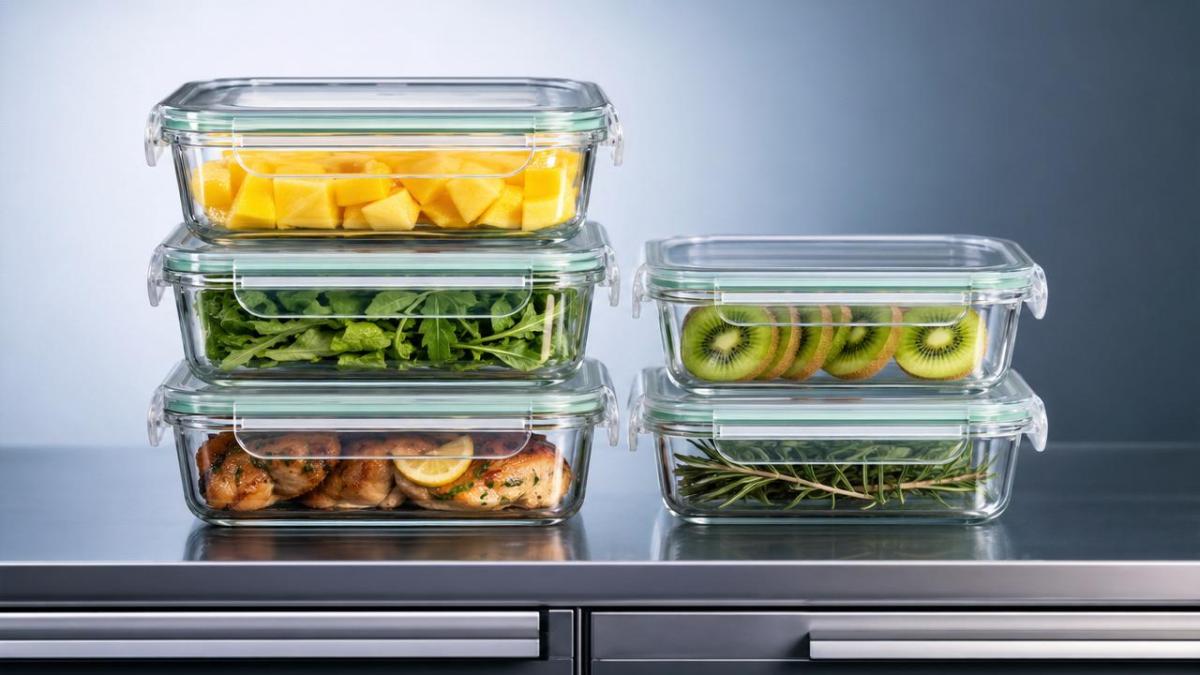
How airtight sealing changes freshness in typical food categories
An airtight glass storage container does not affect every product in the same way. Quality control personnel should match the container to the food’s sensitivity profile.
Prepared produce, herbs, and cut fruit
These products lose quality quickly through moisture loss, oxidation, and absorption of surrounding odors. In restaurant mise en place or hotel cold kitchens, airtight sealing can slow drying and preserve aroma. Glass also allows easy visual checks without opening the container, which can reduce unnecessary exposure. However, excessive internal moisture may accelerate spoilage if condensation is not managed, so containers should only be used with proper draining and temperature control.
Cooked proteins and ready-to-eat meals
For cooked meats, poultry, and assembled meals, the main value of an airtight glass storage container is limiting post-cooking contamination and helping retain moisture during chilled storage. In central kitchen operations, this can improve consistency between production and service locations. Still, airtight storage is not a substitute for rapid cooling or correct cold-chain practice. If food enters the container above safe cooling thresholds, freshness gains may be offset by microbiological risk.
Dry ingredients, spices, and bakery inputs
In bakeries, commissaries, and households, dry goods benefit from protection against humidity and pest exposure. Here, the airtight glass storage container supports freshness by preserving texture, preventing clumping, and maintaining flavor intensity. Glass is particularly useful when aroma purity matters, such as with premium spices, tea blends, coffee beans, or allergen-sensitive ingredient segregation.
Fermented, acidic, or strong-smelling foods
Products such as kimchi, pickles, marinades, and sauces often create problems in shared cold storage because of odor migration and possible reaction with lower-grade materials. A quality airtight glass storage container offers a non-reactive surface and better odor isolation. This is valuable in mixed inventory environments where flavor transfer can compromise nearby ingredients or finished products.
Different stakeholders judge the same container differently
One reason storage decisions become inconsistent is that different departments define “fit” in different ways. A chef may value visibility and portion control. A procurement manager may focus on durability and replacement cost. A safety manager cares about cleaning validation, contamination control, and traceable use.
For cross-functional decisions, the best approach is to evaluate the airtight glass storage container against one or two critical use cases rather than discussing it in abstract terms. This creates clearer purchasing criteria and avoids over-specifying containers for low-risk tasks or under-specifying them for sensitive products.
Scenario-based selection advice for quality and safety teams
If your operation stores high-value, ready-to-eat, odor-sensitive, or sample-retention products, prioritize sealing performance and cleanability over lowest price. In these scenarios, a well-designed airtight glass storage container can support fresher sensory quality and stronger compliance outcomes.
If your operation involves frequent opening during active prep, focus on latch reliability, ergonomic handling, and whether the seal remains effective after repeated washing. Freshness losses in this setting often come less from long storage and more from constant exposure during service.
If your facility moves food between sites, evaluate shock resistance, lid lock security, and stacking behavior. Glass can protect food quality, but only if transport practices prevent impact damage and maintain temperature stability.
If your concern is allergen control or odor segregation, choose container systems with clearly separated sizes, labeling zones, and replaceable seals. In such cases, the airtight glass storage container is most valuable as part of a disciplined storage protocol, not as a stand-alone solution.
Common misjudgments that reduce freshness protection
A common mistake is assuming all airtight products perform equally. In practice, lid design, gasket material, closure strength, and dimensional consistency all affect whether the seal remains reliable over time.
Another misjudgment is treating airtight storage as a replacement for process control. Even the best airtight glass storage container cannot correct poor cooling, overloaded refrigeration, delayed cleaning, or mixed raw and cooked storage. Freshness protection works only when the surrounding system supports it.
Teams also sometimes overlook inspection and maintenance. Seals can absorb residue, deform, or crack. If gaskets are not checked, washed, and replaced on schedule, the claimed airtight benefit may disappear gradually without being noticed until quality complaints increase.
Finally, some operations choose glass for premium appearance but ignore the environment. In high-impact, high-speed, or crowded workflows, alternative storage may be safer for certain steps. The right strategy is often mixed-use: airtight glass storage containers for controlled holding and verification points, and more impact-tolerant solutions for rough handling stages.
FAQ for practical evaluation
Does an airtight glass storage container always extend shelf life?
Not always. It can reduce oxygen exposure, odor transfer, and moisture loss, but the actual shelf-life effect depends on food type, fill temperature, sanitation, and refrigeration discipline.
Is glass better than plastic for food freshness?
For odor-sensitive, acidic, premium, or sample-retention applications, glass often offers advantages in non-reactivity and cleaning confidence. But suitability still depends on breakage risk and handling conditions.
What should safety managers inspect first?
Check lid closure consistency, gasket hygiene, visible damage, cleanability, and whether staff can use the container correctly under actual workflow pressure.
Final decision guide
For quality control and safety professionals, the value of an airtight glass storage container is best measured through scenario fit. It is highly suitable where product freshness depends on limiting air exposure, preserving aroma, preventing cross-contamination, and supporting visible inspection. It requires more careful judgment in rough transport, high-frequency handling, or environments where breakage management is difficult.
Before standardizing any container system, map your main food categories, opening frequency, holding time, transport pattern, and cleaning routine. Then test the airtight glass storage container in one or two priority scenarios with real staff and documented quality checks. That approach will give you stronger evidence for freshness protection, safer operations, and better long-term purchasing decisions.
Popular Tags
Kitchen Industry Research Team
Dedicated to analyzing emerging trends and technological shifts in the global hospitality and foodservice infrastructure sector.
Industry Insights
Join 15,000+ industry professionals. Get the latest market trends and tech news delivered weekly.
No spam. Unsubscribe anytime.
Contact With us
Contact:
Anne Yin (Ceramics Dinnerware/Glassware)
Lucky Zhai(Flatware)