
Restaurant kitchen equipment ideas that save prep space
For project managers and engineering leads, the right restaurant kitchen equipment ideas can do more than improve workflow—they can unlock valuable prep space, support food safety, and simplify installation planning. As commercial kitchens move toward smarter, more efficient layouts, choosing compact, multifunctional, and energy-efficient equipment is becoming essential for delivering high-performance operations in limited space.
What do restaurant kitchen equipment ideas that save prep space really mean?
In practical terms, restaurant kitchen equipment ideas are not just about buying smaller machines. They involve selecting equipment that improves usable work area without reducing output, hygiene, or service speed. For a project manager, this usually means evaluating how each piece of equipment affects circulation, ingredient staging, cleaning access, utility routing, and labor efficiency. A narrow footprint alone is not enough if the unit creates bottlenecks or complicates maintenance.
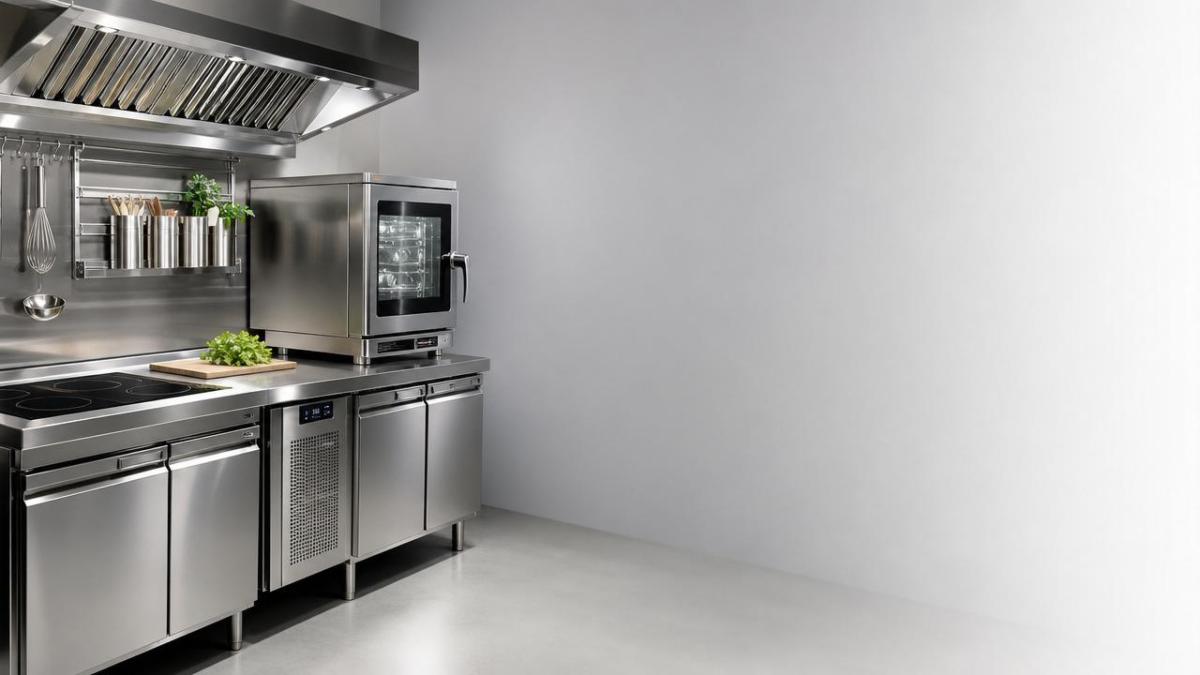
Space-saving solutions often come from combining functions, reducing unnecessary movement, and making better use of vertical and undercounter zones. Examples include refrigerated prep tables that combine cold storage and work surface, combi ovens that replace several separate cooking units, undercounter dishwashers in compact service kitchens, and wall-mounted shelving that frees floor space. In other words, the best restaurant kitchen equipment ideas support both layout efficiency and operational continuity.
This topic gets attention because prep space is expensive. In urban restaurants, hotel outlets, food courts, and central kitchen satellite sites, every square meter matters. When prep zones are too tight, teams face slower assembly, poor separation of raw and cooked items, and a higher risk of cross-contamination. Saving prep space is therefore not only a design concern but also a performance, safety, and cost-control issue.
Which equipment ideas usually create the most prep space in a commercial kitchen?
Among the most effective restaurant kitchen equipment ideas, multifunctional equipment usually delivers the fastest gains. Instead of placing separate units for storage, prep, holding, and cooking, operators can consolidate tasks around fewer, better-designed stations. This is especially valuable in quick-service restaurants, compact hotel kitchens, and high-rent city locations where line length and aisle clearance are tightly controlled.
Key categories to evaluate include:
- Undercounter refrigeration paired with stainless prep tops for ingredient access and workspace in one unit.
- Combi ovens that steam, bake, roast, and regenerate, reducing the need for multiple thermal appliances.
- Drop-in induction units or modular cooklines that fit tighter footprints and generate less ambient heat.
- Vertical storage systems, wall racks, magnetic tool holders, and hanging utensil rails that clear bench surfaces.
- Mobile worktables with lockable casters that can shift between prep, plating, and cleaning support roles.
- Compact food processors, vegetable cutters, and mixer attachments that eliminate bulky standalone equipment.
Another highly useful direction is equipment with integrated smart controls. Digital kitchen systems can reduce the need for duplicate holding or backup stations because temperature monitoring, production timing, and maintenance alerts are more predictable. In projects where labor availability is uncertain, automation-friendly units may protect throughput while still keeping the layout compact.
How should project managers judge whether a space-saving equipment idea is actually suitable?
The right decision depends on more than catalog dimensions. Project managers and engineering leads should review the full operating context: menu complexity, daily covers, prep volume, utility capacity, cleaning procedure, and expansion plans. A small machine that cannot support peak production may force staff to improvise with temporary tables or add duplicate units later, which defeats the original purpose.
A practical evaluation should start with five questions. First, how many tasks can the equipment replace without compromising speed or product quality? Second, does it reduce staff movement between storage, wash, prep, and cook zones? Third, can maintenance teams access service panels without moving surrounding equipment? Fourth, does the unit support food safety zoning? Fifth, will it fit local power, gas, drainage, and ventilation conditions without costly rework?
This is where restaurant kitchen equipment ideas need to be translated into engineering criteria. For example, an undercounter blast chiller may save visible prep area, but if condensate routing is difficult or the compressor discharge overheats adjacent stations, layout efficiency may suffer. Similarly, stacked ovens may appear compact, yet they can create ergonomic issues if loading height is unsafe for staff.
Quick assessment table for decision-making
What are the most common mistakes when choosing restaurant kitchen equipment ideas for small prep areas?
One common mistake is prioritizing equipment count over process flow. Some kitchens attempt to solve prep congestion by adding more specialized units, but this often fragments the workspace. Staff then spend more time walking, turning, and waiting for access. A leaner arrangement with fewer but smarter units usually works better than a crowded room filled with appliances.
Another mistake is ignoring vertical planning. Floor area tends to receive all the attention, yet shelving, overhead racks, salamander placement, and elevated storage can significantly increase prep efficiency. However, vertical use must be balanced with operator safety and cleaning accessibility. Poorly positioned shelving can reduce sightlines or create head-clearance hazards.
A third mistake is treating all restaurants the same. Restaurant kitchen equipment ideas should vary by concept. A bakery, fine dining operation, cloud kitchen, buffet kitchen, and quick-service outlet all use prep space differently. For instance, refrigerated ingredient rails are essential in assembly-heavy formats, while a production kitchen may gain more from high-capacity processing equipment and mobile staging tables.
There is also a recurring procurement error: selecting compact equipment without reviewing serviceability. If technicians need to remove adjacent units for repairs, downtime and labor costs rise. Space-saving equipment must still leave room for ventilation, filter changes, drain cleaning, and part replacement. In many projects, lifecycle convenience matters as much as initial space reduction.
How do compact and multifunctional options compare with traditional layouts?
Traditional layouts often separate prep, cold storage, cooking, and holding into clearly defined blocks with individual equipment for each task. This can work well in large back-of-house areas, especially where teams are specialized and menu volumes are high. The downside is that these layouts consume more floor area and may require longer travel paths between stations.
Compact and multifunctional restaurant kitchen equipment ideas are better suited to projects where space, labor, or energy efficiency is a priority. They reduce travel distance, keep ingredients close to the point of use, and often simplify supervision. In a limited footprint, a prep table with refrigerated drawers and integrated ingredient pans can outperform a separate workbench plus reach-in refrigerator setup.
That said, multifunctional equipment is not always the best answer. If one machine handles too many critical tasks, a breakdown can affect the whole line. Engineering leads should assess redundancy needs, especially in hotel kitchens, institutional dining, or high-volume production. A balanced strategy may involve multifunctional units for daily operations plus selected backup capacity for risk control.
Comparison at a glance
What should be confirmed before procurement, installation, and rollout?
Before approving equipment, teams should confirm a detailed equipment schedule tied to process flow, MEP coordination, and cleaning logic. The most successful restaurant kitchen equipment ideas are supported by early cross-functional review between operations, design, engineering, procurement, and maintenance. This avoids discovering too late that a compact unit has incompatible voltage, insufficient drainage slope, or ventilation conflicts.
At procurement stage, ask for dimensional drawings, utility connection points, clearance requirements, heat rejection data, and recommended service zones. It is also worth requesting case references from similar kitchen types. A unit that performs well in a café may not suit a high-output production line. If the project includes sustainability targets, verify energy consumption, standby efficiency, and material durability, because energy-efficient kitchen solutions increasingly influence long-term operating cost.
During installation planning, sequence matters. Equipment that sits against walls or under counters should be checked against tiling, drain positions, grease management, and final cleaning access. In retrofit projects, the challenge is often not the equipment itself but fitting it into existing columns, old services, and restricted delivery routes. Good planning turns restaurant kitchen equipment ideas into practical, low-risk implementation steps.
Which restaurant types and project scenarios benefit most from these ideas?
The strongest benefits usually appear in high-cost, high-density, or operationally flexible environments. Small restaurants in city centers need every centimeter for production and customer experience. Hotel kitchens benefit when banquet, all-day dining, and room service functions overlap. Central kitchens and satellite outlets gain from modular equipment that standardizes workflow across sites. Emerging market foodservice projects also benefit because scalable, efficient equipment can support growth without excessive floor expansion.
For project managers in mixed-use developments, compact kitchen systems can make leasing and fit-out more feasible for tenants. For engineering leads, standardized space-saving equipment can simplify repeat installations across chains. In both cases, restaurant kitchen equipment ideas become part of a broader strategy that includes automation, digital monitoring, and energy management—not just a one-time purchase decision.
What are the final questions to ask before moving forward?
If you are narrowing down restaurant kitchen equipment ideas, the final step is to ask focused implementation questions rather than general product questions. Confirm what prep tasks consume the most space today, which units can be combined safely, what peak capacity is required, and how future menu changes may affect layout. Review whether the proposed equipment supports food safety separation, labor efficiency, maintenance access, and energy targets at the same time.
It is also wise to discuss lead time, commissioning support, spare parts availability, warranty terms, utility readiness, and any local code implications before signing off. If needed, ask suppliers to map the equipment into your actual prep sequence instead of only presenting isolated specifications. That conversation will reveal whether the solution is truly fit for your project.
If you need to confirm a specific solution, parameters, planning direction, schedule, budget range, or cooperation model, prioritize discussions around kitchen process flow, site constraints, utility conditions, expected output, cleaning standards, and after-sales support. Those points will help transform good restaurant kitchen equipment ideas into a workable, efficient, and scalable commercial kitchen plan.
Popular Tags
Kitchen Industry Research Team
Dedicated to analyzing emerging trends and technological shifts in the global hospitality and foodservice infrastructure sector.
Industry Insights
Join 15,000+ industry professionals. Get the latest market trends and tech news delivered weekly.
No spam. Unsubscribe anytime.
Contact With us
Contact:
Anne Yin (Ceramics Dinnerware/Glassware)
Lucky Zhai(Flatware)