
Kitchen tools for professional chefs that save prep time
In fast-paced commercial kitchens, the right kitchen tools for professional chefs can dramatically cut prep time, improve consistency, and reduce operator fatigue. From precision knives and ergonomic peelers to smart prep equipment and durable utensils, choosing efficient tools is essential for maintaining workflow, food quality, and safety. This guide explores practical solutions that help kitchen staff work faster and more effectively in demanding foodservice environments.
What professional chefs and kitchen operators really need from prep tools
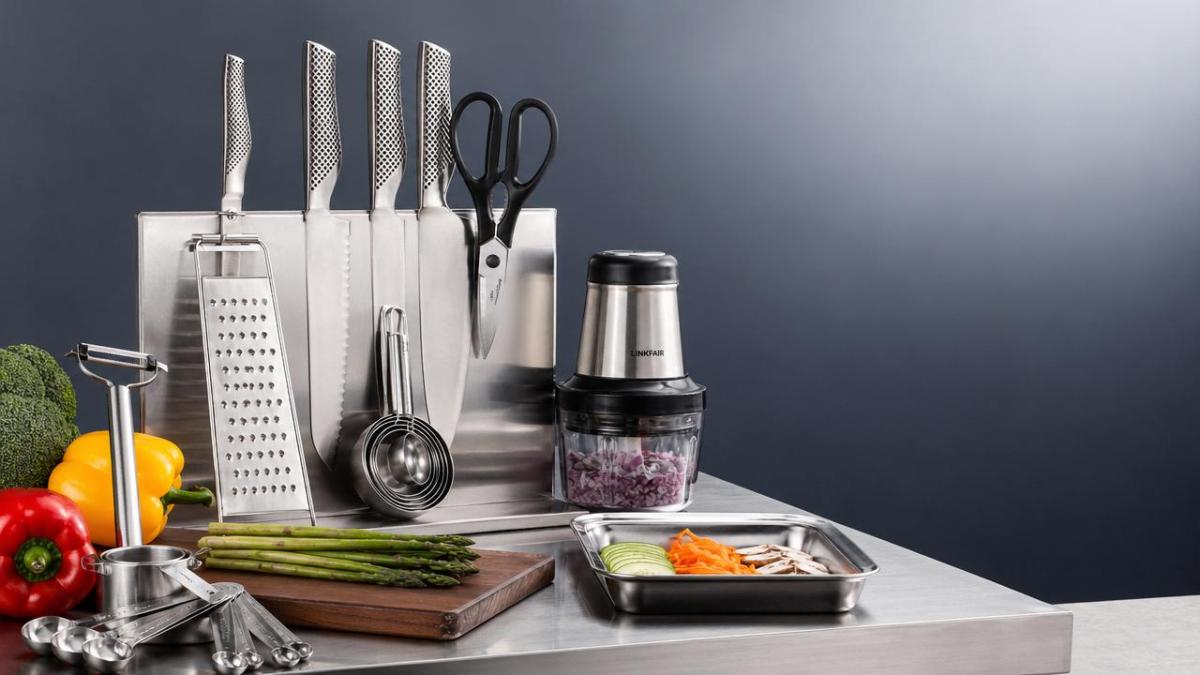
When users search for kitchen tools for professional chefs, they are usually not looking for a generic list of utensils. They want tools that help them prep faster, work more accurately, and hold up under constant commercial use. In a busy restaurant, hotel kitchen, central kitchen, or catering operation, every minute saved during prep directly affects service speed, labor efficiency, and food consistency.
For operators, the best tools are not always the most expensive ones. The real value comes from a combination of speed, comfort, durability, easy cleaning, and suitability for the menu. A chef preparing large volumes of vegetables, proteins, herbs, and garnishes needs equipment that reduces repetitive motion, minimizes waste, and keeps output uniform across shifts.
This means the most useful kitchen tools for professional chefs are the ones that solve daily bottlenecks. If onions take too long to dice, if peeling creates hand strain, if portioning is inconsistent, or if tools dull too quickly, prep time increases and workflow suffers. Good tool selection is therefore an operational decision, not just a purchasing choice.
The biggest prep-time problems in commercial kitchens
Before choosing tools, it helps to identify where time is actually being lost. In many kitchens, delays happen in repetitive cutting, peeling, trimming, scooping, mixing, portioning, and transferring ingredients. These tasks may seem small on their own, but across a full day they can consume hours of labor.
Another common issue is inconsistency between staff members. One cook may cut vegetables quickly while another struggles with a dull knife or awkward peeler. Without standardized tools, results vary in size, appearance, and yield. That inconsistency can also affect cooking time, plate presentation, and food cost.
Operator fatigue is another hidden problem. Tools with poor grip, excess weight, or inefficient blade design make staff work harder than necessary. Over a long shift, fatigue slows prep, reduces attention, and can increase the risk of accidents. For high-output kitchens, ergonomic design matters almost as much as sharpness or speed.
Cleaning and sanitation also influence efficiency. Tools that are difficult to wash, dry, and store create friction between prep tasks. In environments where food safety standards are strict, easy-to-clean materials such as stainless steel and food-grade polymers help maintain hygiene without adding unnecessary downtime.
Essential hand tools that save the most prep time
A chef’s knife remains the most important item in any professional prep station. A high-quality knife with the right balance, blade geometry, and handle grip allows faster cutting with less effort. For most kitchens, an 8-inch or 10-inch chef’s knife covers the majority of vegetable, herb, and protein prep tasks. The key is keeping it sharp and matching blade style to the work.
Paring knives are equally useful for detailed trimming, coring, peeling, and garnish work. In high-volume prep, a sharp and comfortable paring knife improves accuracy and reduces waste. Serrated utility knives are also valuable for tomatoes, citrus, bread, and other delicate products where crushing must be avoided.
Ergonomic peelers are often underestimated. In kitchens handling potatoes, carrots, cucumbers, apples, or root vegetables in bulk, a good peeler can save significant time and reduce hand strain. Y-shaped models are often preferred for speed, while swivel peelers work well for curved produce. The ideal choice depends on staff technique and ingredient type.
Microplanes, graters, and zesters help speed up fine prep such as citrus zest, hard cheese, garlic, ginger, and spice finishing. Instead of using slower knife work for these tasks, the right grating tool improves consistency and reduces prep effort. For frequent use, stainless steel blades and easy-clean designs are best.
Kitchen shears are another practical time-saver. They are efficient for trimming herbs, cutting packaging, portioning poultry parts, and snipping garnishes. In many situations, shears are faster and safer than switching repeatedly between knife and board.
Portion scoops, dishers, and measuring tools also deserve attention. In bakeries, catering kitchens, and high-volume service lines, these tools improve speed and standardization for batters, mashed items, sauces, fillings, and side portions. Uniform sizing reduces food waste and supports predictable cooking and plating results.
Prep equipment that goes beyond hand tools
While hand tools are essential, some of the biggest time savings come from compact prep equipment. Commercial food processors can slice, shred, chop, and puree ingredients much faster than manual labor, especially in kitchens producing soups, sauces, slaws, or bulk vegetable prep. The value is highest when the same preparation is repeated daily in large quantities.
Mandolines are another useful option when uniform slicing matters. For potatoes, cucumbers, onions, and fruit, a professional-grade mandoline can produce consistent cuts far faster than knife work. Safety features are critical, however. Models with stable frames, blade guards, and hand protection are much better suited to professional environments.
Immersion blenders save time in sauce finishing, soup blending, emulsifying, and small-batch mixing. They reduce the need to transfer hot liquids to larger machines and simplify cleanup. In busy kitchens, that combination of speed and flexibility makes them highly practical.
Commercial scales are also part of prep efficiency. Accurate weighing improves batch consistency, portion control, and recipe repeatability. For operators in pastry, commissary, and production kitchens, scales reduce errors that could otherwise waste both ingredients and labor time.
In operations with very high volume, automated or semi-automated prep systems may offer strong returns. Vegetable cutters, meat slicers, portioning systems, and smart kitchen equipment can dramatically increase output while reducing operator fatigue. The right solution depends on menu style, labor costs, and daily prep volume.
How to choose kitchen tools for professional chefs based on actual workflow
The best way to select kitchen tools for professional chefs is to evaluate real prep patterns, not just product features. Start by asking which tasks are repeated most often and which ones create the most delay. If the kitchen spends hours peeling and slicing produce, then investing in better peelers, mandolines, or vegetable prep machines will have more impact than buying specialty tools that are rarely used.
Menu type should guide selection. Fine-dining kitchens may prioritize precision knives, tweezers, and delicate plating tools, while hotel banquet kitchens may need bulk prep equipment, portion scoops, and durable mixing tools. Central kitchens and food processing facilities often benefit most from scalable, easy-sanitize tools that support high throughput.
Material quality matters because commercial use is demanding. Stainless steel remains a preferred material for blades, mixing tools, tongs, and many prep utensils because it resists corrosion, handles repeated washing, and maintains a professional standard of hygiene. Handles should provide secure grip even in wet or greasy conditions.
Ease of maintenance is another major factor. A tool that saves time during prep but consumes too much time in sharpening, disassembly, or cleaning may not be the best operational choice. Busy kitchens usually benefit from simple, durable designs that can be cleaned fast and returned to service quickly.
It is also wise to involve the staff who will actually use the tools. Operators often identify small ergonomic issues that buyers miss. A handle angle, blade width, or tool weight can strongly affect long-shift comfort. Trial use with a few team members can prevent poor purchasing decisions.
Features that make tools faster, safer, and easier to use
Sharpness is the first feature to consider, but it is not the only one. Blade retention is just as important. A knife or peeler that starts sharp but dulls quickly will slow the team down within days. Commercial kitchens need tools that maintain performance under heavy use and can be resharpened efficiently.
Ergonomic handles are essential for high-repetition tasks. Non-slip grip surfaces, balanced weight, and reduced wrist strain all contribute to faster and safer operation. This is particularly important in prep shifts that involve repetitive cutting or peeling for several hours.
Tool geometry also affects efficiency. A wider chef’s knife may improve knuckle clearance and transfer chopped product more easily. A Y-peeler may allow a more natural wrist motion. A scoop with a smooth release mechanism can speed up repeated portioning. Small design details often create major time savings over hundreds of repetitions.
Safety features should never be treated as secondary. Finger guards, stable cutting surfaces, blade covers, and secure locking systems on mechanical prep equipment help reduce accidents. In professional kitchens, even minor injuries can disrupt staffing and service flow, so safer tools are often more efficient in the long run.
Storage compatibility matters too. If tools are difficult to organize, staff lose time searching for them or storing them improperly. Magnetic racks, knife rolls, designated drawers, and wall-mounted systems support faster access and better tool care.
When smart and automated kitchen solutions make sense
The kitchen equipment industry is increasingly moving toward automation, intelligent controls, and integrated workflow systems. For some operators, smart tools and automated prep solutions can produce major labor savings. For others, simpler manual tools still offer the best value. The right decision depends on scale and repetition.
Smart kitchen systems are most useful where the same prep tasks happen every day in predictable volumes. Central kitchens, chains, institutional foodservice, and food processing environments are strong candidates. In these settings, automated cutting, weighing, batching, and monitoring systems can improve consistency while reducing dependence on manual skill for repetitive work.
Digital management can also support prep efficiency indirectly. Equipment usage tracking, maintenance alerts, and production planning tools help reduce downtime and improve scheduling. When connected to broader kitchen operations, these systems support better labor allocation and ingredient control.
However, automation should not be viewed as a replacement for all skilled hand work. In many restaurants, the best approach is a hybrid model: use efficient hand tools for flexible, detail-oriented prep, and use machines for repetitive, high-volume tasks. This combination preserves quality while improving speed.
Common buying mistakes that waste time instead of saving it
One common mistake is buying tools based only on price. Very cheap products may seem cost-effective at first, but they often dull faster, break sooner, and create more strain for staff. Over time, replacement costs and lost labor efficiency can outweigh the initial savings.
Another mistake is purchasing too many specialty tools without solving the main prep bottlenecks. A kitchen may accumulate gadgets that are rarely used while staff still struggle with poor knives, uncomfortable peelers, or inefficient cutting boards. Basic high-use tools should always be prioritized.
Ignoring cleaning requirements is also risky. Complex tools with hard-to-reach parts may slow sanitation and create hygiene issues. In professional environments, ease of cleaning is part of productivity, not a separate concern.
Some operations also underestimate the importance of training. Even the best kitchen tools for professional chefs will not deliver full value if staff do not use them correctly. Proper knife handling, safe mandoline use, basic sharpening habits, and station organization all contribute to prep-time savings.
A practical checklist for selecting time-saving kitchen tools
To make better purchasing decisions, operators can use a simple checklist. First, identify the top three prep tasks consuming the most labor hours. Second, determine whether the problem is speed, consistency, fatigue, safety, or sanitation. Third, compare tool options based on commercial durability, ergonomics, cleaning ease, and expected frequency of use.
Next, estimate the labor impact. If a better tool saves even a few minutes per prep cycle and that cycle happens many times a day, the cumulative benefit may be substantial. This is especially true in high-volume operations where small efficiency gains scale quickly.
Then, test where possible. A short trial often reveals whether a knife feels balanced, a peeler works smoothly, or a prep machine actually matches the kitchen’s pace and output. Finally, standardize successful tools across stations to reduce inconsistency and simplify staff training.
Conclusion: the best prep tools are the ones that improve workflow every day
The most effective kitchen tools for professional chefs are not defined by brand prestige or novelty. They are the tools that make repeated prep tasks faster, safer, cleaner, and less tiring for the people doing the work. In real commercial kitchens, that usually means sharp and durable knives, ergonomic peelers, reliable portioning tools, practical prep equipment, and layouts that support quick access and easy cleaning.
For operators and kitchen staff, the smartest approach is to focus on actual workflow problems. Look for tools that remove daily friction, improve consistency, and stand up to heavy use. When chosen carefully, the right tools do more than save prep time. They support better food quality, smoother service, lower fatigue, and a more productive kitchen overall.
Popular Tags
Kitchen Industry Research Team
Dedicated to analyzing emerging trends and technological shifts in the global hospitality and foodservice infrastructure sector.
Industry Insights
Join 15,000+ industry professionals. Get the latest market trends and tech news delivered weekly.
No spam. Unsubscribe anytime.
Contact With us
Contact:
Anne Yin (Ceramics Dinnerware/Glassware)
Lucky Zhai(Flatware)