
Kitchen design for food processing that cuts cleanup time
Efficient kitchen design for food processing is no longer just about output—it is a strategic factor in reducing cleanup time, improving hygiene control, and keeping projects on schedule. For project managers and engineering leads, the right layout, equipment flow, and sanitation planning can directly affect labor costs, compliance, and operational efficiency. This article explores practical design priorities that help build cleaner, faster, and more productive food processing kitchens.
For most project decision-makers, the core question is not whether cleanup matters, but how much poor design is already costing the operation in labor hours, downtime, water use, sanitation risk, and production interruptions. In food processing environments, every extra movement, every hard-to-reach corner, and every poorly placed drain adds recurring cost long after the project is handed over.
The strongest approach to kitchen design for food processing is to treat cleanability as a core engineering requirement from the start, not as a secondary maintenance issue. When layout, zoning, drainage, equipment selection, and access for washdown are integrated early, cleanup becomes faster, more consistent, and easier to standardize across shifts.
Why cleanup time should be a design priority from day one
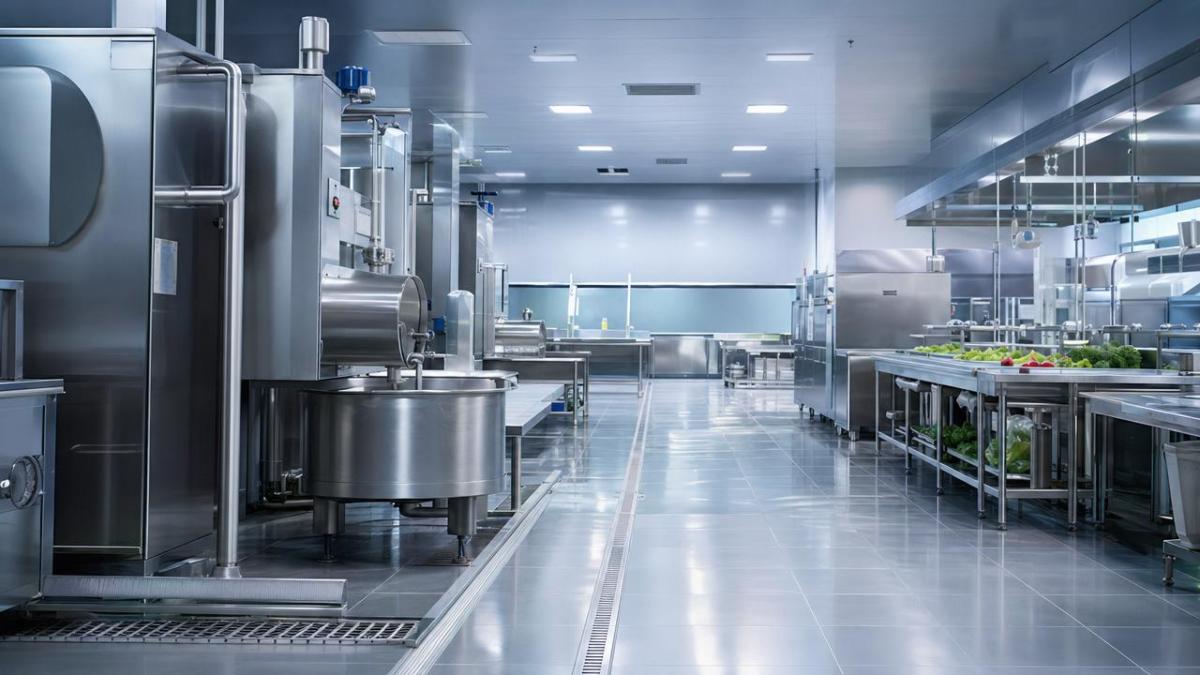
Project managers are often measured on capital cost, completion schedule, and production capacity. Yet in food processing facilities, operational cleaning time can quietly erode all three business goals. A kitchen that takes an extra hour to sanitize every day may lose hundreds of productive hours each year, while also increasing labor demand and utility costs.
That makes kitchen design for food processing a lifecycle investment decision. If cleanup requires partial disassembly, long hose runs, manual scraping, or repeated movement of carts and bins, the facility will continue paying for these inefficiencies for years. A slightly higher upfront design standard often delivers faster payback than adding output equipment alone.
There is also a compliance dimension. Food processing kitchens must support hygienic practices, prevent cross-contamination, and allow reliable verification of cleaning. A design that shortens cleanup time without compromising sanitation helps operations maintain both audit readiness and production discipline. Faster cleaning is only valuable when it also improves consistency and hygiene confidence.
What project managers and engineering leads care about most
For this audience, the key concern is practical decision-making. They need to know which design choices meaningfully reduce cleaning time, which investments are worth the budget, and where avoidable design mistakes create long-term operational pain. They are less interested in abstract design trends and more focused on measurable impact.
Typically, their priority list includes six questions. First, will the layout reduce labor and downtime? Second, will it support food safety and inspections? Third, can operators clean efficiently without excessive training or workarounds? Fourth, does the design suit the product type and cleaning method? Fifth, are the utilities and drainage sufficient for washdown? Sixth, will maintenance access create hidden hygiene problems?
These concerns mean a successful article on kitchen design for food processing should emphasize operational flow, sanitation engineering, risk reduction, and return on investment. Generic discussion about aesthetics, broad commercial kitchen trends, or residential design principles adds little value for this reader group and should remain secondary.
Start with process flow, because poor flow creates dirty bottlenecks
The fastest way to cut cleanup time is often to reduce the amount of mess created by poor movement patterns. In food processing kitchens, product flow, staff flow, raw material receiving, waste handling, and clean equipment return should be planned as connected systems. When these paths cross unnecessarily, spills, traffic congestion, and contamination risks rise together.
A good layout separates raw and cooked zones, allergen-sensitive operations, packaging areas, waste staging, and wash areas with clear directional logic. This reduces accidental backtracking and keeps residues contained within predictable zones. It also allows cleaning teams to work in a sequence rather than reacting to contamination spread across the facility.
Project teams should evaluate where ingredients enter, where trimming or prep waste is generated, where intermediate storage sits, and where operators need handwashing, utensil exchange, or bin disposal. If these touchpoints are too far apart or poorly aligned, cleanup becomes slower because dirt travels farther and sanitation crews must clean a larger effective footprint.
In many retrofit projects, the biggest gains do not come from new machines but from reducing crossover between production and sanitation traffic. Even small changes in aisle width, transfer points, or workcell orientation can remove recurring cleanup friction. The goal is not only efficient production flow, but controlled contamination flow.
Choose hygienic equipment layouts that are easy to clean in place and around
Equipment can be technically high-performing and still create major sanitation inefficiency. For food processing kitchens, project leaders should assess not only what the machine does, but how it is cleaned, accessed, drained, and inspected. If the area around and under the equipment cannot be cleaned quickly, labor costs rise and hygiene risks remain hidden.
One of the most common mistakes is placing equipment too close together or too close to walls without considering washdown access. This creates dead spaces where product debris accumulates and where cleaning tools cannot reach effectively. A compact layout may look efficient on paper but become expensive during operation.
Whenever possible, specify equipment with hygienic frames, minimal horizontal ledges, sealed hollow sections, smooth welds, and fewer fasteners in food-contact and splash zones. Open-frame supports and raised equipment clearance can make daily floor cleaning significantly faster. Wall-mounted or curb-mounted utilities can also reduce obstruction around the base of machines.
Cleaning method matters as well. Wet washdown, foam cleaning, dry cleaning, and clean-in-place systems require different spatial and material decisions. If the process includes heavy protein, starch, oils, or sticky residues, designs should anticipate more aggressive cleaning needs. Selecting equipment without matching it to the actual residue profile is a frequent source of operational disappointment.
Design drainage and floors for sanitation speed, not just basic code compliance
Drainage is one of the most underestimated factors in cleanup performance. Many facilities technically meet drainage requirements but still suffer from standing water, splashback, slow runoff, and hard-to-clean trench details. In practice, poor drainage extends cleaning time, increases slip risk, and creates persistent microbial concern.
Floor slope should support the actual direction of washdown and the position of drains, not just general assumptions in the drawing phase. If water pools around equipment legs, transitions, or corners, sanitation crews must spend extra time pushing water manually. That adds labor and often leaves moisture behind, delaying restart.
Drain placement should match the zones where residue and water are generated most heavily. Trench drains may be effective in some high-volume wash areas, while point drains may suit smaller controlled zones. What matters is that cleaning water, solids, and residues move predictably to collection points without spreading contamination into adjacent work areas.
Floor finishes also play a major role. Surfaces should resist chemicals, thermal shock, and repeated cleaning without cracking or becoming rough in ways that trap residue. Cove bases, sealed transitions, and well-executed floor-to-wall junctions make a major difference over time. A floor that is easy to hose down but difficult to sanitize thoroughly is not truly efficient.
Separate sanitation zones to control contamination and reduce total cleaning burden
Not every square meter of a food processing kitchen should be cleaned to the same standard in the same way. Smart zoning reduces both over-cleaning and under-cleaning. By dividing areas according to contamination risk, process type, and product sensitivity, project teams can create targeted sanitation protocols that save time while improving control.
Typical zones may include raw ingredient handling, intermediate processing, high-care finished product areas, equipment wash stations, waste holding, and staff support areas. Each zone should have clear boundaries, suitable materials, and dedicated tools where needed. This limits the spread of residues and allows crews to clean according to risk rather than using one inefficient method everywhere.
Physical separation can include walls, partitions, air control, door discipline, floor markings, or dedicated transfer points. Operational separation may include color-coded utensils, dedicated carts, and different cleaning schedules. From a project perspective, these zoning decisions should be built into the design package, not left entirely to later operating procedures.
Better zoning also improves shutdown planning. Teams can clean one section while another remains operational or in protected standby, reducing whole-line downtime. For facilities under pressure to maximize throughput, this can be as valuable as shortening individual cleaning tasks.
Reduce manual handling of waste, bins, and tools
Cleanup time expands quickly when sanitation staff need to move waste containers through production paths, carry hoses long distances, or search for tools stored in inconsistent locations. A kitchen design for food processing should minimize unnecessary manual handling because every extra movement multiplies across shifts and staffing levels.
Waste should leave the process area through a route that does not cross clean equipment return or finished product movement. Collection points need to be close enough to workstations to prevent overflow and floor spillage, but positioned so they do not interfere with cleaning access. In wet environments, enclosed or well-contained waste systems can also reduce odor and splash problems.
Tool storage matters more than many project plans recognize. Dedicated sanitation stations with hose reels, chemical dosing equipment, squeegees, brushes, and PPE storage can reduce setup time before cleaning even begins. Standardized placement also helps with training and audit control.
If teams must improvise where to store mobile racks, disassembled parts, or temporary waste tubs, the design is incomplete. Cleanup efficiency depends on what happens before washing starts and after washing ends. The space needs to support the full sanitation workflow, not just the production workflow.
Plan utilities around cleaning reality: water, pressure, chemicals, air, and power
Many projects focus utility planning on production loads and treat sanitation needs as a secondary layer. This usually leads to temporary fixes such as extra hoses, portable pumps, extension lines, or inconsistent chemical application. In turn, cleanup becomes slower, less repeatable, and harder to validate.
Water access points should be placed where crews actually need them, with sufficient pressure and volume for the chosen cleaning method. Too few stations create waiting and long hose runs. Too many poorly positioned stations create clutter and maintenance burden. The right balance depends on process density, cleaning frequency, and zone separation.
Chemical systems should support accurate dosing and safe use. If staff manually mix sanitation chemicals because the design did not include suitable dispensers or supply points, both safety and cleaning consistency suffer. Similarly, compressed air and electrical access for specific tools should be provided intentionally rather than added later in ad hoc ways.
Utility planning should also account for drainage load during peak sanitation windows. If several washdown points operate at once, can the system handle the volume without backup or slow removal? This is a basic question, but one that often surfaces only after commissioning problems appear.
Design for inspection, maintenance, and cleaning verification
A facility may appear cleanable during design review but become difficult to manage once real maintenance activity begins. Guards, panels, motors, conveyors, and service lines all affect whether sanitation teams can inspect and clean effectively. Hidden voids and hard-to-open access points often become chronic hygiene trouble spots.
Project managers should require design reviews that consider what operators and sanitation teams will physically see and reach during daily and weekly cleaning. Can covers be removed without tools? Can residue-prone areas be visually inspected? Are maintenance interventions likely to create debris traps or alignment issues after reassembly?
Verification is equally important. If the kitchen supports ATP testing, visual inspection, swabbing, and routine audits without disrupting production excessively, managers gain confidence that faster cleaning is still effective cleaning. A design that reduces cleanup time but makes verification harder may create false efficiency.
In regulated or brand-sensitive operations, traceable cleaning performance matters. The more the design supports standard procedures, clear access, and consistent sanitation outcomes, the easier it becomes to train teams, document compliance, and avoid recurring corrective actions.
How to evaluate ROI in kitchen design for food processing
For capital decision-makers, the value case should be quantified. The most direct savings usually come from reduced sanitation labor hours, shorter downtime between batches, lower water and chemical use, fewer product contamination events, and less rework caused by cleaning inconsistency. These savings are often large enough to justify better design features early.
A simple evaluation model can compare baseline cleaning time per shift, number of shifts per year, labor cost per hour, utility cost, and production value of recovered operating time. Add to that the cost of audit failures, drain repairs, floor deterioration, and equipment modifications caused by poor initial design. The financial picture becomes clearer very quickly.
It is also useful to estimate risk-adjusted value. Some design improvements may not generate dramatic daily labor savings, but they reduce the likelihood of severe hygiene incidents, unplanned shutdowns, or product holds. For food processing environments, preventing one major contamination event can outweigh many small capital upgrades.
In other words, the best kitchen design for food processing does not simply lower cleaning cost. It stabilizes operations, protects throughput, and reduces uncertainty. That is often the outcome senior stakeholders care about most.
Common design mistakes that increase cleanup time for years
Several errors appear repeatedly across food processing projects. The first is prioritizing equipment density over access. The second is underestimating drainage complexity. The third is failing to separate dirty and clean flows. The fourth is choosing materials that cannot withstand the real cleaning regime. The fifth is leaving sanitation workflow to operators after handover.
Another common issue is using generic commercial kitchen assumptions in a food processing context. Restaurants and food factories may share some equipment categories, but cleanup demands, contamination risks, and audit requirements can differ significantly. Project teams should avoid applying broad kitchen templates where process-specific hygiene engineering is needed.
Late-stage changes also create problems. When production equipment is selected before sanitation access is resolved, teams often discover conflicts after installation. Retrofitting drains, moving utilities, or creating access clearances later is expensive and disruptive. Early multidisciplinary review is almost always cheaper than post-installation correction.
Finally, many projects overlook operator behavior. If the design depends on perfect staff discipline to remain cleanable, it is not robust enough. Good design reduces reliance on workarounds and makes the correct cleaning method the easiest method to follow.
What a strong project brief should include
If you are leading a new build or renovation, the design brief should include sanitation performance targets alongside production goals. Define expected cleaning methods, maximum acceptable cleanup time, zoning logic, water use assumptions, drainage requirements, and inspection access standards. This creates alignment before equipment and layout decisions are locked in.
The brief should also identify product-specific residue challenges, allergen handling requirements, changeover frequency, and any special hygiene protocols for high-care areas. These factors strongly influence whether dry cleaning, wet cleaning, foam systems, or partial clean-in-place strategies are appropriate.
Bring sanitation supervisors, maintenance staff, process engineers, and quality teams into design review early. They often identify practical access and cleaning problems that are not obvious in conceptual layouts. For project managers, this cross-functional input can prevent expensive blind spots and improve commissioning outcomes.
Most importantly, ask every supplier and designer the same question: how does this choice reduce cleaning time without weakening hygiene control? That question keeps the project anchored to operational value rather than isolated technical features.
Conclusion
Effective kitchen design for food processing is one of the clearest ways to cut cleanup time while improving hygiene, compliance, and operational reliability. For project managers and engineering leads, the main takeaway is simple: sanitation efficiency should be designed in from the beginning, not patched in after installation.
The highest-value priorities are usually process flow, hygienic equipment spacing, drainage performance, sanitation zoning, utility planning, and access for inspection and maintenance. When these elements are treated as business-critical design decisions, facilities gain more than a cleaner kitchen. They gain faster turnaround, lower labor burden, better audit readiness, and fewer long-term operational surprises.
If a design choice looks efficient in production but creates friction in cleaning, it is not truly efficient. The most successful food processing kitchens are the ones that make safe, repeatable cleanup easier every single day.
Popular Tags
Kitchen Industry Research Team
Dedicated to analyzing emerging trends and technological shifts in the global hospitality and foodservice infrastructure sector.
Industry Insights
Join 15,000+ industry professionals. Get the latest market trends and tech news delivered weekly.
No spam. Unsubscribe anytime.
Contact With us
Contact:
Anne Yin (Ceramics Dinnerware/Glassware)
Lucky Zhai(Flatware)