
How to Avoid Leakage Issues in a Glass Sugar Jar?
A leaking glass sugar jar can affect freshness, hygiene, and daily convenience in both home and commercial kitchens. Whether you also use a glass flour container, glass cookie jar, or glass nut jar, understanding the causes of poor sealing is essential for better storage performance. In most cases, leakage happens because of a poor lid fit, worn sealing materials, moisture buildup, or using the wrong jar design for the ingredient. The good news is that these issues are usually preventable with better container selection, regular inspection, and correct daily use.
For home users, this means keeping sugar dry, clean, and easy to scoop. For restaurants, food processors, and purchasing teams, it also means reducing waste, improving hygiene control, and choosing storage containers that perform reliably over time. This guide focuses on the practical factors that matter most when trying to avoid leakage issues in a glass sugar jar.
Why does a glass sugar jar leak in the first place?
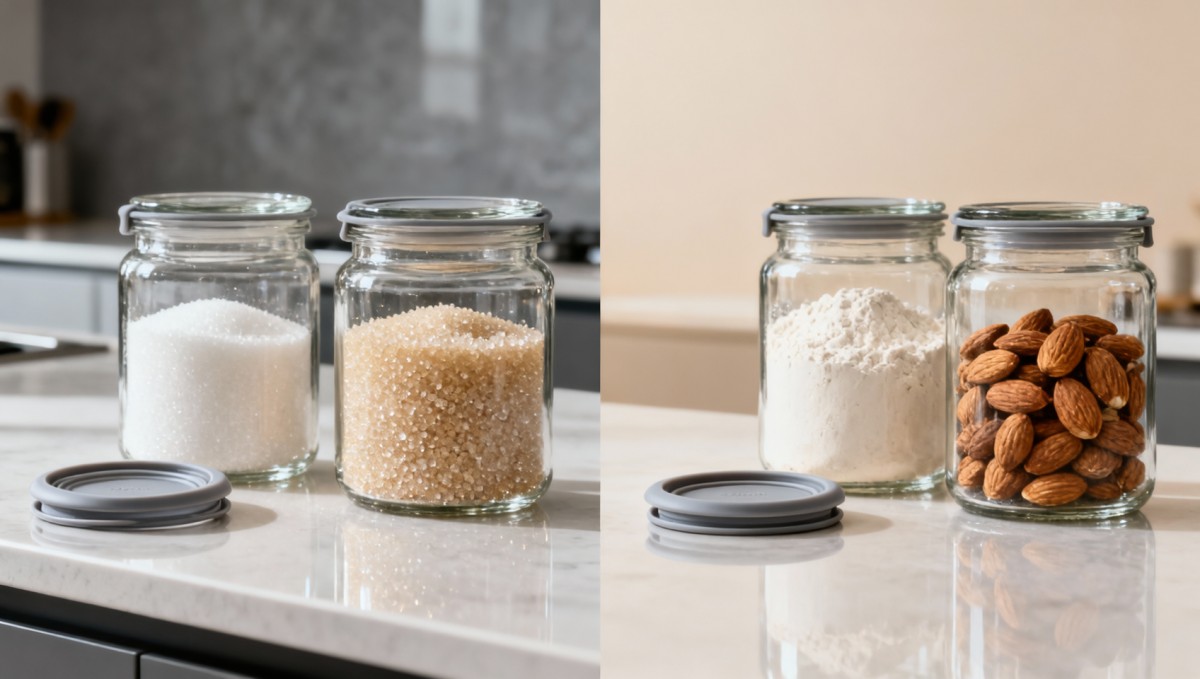
When people notice “leakage” in a glass sugar jar, the problem is not always liquid leaking out. In kitchen storage, leakage often means fine sugar granules escaping through lid gaps, outside air entering the container, or moisture getting in and affecting the contents. Any of these issues can reduce freshness and create cleaning or hygiene problems.
The most common causes include:
- Poor lid-to-jar fit: If the lid does not align tightly with the jar opening, sugar can spill and air can enter.
- Damaged or low-quality sealing ring: Silicone or rubber gaskets can crack, flatten, or loosen over time.
- Thread or clamp defects: Screw-top and clip-top jars depend on precise closure structure. Manufacturing inconsistency can weaken the seal.
- Warped lid materials: Some lids deform due to heat, humidity, or repeated washing.
- Improper use: Overfilling the jar, closing it with sugar grains on the rim, or forcing the lid can all cause sealing failure.
- Using the wrong jar for the ingredient: A decorative container may look attractive but may not provide the airtight performance needed for sugar storage.
If you also store flour, nuts, snacks, or cookies, the same principle applies. A glass flour container may need stronger moisture resistance, while a glass cookie jar may prioritize easy access over a fully airtight seal. Understanding the actual storage need is the first step to preventing leakage.
What features should you look for in a non-leaking glass sugar jar?
If your goal is to avoid leakage issues, the jar design matters more than appearance alone. Buyers and users should focus on sealing performance, structural quality, and practical handling.
Key features to evaluate include:
- Airtight sealing system: Look for food-grade silicone or rubber gaskets that create even pressure around the opening.
- Well-matched lid structure: Screw lids, clamp lids, and push lids each perform differently. The best option depends on frequency of use and sealing requirements.
- Thick, durable glass body: A stable jar opening helps maintain lid alignment and reduces the risk of deformation or chipping.
- Smooth rim and sealing surface: Irregular surfaces can create tiny gaps that allow air or granules to pass.
- Easy-to-clean construction: If sugar residue builds up around grooves or seals, closure performance can decline.
- Appropriate capacity: A jar that is too full is harder to close properly. A jar that is too large may allow excess air exposure.
For purchasing teams or commercial buyers, it is also useful to ask suppliers about seal material standards, lid life cycle, testing methods, and consistency across production batches. A jar that performs well in one sample but poorly in volume orders can create ongoing operational issues.
How can daily use and cleaning prevent sealing problems?
Even a high-quality glass sugar jar can develop leakage issues if it is used incorrectly. For operators and household users, routine handling often makes the biggest difference.
Best practices include:
- Clean the rim before closing: Sugar crystals on the jar mouth can prevent the lid from sealing evenly.
- Keep the gasket dry and intact: Moisture can reduce sealing performance and may lead to clumping inside the jar.
- Avoid overfilling: Leave enough headspace so the lid can close without pressure from the contents.
- Do not expose the lid to unnecessary heat: Some lid materials may warp after dishwashing or heat exposure.
- Inspect seals regularly: Replace worn gaskets before they fail completely.
- Use dry utensils only: Wet spoons introduce moisture that can damage sugar quality and affect the closure area.
In commercial kitchens, these checks can be added to standard cleaning and storage procedures. Small preventive actions help avoid repeated sugar waste, sticky storage surfaces, and cross-contamination concerns.
How do different lid types compare for sugar storage?
Not all lid systems offer the same protection. Choosing the right type can significantly reduce leakage issues in a glass sugar jar.
- Screw-top lids: Good for consistent closure when manufacturing precision is high. They are common and convenient, but poor threading can lead to uneven sealing.
- Clamp lids: Often provide strong airtight performance when paired with a quality gasket. They are a good option for long-term dry storage.
- Bamboo or wooden lids with silicone rings: Popular in modern kitchen design. They can work well, but sealing quality depends heavily on ring fit and lid flatness.
- Push-on lids: Suitable for quick access, but often less secure for very fine dry ingredients if the fit is loose.
For sugar, flour, and other fine dry ingredients, airtight clamp lids or well-made screw-top lids are usually the most reliable choices. If the jar will be opened frequently in a fast-paced environment, ease of operation should be balanced with sealing strength.
What should buyers and decision-makers consider before purchasing in bulk?
For businesses, avoiding leakage is not just a product issue. It is also a cost, workflow, and quality-control issue. A poorly sealed glass sugar jar may lead to ingredient waste, more cleaning labor, reduced shelf performance, and a weaker impression of storage professionalism.
Before making a purchase decision, consider the following:
- Seal consistency: Request product samples and test multiple units, not just one.
- Material safety: Confirm food-contact compliance for glass, gasket, and lid materials.
- Durability under real use: Evaluate performance after repeated opening, washing, and refilling.
- Storage environment: High-humidity kitchens may require stronger moisture protection.
- Application match: The right container for sugar may differ from the ideal glass cookie jar or glass nut jar.
- Supplier reliability: Stable quality control and clear replacement policies reduce procurement risk.
Decision-makers should also look beyond unit price. A slightly higher-quality jar may provide better value through lower breakage, fewer complaints, and longer sealing performance.
What are the warning signs that a jar should be replaced?
Sometimes maintenance is not enough. If a jar continues to leak despite proper use, replacement may be the better option.
Common warning signs include:
- Visible cracks or chips around the rim
- Loose or flattened gasket
- Lid no longer closes evenly
- Persistent sugar residue outside the container after closure
- Moisture appearing inside despite dry storage conditions
- Difficulty opening and closing due to thread damage or misalignment
Replacing a faulty jar early is often more cost-effective than continuing to use a container that compromises food quality and cleanliness.
Conclusion
To avoid leakage issues in a glass sugar jar, focus on the factors that directly affect sealing performance: lid fit, gasket quality, jar design, cleaning habits, and proper use. For most users, the best solution is not complicated. Choose a jar designed for airtight dry storage, keep the sealing area clean and dry, and inspect wear parts regularly.
For households, this helps preserve freshness and reduce mess. For commercial kitchens and procurement teams, it supports better hygiene, lower waste, and more dependable daily operations. Whether you are selecting a glass sugar jar, a glass flour container, a glass cookie jar, or a glass nut jar, the best storage choice is one that combines practical sealing performance with long-term usability.
Popular Tags
Kitchen Industry Research Team
Dedicated to analyzing emerging trends and technological shifts in the global hospitality and foodservice infrastructure sector.
Industry Insights
Join 15,000+ industry professionals. Get the latest market trends and tech news delivered weekly.
No spam. Unsubscribe anytime.

Contact With us
Contact:
Anne Yin (Ceramics Dinnerware/Glassware)
Lucky Zhai(Flatware)