
Hotel Kitchen Equipment Upgrades That Cut Labor Costs
Upgrading hotel kitchen equipment is one of the most practical ways to lower labor costs without sacrificing service quality. For hotels dealing with staffing shortages, rising wages, and pressure to maintain food consistency, the right equipment upgrade can reduce prep time, shorten ticket times, improve safety, and cut rework. The biggest gains usually come from replacing labor-heavy processes, improving kitchen flow, and choosing equipment that is easier to clean, maintain, and operate across multiple shifts.
For operators, purchasers, and decision-makers, the key question is not simply which machines are newest. It is which upgrades actually remove repetitive work, reduce dependence on highly skilled labor, and produce measurable returns. In many hotel kitchens, the best results come from targeted investments in industrial food equipment, dishwashing systems, holding equipment, combi ovens, prep automation, grease trap equipment, and a better commercial kitchen layout.
What hotel buyers really want to know before upgrading kitchen equipment
Most readers searching for hotel kitchen equipment upgrades are not looking for general trends. They want to know which investments can realistically cut labor hours, where savings usually come from, how to evaluate payback, and how to avoid buying equipment that adds complexity instead of reducing work.
For hotel kitchens, labor cost reduction typically comes from five areas:
- Reducing manual prep and repetitive tasks
- Speeding up cooking, holding, and service workflows
- Lowering cleaning and sanitation time
- Reducing training dependence through simpler operation
- Preventing downtime, food waste, and service errors
This is why equipment decisions should be tied to workflow bottlenecks instead of made item by item. A hotel may spend heavily on a single appliance but see limited savings if prep stations, warewashing, or kitchen circulation still slow the team down.
Which equipment upgrades usually deliver the fastest labor savings
Not every upgrade has the same impact. In most hotel kitchens, the strongest labor-saving opportunities come from equipment that replaces high-frequency manual work or supports consistent output with fewer touches.
1. Combi ovens and programmable cooking equipment
Combi ovens are often among the most valuable upgrades for hotels because they combine steaming, roasting, baking, and regeneration in one unit. Programmable settings reduce the need for constant supervision and help less experienced staff produce consistent results.
- Fewer separate cooking stations to manage
- Reduced monitoring time
- Improved batch consistency for banquets and breakfast service
- Lower rework from overcooking or uneven output
2. Food prep automation and industrial food equipment
Vegetable cutters, portioning systems, mixers, slicers, and food processors can significantly reduce prep labor. In hotels with large breakfast, banquet, or room service volume, prep automation can save hours daily while improving portion consistency.
- Less knife work and repetitive manual prep
- Faster turnaround for high-volume service
- More predictable production planning
- Reduced dependence on highly skilled prep staff
3. High-efficiency warewashing systems
Dishwashing and warewashing often consume more labor than managers expect. Conveyor dishwashers, hood-type dishwashers, and systems with better drying and sorting support can reduce staffing pressure, especially during peak banquet and dining periods.
- Shorter cleaning cycles
- Less manual rewash
- Better throughput during service peaks
- Cleaner workflow between kitchen and service teams
4. Hot holding, blast chilling, and regeneration equipment
Hotels that manage buffets, events, and multi-outlet food service benefit from holding and regeneration systems that protect quality while reducing last-minute cooking pressure. Blast chillers also support batch production and safer food handling.
- More efficient production scheduling
- Less rush labor before service
- Stronger food safety control
- Reduced waste from overproduction
5. Self-cleaning and easy-clean equipment
Cleaning time is a hidden labor cost. Equipment with automated cleaning programs, removable parts, smoother surfaces, and easier access can save meaningful labor every day. This is especially important in hotels with long operating hours and multiple shifts.
Why commercial kitchen layout matters as much as the equipment itself
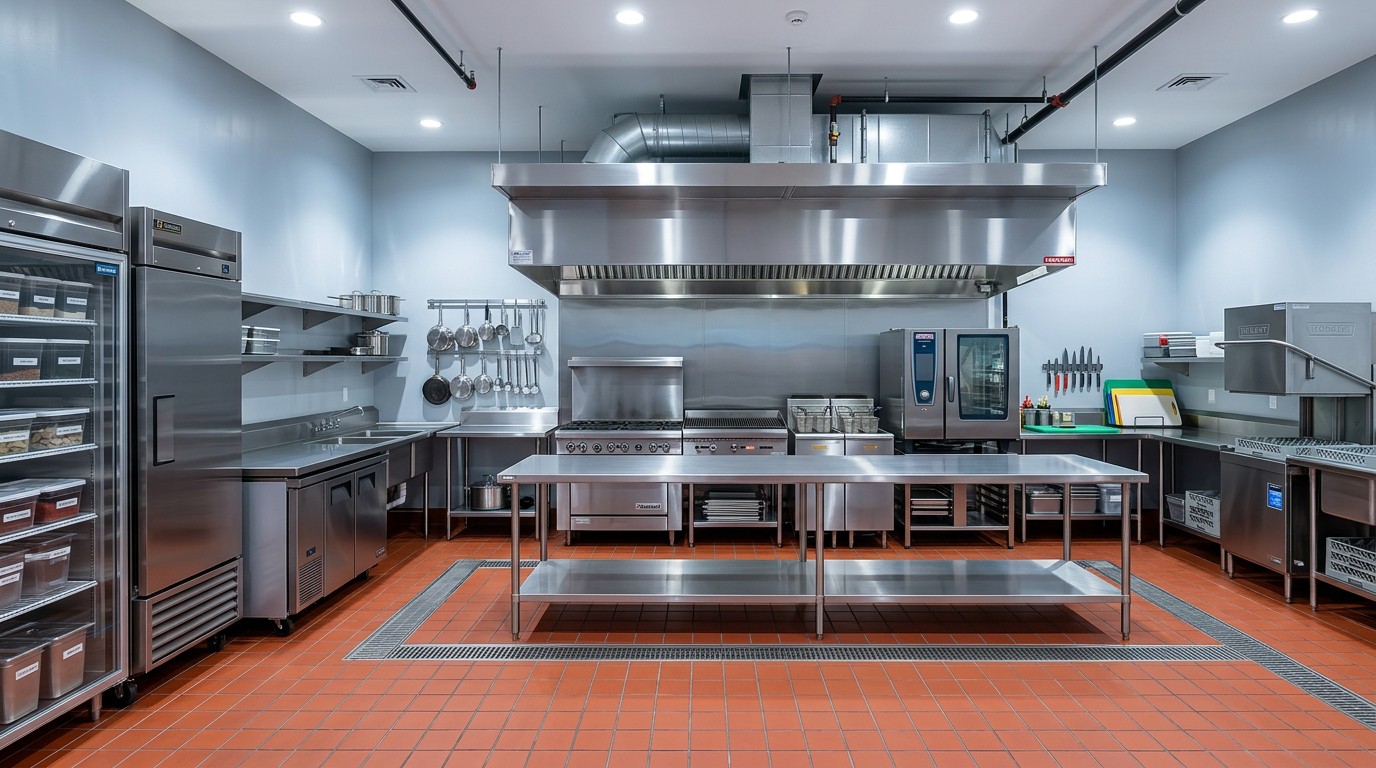
Many hotels focus on appliance upgrades but overlook one of the biggest labor drivers: kitchen movement. A poor commercial kitchen layout creates unnecessary walking, waiting, handoffs, and congestion. Even high-end equipment underperforms when the kitchen flow is inefficient.
Layout planning should examine:
- Distance between prep, cooking, plating, and warewashing
- Traffic conflicts between clean and dirty zones
- Placement of refrigerated storage near points of use
- Access to banquet production areas and service elevators
- Workflow during breakfast, lunch, dinner, and event peaks
For many hotels, labor savings come from combining equipment upgrades with layout improvements such as consolidated prep lines, better pass design, dedicated banquet production zones, and improved storage access. This is often more effective than simply adding more machines.
How grease trap equipment and sanitation systems affect labor costs
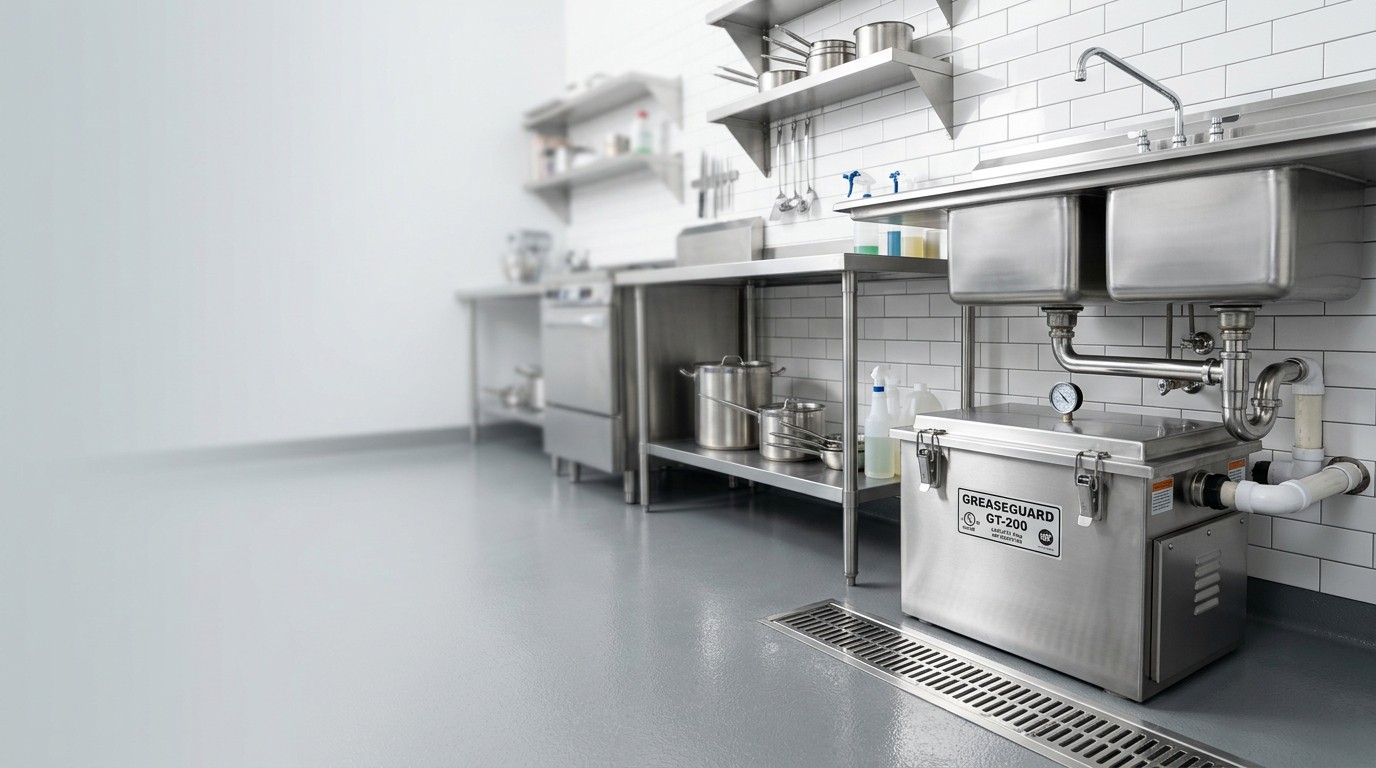
Grease trap equipment may not be the first category buyers think about, but it has a direct effect on labor, maintenance, and compliance. Poor grease management leads to slow drainage, extra cleaning time, emergency service calls, unpleasant working conditions, and greater risk of disruption.
Modern grease management solutions can help hotels by:
- Reducing manual grease handling and cleaning frequency
- Improving drainage performance in busy production areas
- Lowering the risk of plumbing blockages and downtime
- Supporting food safety and hygiene standards
Similarly, better ventilation, drainage, waste handling, and sanitation equipment reduce non-productive labor. These systems may not seem as visible as cooking equipment, but they often improve total back-of-house efficiency and reduce operational headaches.
How to calculate whether an equipment upgrade will really pay off
For procurement teams and business decision-makers, the real question is return on investment. A smart purchase is not necessarily the cheapest unit. It is the option that lowers labor dependency, supports output, and keeps total cost of ownership under control.
Start with a simple evaluation model:
- Current labor hours: How many hours are currently spent on the task?
- Labor reduction potential: How many hours can the new equipment save per day or week?
- Wage cost: What is the loaded labor cost, including overtime and turnover impact?
- Throughput gain: Can the kitchen handle more covers, events, or orders with the same team?
- Waste reduction: Will consistency improve and food loss decline?
- Downtime risk: What are the maintenance requirements and repair response times?
- Training time: Is the equipment intuitive for multi-shift use?
A common mistake is evaluating equipment only on purchase price. In hotel operations, a machine that saves one to three labor hours per day can justify a higher upfront cost if it remains reliable and easy to use. That is why many buyers compare not just equipment specifications, but also kitchen equipment repair support, parts availability, and service network strength.
What to ask commercial kitchen equipment manufacturers and suppliers
Choosing among commercial kitchen equipment manufacturers and catering equipment suppliers requires more than comparing catalogs. Hotels need partners that understand operational reality, peak service demands, and maintenance requirements.
Key questions to ask include:
- What labor-saving use cases has this equipment delivered in hotels specifically?
- What is the expected daily throughput in real operating conditions?
- How much operator training is required?
- How long do cleaning and changeover take?
- What preventive maintenance is needed?
- How quickly can parts and repair support be provided?
- Can the equipment integrate with the existing kitchen line and utilities?
- What is the realistic payback period based on similar installations?
The best suppliers do not just sell equipment. They help evaluate workflow, recommend appropriate sizing, identify installation constraints, and provide after-sales support. For hotels, that support can matter as much as the product itself.
Common mistakes that prevent labor savings after an upgrade
Some hotel kitchens invest in new equipment but fail to achieve expected savings. Usually, the problem is not the idea of upgrading, but how the project was planned and implemented.
The most common mistakes include:
- Buying oversized or overly complex equipment
- Ignoring workflow bottlenecks outside the upgraded station
- Choosing equipment without considering cleaning time
- Underestimating staff training needs
- Failing to verify service and repair support
- Adding equipment without improving kitchen layout
- Not measuring before-and-after labor performance
In practice, the most successful upgrades are targeted. Instead of replacing everything at once, many hotels get better results by identifying the top labor-intensive tasks and addressing those first.
Best upgrade priorities for different hotel kitchen scenarios
Not every hotel operation has the same needs. Upgrade priorities should reflect service model, volume, and staffing pressure.
For buffet-heavy hotels
- Combi ovens
- Holding cabinets
- Blast chillers
- High-volume prep equipment
For banquet and event hotels
- Batch cooking systems
- Regeneration equipment
- Mobile holding solutions
- High-capacity warewashing
For limited-space urban hotels
- Multi-function cooking equipment
- Space-efficient refrigeration
- Compact prep automation
- Layout redesign for fewer steps
For hotels facing high staff turnover
- Programmable equipment
- Easy-clean systems
- Simplified prep tools
- Equipment with strong training support
How to build a practical hotel kitchen upgrade plan
A strong upgrade plan starts with observation, not assumptions. Before purchasing, hotel teams should review actual kitchen performance across shifts and service types.
A practical process looks like this:
- Map the current workflow from receiving to service and cleaning
- Identify the most labor-intensive and delay-prone tasks
- Measure labor hours, output, waiting time, and rework
- Prioritize upgrades with the clearest savings potential
- Compare manufacturers, suppliers, and repair support options
- Confirm utility, space, ventilation, and drainage requirements
- Train staff and standardize operating procedures
- Track labor savings and operational performance after installation
This approach helps buyers avoid trend-driven purchases and focus on equipment that supports real operating improvements.
Conclusion
Hotel kitchen equipment upgrades can cut labor costs, but only when investments are tied to workflow problems and operational goals. The most effective upgrades usually reduce repetitive manual work, simplify cooking and cleaning, improve kitchen flow, and support consistent output with fewer labor hours.
For information researchers, operators, buyers, and business leaders, the best decision framework is simple: identify where labor is being consumed, choose equipment that removes that burden, and evaluate suppliers based on reliability, support, and long-term value. In today’s hospitality environment, the right combination of commercial kitchen equipment, industrial food equipment, grease trap equipment, and smarter kitchen layout planning can deliver both immediate efficiency gains and durable competitive advantage.
- commercial kitchen equipment
- catering equipment
- cooking equipment
- Vegetable Cutter
- Slicer
- Mixer
- Food Processor
- kitchen equipment
- kitchen equipment manufacturers
- commercial kitchen layout
- grease trap equipment
- catering equipment suppliers
- commercial kitchen equipment manufacturers
- kitchen equipment repair
- hotel kitchen equipment
- industrial food equipment
Popular Tags
Kitchen Industry Research Team
Dedicated to analyzing emerging trends and technological shifts in the global hospitality and foodservice infrastructure sector.
Industry Insights
Join 15,000+ industry professionals. Get the latest market trends and tech news delivered weekly.
No spam. Unsubscribe anytime.
Contact With us
Contact:
Anne Yin (Ceramics Dinnerware/Glassware)
Lucky Zhai(Flatware)