
Industrial Food Equipment Demand Signals for 2026
As 2026 approaches, demand signals in industrial food equipment are becoming clearer across hotels, restaurants, and food processing facilities. From hotel kitchen equipment and professional catering equipment to commercial kitchen layout planning, buyers are focusing on automation, energy efficiency, and reliability. For procurement teams, operators, and decision-makers, understanding how commercial kitchen equipment manufacturers, catering equipment suppliers, and restaurant equipment suppliers respond to these trends is essential for smarter investment.
The market is no longer driven by capacity alone. In many projects, the real buying decision now depends on 4 practical factors: labor reduction, utility control, compliance readiness, and service continuity. Whether the application is a hotel banquet kitchen, a central kitchen, or a food processing line, equipment must support faster output, lower downtime, and safer daily operation.
For information researchers, the key question is where demand is moving. For operators, it is whether equipment improves workflow in real shifts of 8–12 hours. For procurement teams, it is about lifecycle cost across 3–7 years, not just upfront price. For business decision-makers, the focus is how industrial food equipment can protect margins while supporting expansion in 2026 and beyond.
Core Demand Signals Shaping Industrial Food Equipment in 2026
Industrial food equipment demand in 2026 is being shaped by a combination of labor pressure, food safety expectations, and rising energy costs. In commercial kitchens and food processing environments, businesses are seeking systems that can maintain stable output with fewer manual steps. In practical terms, this means greater interest in programmable cooking, automated washing, temperature monitoring, and integrated production flow.
Hotels and restaurant groups are increasingly evaluating equipment based on throughput per hour rather than nameplate capacity alone. A combi oven, for example, may be assessed by how many trays it can handle in a 60–90 minute cycle, while a vegetable processing unit may be judged by whether it can support 200–500 kg per hour with consistent cut quality. This shift shows buyers want measurable operating value.
Another clear signal is the move toward energy-efficient kitchen solutions. In many sites, energy-consuming equipment such as fryers, steamers, refrigeration units, and dishwashing systems can account for a significant share of operating cost. Buyers now compare standby power, heat recovery features, insulation performance, and cleaning water consumption before final approval.
Demand is also becoming more segmented. Restaurant equipment suppliers serving quick-service chains often face different requirements from those serving luxury hotels or frozen food factories. A central kitchen may prioritize batch consistency and traceability, while a hotel kitchen may prioritize menu flexibility and peak-hour responsiveness during breakfast, banquet, and room service windows.
Where buyers are reallocating budgets
Budget allocation is moving away from isolated single machines toward connected systems. In many tenders, 3 linked areas receive the most attention: cooking automation, cold chain reliability, and workflow-based kitchen layout planning. This is especially relevant when operations run more than 2 shifts per day or need HACCP-oriented record keeping.
- Programmable cooking equipment that reduces dependence on highly experienced staff.
- Refrigeration and holding systems with tighter temperature control, often within ±1°C to ±2°C.
- Modular prep and washing zones that shorten walking distance and reduce cross-contamination risk.
- Remote diagnostic capability that can cut service response delays from 48 hours to 24 hours in some regions.
The table below summarizes typical demand signals by application scenario, helping procurement teams match equipment priorities with real operating conditions.
The key takeaway is that commercial kitchen equipment manufacturers are being asked to deliver more than metal fabrication and heating power. Buyers want systems aligned with labor efficiency, serviceability, and process control. That is why demand signals for 2026 are strongest around integrated, measurable performance rather than basic equipment replacement.
What Procurement Teams and Operators Should Evaluate First
When procurement teams review industrial food equipment, the most common mistake is focusing too heavily on initial quotation. In reality, a lower purchase price can lead to higher operating cost if cleaning time is longer, spare parts are slow to arrive, or power consumption is inefficient. For many commercial kitchens, total cost over 36–60 months is a more reliable benchmark than day-one cost.
Operators look at the same equipment from a different angle. They care about ease of loading, ergonomic height, clear controls, and the number of manual touches required during prep, cooking, and sanitation. If a machine saves 10 minutes per cycle and runs 12 cycles daily, the labor impact becomes meaningful over a full month. This is why user feedback should be included before final procurement approval.
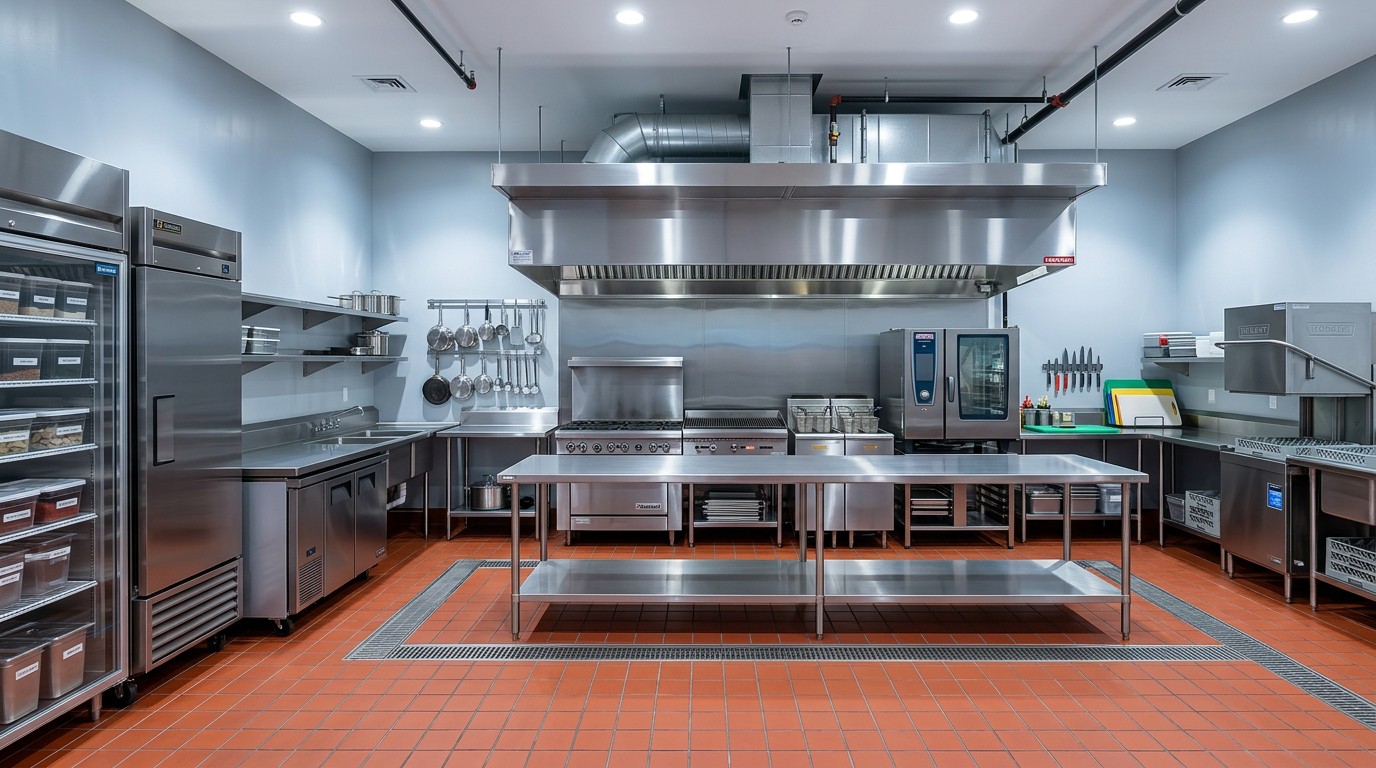
Commercial kitchen layout planning also deserves early attention. Equipment that looks efficient on paper may create bottlenecks if cold prep, hot line, wash area, and pass-out points are not coordinated. In busy kitchens, even a 2–3 meter reduction in repeated staff movement between stations can improve shift speed and reduce fatigue, especially during breakfast and lunch peaks.
Procurement teams should also verify service depth. Restaurant equipment suppliers may offer similar products, but lead time for parts, installation guidance, and maintenance training can vary widely. A realistic benchmark is whether technical support is available within 24–72 hours, and whether common wear parts are stocked locally or require 2–6 weeks of import lead time.
Five evaluation dimensions before purchase
- Capacity fit: Match actual daily volume, such as 300 meals, 1,000 meals, or 3 tons of processed raw material, instead of overbuying.
- Utility profile: Compare gas, electric, steam, and water requirements, including peak load and standby consumption.
- Hygiene design: Check weld quality, drainage angle, corner radius, and cleanability for daily sanitation routines.
- Serviceability: Review spare part access, control system complexity, and preventive maintenance intervals.
- Workflow impact: Confirm whether the machine reduces manual handling, waiting time, or cross-zone movement.
The following table helps purchasing and operations teams compare decision factors in a structured way.
A disciplined evaluation process helps avoid two common risks: buying oversized systems that run below 50% utilization, or buying undersized equipment that fails during peak service. For both catering equipment suppliers and end users, the best project outcomes come from aligning specification with real workflow, staffing level, and future expansion plans.
Technology Priorities: Automation, Smart Control, and Energy Efficiency
Automation is one of the strongest demand signals in industrial food equipment because it addresses three pressures at once: labor scarcity, consistency requirements, and training complexity. In a hotel or chain restaurant kitchen, automated dosing, programmable cooking, and preset cleaning routines can reduce dependency on a small group of highly experienced staff. In processing lines, automation supports repeatable output over long shifts.
Smart control is becoming more practical rather than purely promotional. Buyers are paying attention to interfaces that log cycle history, record temperature events, and signal faults before failure stops production. A useful system does not need extreme complexity. Often, 3 basic capabilities create immediate value: parameter presets, alarm history, and remote diagnostics. These features support faster training and more reliable compliance documentation.
Energy efficiency is also moving from a bonus feature to a procurement requirement. Equipment used 6–16 hours per day must be evaluated for heat retention, idle mode performance, and recovery speed after door opening or batch unloading. In refrigeration and warewashing, utility savings may come from better compressor control, heat recovery, or reduced water use per cycle rather than from simple motor downsizing.
For commercial kitchen equipment manufacturers, this means product development must combine mechanical durability with digital practicality. Buyers are not asking for technology for its own sake. They are asking whether a fryer can maintain stable oil temperature over repeated loads, whether a blast chiller can reliably move product through the critical temperature zone in the required time, and whether maintenance teams can identify faults without prolonged shutdown.
Technology features with the strongest buying impact
Automation features
- Preset recipes and process memory that can reduce setup errors across multiple shifts.
- Automatic fill, drain, or cleaning routines that shorten sanitation time by 15–30 minutes per cycle in some applications.
- Conveyor, dosing, or portioning support for facilities handling repetitive products or high-volume meal production.
Energy and control features
- Standby power management and insulated chambers for equipment running long service hours.
- Temperature control ranges suited to the task, whether hot holding, blast chilling, proofing, or low-temperature cooking.
- Simple dashboards that allow supervisors to review alarms, cycle time, and maintenance prompts without specialist software.
The strongest investment logic in 2026 will come from equipment that improves both process control and operating cost. Smart kitchen technologies should therefore be assessed against tangible targets such as fewer manual corrections, shorter changeover time, lower water use, or more stable output quality over a 7-day production schedule.
Supply Chain, Lead Time, and Risk Control for Buyers
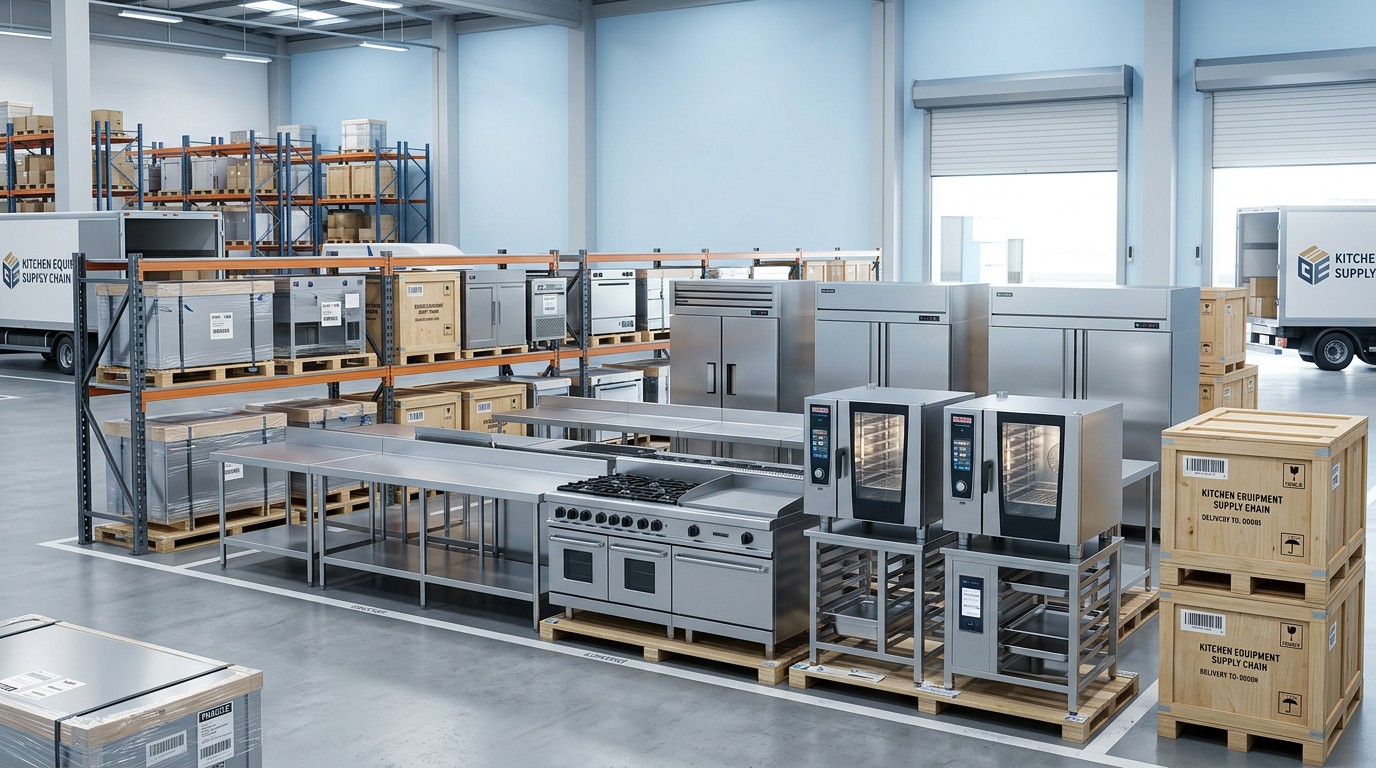
Global sourcing remains important in the kitchen equipment industry, especially with manufacturing and export strength concentrated in countries such as China, Germany, Italy, and Japan. However, 2026 buyers are more alert to supply-chain risk than they were in earlier replacement cycles. A machine with good specifications can still become a poor decision if shipping, commissioning, or spare part supply is unstable.
Lead times vary by product type and customization level. Standard stainless worktables, storage racks, and basic prep equipment may move on shorter schedules, while custom cooking suites, tunnel washers, or integrated food processing machinery often require longer engineering and production windows. For project planning, buyers should separate standard, semi-custom, and fully custom items from the start.
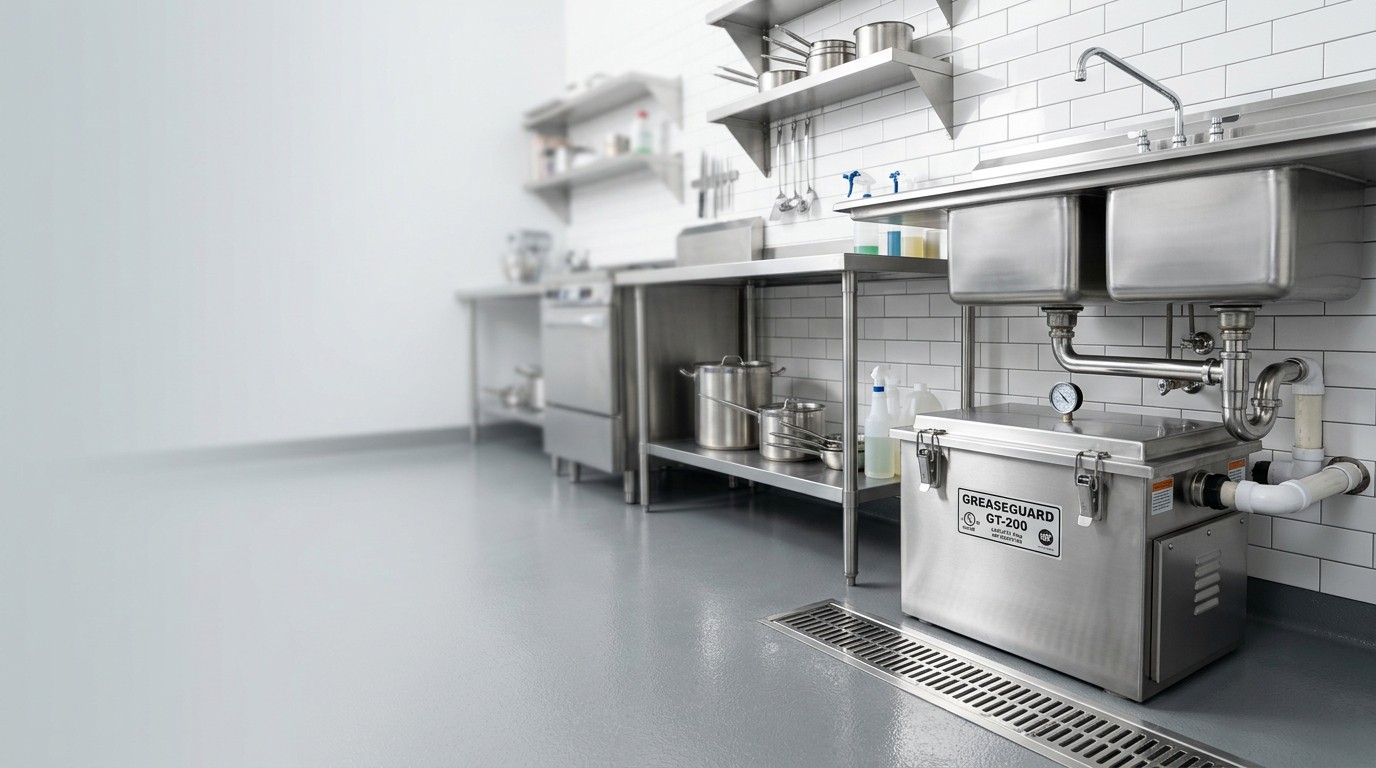
Risk control should also include compliance review. Electrical specification, ventilation compatibility, drainage design, local utility connection, and operator safety labeling all need confirmation before shipment. In commercial kitchen layout planning, missing one detail such as floor drain position or door clearance can delay installation and increase cost during site modification.
The most reliable catering equipment suppliers and restaurant equipment suppliers usually support buyers with documentation before delivery, not after problems appear. This may include equipment drawings, utility schedules, recommended clearances, commissioning checklists, and maintenance intervals. Early document review can prevent avoidable delays during the final 2–4 weeks before opening or production start-up.
Typical lead-time and risk checkpoints
The table below outlines common planning ranges and the main control points procurement teams should check before placing an order.
The important lesson is that procurement should not treat delivery as a simple logistics event. It is a multi-step process involving specification confirmation, factory production, pre-shipment review, installation readiness, and commissioning. Buyers who manage these checkpoints early are more likely to achieve a smooth handover and stable first-month performance.
How to Build a Practical 2026 Equipment Strategy
A practical industrial food equipment strategy for 2026 starts with business reality, not catalog size. Companies should define whether the main goal is expansion, replacement, standardization, or cost control. A fast-growing chain may prioritize repeatable kitchen modules across 5–20 sites, while an established hotel may focus on upgrading selected stations such as combi cooking, warewashing, or cold storage without disrupting ongoing service.
It also helps to divide investment into phases. Instead of replacing everything at once, many businesses benefit from a 3-stage approach: first solve the highest-risk bottleneck, then improve energy and workflow performance, and finally add digital monitoring where the return is clear. This method supports cash-flow discipline and makes operator training more manageable.
For decision-makers, collaboration between procurement, operations, and technical teams is essential. Procurement can compare quotations, but operators understand actual bottlenecks, and technical teams can confirm utilities, compliance, and maintenance implications. A cross-functional review usually produces better equipment selection than a price-only process handled by a single department.
The kitchen equipment industry is moving toward smarter, greener, and more integrated systems, but the best investments remain those grounded in measurable use cases. Equipment must support food safety, output consistency, cleaning efficiency, and service continuity. If those priorities are met, technology upgrades become a business advantage rather than a budget burden.
Recommended action plan for buyers
- Audit current operations for 2–4 weeks and record bottlenecks, cleaning time, downtime frequency, and utility-heavy equipment.
- Separate must-have requirements from optional features before contacting commercial kitchen equipment manufacturers.
- Request layout, utility, and maintenance information together with quotation, not as a later follow-up.
- Evaluate equipment on a lifecycle basis, including service response, spare parts access, and training needs.
- Plan implementation in phases where possible, especially for multi-site or live-operation environments.
FAQ: common buyer questions
How long should buyers plan for installation and commissioning?
For standard commercial kitchen equipment, on-site setup may take 1–3 days, while integrated or custom systems can take 1–3 weeks depending on utility readiness, testing requirements, and staff training. The best practice is to confirm site conditions at least 2 weeks before delivery.
What is the most overlooked cost in equipment procurement?
The most overlooked cost is often downtime-related loss rather than purchase price. A delayed repair, poor cleaning design, or shortage of wear parts can reduce output, increase labor, and affect food safety performance. That is why after-sales support should be assessed as carefully as technical specification.
Which equipment categories are seeing the strongest demand signals?
Demand is strongest in programmable cooking systems, energy-efficient refrigeration, automated washing solutions, and food processing equipment that supports standardized, high-volume output. Equipment connected to labor reduction and utility control is receiving particularly strong attention across hotels, catering operations, and central kitchens.
Industrial food equipment demand signals for 2026 point to a clear direction: buyers want reliable systems that improve productivity, lower operating pressure, and support safer, more consistent output. From hotel kitchen equipment to food processing machinery, the strongest opportunities lie in automation, smart control, efficient layout, and dependable service support.
If you are reviewing suppliers, planning a new project, or upgrading existing operations, now is the right time to evaluate your priorities and build a specification based on real workflow needs. Contact us to discuss your application, get a tailored equipment recommendation, or learn more about practical solutions for commercial kitchens and food processing environments.
- commercial kitchen equipment
- restaurant equipment
- food processing equipment
- smart kitchen
- catering equipment
- cooking equipment
- central kitchen
- restaurant kitchen
- kitchen solutions
- kitchen equipment
- kitchen equipment manufacturers
- commercial kitchen layout
- restaurant equipment suppliers
- catering equipment suppliers
- commercial kitchen equipment manufacturers
- professional catering equipment
- hotel kitchen equipment
- industrial food equipment
Popular Tags
Kitchen Industry Research Team
Dedicated to analyzing emerging trends and technological shifts in the global hospitality and foodservice infrastructure sector.
Industry Insights
Join 15,000+ industry professionals. Get the latest market trends and tech news delivered weekly.
No spam. Unsubscribe anytime.
Contact With us
Contact:
Anne Yin (Ceramics Dinnerware/Glassware)
Lucky Zhai(Flatware)