
Glass storage jars that keep dry goods usable longer
A glass storage jar is one of the simplest ways to keep flour, rice, pasta, beans, and snacks fresher for longer while making your kitchen look cleaner and more organized. For everyday home cooks, the right jar helps block moisture, reduce waste, and make dry goods easier to store, see, and use. In this guide, we explore how to choose practical glass storage solutions that improve freshness, convenience, and food safety.
For end consumers, a good glass storage jar is more than a decorative container. It is a practical piece of kitchen equipment that supports better food handling, simpler meal preparation, and more controlled household storage. In a market where kitchen products are increasingly shaped by hygiene, efficiency, and smart organization, choosing the right jar can reduce waste over a 2- to 6-month storage cycle and improve day-to-day kitchen workflow.
The most useful options combine visible storage, reliable sealing, easy cleaning, and sizes matched to real household needs. Whether you cook for 1 person, a family of 4, or buy staples in bulk every 2 to 4 weeks, the right glass storage solution can make dry goods safer and easier to manage.
Why a Glass Storage Jar Works Better for Dry Goods
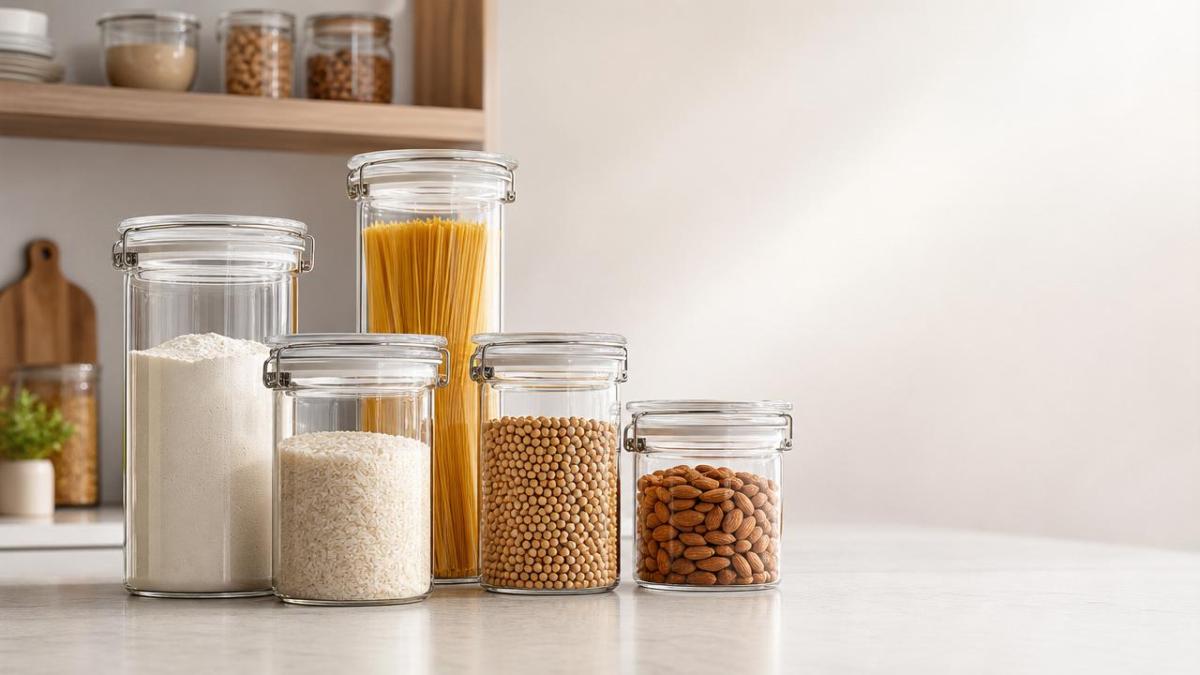
A glass storage jar performs well because glass is non-porous, does not absorb odors easily, and allows users to inspect contents at a glance. For dry goods such as rice, oats, lentils, sugar, coffee beans, and crackers, visibility matters. If you can see the fill level in 3 seconds, you are less likely to overbuy, forget older stock, or leave opened packages exposed on a shelf.
Compared with torn paper bags or loosely folded plastic packaging, a sealed jar creates a more stable storage environment. This matters when indoor humidity rises above 60% or when room temperatures shift between 18°C and 30°C across seasons. Dry foods often remain usable longer when moisture exposure is limited and opening frequency is controlled.
Core benefits for home kitchens
- Better moisture control for flour, grains, and cereal products
- Faster stock rotation through clear visibility
- Less pantry clutter and fewer half-open packages
- Simpler portion planning for weekly cooking cycles
- Easier cleaning than many textured plastic containers
Freshness is affected by four practical factors
Even the best glass storage jar cannot preserve quality if the storage method is poor. In home use, freshness usually depends on 4 factors: seal quality, opening frequency, fill level, and storage location. A jar placed beside a stove may face higher heat and vapor exposure than one stored in a cool pantry cabinet. For foods used daily, a smaller 500 ml to 1.2 L jar often performs better than a large jar repeatedly opened for months.
This is especially important in kitchens influenced by broader equipment trends such as compact layouts, multi-use appliances, and higher-volume meal prep. As kitchens become more efficient, consumers also expect storage tools to support speed, hygiene, and visual order.
Common household use cases
Most consumers buy a glass storage jar for one of 3 reasons: they want to preserve pantry staples longer, they need better cabinet organization, or they want cleaner countertop storage. The right choice depends on product type. Short pasta, beans, and nuts usually need different jar shapes and capacities than powdered ingredients.
The table below shows how common dry goods match with typical jar sizes and closure priorities.
The key takeaway is that there is no single “best” glass storage jar for every pantry item. Capacity, opening width, and closure style should be matched to how quickly the product is consumed, not just to shelf appearance.
How to Choose the Right Glass Storage Jar
When shopping for a glass storage jar, consumers often focus first on shape or design. In practice, 5 selection points matter more: seal performance, capacity, mouth width, glass thickness, and daily handling comfort. These factors directly influence shelf life, breakage risk, and how often the jar is actually used.
1. Check the closure system
A weak lid can cancel out the benefits of a good jar body. For dry goods, common closure types include screw lids, clamp lids with silicone or rubber gaskets, and push-fit lids. For most homes, clamp or screw systems with a reliable sealing ring offer stronger performance than decorative loose lids. If you open a jar 1 to 3 times per day, closure durability becomes more important than style.
2. Match capacity to buying habits
Buying a very large glass storage jar is not always efficient. If a household uses 1 kg of rice per week, a 3 L to 4 L jar may be practical. If flour is used only twice a month, a medium-size jar may preserve quality better because it limits long-term air exposure after each opening. Consumers who shop every 7 to 10 days often benefit from medium-format jars rather than oversized containers.
3. Consider opening width and reach
A narrow-mouth jar may look elegant, but it can make scooping or cleaning difficult. For ingredients handled with measuring cups or tablespoons, wide-mouth openings are easier to use. A practical opening diameter for flour and pasta is often around 9 cm to 12 cm, while spices and tea can work well in smaller formats.
4. Look at storage layout
Before buying a set, measure shelf height, cabinet depth, and drawer clearance. A tall cylindrical glass storage jar may fit open shelving but not upper cabinets with low clearance. In compact kitchens, square or slightly rectangular jars often use 10% to 20% space more efficiently than round ones because they reduce gaps between containers.
5. Prioritize easy cleaning
Dry goods leave dust, oil residue, or fine powder over time. A jar should be easy to clean at least once every 3 to 6 weeks depending on use. Wide openings, removable sealing rings, and smooth inner walls help reduce cleaning time and lower the risk of residue buildup around the lid.
The comparison below can help consumers narrow down the right specification based on actual kitchen needs rather than appearance alone.
This comparison shows that kitchen routine should guide product selection. Consumers storing everyday cereal and snacks need convenience, while those managing rice, beans, or baking staples in larger volumes need more capacity and stronger shelf stability.
Practical Storage Methods That Keep Food Usable Longer
A glass storage jar only works well when paired with sound pantry habits. Many freshness problems come from user behavior rather than container quality. In home kitchens, 6 simple steps can extend usability and reduce waste: clean the jar fully, dry it completely, fill it with one product only, label the date, avoid heat exposure, and rotate older contents first.
Best practices for common dry goods
- Let newly washed jars air-dry for several hours before filling.
- Store jars in a cool cabinet, ideally away from ovens, kettles, and dishwashers.
- Refill only after finishing or fully emptying older stock when possible.
- Use separate jars for strong-smelling items such as coffee or spiced snacks.
- Label purchase or refill dates if a product may stay stored for 4 weeks or more.
Avoid these frequent mistakes
One common mistake is pouring fresh dry goods on top of older stock without checking the bottom layer. Another is filling a jar while the contents are still warm from cooking or roasting. Even slight trapped condensation can shorten usability. Consumers should also avoid storing a glass storage jar in direct sunlight, especially when the contents include oils, seeds, or nuts that can degrade faster.
Another issue is using one large container for products with very different turnover speeds. For example, a family may finish cereal in 5 days but use specialty flour over 8 weeks. Splitting storage by use frequency often gives better results than using matching jars for everything.
When to replace or upgrade your jars
Consumers should inspect jars every few months. Replace a sealing ring if it has hardened, cracked, or lost flexibility. Upgrade the jar if the lid no longer closes evenly, if the glass edge chips, or if the size no longer suits shopping habits. A glass storage jar that is too heavy, too tall, or awkward to clean often ends up underused, even if it looks good on display.
For growing households or people moving toward bulk buying, adding 3 to 5 standardized jar sizes can improve pantry management more than buying a large mixed set. This approach helps create a more modular kitchen system, which aligns with broader industry movement toward integrated and efficient home equipment solutions.
What Consumers Should Evaluate Before Buying a Set
A single glass storage jar can solve one problem, but a full set affects kitchen workflow, cleaning effort, and storage flexibility. Before purchasing, consumers should evaluate 4 practical dimensions: food types stored, available shelf space, refill frequency, and handling safety. These points are especially useful when comparing online listings where photos can make jars seem larger or more compact than they really are.
A simple purchase checklist
- Measure at least 2 shelf heights and 1 cabinet depth before ordering.
- Check whether the lid includes a gasket or sealing ring.
- Compare empty jar weight if the container will be lifted often.
- Choose a mix of small, medium, and large sizes instead of all one format.
- Review whether replacement lids or spare seals are available.
Balancing appearance and utility
Design matters, but utility should come first. Clear, uniform glass storage jar sets can make a kitchen look more organized, yet performance depends on practical details. A set that saves 15 to 20 minutes per week in locating ingredients, cleaning spills, and checking stock can offer more value than a premium-looking set with poor seals or awkward openings.
Consumers who want a neater kitchen, better dry-goods management, and less food waste should look for durable materials, logical capacities, and dependable sealing. In modern kitchens shaped by efficiency and food safety expectations, these small storage choices play a meaningful role in everyday results.
The best glass storage jar is the one that fits your ingredients, your cabinet layout, and your cooking routine. When chosen well, it keeps staples easier to access, helps dry goods stay usable longer, and supports a cleaner, more organized kitchen system. If you want help comparing storage options, selecting practical jar sizes, or finding solutions suited to modern kitchen equipment needs, contact us today to get product details and explore more kitchen storage solutions.
Popular Tags
Kitchen Industry Research Team
Dedicated to analyzing emerging trends and technological shifts in the global hospitality and foodservice infrastructure sector.
Industry Insights
Join 15,000+ industry professionals. Get the latest market trends and tech news delivered weekly.
No spam. Unsubscribe anytime.
Hot Articles
 ASEAN FTA Upgrade Enters Text Verification Phase; Smart Kitchen Controls Added to Zero-Tariff List
- Electronics Manufacturing Leads with 13.6% Output Growth; Kitchen Appliance Chip Supply Stabilizes
- OpenCLAW-like Agent Deployment Risk Management Guidelines Released
- Green Power Stocks Rally; Overseas Buyers Prioritize Green Electricity Usage

Contact With us
Contact:
Anne Yin (Ceramics Dinnerware/Glassware)
Lucky Zhai(Flatware)