
Leak-proof glass storage container problems after repeated use
Repeated use can expose hidden risks in any leak-proof glass storage container, from seal degradation to microcracks that threaten food safety and storage reliability. For quality control and safety managers, understanding these failure points is essential to reducing complaints, preventing contamination, and ensuring consistent performance in commercial and household kitchen environments.
Why repeated-use performance is becoming a bigger quality issue
Across the kitchen equipment industry, expectations for food contact products have changed. Buyers no longer evaluate a leak-proof glass storage container only by appearance, initial closure feel, or short-term leak testing. Commercial kitchens, retail buyers, and safety teams increasingly focus on how containers perform after dozens or even hundreds of use cycles involving dishwashing, refrigeration, reheating, stacking, transport, and chemical exposure from detergents. This shift is changing the way quality teams define acceptable risk.
The trend is driven by three converging pressures. First, food safety requirements are becoming stricter, especially where cross-contamination, allergen control, and storage integrity are under review. Second, end users expect reusable products to support sustainability goals, which means longer service life is now part of perceived quality. Third, digital feedback channels have made container failures far more visible. A seal that weakens after repeated use can quickly become a reputation issue, not just a technical defect.
For quality control personnel and safety managers, this means the conversation is moving from “Does it leak when new?” to “How does this leak-proof glass storage container age in real operating conditions?” That change matters because repeated-use failure often develops slowly and may not be detected by basic incoming inspection alone.
The main trend signals quality teams should not ignore
Several market signals suggest that repeated-use durability is becoming a more decisive quality benchmark in both commercial and household kitchen settings. Containers are being used in more demanding ways: hot-fill to cold storage transitions, freezer-to-counter movement, aggressive dishwashing cycles, meal-prep transport, and denser stacking in central kitchens. At the same time, procurement teams increasingly ask suppliers for evidence of cycle durability, gasket retention, and closure consistency.
Another important signal is the widening gap between initial compliance and real-world performance. A product may pass a one-time leakage test yet still fail after repeated opening and closing, thermal shock, or exposure to oil, acid, and cleaning agents. As a result, more organizations are reviewing life-cycle testing protocols, supplier change control, and material traceability for lids, gaskets, clips, and glass body finishing.
What usually goes wrong in a leak-proof glass storage container after repeated use
The most common failures are not always dramatic breakages. In many cases, quality degradation appears gradually. Gaskets can harden, swell, or lose elasticity. Lid geometry can warp slightly under heat. Locking clips may loosen, reducing sealing pressure. Glass rims may develop tiny chips or microcracks that are difficult to see during routine handling but still compromise safety and leak resistance. These issues become more serious when the container is used for liquid foods, sauces, allergen-sensitive ingredients, or ready-to-eat products.
A repeated-use problem is especially concerning because users often continue using the product after early warning signs appear. A leak-proof glass storage container with slight seal fatigue may still function on dry foods, encouraging continued use until a liquid leak or hygiene issue occurs. From a risk management perspective, delayed failure is more difficult than immediate failure because it bypasses basic acceptance checks and emerges in the field.
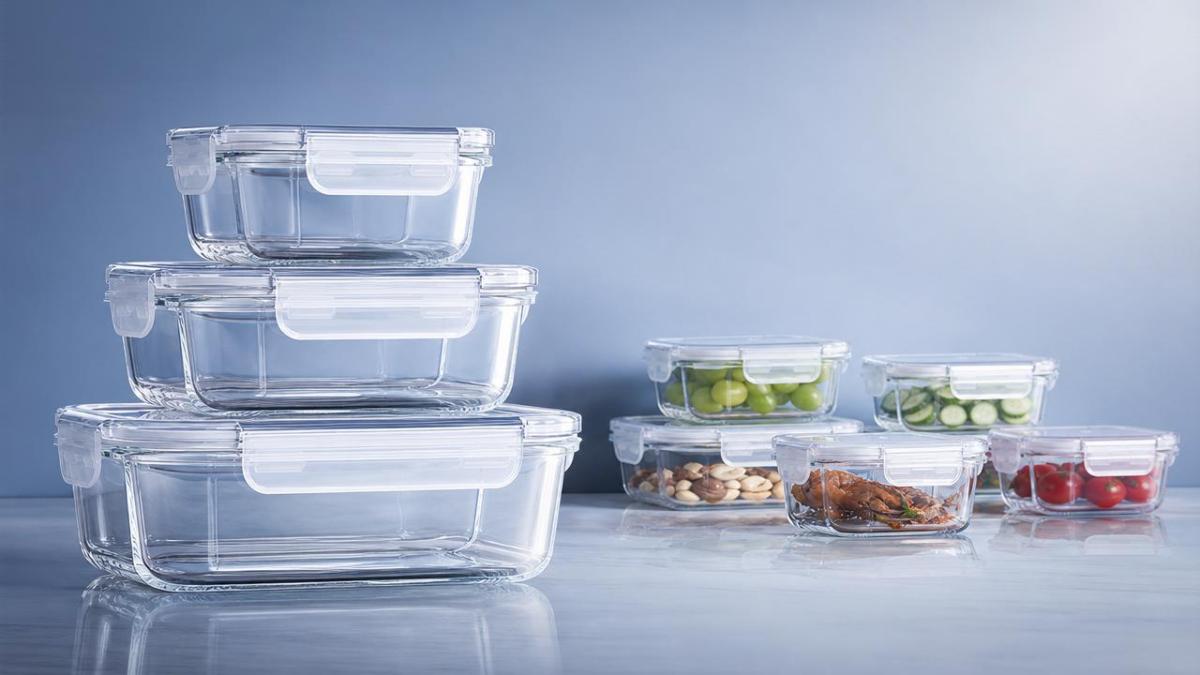
The interaction between components is another important point. Glass may remain structurally acceptable while the closure system degrades, or the lid may stay intact while the gasket chemistry changes after repeated dishwasher exposure. Quality teams should therefore avoid treating the product as a single material item. The leak-proof glass storage container must be evaluated as a system composed of glass body, rim finish, lid substrate, hinge or clip mechanism, seal design, and assembly tolerance.
Why these failures are becoming more common
The rising frequency of repeated-use issues is linked to broader industry changes. One driver is more intensive use. In restaurants, hotels, and central kitchens, storage containers now move faster across prep, chilling, service, and cleaning stages. In household channels, meal-prep culture and bulk cooking have increased the number of open-close and wash cycles per week. A leak-proof glass storage container that once faced light domestic use may now experience operating stress closer to a semi-commercial pattern.
Another driver is the push for cost efficiency. Competitive pricing can encourage thinner design margins, lower-cost gasket compounds, or less robust clip structures. Not every cost optimization causes failure, but under repeated use, narrow tolerances leave less room for thermal expansion, deformation, and wear. Safety managers should pay close attention when suppliers change tooling, polymer grades, seal formulations, or subcontracted component sources.
Sustainability pressure also plays a role. The market favors reusable, low-waste packaging and storage solutions, which is positive, but longer reuse expectations raise the performance bar. A leak-proof glass storage container marketed as durable must now deliver not only recyclability and food contact compliance, but also predictable sealing behavior over time. This is pushing manufacturers and buyers to think more in terms of service life validation than one-time product approval.
Who is affected most by the shift toward life-cycle quality evaluation
The impact is not limited to manufacturers. Different functions across the supply chain face different risks when repeated-use defects increase.
What quality and safety teams should watch more closely now
A stronger inspection mindset is needed, but it should be practical and data-led. The first priority is seal performance drift. Instead of checking only visible gasket defects, teams should monitor compression set, odor retention, discoloration, and fit consistency after repeated washing and food contact. The second priority is glass edge condition. The rim area often determines whether a leak-proof glass storage container maintains full sealing pressure, and even small edge damage can create both leakage and hygiene concerns.
The third area is use-condition mapping. Many failures are linked not simply to poor quality, but to mismatch between product design and operating environment. For example, if containers are regularly exposed to sudden temperature transitions, stacking loads, or acidic food residues, inspection criteria should reflect that stress profile. A product that performs well in dry storage may not remain reliable in liquid transport or repeated reheating scenarios.
The fourth area is complaint intelligence. Returns and customer comments can reveal pattern shifts before lab failures become obvious. If complaints mention “lid no longer closes tightly,” “leaks after dishwasher use,” or “glass cracked without impact,” these should be coded as trend signals rather than isolated user issues. Over time, such information can help identify whether the problem lies in a batch, a supplier change, a material weakness, or unrealistic use expectations.
How testing expectations are evolving
Testing strategies for a leak-proof glass storage container are moving toward more realistic simulation. Traditional pass-fail leak checks remain useful, but they are no longer enough on their own. Forward-looking organizations are adding repeated latch cycling, dishwasher endurance, thermal shock screening, stain and odor retention review, and post-cycle leakage confirmation. The purpose is not to create unnecessary test burden, but to understand failure timing and failure mode before the market does.
This trend also supports better supplier conversations. When a buyer can show that leakage begins after a certain number of cycles or only after detergent and heat exposure, root-cause analysis becomes far more precise. It becomes easier to discuss gasket formulation, lid dimensional stability, clip fatigue, or annealing consistency in the glass body. In a competitive market, suppliers that can demonstrate stable repeated-use performance may gain an advantage beyond price.
Practical judgment framework for the next 12 months
For organizations deciding how seriously to treat repeated-use risk, the most useful approach is to assess both exposure and consequence. If the leak-proof glass storage container is used for ready-to-eat foods, transported liquids, allergen-separated ingredients, or high-frequency commercial workflows, the impact of a gradual seal failure is much higher than in light dry-storage use. That should influence testing depth, approval rules, and replacement policy.
Recommended response direction for manufacturers and buyers
The strongest response is not simply more inspection at the end of production. It is better alignment across design, sourcing, validation, and use guidance. Manufacturers should review whether product claims match actual repeated-use capability. Buyers should confirm whether specifications clearly define use conditions, expected cycle life, and rejection criteria. Safety teams should ensure frontline staff know when a leak-proof glass storage container must be removed from service due to seal wear, rim damage, closure looseness, or unexplained cracking.
In parallel, organizations should improve documentation quality. A clear record of complaints, batch numbers, use context, and failure mode can turn scattered incidents into a meaningful trend picture. This is especially important in an industry moving toward smarter kitchens and more digital operations, where traceability and preventive quality decisions are becoming competitive strengths.
Final takeaway: repeated-use risk is now a strategic quality signal
The broader direction is clear: the market is treating the leak-proof glass storage container less as a static food container and more as a reusable performance system. That change affects quality standards, supplier expectations, complaint handling, and food safety oversight. Repeated-use problems are no longer minor wear issues; they are signals about product design resilience, process control, and operational fit.
If your organization wants to judge how this trend may affect current products or sourcing decisions, focus on a few practical questions: Are failure patterns emerging after repeated use rather than at first inspection? Are testing methods aligned with real kitchen conditions? Are supplier changes tightly controlled? And does the intended use of each leak-proof glass storage container match its proven durability profile? The answers will help determine whether the next step should be tighter validation, revised handling rules, or a broader review of storage container quality strategy.
Popular Tags
Kitchen Industry Research Team
Dedicated to analyzing emerging trends and technological shifts in the global hospitality and foodservice infrastructure sector.
Industry Insights
Join 15,000+ industry professionals. Get the latest market trends and tech news delivered weekly.
No spam. Unsubscribe anytime.
Hot Articles
 ASEAN FTA Upgrade Enters Text Verification Phase; Smart Kitchen Controls Added to Zero-Tariff List
- Electronics Manufacturing Leads with 13.6% Output Growth; Kitchen Appliance Chip Supply Stabilizes
- OpenCLAW-like Agent Deployment Risk Management Guidelines Released
- Green Power Stocks Rally; Overseas Buyers Prioritize Green Electricity Usage

Contact With us
Contact:
Anne Yin (Ceramics Dinnerware/Glassware)
Lucky Zhai(Flatware)