
What slows down restaurant supplies sourcing the most?
Restaurant supplies sourcing often slows down because of fragmented supplier networks, inconsistent product specifications, long lead times, and limited pricing transparency. For business evaluators, these delays affect procurement efficiency, cost control, and project planning. Understanding the key bottlenecks behind restaurant supplies sourcing is essential for assessing supplier reliability, reducing operational risk, and making smarter purchasing decisions in a fast-evolving kitchen equipment market.
Why does restaurant supplies sourcing become slow so easily?
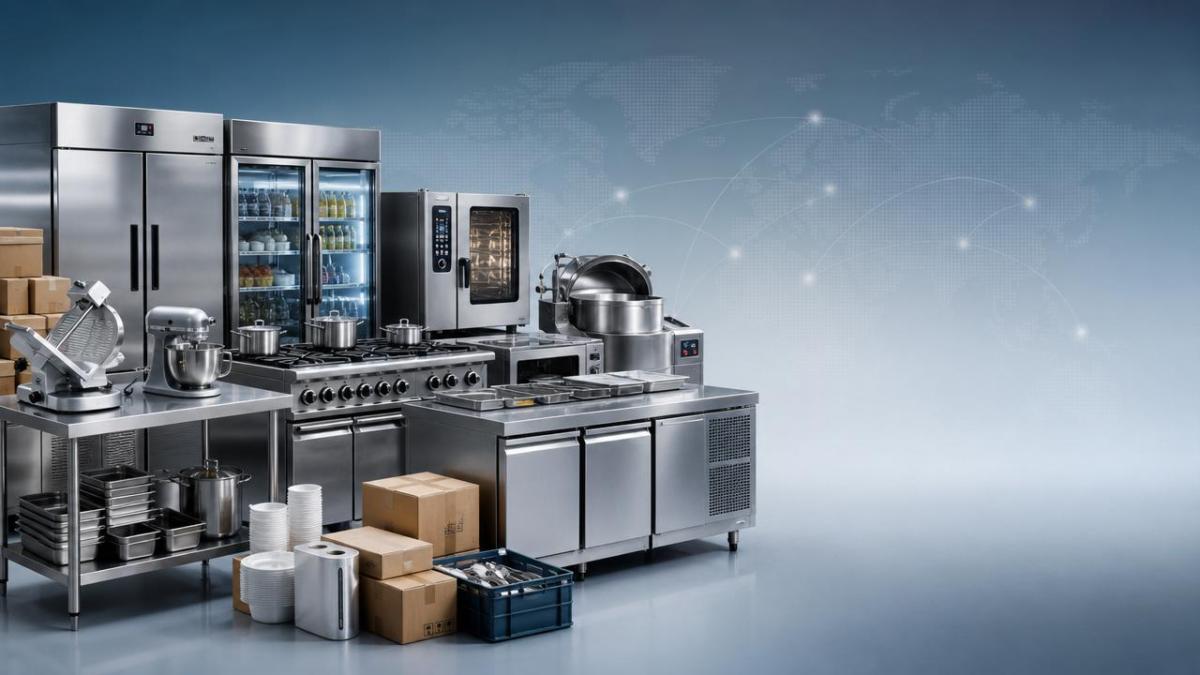
At first glance, restaurant supplies sourcing looks simple: compare prices, place an order, and arrange delivery. In reality, the category covers cooking equipment, refrigeration, food preparation machines, stainless steel fixtures, ventilation components, tableware, and consumables. Each group may involve different factories, compliance documents, voltage standards, packaging rules, and after-sales expectations. That complexity is the main reason sourcing timelines slip.
In the kitchen equipment industry, delays rarely come from a single failure point. They usually result from small inefficiencies accumulating across specification review, supplier communication, sample confirmation, certification checks, production scheduling, and logistics coordination. For business evaluators, the key issue is not only speed, but whether the sourcing process can produce predictable cost, quality, and delivery outcomes.
The challenge grows when projects involve commercial kitchens for restaurants, hotels, central kitchens, or food processing facilities. These buyers need equipment that supports food safety, durability, energy efficiency, and increasingly, smart or automated kitchen operations. A sourcing process that ignores those variables may appear fast at the quotation stage but become slow during approval or installation.
- Supplier fragmentation forces buyers to collect quotations from multiple vendors, often with different lead times and documentation standards.
- Incomplete specifications create back-and-forth clarification on dimensions, power supply, materials, output capacity, and regional compliance needs.
- Price comparisons become unreliable when quotes exclude freight, installation parts, spare components, or testing requirements.
- Production scheduling can shift quickly when factories handle seasonal demand from hospitality, foodservice, and export markets at the same time.
What are the biggest bottlenecks in restaurant supplies sourcing?
Business evaluators need to separate visible delays from structural delays. Visible delays include late quotations or shipment changes. Structural delays are deeper: unclear sourcing ownership, inconsistent supplier capability, and poor data management. The table below summarizes where restaurant supplies sourcing slows down most often and why those issues matter commercially.
These bottlenecks are common in global kitchen equipment procurement because the market includes both standardized products and project-based solutions. A fryer, prep table, dishwasher, or smart combi unit may each follow different sourcing logic. Evaluators should therefore assess not just product price, but the supplier’s ability to manage variation without creating hidden delays.
Specification gaps are more expensive than many buyers expect
One of the most underestimated problems in restaurant supplies sourcing is incomplete specification alignment. A buyer may request a stainless steel worktable without defining thickness, grade, load capacity, backsplash requirement, or shelf configuration. The supplier then quotes based on assumptions. When the project team later revises the details, both price and lead time change.
This issue becomes more serious with powered equipment. Voltage, frequency, plug type, gas standard, control interface, energy consumption, and output performance all influence product selection. In international trade, differences between destination markets can slow approvals if the sourcing team starts with a generic request rather than a market-specific requirement list.
Lead time risk is often hidden inside custom and semi-custom orders
Stock items move faster, but restaurant projects rarely rely only on stock items. Layout-dependent products such as stainless counters, hoods, sinks, shelving, and integrated kitchen lines often need customization. Even when the product itself is simple, engineering drawings, confirmation cycles, and production slot allocation add time. If multiple suppliers handle related items, one delay can hold the full shipment.
Which sourcing scenarios usually create the longest delays?
Not every procurement project slows down in the same way. Restaurant supplies sourcing for a new restaurant opening is very different from replenishment for an existing chain, and both differ from central kitchen or food processing procurement. Evaluators can improve speed by identifying the scenario first and then applying the right control points.
This comparison shows why a generic procurement method often fails. In high-volume hospitality and foodservice markets, speed comes from matching sourcing controls to the actual project type. A supplier that performs well for replenishment may still struggle with custom-engineered kitchen packages.
How should business evaluators assess suppliers more efficiently?
If restaurant supplies sourcing is slowing down, the evaluation framework may be too price-driven or too reactive. A better approach is to score suppliers across commercial, technical, operational, and compliance dimensions before the project reaches a critical deadline. That creates faster decision cycles and reduces rework.
Key evaluation dimensions
- Product clarity: Can the supplier provide complete specifications, drawings, power details, material descriptions, and accessory lists without repeated corrections?
- Lead time reliability: Does the supplier explain standard production cycles, peak-season constraints, and shipment milestones clearly?
- Category integration: Can the supplier support multiple kitchen equipment categories, reducing fragmentation in restaurant supplies sourcing?
- Commercial transparency: Are quotations structured to show unit price, packaging, spare parts, optional configurations, and delivery terms separately?
- Compliance readiness: Can the supplier discuss destination-market documentation and commonly requested testing or certification pathways in a practical way?
- After-sales support: Are replacement parts, troubleshooting response, and installation guidance addressed before order placement?
A practical sourcing checklist before RFQ approval
- Confirm whether the item is standard, configurable, or custom-made. This changes quotation speed and lead time risk.
- Define performance requirements, not just product names. For example, specify output capacity, operating environment, and duty cycle.
- Check regional utility requirements early, especially voltage, frequency, gas configuration, and plug format.
- Request a quotation format that separates equipment price, accessories, packaging, and logistics assumptions.
- Align internal stakeholders on acceptable alternatives before the final bid round to avoid late-stage specification changes.
What technical and compliance issues slow sourcing decisions?
In commercial kitchen procurement, technical review often takes longer than buyers expect because the equipment must work safely and efficiently in a real operating environment. Restaurant supplies sourcing slows when the selected products do not align with installation conditions, production volume, sanitation practices, or energy targets.
For example, refrigeration products may require attention to ambient temperature range, refrigerant type, compressor configuration, and internal layout. Cooking equipment may require checks on heat output, recovery time, control mode, and exhaust compatibility. Stainless fabrication may involve material grade, welding finish, corrosion resistance, and cleanability. These details directly affect long-term operating cost and user satisfaction.
Compliance can also delay projects. Depending on destination market and product type, buyers may review electrical safety standards, food-contact material declarations, sanitation design expectations, or energy-related documentation. Not every product requires the same level of documentation, but the supplier should at least identify which approvals are commonly discussed for the relevant market and product group.
- Electrical items may require confirmation of safety and labeling expectations.
- Food-contact parts may require material traceability or declaration support.
- Energy-efficient kitchen solutions may require more detailed performance discussion during evaluation.
- Integrated or smart kitchen systems may need interface and compatibility review with digital management tools.
How can buyers reduce cost pressure without slowing restaurant supplies sourcing?
Cost control does not mean choosing the lowest quoted price. In restaurant supplies sourcing, low price can become expensive when it leads to specification mismatch, weak packaging, delayed shipment, or higher maintenance frequency. Business evaluators should compare total acquisition logic, not just headline numbers.
A useful method is to segment purchases into strategic categories. High-impact equipment such as refrigeration, cooking lines, and food processing machines should be evaluated for lifecycle reliability, spare parts access, and energy use. Lower-risk items such as basic utensils or standard shelving can be sourced with more aggressive price competition if specifications are tightly controlled.
Cost-saving approaches that do not undermine delivery
- Bundle adjacent categories with one capable supplier to reduce communication loops and improve shipment consolidation.
- Standardize repeat-use items across projects so quotations can be compared faster and inventory planning improves.
- Use approved alternative specifications where premium finishes or oversized capacity are not necessary for the operating model.
- Ask for optional configurations separately rather than embedding every possible feature into the base quotation.
Common mistakes that make restaurant supplies sourcing slower than it should be
Many delays are avoidable. They happen because procurement teams begin too late, rely on product names instead of technical descriptions, or assume all suppliers interpret requirements the same way. In kitchen equipment sourcing, assumptions are expensive because installation and operating conditions vary widely.
Frequent sourcing mistakes
- Requesting quotations before confirming dimensions, utility conditions, and performance targets.
- Evaluating factory capability only by product photos instead of documentation quality and response precision.
- Ignoring after-sales requirements until after the order is placed, especially for powered or automated equipment.
- Treating all categories the same, even though fabricated stainless items and smart kitchen equipment require different sourcing controls.
- Comparing unit prices without adjusting for packaging, spare parts, accessories, and delivery terms.
A disciplined sourcing workflow saves more time than rushed RFQs. In a market shaped by automation, intelligent controls, and energy-efficient systems, technical understanding and procurement speed must work together rather than compete.
FAQ: what do business evaluators ask most about restaurant supplies sourcing?
How can we shorten restaurant supplies sourcing for multi-category projects?
Start by grouping items into standard, configurable, and custom categories. Then prioritize suppliers that can cover multiple related kitchen equipment lines with consistent documentation. This reduces communication gaps, simplifies shipment planning, and helps control total project timing.
What should we check first when comparing suppliers?
Check specification completeness and quotation structure before comparing price. A clear quotation should show model scope, materials, electrical details, accessory inclusion, packaging assumptions, and lead time. Without that, price comparison is not commercially reliable.
How long does restaurant supplies sourcing usually take?
There is no single timeline because standard smallwares, powered appliances, and custom stainless items move at different speeds. The key driver is how complete the requirement set is at the start. Projects with finalized specifications and aligned stakeholders move much faster than those still changing layout or utility assumptions.
Are smart kitchen and energy-efficient products slower to source?
Sometimes yes, because they may require more technical review, interface checks, or performance comparison. However, they are not automatically slower if the supplier can explain configuration options clearly and provide the right documentation early. In many cases, structured review prevents later operating inefficiencies.
Why choosing the right sourcing partner matters now
The kitchen equipment industry is becoming more international, more technical, and more integrated. Buyers are no longer sourcing only basic appliances. They are evaluating automated food processing systems, digital kitchen management tools, energy-conscious equipment, and project-based combinations of fabricated and powered products. That shift makes restaurant supplies sourcing more strategic than transactional.
A capable sourcing partner helps shorten decision cycles by clarifying specifications, comparing practical alternatives, identifying likely lead time risks, and aligning procurement with destination-market requirements. For business evaluators, that means fewer hidden costs and stronger confidence in supplier selection.
Why choose us for restaurant supplies sourcing support
If you are evaluating suppliers for restaurant supplies sourcing, we can support the parts of the process that usually slow projects down. We help buyers organize product parameters, compare equipment options across categories, review delivery timing, and communicate more effectively with manufacturing sources in the kitchen equipment sector.
You can contact us for practical sourcing support such as parameter confirmation, product selection guidance, lead time review, custom solution discussion, destination-market certification planning, sample coordination, and quotation communication. If your project involves commercial kitchen equipment, food processing machinery, kitchen electrical appliances, or integrated kitchen systems, we can help structure the evaluation process so decisions become faster, clearer, and easier to defend internally.
Popular Tags
Kitchen Industry Research Team
Dedicated to analyzing emerging trends and technological shifts in the global hospitality and foodservice infrastructure sector.
Industry Insights
Join 15,000+ industry professionals. Get the latest market trends and tech news delivered weekly.
No spam. Unsubscribe anytime.

Contact With us
Contact:
Anne Yin (Ceramics Dinnerware/Glassware)
Lucky Zhai(Flatware)