
Stainless Steel Silverware Buying Guide for Bulk Orders
Choosing stainless steel silverware for bulk orders requires more than comparing prices. Buyers across restaurants, hotels, and foodservice operations must balance durability, design, hygiene, and supply reliability while aligning with items like ceramic serving plate, glass water cup, and porcelain dinnerware. This guide helps procurement teams, operators, and decision-makers evaluate quality standards, supplier options, and cost efficiency in today’s competitive kitchen equipment market.
In large-volume purchasing, silverware affects more than table presentation. It influences replacement frequency, dishwashing efficiency, guest perception, storage planning, and overall operating cost across 12 to 36 months. For B2B buyers in the kitchen equipment industry, the right choice supports consistent service, food safety, and procurement control across restaurants, hotels, catering companies, central kitchens, and institutional dining operations.
A practical buying process should review material grade, thickness, finish, edge quality, weight balance, packaging, lead time, and supplier stability. Bulk orders also require coordination with broader tabletop programs, especially when silverware must visually match porcelain dinnerware, ceramic serving plate sets, buffet accessories, and beverage service items such as the glass water cup.
Why Bulk Silverware Selection Matters in Commercial Foodservice
For commercial kitchens and foodservice groups, stainless steel silverware is a high-touch item used hundreds or thousands of times per week. A 120-seat restaurant may cycle cutlery 2 to 4 times daily, while a hotel buffet or banquet department may handle 500 to 2,000 pieces in a single service period. That usage level means even small differences in steel grade or finish quality can quickly translate into measurable replacement costs.
Bulk procurement also involves operational consistency. If forks in one shipment differ in length by 3 to 5 mm or knives have uneven serration, staff sorting becomes slower and the guest experience becomes less uniform. Procurement teams should therefore assess dimensional consistency, carton labeling, and batch stability, not only unit price.
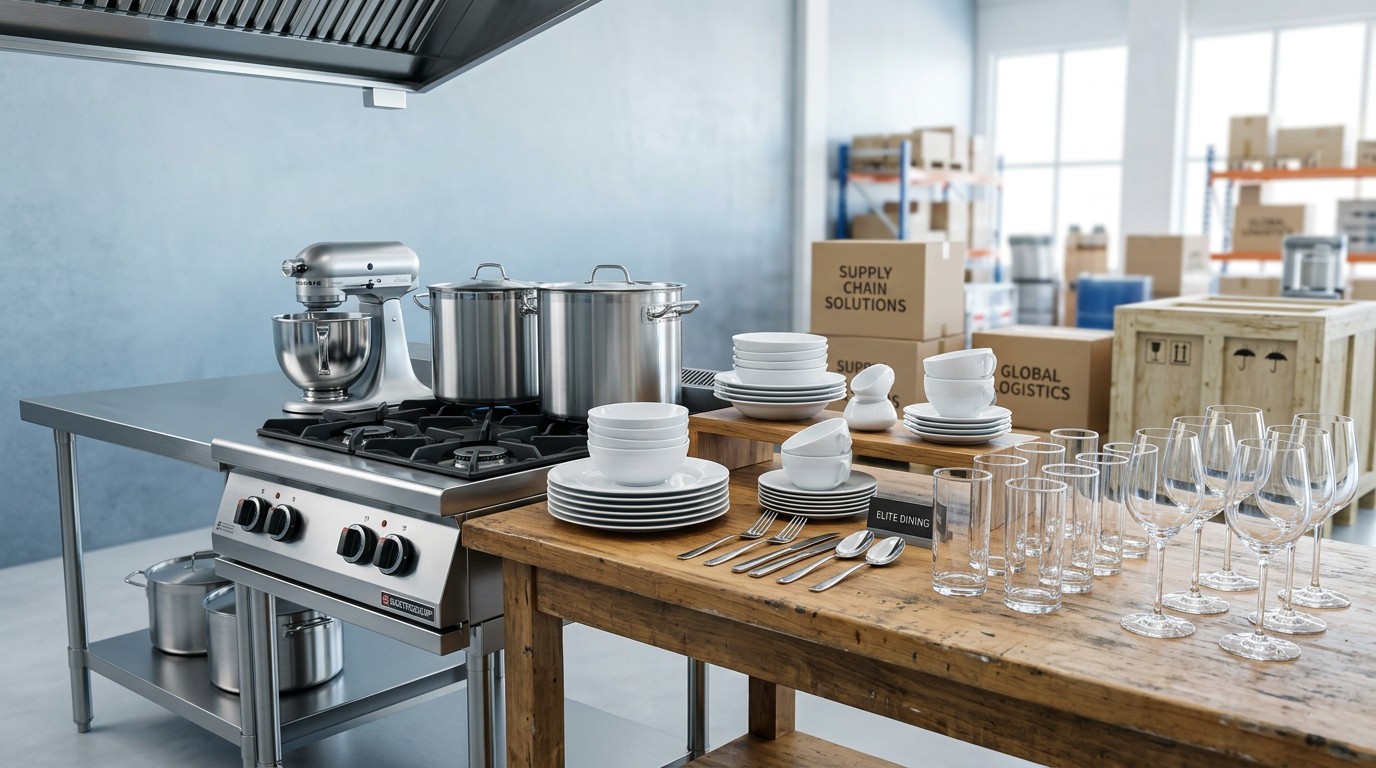
In the broader kitchen equipment market, buyers increasingly prefer supply partners that can coordinate multiple tabletop categories under one sourcing plan. This is particularly useful when silverware must complement ceramic serving plate collections, glass water cup lines, and porcelain dinnerware for casual dining, banquet service, or premium hospitality environments.
Another reason selection matters is labor efficiency. Silverware with poor finishing, deep grooves, or weak edge polishing can trap residues and require additional washing time. Over 6 to 12 months, that extra handling can affect labor hours, machine wear, and rewash rates, especially in high-turnover kitchens where dishwashing speed is a critical KPI.
Core Business Risks in Bulk Orders
- Short service life caused by low-grade stainless steel, leading to visible corrosion or surface dullness within 3 to 9 months.
- Unstable deliveries that disrupt opening schedules, seasonal promotions, or hotel banquet events.
- Inconsistent style or finish that weakens brand presentation across multiple locations.
- Poor packaging protection, resulting in scratches, mixed SKUs, or count discrepancies during inbound inspection.
The table below outlines how different commercial settings prioritize silverware purchasing factors. This helps buyers align specification decisions with real operating needs instead of using one generic standard for every project.
The key takeaway is that the best stainless steel silverware is not always the heaviest or most polished option. The right product is the one that fits the service model, expected wash cycles, target image, and reorder strategy of the buyer’s operation.
How to Evaluate Material Grade, Construction, and Finish
Material grade is the starting point for any stainless steel silverware buying guide. In commercial procurement, buyers commonly compare 18/0 and 18/8 compositions. An 18/0 option contains chromium but little or no nickel, which usually lowers cost and works well for value-driven projects. An 18/8 option adds nickel, which generally improves corrosion resistance and surface luster, making it suitable for premium dining or humid environments.
Thickness and weight should be checked together. A dinner fork in a bulk hospitality program may range from about 2.0 mm to 3.5 mm depending on style and target segment. Thin pieces may reduce upfront spending, but if they bend under regular use or feel too light in hand, replacement frequency may increase. For hotels and full-service restaurants, mid-range to heavier construction often offers a better 12- to 24-month value balance.
Surface finish affects both visual appeal and maintenance. Mirror polish is common in upscale service because it coordinates well with porcelain dinnerware and formal tabletop settings. Satin or stonewashed finishes can hide minor scratches better in high-turnover environments. Buyers should ask for finish consistency across lots, because mixed polish levels can become visible when settings are placed side by side.
Edge treatment is another quality indicator that is often overlooked. Smooth fork tines, rounded spoon bowls, and well-finished knife handles improve user comfort and reduce cleaning issues. In large orders, requesting 5 to 10 sample pieces per SKU for handling tests is usually more useful than relying on catalog photos alone.
Key Material and Build Checks
The following comparison helps procurement teams screen specifications before placing trial orders or confirming production. It can also be used when comparing offers from multiple suppliers in China, Germany, Italy, Japan, or other established kitchen equipment manufacturing markets.
This comparison shows why price-per-piece should never be the only benchmark. Material composition, thickness, and finish together determine whether a bulk order supports operational durability or simply creates a lower invoice today and a higher replacement budget later.
Practical sample review steps
- Inspect 5 to 10 random samples under bright light for scratches, polish variation, and burrs.
- Compare weight and balance in hand, especially for dinner knife and tablespoon items.
- Run 20 to 30 dishwasher cycles if possible to check surface stability and stain tendency.
- Place samples with ceramic serving plate and glass water cup sets to confirm visual coordination.
Matching Silverware to Dining Concept, Tabletop Range, and User Experience
A successful bulk order should support the full dining environment, not just the cutlery drawer. Stainless steel silverware must fit the table concept, meal format, and brand positioning. For example, a modern hotel restaurant may prefer clean, straight-line profiles that pair with porcelain dinnerware and a slim glass water cup, while a banquet venue may choose more decorative handles for formal presentation.
Menu type also matters. Steak service, seafood dining, buffet breakfast, and school catering each require different item mixes. Buyers should determine whether they need only standard 4-piece sets or a larger program with dessert spoon, tea spoon, steak knife, serving spoon, and specialty utensils. A mismatch in assortment can create stock gaps within 2 to 8 weeks of launch.
Operational staff should be involved early in specification review. Servers care about tray handling and table setup speed, while dishwashing teams notice stacking behavior, stuck nesting, and water spot visibility. Their input often identifies issues that decision-makers do not see in catalogs, especially when thousands of pieces move daily between dining room and wash area.
User experience also includes comfort. A fork that looks elegant but has sharp transitions near the neck may feel awkward in regular use. In premium hospitality, the tactile impression of a spoon or knife can influence guest perception nearly as much as plate design or glass clarity.
Typical Item Planning for Bulk Orders
- Casual restaurant program: dinner fork, dinner knife, tablespoon, teaspoon, with reorder safety stock of 8% to 12%.
- Hotel all-day dining: core 4-piece set plus dessert spoon and service utensils for buffet rotation.
- Banquet package: extra 10% to 15% over seat count to cover peak events, breakage, and back-of-house sorting delays.
- Institutional dining: simplified SKU mix to improve counting speed and reduce loss rates.
The next table shows how silverware style planning can align with related tabletop categories in a commercial kitchen equipment sourcing program.
For most buyers, the best result comes from sourcing silverware as part of a coordinated tabletop strategy. That approach reduces style mismatch, simplifies supplier communication, and improves brand consistency across every guest touchpoint.
Supplier Screening, MOQ, Lead Time, and Quality Control for Bulk Orders
Supplier reliability is just as important as product quality. In international kitchen equipment sourcing, buyers commonly compare factories, trading partners, and integrated supply companies. Each model has advantages, but the evaluation should always include communication speed, sampling capability, packaging control, document accuracy, and order traceability.
MOQ can vary widely by design and packaging method. Standard styles may allow lower starting quantities, while custom logo work, gift boxing, or special finishes usually require higher thresholds. As a practical benchmark, buyers should ask for MOQ by SKU, MOQ by mixed container, and MOQ for private labeling. Those three figures often affect the real landed cost more than the quoted unit price.
Lead time should be reviewed in stages rather than as one number. Sample preparation may take 7 to 15 days, order confirmation and production planning another 3 to 7 days, and mass production 20 to 45 days depending on quantity, finish complexity, and peak season. For multi-category kitchen equipment projects that include silverware, porcelain dinnerware, and glass water cup lines, coordination time should also be added.
Quality control for bulk silverware should include pre-production confirmation, in-process checks, and final inspection. Buyers should confirm count accuracy, polish consistency, logo placement if applicable, carton labeling, and protective packaging. Even a 2% count shortage in a 20,000-piece order can disrupt project rollout and create urgent replenishment costs.
Recommended supplier review checklist
- Request recent production photos or sample videos for the same or similar stainless steel silverware style.
- Confirm standard packaging quantity per carton, inner pack structure, and scratch protection method.
- Ask how finish consistency is checked across production batches and mixed SKUs.
- Review typical lead time ranges for repeat orders, not only first orders.
- Clarify replacement handling for count shortage, visible defects, or transit-related damage.
Common procurement mistakes to avoid
One common mistake is approving a sample without documenting weight, finish, dimensions, and packaging details in the purchase agreement. Another is mixing too many patterns in one trial order, which makes quality comparison difficult. Buyers should also avoid evaluating only factory price while ignoring freight efficiency, breakage protection, and replenishment responsiveness over the next 6 to 12 months.
A disciplined supplier selection process lowers risk across the entire kitchen equipment procurement plan. It supports smoother inbound receiving, more accurate forecasting, and better coordination with other operational supplies used in restaurants, hotels, and commercial kitchens.
Cost Planning, Reordering Strategy, and Long-Term Value
The lowest quote does not always produce the lowest ownership cost. In bulk silverware purchasing, buyers should estimate total cost across product life, including replacement rate, washing labor, sorting time, damage in transit, and emergency top-up orders. A product that costs 8% to 15% more initially may still be more economical if it lasts significantly longer under commercial use.
A practical approach is to build a 3-part budget model: initial purchase cost, operating loss or replacement reserve, and reorder logistics. For example, a hotel or chain restaurant may hold 10% to 20% extra stock beyond active service count to cover peak demand, missing pieces, and dishwasher losses. This reserve protects service continuity without forcing costly rush procurement.
Reorder strategy should consider standardization. If all locations use the same spoon, fork, and knife profile, cross-location balancing becomes easier and procurement data becomes cleaner. For growing foodservice groups, standard SKUs can reduce training complexity and improve purchasing leverage during annual or semiannual sourcing cycles.
Buyers should also factor in visual aging. In high-traffic service, minor scratches, water spotting, and finish fade may affect when silverware is replaced for front-of-house use, even if the items remain functional. This is especially relevant in hospitality settings where the tabletop must remain consistent with ceramic serving plate presentation and premium glassware.
FAQ for procurement teams and operators
How many extra pieces should be ordered for a new opening?
A common planning range is 10% to 20% above active seat-count requirements. Banquet-heavy hotels or buffet operations may need 20% to 30% reserve because circulation, sorting, and event peaks are less predictable.
What is a reasonable bulk order lead time?
For standard items, buyers often plan 4 to 8 weeks including sample approval and production. Custom logo, special finish, or multi-category tabletop programs may extend that to 6 to 10 weeks depending on season and shipping route.
Which indicators matter most during comparison?
Focus on 4 core areas: material grade, thickness consistency, finish quality, and supply reliability. After that, review packaging method, MOQ flexibility, and how well the silverware coordinates with porcelain dinnerware, ceramic serving plate assortments, and glass water cup selections.
Is heavier silverware always better?
Not always. Heavier pieces may signal better durability and a more premium feel, but the right weight depends on concept, guest expectations, and labor handling. Overly heavy items can increase tray weight and reduce service comfort in high-volume operations.
Choosing stainless steel silverware for bulk orders is ultimately a decision about performance, brand fit, and supply dependability. The best buying outcomes come from evaluating material grade, gauge, finish, assortment planning, and supplier execution together rather than in isolation. If you are building or upgrading a tabletop program for restaurants, hotels, catering operations, or broader kitchen equipment procurement, now is the right time to review your specifications, compare options carefully, and secure a solution that supports both daily operations and long-term cost control. Contact us to discuss product details, request a tailored sourcing plan, or explore more commercial kitchen and tabletop solutions.
Popular Tags
Kitchen Industry Research Team
Dedicated to analyzing emerging trends and technological shifts in the global hospitality and foodservice infrastructure sector.
Industry Insights
Join 15,000+ industry professionals. Get the latest market trends and tech news delivered weekly.
No spam. Unsubscribe anytime.

Contact With us
Contact:
Anne Yin (Ceramics Dinnerware/Glassware)
Lucky Zhai(Flatware)