
Foodservice equipment suppliers: what separates reliable partners
Choosing among foodservice equipment suppliers is more than a price comparison—it is a strategic decision that affects operational efficiency, food safety, lifecycle cost, and long-term scalability. For business evaluators, the real difference lies in a supplier’s manufacturing standards, product consistency, technical support, and ability to adapt to evolving demands for smart, energy-efficient kitchen solutions. This article explores the key traits that distinguish reliable partners in a competitive global market.
In commercial kitchens, central production facilities, hotel operations, and food processing environments, equipment decisions have a direct impact on throughput, compliance, labor use, and maintenance budgets. A supplier that looks competitive on unit price may still create costly delays through inconsistent build quality, weak after-sales service, or limited spare parts access. For procurement and evaluation teams, the goal is to identify suppliers that reduce operational risk over a 3- to 7-year equipment lifecycle, not only at the point of purchase.
The global kitchen equipment market is also changing fast. Buyers are now comparing not only stainless steel grades, heating systems, refrigeration performance, and production capacity, but also digital controls, energy consumption, automation compatibility, and service responsiveness within 24-72 hours. That shift makes supplier assessment more complex and more important.
What reliable foodservice equipment suppliers consistently deliver
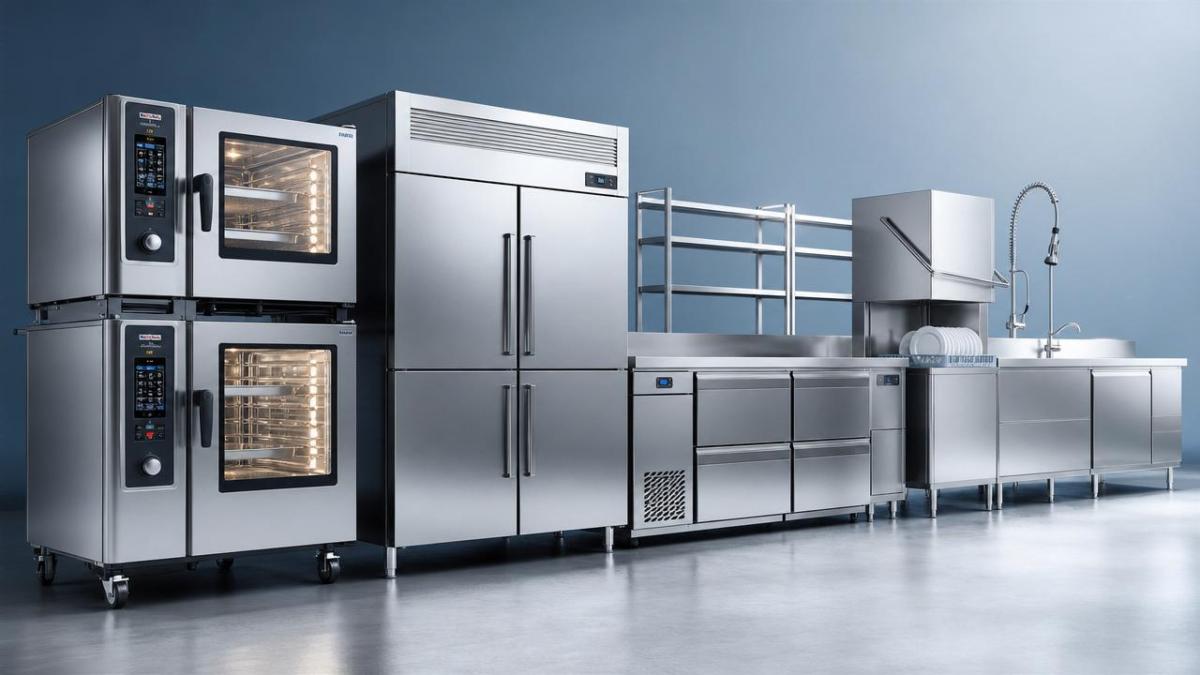
Reliable foodservice equipment suppliers distinguish themselves through consistency, traceability, technical competence, and execution discipline. In practice, that means products arriving with stable specifications, documented materials, clear operating parameters, and support that continues after installation. For a business evaluator, these factors are easier to measure than marketing claims and often reveal whether a supplier can support multi-site growth.
Manufacturing control is more important than catalog size
A large product range can be useful, but range alone does not indicate reliability. What matters more is whether the supplier controls key production steps, maintains stable sourcing for core components, and follows repeatable inspection routines. For example, in cooking equipment, heat distribution tolerance, control panel durability, and welded joint consistency all influence field performance over the first 12-24 months.
Business evaluators should verify whether the supplier can explain its quality checkpoints in concrete terms: incoming material inspection, in-process testing, final functional testing, and packaging verification. Even a 2%-5% defect rate in high-use kitchen environments can trigger service calls, downtime, and labor disruption across multiple locations.
Key questions to ask during supplier assessment
- How many inspection stages are used before shipment: 3, 4, or more?
- What are the standard lead times for core product lines: 15-30 days or 45-60 days?
- Which components are sourced externally, and what is the backup plan if one vendor fails?
- Can the supplier maintain specification consistency across 2 or more repeat orders?
- What is the typical response window for technical issues: under 24 hours, 48 hours, or longer?
The table below shows practical indicators that help separate dependable foodservice equipment suppliers from transactional vendors that focus mainly on shipment volume.
The strongest pattern is that reliable suppliers make uncertainty smaller at every stage. They provide measurable delivery windows, usable technical files, and predictable communication. That reduces hidden costs in installation planning, staff training, and maintenance scheduling.
Support capability affects total cost of ownership
When buyers compare foodservice equipment suppliers, purchase price often gets the first attention. Yet the bigger financial question is total cost over time: energy use, service frequency, spare parts availability, operator training, and downtime recovery. A fryer, oven, dishwasher, or refrigeration unit that saves 8%-15% in energy use may justify a higher initial cost if utilization is daily and annual runtime exceeds 2,000 hours.
The same logic applies to maintenance. If routine servicing requires one visit every 6 months rather than every 3 months, or if parts can be shipped within 5-10 days instead of 3-4 weeks, operating disruption falls sharply. For chain restaurants and hospitality groups, service reliability is often worth more than a small discount on the front end.
How business evaluators should compare suppliers across risk, performance, and scalability
A strong supplier review process should move beyond generic qualification checklists. The most effective approach uses a weighted model covering 4 core dimensions: product fit, operational reliability, service capability, and expansion readiness. This helps procurement teams avoid overvaluing price and undervaluing implementation risk.
Build an evaluation matrix around operational reality
Not all kitchens have the same priorities. A hotel banquet kitchen may focus on batch cooking capacity, regeneration speed, and holding performance. A quick-service chain may prioritize compact footprint, repeatability, and cleaning time under 20 minutes per station. A food processing facility may emphasize throughput per hour, washdown suitability, and integration with upstream or downstream handling systems.
That is why the selection matrix should translate equipment features into operational outcomes. Capacity should be measured against actual meal volume, not brochure maximums. Power ratings should be matched to site utility limits. Digital controls should be reviewed for multilingual use, access permissions, and staff training requirements within 1-3 operating shifts.
The following comparison framework can help business evaluators score foodservice equipment suppliers in a structured way before final negotiation.
This matrix helps teams compare suppliers on business impact rather than presentation quality. It also creates a clearer basis for cross-functional discussion between procurement, operations, engineering, and finance.
Red flags that often appear late in the buying process
Some supplier risks are not visible in the quotation stage. They emerge only when layout drawings are reviewed, utility requirements are confirmed, or trial production begins. One common issue is unclear customization boundaries. A supplier may say it can modify dimensions, voltage, burner configuration, or control systems, but may not define which changes add 7 days, 15 days, or 30 days to lead time.
Another red flag is weak spare parts planning. If high-wear items such as gaskets, thermostats, switches, baskets, nozzles, or door seals are not included in recommended service stock, even a minor failure can delay a kitchen line. For high-volume operations, keeping 6-12 months of critical consumables and wear parts on forecast is often more practical than ordering reactively.
Common warning signs
- Technical drawings are incomplete or unavailable before deposit.
- Power, gas, drainage, or ventilation requirements are described only generally.
- Warranty terms exclude core components without clear explanation.
- There is no named after-sales contact or escalation path.
- Trial samples differ materially from mass-production specifications.
Why smart, efficient, and service-ready suppliers gain long-term advantage
The kitchen equipment sector is moving toward automation, intelligent control, and lower energy consumption. That shift changes what buyers should expect from foodservice equipment suppliers. A dependable partner is no longer just a fabricator or exporter. It increasingly needs to support digital operation, usage monitoring, and equipment ecosystems that fit labor-constrained kitchens.
Energy and automation are now procurement variables
Energy-efficient cooking and refrigeration equipment can reduce operating expense in measurable ways, especially in facilities running 10-16 hours per day. Features such as insulated cavities, staged heating, variable-speed fans, demand-based ventilation interface, and programmable cooking cycles can help improve consistency while controlling utility load. These are no longer premium-only considerations; they are becoming standard evaluation points.
Automation also matters beyond labor reduction. In central kitchens and food processing settings, automated handling or programmable controls can improve portion consistency, shorten training time, and reduce operator error. If onboarding a new employee takes 2 days instead of 5 due to simpler interfaces or saved recipe settings, operational flexibility improves immediately.
Suppliers should support implementation, not just shipment
Implementation quality often determines whether an equipment project succeeds. The best foodservice equipment suppliers support a sequence that includes requirement review, layout validation, utility check, production scheduling, shipment preparation, installation guidance, and post-startup follow-up. Even for standard products, this 6- to 7-step workflow reduces avoidable mistakes.
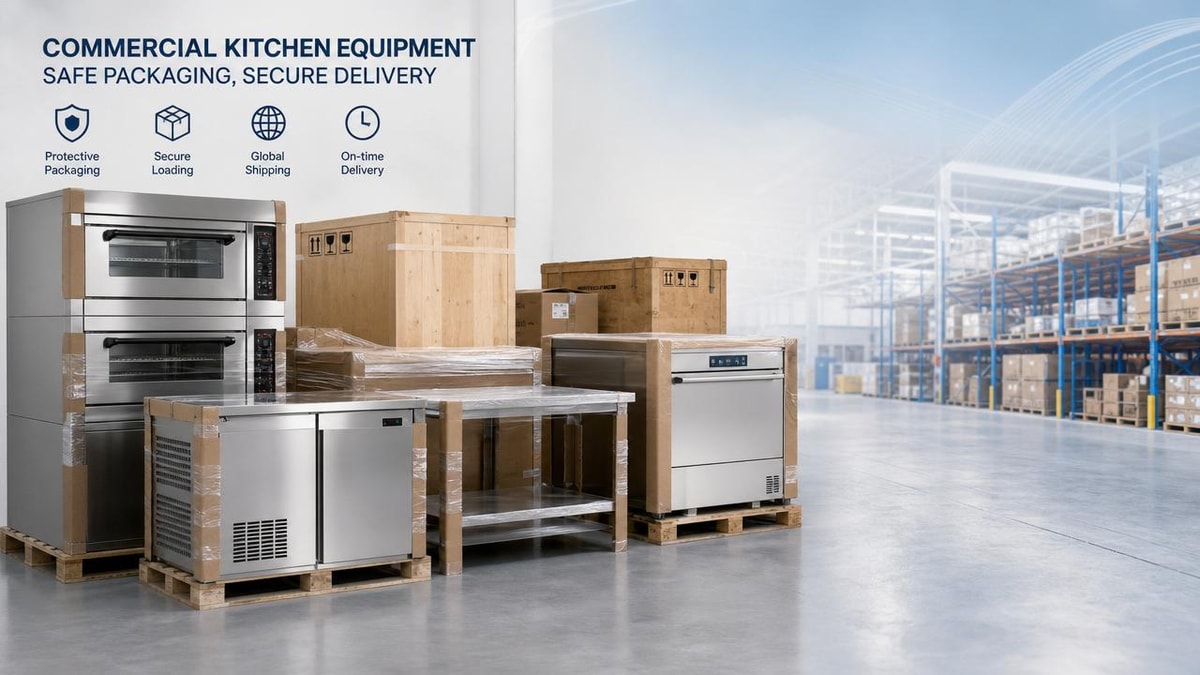
In international sourcing, the need for coordination is even greater. Buyers may be comparing suppliers from China, Germany, Italy, Japan, or regional distributors. That makes communication quality, packaging durability, documentation accuracy, and export readiness central to risk control. A supplier that answers quickly but cannot align packaging, labeling, and spare parts planning may still create delays after arrival.
Practical implementation checklist
- Confirm utility requirements at least 2-3 weeks before shipment.
- Review installation clearances, drainage points, and ventilation interface.
- Request operator manuals and maintenance lists before equipment arrives.
- Define spare parts priority into critical, routine, and optional categories.
- Schedule training for operators, supervisors, and maintenance personnel separately.
What a confident final supplier decision looks like
A strong final decision rarely comes from one factor alone. It comes from alignment across specification stability, application fit, service readiness, and long-term business value. The most reliable foodservice equipment suppliers usually perform well in the same pattern: they communicate clearly, document thoroughly, quote realistically, and remain engaged after delivery.
For business evaluators, the most useful question is not “Who offered the lowest initial price?” but “Which supplier gives us the highest confidence over the next 36-60 months?” That perspective improves vendor selection for restaurants, hotel groups, central kitchens, food processors, and distributors working in a market where efficiency, hygiene, and smart operation are increasingly connected.
If you are assessing foodservice equipment suppliers for a new project, replacement cycle, or multi-site expansion, focus on evidence: inspection discipline, lead time transparency, energy-performance fit, and after-sales capability. To discuss your application, compare solution options, or get a customized sourcing plan, contact us today and explore more practical kitchen equipment solutions built for reliable operation.
Popular Tags
Kitchen Industry Research Team
Dedicated to analyzing emerging trends and technological shifts in the global hospitality and foodservice infrastructure sector.
Industry Insights
Join 15,000+ industry professionals. Get the latest market trends and tech news delivered weekly.
No spam. Unsubscribe anytime.

Contact With us
Contact:
Anne Yin (Ceramics Dinnerware/Glassware)
Lucky Zhai(Flatware)