
What catering teams often overlook in kitchen equipment planning
In catering projects, success is often shaped long before service begins. Yet many teams still focus on layout and budget while underestimating how restaurant kitchen equipment for catering affects workflow, safety, energy use, and long-term maintenance. For project managers, smart equipment planning is not just a procurement task—it is a critical step in building an efficient, scalable, and reliable kitchen operation.
The core issue is not whether a kitchen has enough equipment, but whether the selected equipment matches the menu, service model, staffing reality, compliance requirements, and growth plan. In many failed or underperforming kitchens, the problem is not a lack of investment. It is poor planning logic early in the project.
For engineering leads and project managers, this means equipment decisions should be treated as operational infrastructure. A combi oven, blast chiller, ventilation setup, warewashing system, or prep line does not only fill space on a drawing. Each choice shapes labor productivity, service speed, food consistency, utility consumption, and maintenance risk for years.
This article focuses on what catering teams most often overlook in kitchen equipment planning, why these gaps create expensive problems later, and how decision-makers can evaluate restaurant kitchen equipment for catering more strategically before installation begins.
Why equipment planning fails even in well-funded catering projects
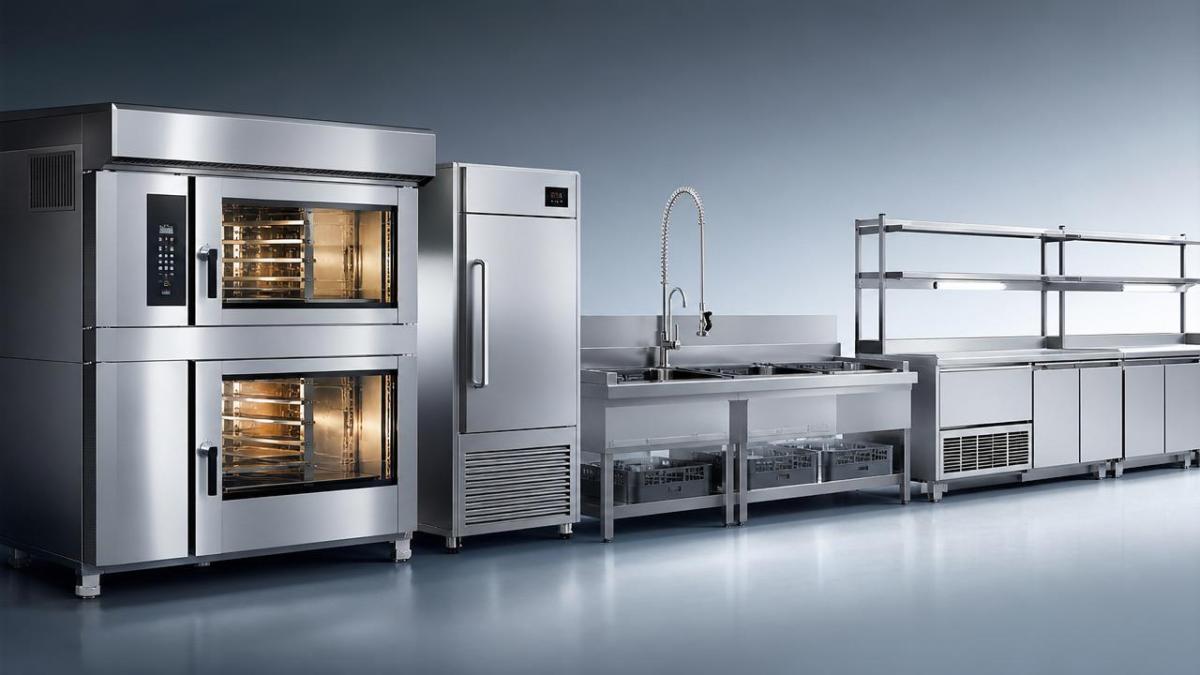
Many catering teams assume that if the layout looks efficient and the budget is approved, the kitchen plan is fundamentally sound. In practice, equipment planning often fails because teams make decisions in isolation. Designers may focus on space efficiency, chefs may focus on cooking capability, and procurement may focus on upfront price. The result is a kitchen that works on paper but struggles under real operating pressure.
The most common blind spot is treating equipment selection as a late-stage purchasing task rather than an early operational planning exercise. By the time equipment lists are finalized, the utility plan, ventilation design, workflow routes, and production targets may already be locked in. At that point, correcting equipment mismatch becomes expensive and disruptive.
Another frequent issue is overestimating theoretical capacity. A kitchen may appear fully equipped, yet actual output drops because equipment loading times, cleaning cycles, recovery speed, or staff handling requirements were never properly assessed. For project managers, this gap between specification and usable capacity is one of the most important risks to identify early.
What project managers are really trying to avoid
For project managers and engineering leaders, the priority is rarely just buying appliances. They are trying to avoid schedule delays, rework, budget overruns, operational bottlenecks, and compliance failures. Equipment planning matters because it directly affects all of these risks.
The first concern is whether the kitchen can deliver target output without adding hidden labor pressure. If the production process depends on staff constantly moving between poorly connected stations or manually compensating for equipment limitations, labor costs rise and consistency falls. This is especially damaging in catering operations where volume peaks are predictable but intense.
The second concern is lifecycle cost. Low-cost equipment can become expensive when energy use, spare parts, cleaning time, service frequency, and downtime are factored in. A cheaper fryer or oven may look attractive during procurement, but if it increases maintenance calls or slows service recovery, the total cost to the business is far higher.
The third concern is future flexibility. Catering businesses often evolve menus, service models, and production volume after launch. If equipment planning is too rigid, every operational change creates a renovation problem. The best restaurant kitchen equipment for catering supports both current demand and reasonable future adaptation.
Overlooked factor #1: matching equipment to production flow, not just menu items
A common planning mistake is selecting equipment based mainly on what appears on the menu. While menu analysis is essential, it is only the starting point. What matters more is production flow: how ingredients enter the kitchen, where prep happens, how batches move, where holding occurs, and how finished dishes are passed to service or dispatch.
For example, two operations may both serve roasted proteins, hot sides, and plated meals, but their equipment needs can differ significantly if one is banquet-based and the other supports off-site catering with staged delivery windows. The same menu category does not guarantee the same equipment logic.
Project teams should ask practical questions. Are peak loads concentrated in a short service period or spread across the day? Is food finished to order or batch cooked? Is there a need for hot holding, chilled storage between stages, or rapid regeneration? These details determine whether a kitchen needs more cooking line capacity, more holding support, or better transfer workflow.
When equipment is selected around production sequence instead of isolated dishes, kitchens operate more smoothly. This reduces crossing traffic, lowers handling errors, and improves throughput without necessarily increasing the equipment count.
Overlooked factor #2: realistic peak demand versus nameplate capacity
Equipment brochures often highlight maximum capacity, but catering operations depend on usable capacity under real conditions. A combi oven rated for a certain number of trays may not achieve the expected output if product thickness varies, loading is uneven, or opening frequency is high during peak periods.
Likewise, refrigeration and warewashing systems can underperform when ambient temperature, production intensity, and staff behavior differ from ideal assumptions. Project managers should be careful not to approve equipment based solely on technical headline figures.
A better approach is to test planning assumptions against actual service scenarios. Estimate how many meals must be produced in the busiest 30, 60, and 120 minutes. Then evaluate whether each critical piece of equipment can support that output with sufficient recovery time, cleaning allowance, and operational buffer.
This is especially important in restaurant kitchen equipment for catering because service often involves sharp spikes in demand. A kitchen that meets average daily volume may still fail during event peaks if equipment throughput is not modeled realistically.
Overlooked factor #3: utility infrastructure and energy load alignment
One of the costliest oversights in kitchen projects is choosing equipment before confirming full compatibility with power supply, gas capacity, water pressure, drainage, ventilation, and heat rejection requirements. Teams sometimes approve ideal equipment packages only to discover later that the building cannot support them without major infrastructure upgrades.
This creates a chain reaction: revised MEP work, delayed installation, unplanned budget increases, and in some cases forced substitution to lower-performing equipment. The operational impact can continue long after project handover.
Energy efficiency should also be evaluated beyond marketing claims. The relevant question is not simply whether a unit is labeled efficient, but how it performs in the intended operating pattern. Equipment that cycles heavily, requires long idle periods, or produces excess ambient heat can increase utility costs and strain HVAC systems.
For project managers, utility alignment should be treated as a decision gate, not a post-selection check. Every major equipment choice should be validated against site infrastructure, projected consumption, and the broader energy strategy of the facility.
Overlooked factor #4: cleaning, maintenance access, and downtime risk
Many kitchen equipment plans look excellent in a design review but fail in daily use because no one fully considered cleaning access and maintenance practicality. Equipment may be positioned too tightly, installed without service clearance, or selected without regard for the availability of spare parts and technical support in the local market.
These issues matter because catering kitchens do not have much tolerance for downtime. If one critical unit fails during a peak production window, the entire workflow may be affected. Recovery depends not only on equipment quality but also on how easy the equipment is to inspect, clean, repair, and temporarily bypass.
Project teams should evaluate maintenance risk at the planning stage. Key questions include: Are service panels accessible? Can the unit be moved or isolated without shutting down adjacent stations? Are replacement parts standardized? Is there qualified support nearby? What is the expected preventive maintenance frequency?
Good equipment planning reduces long-term disruption. It also supports hygiene standards, because staff are more likely to clean equipment properly when access is practical and time requirements are realistic.
Overlooked factor #5: staff capability and operational simplicity
Modern kitchens increasingly adopt smart, automated, and programmable solutions. These can bring major gains in consistency, labor efficiency, and reporting. However, advanced equipment only delivers value when the operating team can use it reliably.
A frequent mistake is selecting highly sophisticated systems for a kitchen with limited training capacity, high staff turnover, or a simple production model that does not require complex functionality. In such cases, technology can become underused, misused, or actively avoided by staff.
For project managers, the right question is not whether the equipment is advanced, but whether it is appropriate. A user-friendly interface, repeatable presets, straightforward cleaning routines, and manageable training demands often matter more than premium features that rarely support actual service needs.
This does not mean avoiding intelligent systems. It means choosing automation where it solves a clear operational problem: reducing dependence on specialist labor, improving batch consistency, lowering waste, or giving managers better control over production and maintenance data.
Overlooked factor #6: integration between stations, storage, and delivery points
Kitchen equipment is often evaluated unit by unit, but catering performance depends on system integration. Cooking equipment, cold storage, prep tables, holding cabinets, dishwashing zones, and dispatch areas must work as a connected production environment.
Problems arise when one section is upgraded while related support functions remain undersized. A kitchen may have excellent cooking capacity but insufficient refrigerated staging, poor pass design, or limited holding space. In that case, investment in premium cooking equipment does not translate into operational efficiency.
Project teams should map the full journey of food, equipment, staff, and waste. Identify transfer points where delays are likely. Assess whether handoff between prep, cook, hold, plate, and cleaning stages is balanced. Often the most important improvement is not adding more headline equipment, but eliminating friction between stations.
This systems view is especially valuable when planning restaurant kitchen equipment for catering, because the operation may involve both on-site service and timed external dispatch. Equipment should support movement and coordination, not just cooking capacity.
How to make better equipment decisions before procurement is locked
The best planning process starts with operational data, not catalog browsing. Before finalizing equipment lists, project managers should align stakeholders around service model, menu mix, batch size, peak output, labor assumptions, hygiene standards, and expected growth. Without this foundation, equipment comparisons are often misleading.
Next, translate those operational needs into measurable decision criteria. These may include hourly throughput, footprint efficiency, utility compatibility, cleaning time, recovery speed, holding performance, maintenance access, and lifecycle cost. Comparing options using these criteria leads to more defensible decisions than choosing by brand familiarity or upfront price alone.
It is also wise to involve both operations and technical teams early. Chefs, kitchen managers, MEP engineers, maintenance staff, and procurement leaders often see different risks. Bringing these views together before specification freeze helps prevent expensive late changes.
Finally, build contingency into the plan. Allow for service peaks, temporary equipment failure, menu evolution, and staffing variability. A kitchen that only works under ideal assumptions is not truly project-ready.
A practical checklist for evaluating catering kitchen equipment
Project managers can reduce planning mistakes by using a structured review checklist. First, confirm whether each equipment item supports a defined production need rather than a general preference. If the operational role is unclear, the item should be questioned.
Second, verify throughput under realistic peak conditions. Do not rely only on brochure capacity. Ask how the equipment performs with actual batch timing, loading patterns, opening frequency, and staff workflow.
Third, review infrastructure compatibility in detail. Check electrical load, gas demand, water connections, drainage, ventilation, and heat impact on surrounding areas. Small mismatches in these areas often create large project problems.
Fourth, assess total ownership cost. Include energy use, cleaning labor, preventive maintenance, spare parts, warranty terms, expected lifespan, and local service support. This is often where the true difference between two similar options becomes clear.
Fifth, evaluate usability. Can the intended team operate the equipment consistently and safely? Is training manageable? Can settings be standardized? Does the design support hygiene and fast turnaround?
When these questions are built into the planning process, teams make stronger equipment decisions and reduce the chance of post-installation regret.
Conclusion: the smartest kitchen projects treat equipment planning as risk management
What catering teams often overlook in kitchen equipment planning is not a single missing appliance. It is the broader connection between equipment choices and operational performance. When restaurant kitchen equipment for catering is selected without enough attention to workflow, realistic demand, utilities, maintenance, and staff capability, the result is usually higher cost and lower efficiency over time.
For project managers and engineering leads, the most valuable mindset shift is simple: equipment planning is not just about buying what the kitchen needs today. It is about reducing future friction, protecting service reliability, and supporting business growth with decisions that remain practical after launch.
The strongest catering projects are the ones where equipment is planned as part of an integrated system. When that happens, the kitchen becomes easier to operate, easier to maintain, and better able to deliver consistent results under pressure. That is where smart planning creates real long-term value.
Popular Tags
Kitchen Industry Research Team
Dedicated to analyzing emerging trends and technological shifts in the global hospitality and foodservice infrastructure sector.
Industry Insights
Join 15,000+ industry professionals. Get the latest market trends and tech news delivered weekly.
No spam. Unsubscribe anytime.
Contact With us
Contact:
Anne Yin (Ceramics Dinnerware/Glassware)
Lucky Zhai(Flatware)