
Restaurant Kitchen Equipment Layout Mistakes That Slow Service
Even the best kitchen staff can struggle when a poor restaurant kitchen equipment layout creates bottlenecks, extra steps, and delayed orders. For operators working in fast-paced foodservice environments, small layout mistakes often lead to slower service, higher stress, and reduced efficiency. Understanding where these problems start is the first step toward building a smoother, safer, and more productive kitchen.
When people search for advice on restaurant kitchen equipment layout, they usually are not looking for theory. They want to know why service slows down during rush periods, why staff keep crossing paths, and which layout mistakes are quietly hurting output. For kitchen users and operators, the goal is practical: reduce wasted movement, improve station flow, and make equipment placement support faster, safer work.
The most important point is simple: slow service is often caused less by staff performance and more by the way equipment, prep areas, storage, and pass lines are arranged. A strong layout helps average teams work better under pressure. A weak one makes even skilled teams struggle.
Why a Poor Restaurant Kitchen Equipment Layout Causes Slow Service
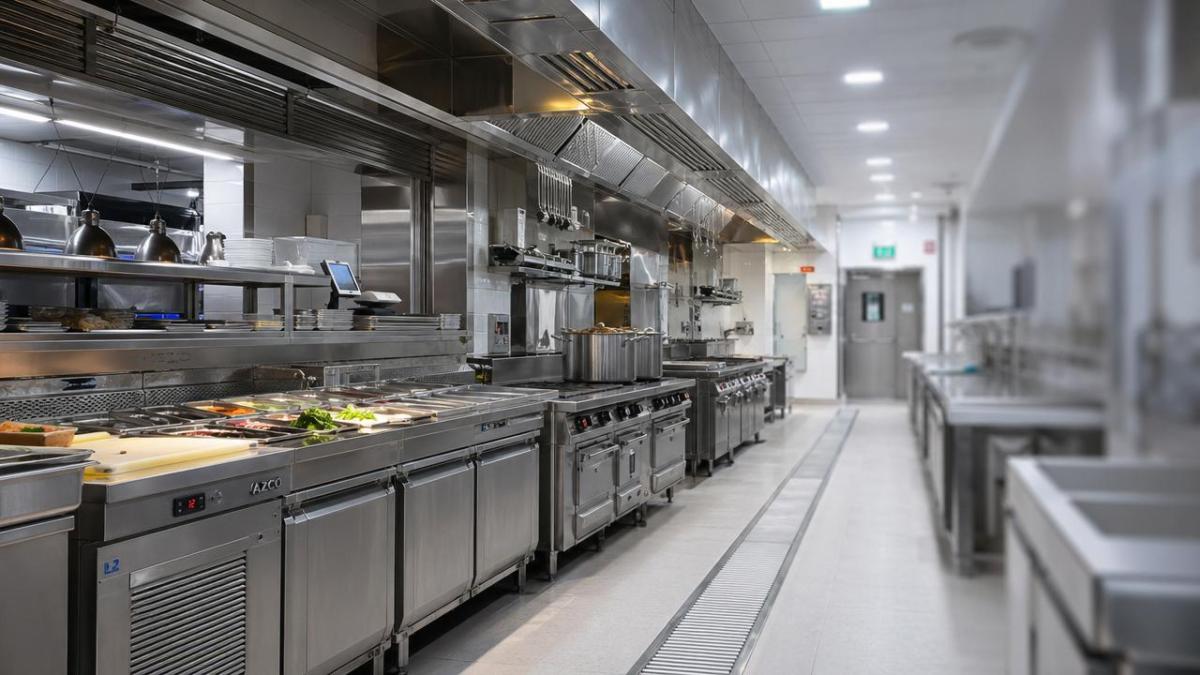
A restaurant kitchen runs on movement, timing, and coordination. If a cook has to take five extra steps every time they need refrigerated ingredients, or if the dishwasher exit blocks the path to plating, those seconds multiply across every order. During busy hours, that turns into long ticket times, mistakes, and stress.
A poor restaurant kitchen equipment layout usually creates three immediate problems. First, it increases unnecessary motion. Second, it creates traffic conflicts between stations. Third, it breaks the natural order of work from receiving and storage to prep, cooking, plating, and cleaning.
Operators feel these problems directly. They may notice that hot food waits too long before plating, that prep runs behind before service starts, or that staff keep asking others to move out of the way. These are layout warnings, not just staffing issues.
The Most Common Layout Mistakes That Slow Down Kitchen Teams
One of the biggest mistakes is placing equipment based on available space instead of workflow. A fryer, range, prep table, and refrigeration unit may all fit physically, but if they do not support the order of tasks, the kitchen becomes inefficient. Equipment should match the process, not just the floor plan.
Another common mistake is separating related stations too far apart. For example, if cold storage is far from prep, or if garnish and finishing supplies are not near the pass, staff lose time with every order. Small distance problems become major delays when repeated hundreds of times a day.
Overcrowding is another frequent issue. Some kitchens try to maximize equipment capacity by adding too many machines, tables, or shelves into limited space. This often reduces real output because staff cannot move freely, open doors safely, or work side by side without interference.
Many kitchens also fail to protect high-traffic areas. Walkways near the cooking line, pass window, dish return, and storage access points should stay clear. When these areas become shared crossing zones, the result is congestion, confusion, and slower handoffs between team members.
Another mistake is poor placement of support equipment. Ice machines, sinks, smallwares, holding cabinets, and waste bins may seem secondary compared with ovens or grills, but when they are badly positioned, they interrupt the core line repeatedly. Support tools should reduce friction, not create it.
Signs Your Layout Is the Real Problem, Not Just the Staff
Operators often blame slow service on training, communication, or staffing levels. Those factors matter, but layout problems have clear patterns. If your kitchen performs reasonably well during quiet periods but breaks down fast during rush hours, layout may be the hidden cause.
Look for repeated crossing movement. If cooks, runners, dish staff, and prep workers frequently pass through the same narrow areas, the kitchen is likely forcing conflict. Watch where people stop, wait, turn around, or backtrack. Those points show where the layout is fighting the team.
Another sign is when equipment is technically available but hard to use efficiently. A reach-in refrigerator that opens into a busy aisle, a prep surface with no nearby hand sink, or a combi oven placed too far from finishing tools can all reduce speed without looking obviously wrong on paper.
Frequent verbal coordination is another warning sign. If staff constantly have to say “behind,” “move,” “coming through,” or “where is that item?” more than normal, the space is probably not supporting natural flow. Good layouts reduce the need for constant traffic negotiation.
Long setup and breakdown times also suggest layout inefficiency. If opening prep takes too much walking or closing tasks require moving items across different areas, the problem may be equipment placement rather than staff discipline.
How to Organize Equipment Around Real Workflow
The best way to improve a restaurant kitchen equipment layout is to map work in the same order it happens. Start with receiving and storage, then prep, cooking, holding, plating, service, and dishwashing. Equipment should support this sequence as smoothly as possible.
Cold and dry storage should be easy to access from receiving and close enough to prep stations to avoid repeated long trips. Prep equipment such as tables, slicers, mixers, and sinks should be grouped according to menu tasks. If prep for multiple stations shares ingredients, central prep should reduce duplicate movement.
The cooking line should be arranged based on menu volume and cooking sequence. High-use equipment needs the best positions. For example, if grilled proteins and fried sides dominate service, grill and fryer placement should support fast coordination with nearby seasoning, landing space, and hot holding.
Plating and pass areas should sit close to the final production point. Staff should not need to carry finished food through unrelated traffic. Keep plates, garnishes, heat lamps, ticket systems, and service handoff organized in one logical zone to reduce delays at the last step.
Dishwashing should be separated enough to prevent dirty return traffic from interfering with food production, but still efficient for staff access. A badly placed dish area can block service flow, create wet-floor risks, and slow the return of essential pans, utensils, and plates.
What Operators Should Check at Each Station
At the prep station, ask whether ingredients, cutting tools, scales, sinks, and waste disposal are all within easy reach. If workers must constantly leave the station, productivity drops. The station should support complete task cycles with minimal interruption.
At the hot line, check whether staff can move from one cooking function to another without collisions. Equipment doors, fryer baskets, oven access, and landing surfaces all need enough clearance. Heat-producing equipment should be arranged so that speed does not come at the cost of safety.
At the cold station or salad station, assess refrigeration access, topping layout, and plating reach. If ingredients are hard to replenish during service, the station will slow down at peak demand. Refill logic matters as much as front-facing organization.
At the pass, focus on clarity and handoff speed. Tickets, plated food, garnishes, and service pickup should not compete for the same small surface. If expo or service staff are blocking cooks, the pass may be undersized or poorly positioned.
At the cleaning area, review the path of dirty items, pre-rinse, rack loading, machine unloading, drying, and return storage. A smooth dish area protects the rest of the kitchen from backups. When dishes pile up, the problem often spreads into prep and service quickly.
How Small Layout Changes Can Improve Speed Without Full Renovation
Not every operator can rebuild a kitchen, but many service problems can be reduced with targeted adjustments. Moving mobile prep tables, reassigning underused equipment, changing shelf placement, or relocating frequently used smallwares can improve flow faster than expected.
Start by identifying the most repeated wasted movement. This may be walking for sauces, reaching past others for trays, or crossing the line for refrigeration. Fixing one high-frequency problem often produces noticeable gains during service.
Another effective change is creating clearer station boundaries. Shared tools and ingredients can be useful, but too much overlap creates confusion. Give each station what it needs most often, and centralize only what truly benefits from shared access.
Review vertical space as well as floor space. Wall shelving, overhead racks, and organized undercounter storage can reduce clutter and keep critical items close. The goal is not to add more items everywhere, but to place the right items where they support work best.
You can also improve flow by adjusting service sequencing. Sometimes layout and process must be corrected together. For example, changing prep batch timing, assigning a dedicated runner, or moving finishing tasks closer to the pass can reduce strain on a weak area while longer-term improvements are planned.
Safety, Fatigue, and Service Speed Are Connected
Layout problems do not only slow production. They also increase fatigue, stress, and accident risk. Repeated twisting, extra lifting, wet-floor crossings, and tight workspaces wear staff down over time. Tired staff move slower, communicate less clearly, and make more mistakes.
A better restaurant kitchen equipment layout supports ergonomic movement. Frequently used tools should be easy to reach. Heavy ingredients should not require awkward carrying across long distances. Hot and cold zones should be organized to reduce dangerous crossing paths.
Safety also affects consistency. When operators feel forced to rush through poorly designed spaces, they may skip steps, stack unsafely, or improvise around blocked equipment. These workarounds may keep service moving for a shift, but they usually damage quality and reliability in the long run.
How to Evaluate a Layout Before Buying New Equipment
Many operators assume the solution to slow service is adding more equipment. In reality, adding equipment to a weak layout can make the problem worse. Before purchasing anything new, assess whether current placement is already limiting the kitchen’s performance.
Start with observation during peak service. Track where delays happen, how often staff backtrack, and which stations create queues. Measure not only equipment capacity, but access efficiency. A fast oven does not help much if trays cannot move in and out smoothly.
Next, compare the menu mix with the current line setup. If the kitchen has evolved over time, equipment may reflect old priorities rather than current sales patterns. The most valuable positions should go to the most important tasks, not to legacy items used only occasionally.
Finally, think in systems. Refrigeration, prep surfaces, cooking equipment, holding units, ventilation, utilities, and cleaning areas must work together. The right investment is often not the largest machine, but the layout change that unlocks smoother flow across the whole kitchen.
Conclusion: A Faster Kitchen Starts With Smarter Layout Decisions
Slow service is often a layout problem hiding inside daily operations. When equipment placement creates extra steps, blocked paths, and broken workflow, staff have to fight the space every shift. That leads to slower ticket times, more stress, and less consistent results.
For kitchen users and operators, the most useful approach is practical observation. Watch movement, identify friction points, and organize each station around real tasks. A better restaurant kitchen equipment layout does not need to be complicated. It needs to match how the team actually works.
When storage, prep, cooking, plating, and cleaning are connected in a logical way, service becomes faster and safer. Staff waste less energy, communication improves, and the kitchen can handle pressure with more control. In the end, smart layout decisions are not just about equipment. They are about making daily work easier and helping the whole operation perform better.
Popular Tags
Kitchen Industry Research Team
Dedicated to analyzing emerging trends and technological shifts in the global hospitality and foodservice infrastructure sector.
Industry Insights
Join 15,000+ industry professionals. Get the latest market trends and tech news delivered weekly.
No spam. Unsubscribe anytime.
Contact With us
Contact:
Anne Yin (Ceramics Dinnerware/Glassware)
Lucky Zhai(Flatware)