
Hotel kitchenkitchen design mistakes that slow banquet service
In high-volume hospitality operations, even small hotel kitchenkitchen design mistakes can create major delays during banquet service, affecting food quality, staff coordination, and guest satisfaction. For hotel owners, procurement managers, and foodservice decision-makers, understanding how layout, equipment selection, and workflow interact is essential to building faster, safer, and more efficient banquet kitchens that support long-term operational performance.
Understanding banquet-focused hotel kitchenkitchen design
Hotel kitchenkitchen design is more than arranging cooking equipment inside a back-of-house space. In banquet operations, it is the practical relationship between production volume, staff movement, food holding, dish-up timing, sanitation control, and service speed. A kitchen that works well for à la carte dining may still fail during a 300-person wedding, a conference lunch rush, or a multi-course gala because banquet service depends on synchronized output rather than isolated cooking performance.
This is why decision-makers increasingly treat hotel kitchenkitchen design as an operational system, not a decoration or construction task. The rise of smart kitchen technologies, automated food processing support, energy-efficient equipment, and digital kitchen management has made design choices even more strategic. Poor planning can lock a hotel into years of labor waste, service bottlenecks, inconsistent plating, and avoidable maintenance costs.
Why the industry pays close attention to design mistakes
Across the kitchen equipment industry, banquet kitchens are among the most demanding environments. Unlike smaller restaurant kitchens, hotels must often serve breakfast buffets, room service, events, staff meals, and premium banquets from interconnected production zones. That complexity means minor hotel kitchenkitchen design errors can quickly multiply under pressure. When workflow is poorly mapped, staff cross paths, hot food waits too long, plating becomes inconsistent, and equipment is used below its intended efficiency.
For business leaders, these issues are not only culinary concerns. They affect labor productivity, customer reviews, event profitability, food safety compliance, utility consumption, and equipment lifespan. In a market where hotels are expected to deliver both speed and quality, kitchen design directly influences brand reputation and operating margin.
The most common hotel kitchenkitchen design mistakes that slow banquet service
The following mistakes appear frequently in banquet-oriented facilities, especially when design decisions are made without enough input from chefs, operations managers, engineering teams, and equipment suppliers.
1. Separating production zones without considering service sequence
A common error is organizing the kitchen by room availability rather than by food flow. If preparation, hot cooking, finishing, holding, plating, and dispatch are too far apart, every tray or trolley takes longer to move. During banquet peaks, those extra seconds become serious delays.
2. Undersized plating and pass areas
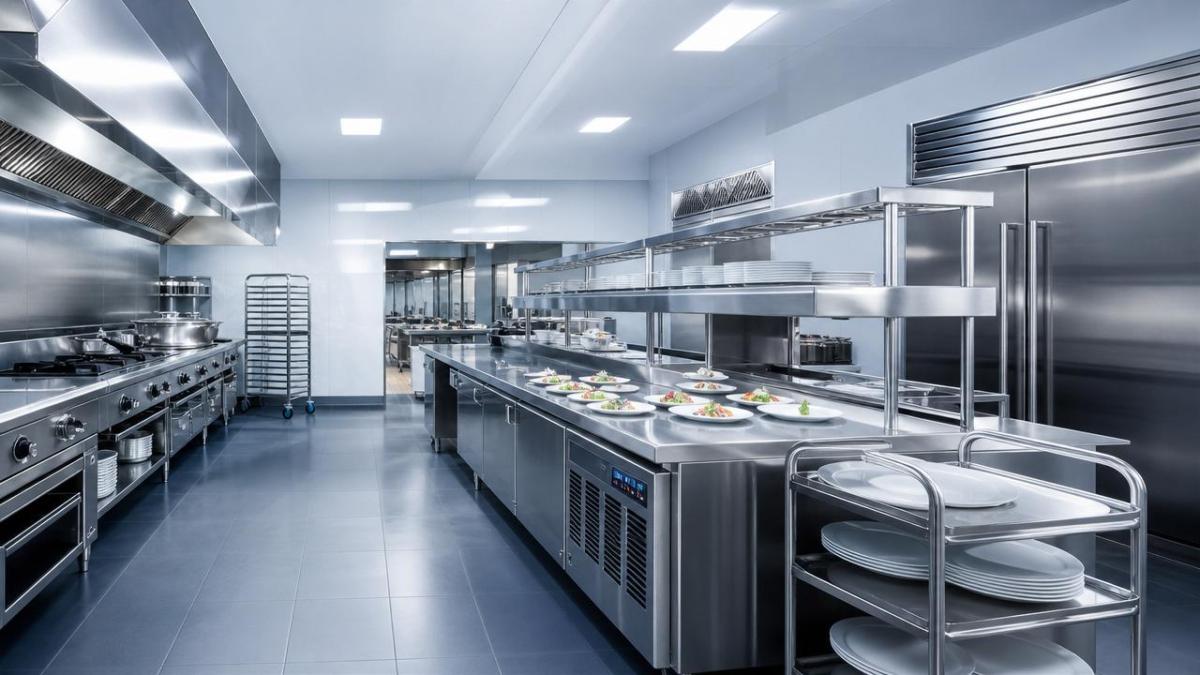
Banquet service depends on assembly speed. Many kitchens invest heavily in cooking equipment but leave too little room for final plating, garnish staging, and quality checks. When dozens of plates must be finished simultaneously, cramped pass lines slow the entire chain.
3. Inadequate hot holding and cold holding capacity
Without properly positioned holding cabinets, blast chill support, or temperature-controlled transfer points, teams are forced to improvise. This creates waiting time, food degradation, and unnecessary rework. In hotel kitchenkitchen design, holding zones are not secondary; they are part of service timing control.
4. Cross-traffic between clean, dirty, and active production routes
If used dish return, pot wash, receiving, and banquet dispatch share the same narrow corridor, congestion is unavoidable. This not only slows service but also introduces hygiene risks and staff safety issues. Efficient banquet kitchens reduce route conflict as much as possible.
5. Choosing equipment by specification sheet alone
High-capacity combi ovens, ranges, kettles, or conveyors do not guarantee efficiency if they are poorly placed or mismatched to menu style. Equipment must fit production rhythm, batch size, menu complexity, utility access, and labor skill level. A technically advanced unit can still become a bottleneck when integrated badly.
6. Ignoring banquet logistics beyond the kitchen door
Many delays happen between kitchen output and ballroom delivery. Long transport routes, limited service elevators, poorly located staging areas, and no dedicated trolley parking can ruin an otherwise capable kitchen. Effective hotel kitchenkitchen design must connect kitchen operations to event spaces, not treat them separately.
Industry overview: where delays usually start
For decision-makers evaluating renovation or new-build projects, the table below summarizes how banquet delay risks commonly appear and why they matter operationally.
Business value of getting hotel kitchenkitchen design right
Well-planned banquet kitchens create measurable value across multiple business areas. First, they improve throughput without automatically increasing headcount. When workstations are logically positioned, the same team can produce more meals with less stress. Second, they support food quality by reducing wait time between cooking, finishing, and service. Third, they strengthen food safety through clearer zoning, cleaner routing, and more reliable temperature control.
There is also a financial advantage. Better hotel kitchenkitchen design lowers hidden costs linked to overproduction, staff overtime, equipment misuse, and emergency maintenance. In addition, energy-efficient kitchen solutions and intelligent cooking equipment can contribute to lower utility bills when installed as part of a coherent workflow system rather than as isolated upgrades.
Which hotel operations benefit most from improved design
Not every property has the same banquet profile, so design priorities should reflect the operating model. The greatest gains usually appear in the following situations.
Practical guidance for evaluating banquet kitchen performance
A strong review process starts with actual operating data. Decision-makers should examine event size patterns, menu complexity, average dispatch time, labor movement, trolley routes, and peak-hour equipment use. Instead of asking only whether the kitchen looks modern, ask whether it supports predictable output at scale.
It is also useful to conduct a workflow audit during live or simulated banquet service. Observe where staff wait, where plates accumulate, where dirty items return, and where supervisors lose visibility. These points often reveal hotel kitchenkitchen design weaknesses that are not obvious on architectural drawings.
When planning improvements, prioritize changes that remove friction across the full chain: receiving, cold storage, prep, cooking, holding, plating, dispatch, return, and wash-up. In many cases, modest adjustments such as better pass-line positioning, added holding equipment, improved shelving, or digital production monitoring can create significant gains without requiring a full rebuild.
How modern kitchen equipment supports faster banquet service
The kitchen equipment industry is moving toward automation, intelligence, and sustainability, and these trends are highly relevant to banquet kitchens. Smart combi ovens, programmable holding systems, blast chilling solutions, induction-based cooking lines, and digital kitchen management platforms help standardize output and reduce service variability. However, technology works best when integrated into a clear operational design.
For example, automated cooking equipment can improve consistency, but if the transfer route to plating is too long, the speed benefit is lost. Energy-efficient appliances can lower operating cost, but if they are installed in a layout that creates congestion, labor inefficiency may offset utility savings. In short, good hotel kitchenkitchen design aligns advanced equipment with real movement patterns and banquet timing requirements.
Key considerations before renovation or new construction
Before approving capital investment, business leaders should confirm five essentials: projected banquet volume, menu style range, staffing model, event-space logistics, and utility infrastructure. These factors determine whether the kitchen needs centralized production, flexible finishing stations, modular equipment, or separate banquet support zones.
It is equally important to involve multiple stakeholders early. Executive chefs understand production pressure points, engineering teams assess ventilation and utilities, procurement teams evaluate lifecycle value, and operations leaders connect kitchen performance to guest experience. The most effective hotel kitchenkitchen design outcomes usually come from cross-functional planning rather than isolated purchasing decisions.
A practical path forward for decision-makers
For hotels that want faster banquet service, fewer delays, and more reliable food quality, the starting point is not simply buying more equipment. It is identifying where hotel kitchenkitchen design interrupts flow and where layout, technology, and operational discipline fail to support each other. A structured assessment can reveal whether the priority is zoning, holding, transport, equipment matching, or digital coordination.
In a competitive hospitality market, banquet performance is a strategic asset. Hotels that invest in thoughtful hotel kitchenkitchen design are better positioned to serve large events efficiently, protect service standards, and build long-term operational resilience. For procurement managers, owners, and foodservice leaders, the smartest next step is to evaluate the kitchen as a complete production system and align future upgrades with both service goals and business growth.
Popular Tags
Kitchen Industry Research Team
Dedicated to analyzing emerging trends and technological shifts in the global hospitality and foodservice infrastructure sector.
Industry Insights
Join 15,000+ industry professionals. Get the latest market trends and tech news delivered weekly.
No spam. Unsubscribe anytime.
Contact With us
Contact:
Anne Yin (Ceramics Dinnerware/Glassware)
Lucky Zhai(Flatware)