
How restaurant supplies exporters handle changing compliance
For every restaurant supplies exporter, changing compliance is no longer a back-office issue but a core factor in market access, distributor confidence, and long-term growth. From food safety and energy efficiency to labeling and electrical standards, exporters must adapt quickly across regions. This article explores how suppliers manage shifting regulations while helping dealers, distributors, and agents reduce risk, protect margins, and keep competitive product lines moving smoothly.
Why compliance changes matter so much for dealers and distributors
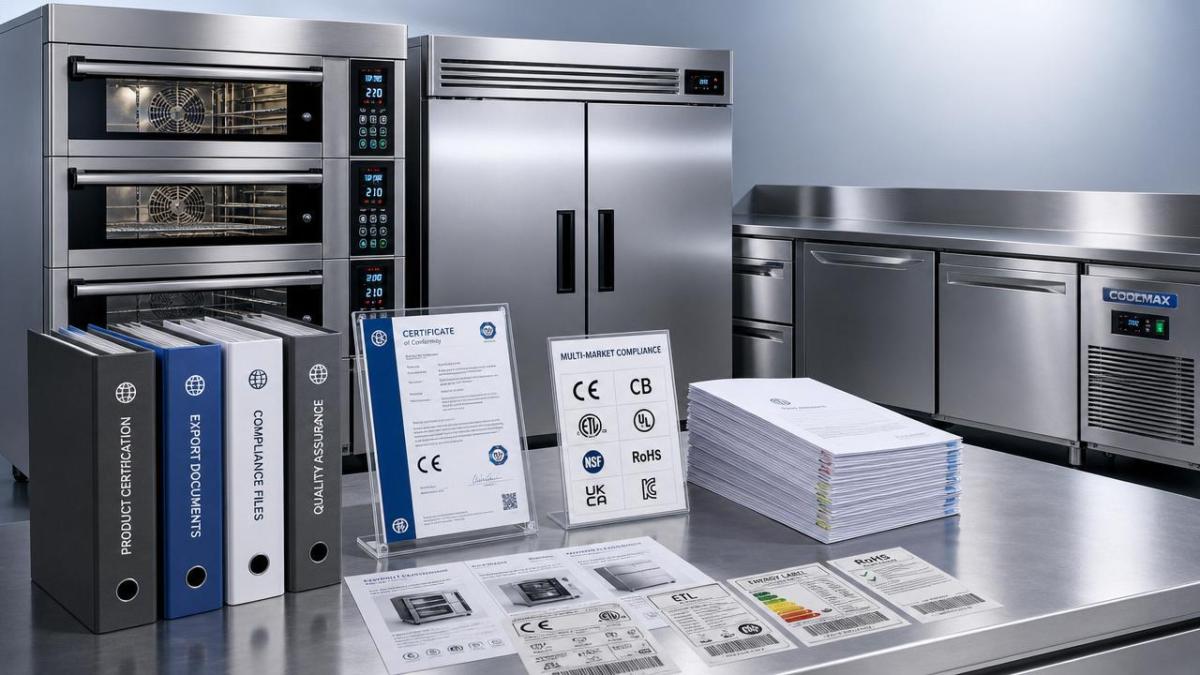
In the kitchen equipment trade, compliance affects far more than customs clearance. A restaurant supplies exporter must make sure that commercial ovens, refrigeration units, food preparation machines, induction cookers, stainless worktables with food-contact parts, and smart kitchen systems can legally enter and operate in each target market. If one standard changes and the exporter reacts too slowly, distributors may face delayed launches, returned shipments, warranty disputes, or local enforcement action.
This pressure is growing because the industry is moving toward automation, intelligence, and energy efficiency at the same time. Products now combine mechanical components, electrical systems, electronic controls, software, sensors, and food-contact materials. That means compliance is no longer a single certificate issue. It is a layered requirement involving safety, hygiene, EMC, energy use, documentation, labeling, and after-sales traceability.
For distributors and agents, the commercial risk is clear. Non-compliant products can lock up working capital, damage channel credibility, and create legal exposure with local customers such as restaurants, hotels, central kitchens, and food processors. A capable restaurant supplies exporter reduces those risks by building compliance into sourcing, engineering, factory control, and shipment planning from the beginning.
- Market access risk: the product may fail import review or local inspection even if production quality is acceptable.
- Margin risk: last-minute redesign, relabeling, or retesting raises landed cost and slows inventory turnover.
- Brand risk: end users often blame the distributor first when equipment documentation or safety marks are incomplete.
- Service risk: spare parts, manuals, and electrical configurations may not match local requirements.
What regulations usually change for kitchen equipment exports?
When dealers evaluate a restaurant supplies exporter, they should not ask only whether the factory has experience. They should ask which parts of compliance are monitored continuously. In kitchen equipment, the most common moving targets are not identical across countries, but they usually cluster around a few predictable areas.
The table below helps distributors map the major compliance categories that often change and the commercial impact of each one.
For a restaurant supplies exporter, the key lesson is simple: compliance updates often start in one component or document but quickly affect the whole order cycle. That is why experienced suppliers treat regulation tracking as an operational system rather than an occasional paperwork task.
How a restaurant supplies exporter builds a practical compliance system
The best exporters do not wait for a distributor complaint or a customs problem. They build internal routines that connect engineering, procurement, quality control, and sales. This is especially important in kitchen equipment, where one product family may be sold to restaurants, hotels, food processing facilities, and retail channels with different technical expectations.
1. Product classification by market and risk level
A capable restaurant supplies exporter separates products into categories such as electrical cooking equipment, refrigeration equipment, food-contact smallwares, gas-related appliances, or smart connected systems. Each category carries a different compliance burden. This prevents low-risk and high-risk items from being handled with the same checklist.
2. Approved materials and component control
Many export issues come from upstream substitutions. A heating element, thermostat, gasket, cable, adhesive, or stainless grade may be changed for cost or availability reasons. Exporters that handle changing compliance well maintain approved component lists, request supporting documents from sub-suppliers, and block unauthorized substitutions before production starts.
3. Documentation readiness before shipment
Documentation should be treated as part of the product, not an afterthought. Depending on market and product type, distributors may need declarations, user manuals, test references, material statements, packaging marks, serial traceability, and spare-parts documentation. Exporters that prepare these early reduce shipment holds and channel friction.
4. Change management workflow
When a standard changes, the exporter should evaluate stock, open orders, future production, and in-market inventory. This workflow matters because the commercial answer may differ by distributor. One market may accept relabeling, while another may require fresh testing or a new declaration package.
- Identify the change and define affected SKUs, components, and destination markets.
- Assess whether the change affects safety, labeling, packaging, energy claims, or software functions.
- Decide whether current stock can ship, requires rework, or should be redirected to another compliant market.
- Update technical files, manuals, carton marks, and customer-facing sales documents.
- Inform dealers early so they can adjust quotations, launch timing, and inventory commitments.
What distributors should check before choosing a compliant exporter
Not every restaurant supplies exporter offers the same level of compliance support. Some only provide a product and a basic invoice set. Others support pre-sale technical matching, certification preparation, packaging adaptation, and after-sales documentation. For dealers and agents, the right choice depends on target market complexity, order volume, and the mix of standard versus customized equipment.
Use the following evaluation table when comparing exporter capability across selection, certification, and service steps.
This comparison matters because compliance strength often shows up in routine details, not in sales promises. Dealers that ask these questions early usually avoid expensive surprises later, especially when handling mixed orders of cooking, refrigeration, preparation, and smart kitchen equipment.
How changing compliance affects cost, lead time, and product strategy
Compliance is often viewed as a cost center, but that is too narrow. For a distributor, it is also a pricing, positioning, and portfolio issue. A restaurant supplies exporter that adapts quickly can help partners keep core products in market while steering premium, standard, and entry-level lines toward the right regulatory environment.
Direct cost impact
- Material changes may increase unit cost when lower-grade or unverified alternatives can no longer be used.
- Retesting, relabeling, and manual translation add compliance overhead, especially for many SKUs.
- Smaller runs become less economical if each market needs different plugs, labels, or electrical configurations.
Lead time impact
The most common delay is not production itself. It is waiting for documents, revised carton artwork, approval of substituted parts, or destination-specific technical confirmation. Exporters that maintain standard compliance packs for key markets usually shorten this stage significantly.
Portfolio strategy impact
Some products remain attractive only if the distributor sells them into the right segment. For example, a basic countertop unit may still work in a price-sensitive market if documentation needs are modest, while a connected combi system may fit better in a market willing to pay for documented energy and control features. A smart restaurant supplies exporter helps the channel decide which products deserve compliance investment and which should be replaced.
Which compliance practices work best for smart and energy-efficient kitchen equipment?
As kitchen equipment evolves, compliance work shifts from purely hardware checks to system-level control. Intelligent cooking devices, automated processing lines, and digital kitchen management tools bring new commercial benefits, but they also add more variables that dealers must understand before quoting a project.
Smart controls require version discipline
When products include control boards, touch panels, remote monitoring, or recipe software, exporters need version tracking for both hardware and firmware. A software update that changes power behavior, alarms, or network functions may affect declarations or manuals. This is especially relevant for distributors supporting chain restaurants or central kitchens that standardize equipment across sites.
Energy claims must be backed by consistent product configuration
Energy-efficient kitchen solutions are strong selling points, but claims should match actual shipped configuration. If insulation, compressor type, fan motor, controller logic, or heating profile changes, performance claims may need review. Dealers should confirm whether the restaurant supplies exporter controls these variables tightly across production batches.
Integrated systems need cross-product coordination
In a larger project, a kitchen may combine refrigeration, cooking, holding, washing, and digital monitoring. Even if each unit is acceptable on its own, site-level issues can appear around power load, ventilation expectations, placement warnings, and user documentation. Exporters with project experience can support a more coordinated compliance review before shipment.
Common mistakes distributors make when evaluating compliance risk
Many channel partners assume compliance is either fully solved or entirely the importer’s problem. In practice, it is shared. The distributor may own local market responsibility, but the exporter controls design, component sourcing, production records, and technical file readiness. Misalignment between these roles creates avoidable cost.
- Choosing only on price and overlooking document quality, manual localization, and electrical configuration matching.
- Assuming one certificate or declaration covers every SKU, voltage, or accessory combination.
- Allowing logo, packaging, or feature customization without checking its effect on labeling or testing status.
- Ignoring after-sales implications such as spare part equivalence, replacement labels, and revised manuals.
- Waiting until booking or customs stage to confirm documentation requirements for the target market.
The strongest protection is early coordination. A restaurant supplies exporter should be involved before the distributor locks specification, artwork, and launch timing. This is particularly important for mixed-product orders serving restaurants, hotels, food factories, and residential channels in parallel.
FAQ: practical questions dealers ask about compliance changes
How do I know whether a restaurant supplies exporter can really support my market?
Ask for a market-specific review process, not just a claim of export experience. The exporter should be able to discuss destination voltage, plug type, labeling language, intended end use, document package, and whether product customization affects compliance status. If the answer stays generic, support may be limited.
What products usually create the most compliance complexity?
Equipment with heating systems, refrigeration circuits, motors, smart controls, food-contact components, or multiple electrical configurations usually requires more attention. Examples include ovens, fryers, induction equipment, blast chillers, mixers, slicers, and connected kitchen systems. Simple utensils may carry lower risk, but material and labeling rules can still matter.
Can a distributor reduce compliance cost without weakening market access?
Yes, if product selection is disciplined. Standardizing voltage options, reducing unnecessary SKU variation, aligning packaging across similar markets, and choosing product families with stable components can lower cost. A restaurant supplies exporter can also help prioritize which products justify deeper compliance investment based on sales potential and channel positioning.
What should be confirmed before placing a customized order?
Confirm whether custom branding, plug changes, voltage changes, software changes, accessory additions, or carton redesign affect declarations, manuals, labels, or testing assumptions. Customized equipment may still be feasible, but the compliance path must be reviewed before deposit payment and production release.
Why choosing the right exporter now creates long-term channel advantage
The kitchen equipment industry is expanding with stronger demand for food safety, labor efficiency, digital control, and lower energy consumption. As markets become more regulated, compliance capability becomes a competitive tool rather than a hidden operational burden. Dealers and agents that work with a responsive restaurant supplies exporter can launch faster, defend margins better, and offer customers a more dependable product portfolio.
If you are reviewing product lines for restaurants, hotels, central kitchens, food processing sites, or mixed distribution channels, we can support practical discussions around parameter confirmation, product selection, delivery timing, customized solutions, certification-related requirements, sample evaluation, and quotation planning. That helps you assess not only what can be shipped, but what can be sold smoothly and supported confidently in your market.
Popular Tags
Kitchen Industry Research Team
Dedicated to analyzing emerging trends and technological shifts in the global hospitality and foodservice infrastructure sector.
Industry Insights
Join 15,000+ industry professionals. Get the latest market trends and tech news delivered weekly.
No spam. Unsubscribe anytime.
Contact With us
Contact:
Anne Yin (Ceramics Dinnerware/Glassware)
Lucky Zhai(Flatware)