
Is a restaurant supplies factory better for bulk orders?
For bulk purchasing, a restaurant supplies factory often delivers stronger control over cost, output, and consistency. Yet the better choice depends on order structure, risk tolerance, and growth plans.
In the kitchen equipment industry, supply chains are changing quickly. Smart production, energy-efficient equipment, and global sourcing pressures are reshaping how large orders are evaluated.
A restaurant supplies factory can be ideal when volume is stable and specifications are clear. However, distributors, trading companies, and mixed sourcing models still fit many situations.
Why bulk buyers are rethinking the restaurant supplies factory model
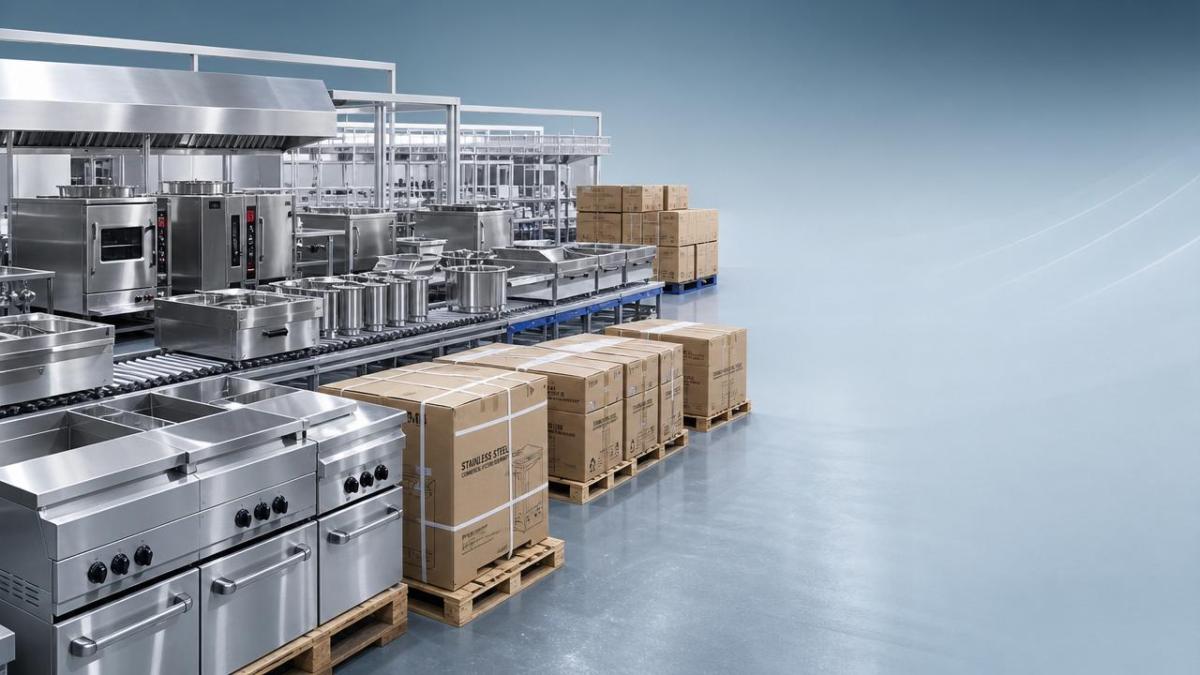
The global foodservice market now expects faster replenishment, stricter food safety, and better energy performance. These shifts make source selection more strategic than simple unit price comparison.
A restaurant supplies factory is no longer judged only by output volume. Buyers now review traceability, automation, packaging standards, and the ability to support changing product mixes.
Commercial kitchen projects also require more coordination. Restaurants, hotels, central kitchens, and food processors often need equipment, utensils, and replacement parts aligned under one supply plan.
This is why direct factory sourcing is gaining attention. It can simplify communication and strengthen planning, especially where repeat orders and technical consistency matter.
The strongest trend signals favoring direct factory sourcing
Several market signals suggest that working with a restaurant supplies factory is becoming more attractive for bulk orders in the kitchen equipment sector.
- Demand is shifting toward standardized, repeatable product lines.
- Lead time pressure is increasing across hospitality and food processing.
- Private label and specification-based sourcing are growing.
- Quality documentation and compliance records are becoming essential.
- Energy-efficient and smart kitchen products require closer technical support.
These signals do not mean every restaurant supplies factory is the best option. They do show that factory capability has become a larger part of purchasing success.
What is driving the shift toward a restaurant supplies factory
The move toward direct sourcing is driven by cost pressure, product complexity, and the need for dependable supply. The table below highlights the main forces.
Where a restaurant supplies factory clearly outperforms other channels
Cost structure becomes more transparent
A restaurant supplies factory usually offers clearer pricing for materials, labor, packaging, and tooling. This transparency helps estimate future orders, not only current quotations.
For high-volume orders, factory pricing often beats distributor pricing. The savings become more visible when orders repeat across months or seasonal cycles.
Customization is easier to manage
Bulk orders often include logo marking, packaging changes, material upgrades, or product dimension adjustments. A restaurant supplies factory can usually manage these changes with fewer communication layers.
This matters in commercial kitchen equipment, where shelf dimensions, voltage standards, or stainless steel grades may vary by market and application.
Production planning supports consistency
A strong restaurant supplies factory can reserve production slots, control batch quality, and standardize raw materials. That reduces variation across large projects or repeated shipments.
Consistency is especially important for chain restaurants, hotel groups, food processors, and integrated kitchen programs using matching product families.
When a restaurant supplies factory may not be the better option
Direct sourcing is not always superior. Some order conditions make distributors or mixed sourcing channels more practical and less risky.
- Order volume is too low to meet minimum production requirements.
- Product categories are too broad for one restaurant supplies factory.
- Urgent local delivery is more important than production savings.
- After-sales service depends on regional inventory and technical teams.
- Internal resources for factory audits and quality follow-up are limited.
A factory may also focus on manufacturing strength while offering weaker support in documentation, consolidation, or local compliance guidance. Those gaps can offset pricing advantages.
How the choice affects different business links
The sourcing channel influences more than the purchase order. It can affect inventory planning, installation timing, quality control, and even product positioning in the market.
What deserves close attention before choosing a restaurant supplies factory
Before deciding, compare the total sourcing model instead of headline price alone. A capable restaurant supplies factory should be evaluated through practical performance indicators.
- Production capacity across peak and normal seasons
- Material sourcing stability and substitute material policy
- Quality systems, inspections, and defect response speed
- Experience with export packaging and labeling rules
- Engineering support for drawings, samples, and revisions
- Lead time reliability, not only promised lead time
- Spare parts, warranty handling, and documentation completeness
These points are critical in kitchen equipment, where performance, hygiene, and long service life depend on manufacturing discipline as much as product design.
A practical way to judge if direct factory sourcing fits your next bulk order
Use a structured comparison before committing. This helps determine whether a restaurant supplies factory creates long-term value or only short-term savings.
- Define product specifications, target quantities, and acceptable quality variance.
- Calculate total landed cost, including tooling, testing, freight, and buffer stock.
- Review sample quality against actual use conditions, not only showroom appearance.
- Check production evidence, certifications, and prior shipment history.
- Test communication speed during revisions and problem-solving scenarios.
- Start with a controlled batch before scaling into full annual volume.
If the order is standardized, recurring, and quality-sensitive, a restaurant supplies factory is often the better route. If needs are fragmented, hybrid sourcing may work better.
The direction of the market suggests deeper factory collaboration
The kitchen equipment market is moving toward smart systems, greener operations, and tighter supply coordination. This trend favors sourcing relationships with better technical depth and production visibility.
In that environment, a restaurant supplies factory becomes more than a low-cost source. It can become a long-term partner for consistency, product upgrades, and supply resilience.
The next step is simple: compare one real bulk order across factory, distributor, and hybrid models. Measured results will show whether direct factory sourcing truly fits your purchasing strategy.
Popular Tags
Kitchen Industry Research Team
Dedicated to analyzing emerging trends and technological shifts in the global hospitality and foodservice infrastructure sector.
Industry Insights
Join 15,000+ industry professionals. Get the latest market trends and tech news delivered weekly.
No spam. Unsubscribe anytime.

Contact With us
Contact:
Anne Yin (Ceramics Dinnerware/Glassware)
Lucky Zhai(Flatware)