
School kitchens under pressure: Which restaurant kitchen equipment holds up to student volume?
School kitchens face unprecedented pressure from high-volume meal service, tight schedules, and strict restaurant kitchen safety standards—making reliable, durable, and space saving restaurant kitchen equipment essential. Whether sourcing from a trusted restaurant kitchen equipment factory, distributor, or exporter, decision-makers must prioritize specs that align with hygienic restaurant kitchen design, fireproof restaurant kitchen equipment requirements, and efficient restaurant kitchen workflow optimization. From ventilation systems to exhaust solutions and maintenance-friendly units, the right restaurant kitchen equipment for schools ensures compliance, longevity, and operational resilience—especially when scaling across cafeterias, food trucks, or catering extensions.
Why School Kitchens Demand Specialized Commercial Kitchen Equipment
Unlike standard restaurant operations, school meal programs serve 300–2,500 students per shift—often within 45–90 minutes. This compressed service window demands equipment engineered for rapid throughput, consistent temperature control, and minimal downtime. A single malfunctioning steam table or underperforming combi oven can delay lunch service for an entire grade level, triggering compliance reviews under USDA Child Nutrition Program guidelines.
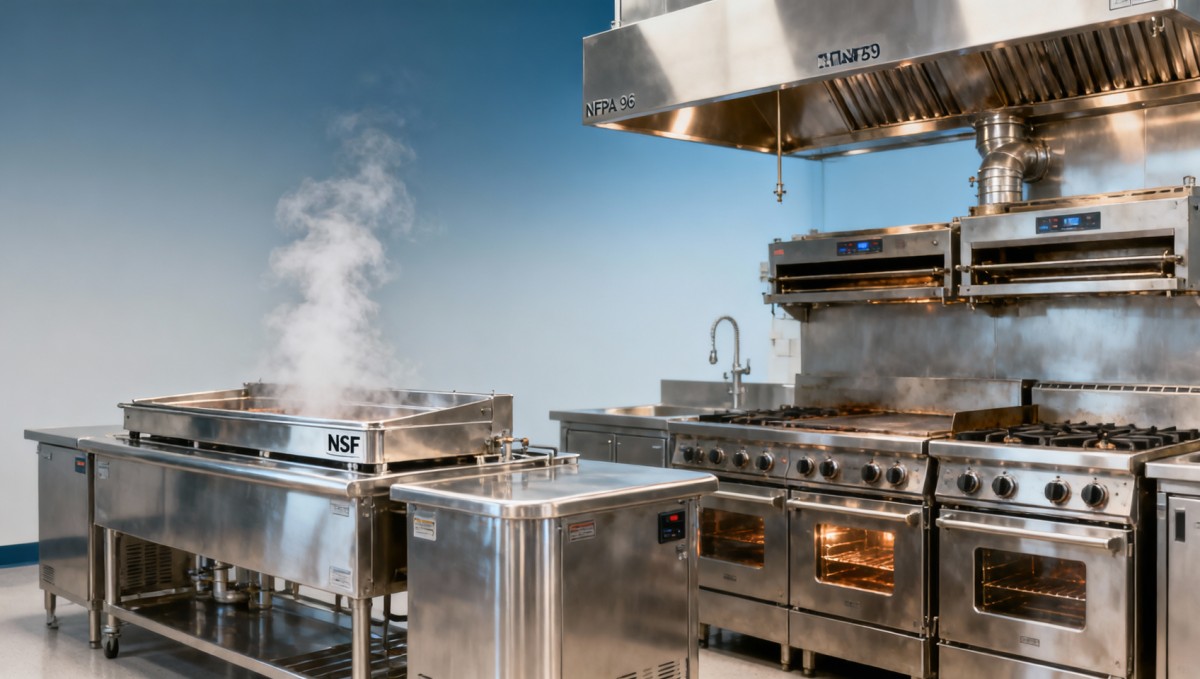
Moreover, school kitchens operate under dual regulatory frameworks: health department mandates (e.g., NSF/ANSI 2, 4, and 8 certifications) and fire code requirements (NFPA 96 for ventilation). Equipment must withstand daily cycles of heavy cleaning with caustic sanitizers, resist corrosion from high-humidity environments, and maintain structural integrity after 10,000+ door openings annually—far exceeding typical restaurant usage benchmarks.
Procurement teams also contend with budget constraints: public school capital budgets average $12,000–$45,000 per kitchen refresh cycle, requiring ROI analysis over a 7–12 year lifespan—not just upfront cost. This makes lifecycle durability, energy efficiency (e.g., ENERGY STAR® certified units), and modular scalability non-negotiable selection criteria.
Critical Performance Benchmarks for High-Volume School Kitchen Equipment
Not all commercial-grade appliances meet school-specific durability thresholds. Key performance metrics include thermal recovery time (<90 seconds for steam tables after 30% load replenishment), door hinge fatigue resistance (tested to 50,000+ cycles), and grease-laden airflow capacity (≥2,200 CFM for Type I hoods serving fryers and griddles). Units must also support NSF-certified “clean-in-place” (CIP) protocols without seal degradation.
Energy consumption is another decisive factor: school kitchens typically run 6–8 hours/day but require preheating 1–2 hours prior. Equipment with programmable idle modes (e.g., combi ovens reducing standby draw from 3.2 kW to 0.45 kW) cuts annual electricity use by 22–35% versus legacy models. Water usage matters too—low-flow pre-rinse spray valves (≤1.28 GPM at 30 PSI) reduce pot-washing water demand by up to 40%.
This table reveals a critical insight: school-grade equipment isn’t merely “restaurant equipment scaled up.” It’s engineered to stricter tolerances in thermal precision, mechanical endurance, and regulatory alignment. Procurement professionals should verify third-party test reports—not just manufacturer claims—before approving orders.
Procurement Decision Framework: 5 Non-Negotiable Evaluation Criteria
When evaluating restaurant kitchen equipment suppliers for school applications, decision-makers should apply this five-point evaluation framework:
- NSF/ANSI Certification Verification: Confirm model-specific certification—not just facility-level. Cross-check certificate numbers against NSF’s online database.
- Service Network Density: Require ≥3 certified technicians within 100 miles of the school district, with ≤4-hour emergency response SLA.
- Modular Design Compatibility: Ensure equipment fits standard 30"–36" utility corridors and integrates with existing hood ductwork (e.g., 18" x 24" flange interfaces).
- Warranty Terms Beyond Standard: Prioritize vendors offering 5-year parts/labor coverage on compressors and heating elements—exceeding industry-standard 2 years.
- Training & Documentation Support: Demand OSHA-aligned operator training modules, multilingual quick-reference guides, and QR-coded maintenance logs embedded in unit housings.
Vendors failing any two criteria should be disqualified early in the RFP process. For example, one Midwest district eliminated 40% of bidders by requiring verifiable NFPA 96 field-test reports—revealing that 7 of 12 shortlisted hood manufacturers had only lab-simulated data, not real-kitchen validation.
Future-Proofing Through Smart Integration and Energy Intelligence
The next generation of school kitchen equipment embeds digital intelligence without compromising ruggedness. Cloud-connected combi ovens now log cooking cycle data (time, temp, humidity) to generate USDA-mandated temperature logs automatically—reducing manual documentation labor by 65%. Similarly, IoT-enabled refrigeration units alert facilities managers to door-open anomalies (>30 sec) or defrost cycle failures before temperature deviations occur.
Energy intelligence is equally vital: smart power meters integrated into main panels track real-time kWh draw per equipment zone. Districts using this data have reduced peak-load penalties by 18–27% through staggered startup sequencing—e.g., initiating dishwasher preheat during off-peak grid windows identified via utility rate APIs.
These features aren’t luxuries—they’re operational safeguards. A Texas ISD reported a 41% reduction in equipment-related lunch delays after deploying smart combi ovens across 14 campuses, directly correlating to improved student attendance metrics during the first semester post-deployment.
Actionable Next Steps for Procurement Teams
Start with a 90-minute equipment audit: map current units against the benchmark table above, flagging models with <5 years remaining service life or lacking verifiable NSF/NFPA certifications. Then, request vendor-provided lifecycle cost analyses—including projected energy, water, labor, and maintenance expenses over 10 years—not just acquisition cost.
Engage facilities staff early: their frontline insights on door hinge wear, condensate drainage issues, or hood filter access difficulties are irreplaceable validation data. Finally, structure contracts to include performance-based milestones—e.g., 95% uptime guarantee for refrigeration units over Year 1, with liquidated damages for shortfall.
School kitchens don’t need “more equipment”—they need precisely specified, rigorously validated, and intelligently integrated systems. The right restaurant kitchen equipment factory or distributor doesn’t just ship units; they deliver operational continuity, regulatory confidence, and measurable impact on student well-being.
Get your customized school kitchen equipment specification checklist and vendor evaluation scorecard—developed with input from 12 state nutrition directors and 37 district FMs. Request your free copy today.
Popular Tags
Kitchen Industry Research Team
Dedicated to analyzing emerging trends and technological shifts in the global hospitality and foodservice infrastructure sector.
Industry Insights
Join 15,000+ industry professionals. Get the latest market trends and tech news delivered weekly.
No spam. Unsubscribe anytime.

Contact With us
Contact:
Anne Yin (Ceramics Dinnerware/Glassware)
Lucky Zhai(Flatware)