
What affects a restaurant supplies bulk order quote most?
A restaurant supplies bulk order quote depends on far more than unit price. From stainless steel restaurant supplies and commercial restaurant supplies specifications to supplier capacity, shipping terms, and custom kitchen design needs, every detail can change the final cost. For hotels, schools, hospitals, cafes, and food processing projects, understanding these pricing factors helps buyers compare restaurant supplies wholesale offers more accurately and make smarter sourcing decisions.
In the commercial kitchen equipment market, a quote is usually the result of multiple linked decisions rather than a single price list. Procurement teams may compare 3 to 5 suppliers, but if they do not align product grade, logistics terms, installation scope, and after-sales requirements, the comparison becomes misleading. A lower initial offer can turn into a higher landed cost once packaging, voltage conversion, spare parts, or delayed delivery are included.
This matters to several types of buyers at once. Information researchers want a clear framework for evaluation. Kitchen operators care about durability, workflow, and ease of cleaning. Purchasing teams focus on MOQ, payment terms, and replacement consistency. Business decision-makers look at lifecycle cost, project timing, and supply risk. In bulk sourcing for restaurant supplies wholesale, all of these priorities shape the final quote.
The following guide explains the main factors that affect a restaurant supplies bulk order quote, how they interact, and what buyers should ask before approving a commercial kitchen order for a restaurant, hotel, school canteen, healthcare facility, or food processing project.
Product specifications and material grade drive the base quote
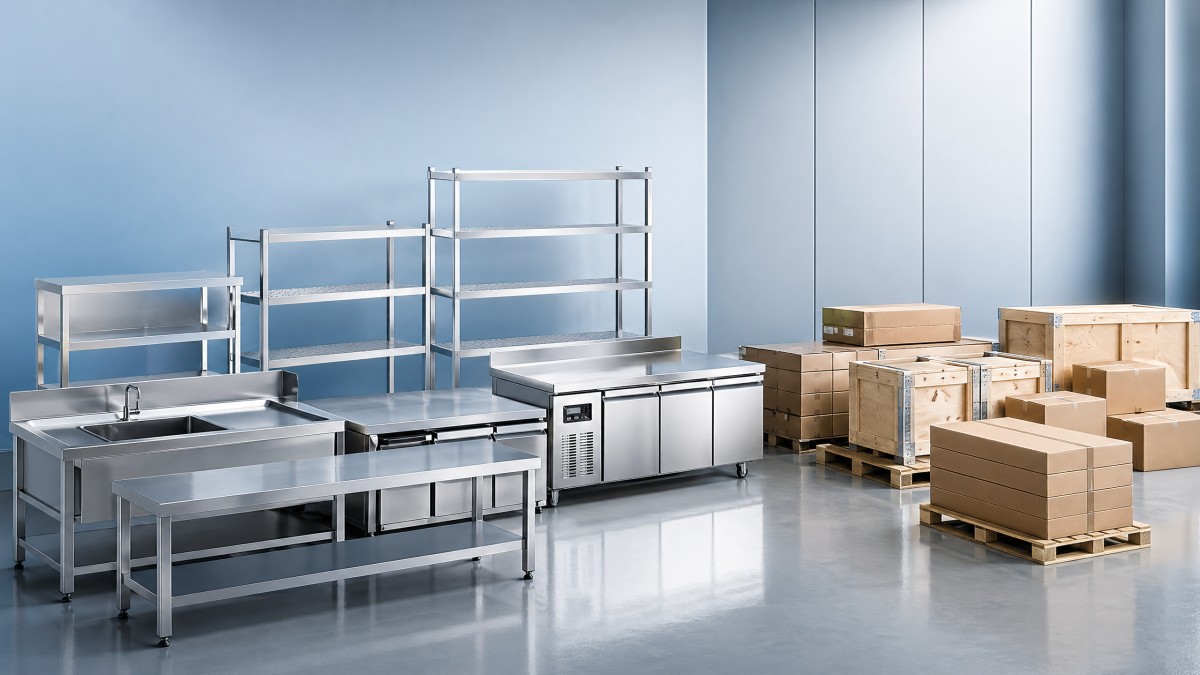
The first and most visible factor in a restaurant supplies bulk order quote is product specification. In commercial kitchen sourcing, two items with a similar appearance can have a 15% to 40% price difference because of material thickness, component grade, and manufacturing method. Stainless steel restaurant supplies are a common example. A prep table made from 201 stainless steel is usually quoted differently from one made from 304 stainless steel, especially in humid kitchens, seafood preparation zones, or healthcare foodservice settings.
Size also changes the quote more than many buyers expect. A 1200 mm worktable, a 1500 mm sink station, and a 1800 mm refrigerated prep counter require different sheet usage, reinforcement, and packaging volume. Once a project includes 50, 100, or 300 units, even small dimensional changes affect raw material consumption, cutting yield, and freight class. This is why commercial restaurant supplies should be compared by exact specification rather than product category alone.
Electrical and performance parameters are another major variable. Equipment such as fryers, ovens, mixers, dishwashers, and hot holding units may be offered in 110V, 220V, or 380V versions, with power ranges from 1.5kW to 25kW depending on use. A quote can increase when buyers require digital controls, insulated construction, higher output per hour, or compatibility with local electrical standards. In export projects, frequency differences such as 50Hz versus 60Hz may also affect component selection.
For purchasing teams, the safest method is to define a product matrix before requesting pricing. That matrix should include material grade, dimensions, load capacity, power rating, finish, and required accessories. Without that detail, restaurant supplies wholesale quotations may look competitive on paper but hide major differences in value and service life.
Common specification variables that change cost
The table below shows how typical specification choices can influence a bulk quote in commercial kitchen procurement.
The key takeaway is simple: a quote built on incomplete specifications is not a reliable quote. Buyers should normalize the specification sheet first, then compare prices. That reduces hidden variation and makes supplier evaluation more accurate.
Checklist before requesting price
- Confirm exact dimensions, quantity per item, and whether tolerances matter for installation spaces.
- State the required stainless steel grade and surface finish for each product group.
- List power, voltage, plug type, and expected daily operating hours for electrical equipment.
- Clarify if accessories, spare parts, manuals, or branding labels are included in the offer.
Order volume, MOQ, and production efficiency strongly affect pricing
Bulk pricing is not always linear. Many buyers assume that doubling the order will automatically cut unit cost sharply, but the actual result depends on MOQ, production scheduling, tooling needs, and packing efficiency. For standard commercial restaurant supplies, the first price break may appear at 20 units, 50 units, or one full pallet. A second break may come at 100 units or a full container load. If the order sits between thresholds, the quote may remain close to small-batch pricing.
Suppliers also evaluate whether the order is standardized or mixed. A bulk order of 200 identical trays or 80 identical worktables is simpler to process than a mixed order covering 35 SKUs with small quantities each. The mixed order requires more purchasing coordination, production setup, labeling, inspection, and carton planning. In practice, this can increase the quote even when the total spend is high.
Lead time pressure changes cost as well. If a project needs dispatch in 7 to 10 days rather than a standard 25 to 40 days, the supplier may need overtime labor, priority purchasing, or production slot adjustments. This is common in restaurant openings, hotel renovation phases, and school canteen deadlines linked to academic calendars. Rush orders often carry a visible surcharge or a less visible cost in reduced discount levels.
Another issue is supplier capacity. A manufacturer with stable output for 500 to 1,000 units per month may price a 300-unit order more efficiently than a smaller workshop with tighter capacity. For enterprise buyers, this does not only affect price. It affects consistency, packaging accuracy, and on-time completion rates across the entire restaurant supplies wholesale project.
How volume structure influences the quote
The following comparison shows why quantity alone is not enough. Order composition matters just as much.
For procurement teams, the most effective strategy is to combine forecast planning with packaging logic. Instead of placing frequent small orders every 2 to 4 weeks, it may be more efficient to consolidate demand into a monthly or quarterly order if storage conditions allow. This can improve quote quality and reduce shipping fragmentation.
Practical procurement steps
- Group SKUs into standard items, custom items, and urgent items before RFQ release.
- Ask for MOQ, price break levels, and valid lead time at each quantity tier.
- Check whether carton optimization or pallet consolidation can lower landed cost.
- Request a production schedule with milestones if the order exceeds 100 units or spans multiple product types.
Shipping terms, packaging, and destination requirements can reshape the total landed cost
A supplier may offer an attractive ex-works or FOB price, but the final restaurant supplies bulk order quote can change significantly once transport, insurance, duties, and destination handling are included. This is especially true for bulky commercial kitchen equipment such as racks, counters, refrigerators, and sink stations, where freight cost depends on cubic volume as much as weight. In some cases, outer dimensions and carton design influence cost more than the product itself.
Packaging requirements vary by project and market. Export shipments for hotels, hospitals, and institutional kitchens often need stronger carton structures, corner protection, fumigation-compliant pallets, or wooden crates for fragile equipment. These measures reduce damage risk, but they also add material cost and increase shipping volume. A buyer comparing restaurant supplies wholesale offers should always ask whether export packaging is included or charged separately.
Destination compliance is another key factor. Equipment for North America, Europe, the Middle East, or Southeast Asia may require different labeling, manuals, plug types, or food-contact material documentation. Even when the supplier does not claim a special certification, the need to adapt user instructions, carton marks, serial tracking, or spare parts labeling can still add time and cost. For chain restaurants and government projects, documentation requirements are often stricter than for independent foodservice operators.
Incoterms also affect how buyers interpret a quote. EXW, FOB, CIF, and DDP are not interchangeable from a budgeting perspective. A lower EXW offer may become more expensive than a higher FOB offer once inland trucking, export clearance, and port handling are calculated. Enterprise buyers should compare quotes on the same delivery basis to avoid distorted decision-making.
What to align in logistics comparison
The table below highlights common logistics elements that can shift the final landed cost of commercial restaurant supplies.
The main lesson is that the quote should be assessed as landed cost, not factory price alone. For large hospitality projects, a 5% difference in unit price can be outweighed by freight damage, customs delay, or incomplete packaging details. Buyers should request a cost structure that separates product price, packaging, shipping basis, and documentation support.
Risk points often missed by buyers
- Comparing one FOB offer against one EXW offer without recalculating inland and port charges.
- Assuming standard cartons are enough for heavy stainless steel restaurant supplies or glass-door equipment.
- Ignoring carton marks, spare parts labeling, or installation instructions needed by the receiving team.
- Overlooking warehouse access limits, lift-gate needs, or site unloading conditions at the destination.
Customization, kitchen layout, and service scope often explain the biggest quote gaps
In many projects, the widest price differences do not come from standard products. They come from customization. If a buyer needs custom kitchen design, non-standard dimensions, integrated utility connections, or workflow-based layout adjustments, the quote changes because engineering work increases. A custom sink line for a hospital kitchen, for example, may require exact faucet openings, backsplash height, drainage position, and wall-clearance dimensions. Those details affect drawings, fabrication, and inspection time.
For hotels, central kitchens, schools, and food processing facilities, layout coordination is often part of the sourcing decision. Equipment may need to fit under existing ventilation systems, align with grease traps, or work within a cold-prep to hot-line process. The supplier may be asked to provide shop drawings, utility points, assembly guidance, or installation sequence suggestions. That service scope should be clearly separated in the quote, especially if the order includes both standard commercial restaurant supplies and project-based fabricated items.
Customization also influences sampling and approval timelines. Standard items may move to production in 7 to 15 days after order confirmation, while custom stainless steel restaurant supplies may require 1 to 3 drawing revisions, a sample confirmation stage, and 20 to 45 days of production depending on complexity. If project owners do not account for this, they may pressure suppliers into compressed schedules that increase cost and quality risk.
After-sales scope is another pricing variable that should not be underestimated. Some quotes include only manufacturing and packing. Others include spare parts kits, remote troubleshooting within 24 to 48 hours, installation manuals, or recommended maintenance schedules. For chain operators and multi-site buyers, this support can justify a higher initial quote because it lowers downtime and replacement confusion later.
Elements that should be separated in a project quote
Before approval, buyers should ask suppliers to break out project scope into measurable components rather than combining everything into one lump sum.
Recommended breakdown
- Standard product value: catalog items such as shelves, tables, bins, and storage racks.
- Custom fabrication value: non-standard dimensions, cutouts, reinforcements, and layout-fit items.
- Engineering support: drawing confirmation, layout review, and utility coordination.
- Service scope: spare parts, manuals, troubleshooting response, and installation guidance.
- Logistics scope: packaging level, shipment basis, and destination documents.
This structure helps decision-makers understand whether a quote is expensive because the products are overpriced or because the scope is broader. In project procurement, that distinction is critical. A supplier offering the lowest visible number may actually exclude engineering and support items that another supplier has already priced in.
FAQ for buyers comparing restaurant supplies wholesale quotes
How many quotes should a buyer compare?
For most B2B kitchen equipment purchases, comparing 3 quotes is practical. Fewer than 2 limits benchmarking, while more than 5 often slows evaluation without adding much clarity unless the project is highly customized or cross-border compliance is complex.
Is the cheapest quote usually the best option?
Not always. If the quote omits packaging upgrades, spare parts, or exact material grade, the apparent saving may disappear after delivery. A better approach is to compare total landed cost, service scope, and expected lifecycle under the real operating environment.
What delivery time is typical for bulk restaurant supplies?
For standard products, production often falls in the 15 to 30 day range. Mixed or custom orders may require 30 to 45 days, and international ocean transit can add another 4 to 8 weeks depending on route and shipping mode.
Which documents should purchasing teams request?
A practical set includes a specification sheet, itemized quotation, packing list format, lead time confirmation, trade term definition, and after-sales scope summary. For customized projects, drawing approval records should also be included.
How to get a more accurate quote and make a better sourcing decision
The fastest way to improve quote accuracy is to issue a better RFQ. Suppliers can only price what they can clearly understand. When a request includes exact quantities, dimensions, material requirements, shipping destination, and required delivery date, the response becomes more reliable. This reduces back-and-forth revisions and helps both buyers and suppliers control project timing.
For purchasing managers, it is useful to evaluate each restaurant supplies bulk order quote through four lenses: product fit, commercial terms, logistics cost, and support capability. A supplier may be strong in standard stainless steel restaurant supplies but weak in custom project coordination. Another may be ideal for mixed commercial restaurant supplies because it has stronger packing control and export documentation support. The right choice depends on the order profile, not just the catalog.
Operators and end users should also be part of the review. A prep table that saves 8% on purchase price but creates cleaning difficulty or poor workflow may cost more over 2 to 3 years of use. Including kitchen managers, maintenance staff, or site supervisors in the selection process often prevents specification errors that later affect installation or operation.
In a global market where kitchen equipment sourcing spans multiple countries and manufacturing bases, the best quote is the one that balances durability, operational suitability, supply continuity, and transparent total cost. For chain operators, hospitality groups, public institutions, and food processing projects, this disciplined approach supports both budget control and long-term equipment performance.
A simple decision framework
- Standardize product specifications before asking for prices.
- Compare quotes on the same trade term and packaging basis.
- Check MOQ, price breaks, and confirmed production lead time.
- Separate standard items from custom kitchen design scope.
- Review after-sales support, spare parts planning, and documentation quality.
If you are evaluating restaurant supplies wholesale options for a new kitchen, renovation, or multi-site rollout, a structured quote review will save time, reduce risk, and improve procurement confidence. To discuss product details, compare sourcing options, or get a customized commercial kitchen solution, contact us today and request a tailored quotation based on your exact project requirements.
Popular Tags
Kitchen Industry Research Team
Dedicated to analyzing emerging trends and technological shifts in the global hospitality and foodservice infrastructure sector.
Industry Insights
Join 15,000+ industry professionals. Get the latest market trends and tech news delivered weekly.
No spam. Unsubscribe anytime.

Contact With us
Contact:
Anne Yin (Ceramics Dinnerware/Glassware)
Lucky Zhai(Flatware)