
Cold Storage Equipment Costs in 2026 by Project Size
Cold Storage Equipment costs in 2026 vary widely by project size, facility type, and performance needs. For buyers evaluating commercial refrigeration equipment within broader professional kitchen equipment investments, understanding budget ranges, installation factors, and energy efficiency is essential. This guide outlines what information researchers, operators, technical evaluators, and business decision-makers should know before planning a cost-effective cold storage project.
In commercial kitchens, central food preparation units, hotels, supermarkets, and food processing environments, cold storage is not a simple box with a compressor. It is a controlled system that affects food safety, operating cost, workflow speed, and compliance readiness. A poorly scoped project can create temperature instability, excess power consumption, and expensive retrofit work within 12 to 24 months.
For 2026 planning, buyers should look beyond the initial equipment quote. Total project cost usually includes insulated panels, condensing units, evaporators, doors, shelving, flooring decisions, control systems, electrical work, refrigerant piping, commissioning, and maintenance access. The right budget framework depends heavily on project size, target temperature, daily door openings, and whether the cold room supports kitchen service, frozen storage, or mixed-use operations.
How Cold Storage Equipment Costs Change by Project Size
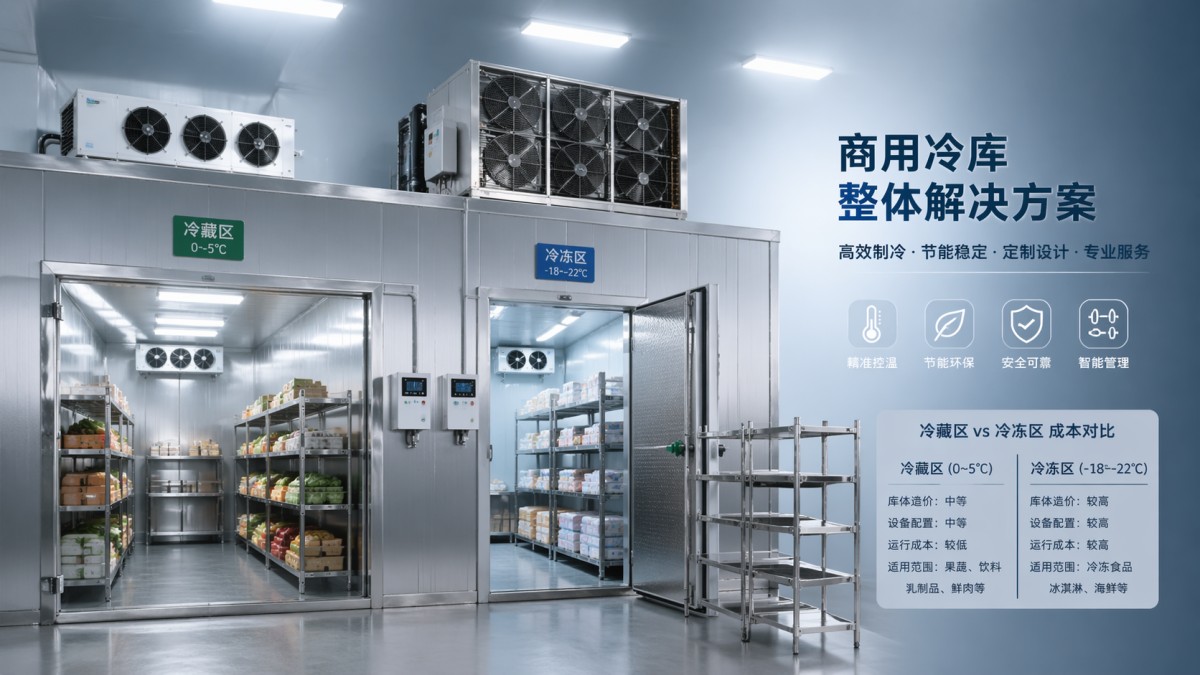
Project size is the first cost driver most buyers evaluate, but square footage alone does not tell the full story. A small walk-in chiller for a restaurant prep area may cost far less in absolute terms than a multi-zone installation, yet the cost per cubic meter can be higher because fixed items such as controls, installation labor, and delivery are spread over a smaller system.
In 2026, a basic small cold room project for light commercial use often falls in the range of USD 6,000 to USD 15,000. Mid-sized projects serving hotels, central kitchens, or bakery operations commonly range from USD 15,000 to USD 45,000. Larger systems for food processing or distribution can start around USD 50,000 and exceed USD 150,000 when multiple temperature zones, heavy-duty doors, remote condensing units, and monitoring platforms are included.
Technical evaluators should also note that freezer rooms typically cost 20% to 45% more than chilled rooms of similar footprint. The difference comes from thicker insulation, stronger refrigeration capacity, anti-condensation door heaters, floor heating in some climates, and longer commissioning checks. Mixed projects combining 0°C to 4°C chilled storage with -18°C frozen storage generally require more complex control logic and segregation planning.
The table below provides a practical budgeting view for common commercial kitchen and foodservice applications. These ranges are not fixed market prices, but they help buyers build an early-stage project estimate before requesting detailed engineering quotations.
A useful planning method is to separate base equipment cost from project-specific extras. Two systems with the same room size can differ by 30% or more depending on ambient temperature, hygiene requirements, loading patterns, and whether installation occurs in a new-build kitchen or a retrofit environment with restricted access.
Small, Medium, and Large Project Cost Priorities
Small projects usually prioritize fast installation, efficient footprint use, and simple maintenance. Operators often need easy-clean surfaces, standard shelving, and reliable holding temperatures for daily service. Medium projects place more emphasis on workflow, segregation of meat and produce, and reduction of door-open time. Large projects typically focus on redundancy, long operating hours, load consistency, and integration with broader food production systems.
- Small cold rooms: prioritize compact layout, lower downtime risk, and easy service access.
- Medium projects: balance equipment cost, storage volume, staff traffic, and future expansion.
- Large installations: evaluate lifecycle cost, energy demand, zoning, and supervisory controls.
Main Cost Components Buyers Should Include in Budget Planning
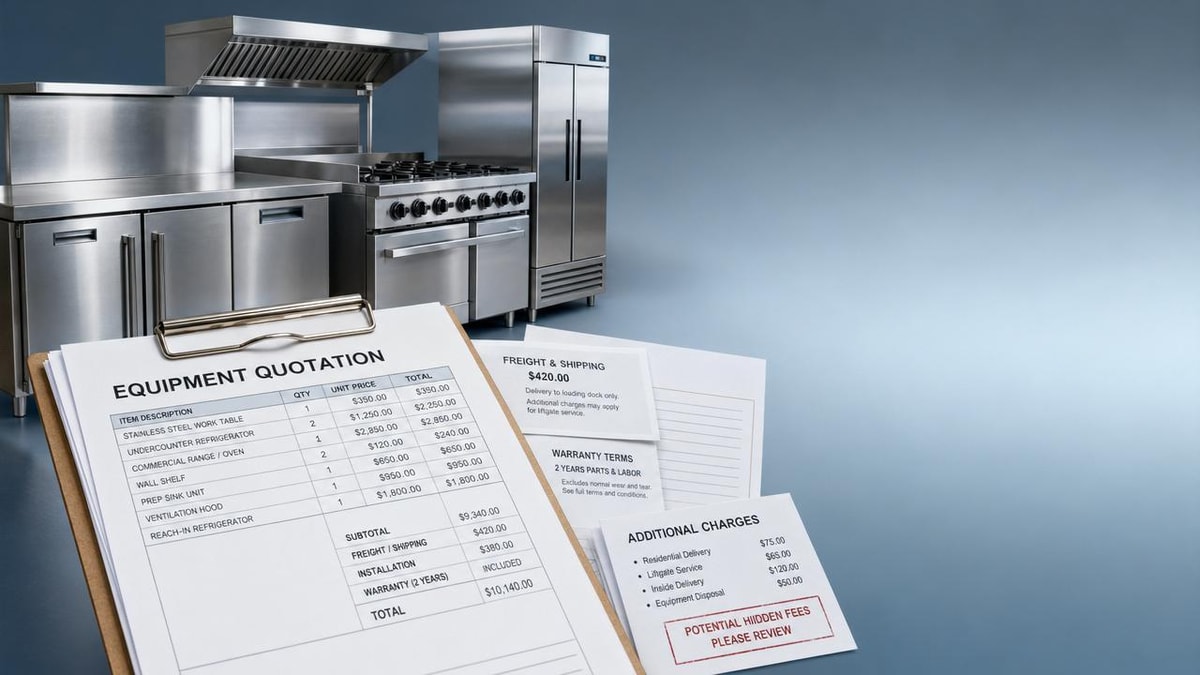
A common procurement mistake is comparing cold storage equipment quotes that include different scopes. One supplier may price only the insulated enclosure and refrigeration set, while another includes electrical installation, drainage, commissioning, shelving, and temperature monitoring. Decision-makers should always request a line-by-line breakdown before making cost comparisons.
In many commercial kitchen projects, equipment itself accounts for roughly 45% to 65% of total installed cost. Installation labor, electrical work, copper piping, transport, and site preparation can represent another 20% to 35%. Optional items such as strip curtains, stainless kick plates, data logging, alarms, and remote monitoring may add 5% to 15% depending on the required control level.
Temperature target is another critical factor. Chilled applications at 0°C to 4°C generally need less compressor power than freezer rooms at -18°C to -25°C. High-traffic operations with more than 40 to 60 door openings per day may need air curtains, rapid-close doors, or higher-capacity evaporators to maintain stable internal conditions.
The following table highlights the most common project cost components and their typical influence on overall spend in professional foodservice and kitchen equipment environments.
The key conclusion is that the lowest quoted equipment price rarely reflects the lowest project cost. Buyers should compare scope completeness, expected energy demand, service access, and uptime implications. A missing floor heater, incorrect door specification, or undersized condensing unit can become a much larger expense after startup.
Hidden Expenses That Often Appear Late
Late-stage cost additions are common in retrofit kitchen projects. These often include electrical upgrades, ceiling modifications, reinforced flooring, condensate drain routing, and night work to avoid disrupting operations. In older hospitality facilities, power distribution constraints alone can add 7 to 14 days to the installation schedule and significantly change labor cost.
Useful pre-quote checklist
- Confirm room dimensions, clear height, and usable storage volume.
- Define target temperatures, product type, and daily loading cycle.
- Check available power supply, ventilation path, and drainage points.
- Record access constraints such as elevators, stairs, or restricted delivery windows.
- Clarify whether shelving, flooring, monitoring, and commissioning are included.
Energy Efficiency, Operating Cost, and Lifecycle Value in 2026
In 2026, more buyers are shifting attention from purchase price to 5-year operating cost. For foodservice businesses facing rising utility rates, energy performance can materially change total ownership cost. A cold room that is 12% to 20% more efficient may justify a higher initial investment if it runs 24 hours per day and supports temperature-sensitive stock with frequent access cycles.
The most important efficiency drivers include insulation thickness, door sealing quality, defrost strategy, variable-speed compression, evaporator sizing, and ambient heat exposure. In hot back-of-house environments where surrounding temperatures remain above 30°C for long periods, poor system selection can push compressor run time much higher than expected, increasing both energy use and component wear.
Operators should also look at maintenance frequency. Systems with easier coil access, better condensate management, and cleaner airflow paths usually reduce service disruption. Preventive maintenance every 3 to 6 months is common in commercial kitchen settings, while higher-load facilities may require monthly inspection of door gaskets, evaporator icing, and control alarms.
Instead of asking only “What does the cold storage equipment cost?” a better question is “What will this system cost to run and maintain over 60 months?” That broader view is especially useful for decision-makers purchasing refrigeration as part of a complete kitchen equipment package for hotels, institutional catering, or food manufacturing lines.
Where efficiency improvements usually pay back
- Higher-density insulation can reduce thermal gain, especially in freezer applications.
- Better door management lowers infiltration losses during peak service periods.
- Smart controllers help stabilize temperatures and reduce unnecessary compressor cycling.
- Proper evaporator sizing supports faster pull-down and more consistent product conditions.
For technical evaluators, the practical target is stable storage performance with predictable energy use. For operators, the target is simpler: fewer alarms, lower spoilage risk, and consistent temperatures during busy hours. These goals usually align when the system is correctly sized rather than merely chosen on the lowest first-cost basis.
Specification and Selection Criteria for Different Facilities
Different facilities need different cold storage priorities. A restaurant may need quick ingredient access and a compact footprint. A hotel may require separate chilled and frozen zones for banquet, room service, and pastry production. A food processing site often needs stricter load planning, washdown resistance, and longer duty cycles. Matching specification to real operating conditions is one of the most effective ways to control cost.
For restaurant and hotel kitchens, common selection factors include 60 mm to 100 mm panel thickness, anti-slip flooring decisions, shelving load capacity, and door clear opening matched to carts or ingredient bins. In production settings, buyers often evaluate panel joint hygiene, floor reinforcement, and whether the system can handle repeated loading of warm product without temperature drift.
Site conditions matter as much as equipment specification. Rooftop condensing placement, indoor machine room arrangements, refrigerant line distance, and service access can all affect installation complexity. When line runs become longer, both material cost and system tuning requirements increase. This is why a formal site survey before final quotation is highly recommended for projects above roughly 15 m².
The comparison below can help procurement teams align facility type with suitable design priorities and budgeting expectations.
The main takeaway is that “best value” varies by use case. A system optimized for restaurant service speed may not be ideal for food processing throughput, and a freezer configured for low traffic may struggle in a high-turn kitchen receiving area. Procurement teams should tie each specification choice to an operational requirement, not just a catalog option.
Selection questions buyers should ask suppliers
Performance and fit
- What room temperature stability can be expected during peak loading periods?
- How many door openings per hour was the system sized to handle?
- Is the quoted capacity based on actual ambient conditions at the site?
- What maintenance points can be accessed without shutting down the whole system?
Delivery Timeline, Installation Process, Risks, and Common Buyer Questions
Cold storage projects are often tied to kitchen openings, renovation schedules, or production capacity upgrades. Typical lead time for standard commercial cold room equipment is around 2 to 6 weeks, while larger or more customized systems may require 6 to 10 weeks depending on panel fabrication, component availability, and site readiness. Installation itself may take 2 to 7 days for a small walk-in and 1 to 3 weeks for more complex multi-room projects.
One of the most common risks is underestimating site readiness. If electrical service, drainage, or structural support is incomplete, equipment can arrive on time but still sit idle. Another issue is specification mismatch. For example, choosing a standard hinged door for a high-traffic loading path can increase heat infiltration, reduce operating efficiency, and create avoidable wear within the first year.
The best project outcomes usually follow a staged process: needs analysis, site survey, engineering confirmation, fabrication, installation, commissioning, and operator handover. This sequence sounds basic, but skipping even one stage can lead to rework, especially in integrated kitchen equipment projects where cold storage must coordinate with prep areas, receiving flow, and hygiene zoning.
Below are practical answers to common buyer questions raised by researchers, users, technical staff, and business managers planning 2026 purchases.
How long does a typical project take?
For a standard 4 m² to 12 m² cold room, total project time is often 3 to 6 weeks from order confirmation to handover. Mid-sized customized projects may take 5 to 8 weeks. Timing depends on stock availability, panel customization, local installation coordination, and any permit or shutdown restrictions at the facility.
What are the most common procurement mistakes?
Three mistakes appear repeatedly: comparing incomplete quotations, buying on room size without load calculation, and ignoring operating cost. Buyers should also avoid specifying insufficient aisle space. Even a technically sound room can become inefficient if staff cannot move safely with carts, bins, or trays during peak hours.
What should operators check after installation?
Operators should verify pull-down time, thermostat calibration, door seal performance, alarm function, drainage, lighting, and cleaning access. During the first 7 to 14 days, it is helpful to monitor how often the room is opened, whether ice builds near the evaporator, and whether stored product blocks airflow around wall and ceiling units.
When is a customized solution worth the extra cost?
Customization is usually worth considering when the facility has unusual dimensions, high product turnover, strict segregation needs, or expansion plans within the next 12 to 36 months. In these cases, better door design, extra monitoring points, or modular zoning can reduce future retrofit cost and support more efficient kitchen operations.
For organizations evaluating cold storage equipment as part of a larger commercial kitchen investment, the smartest 2026 strategy is to budget by project size, verify total installed scope, and weigh lifecycle value alongside initial price. Whether the application is a restaurant walk-in, a hotel multi-zone room, or a food processing cold store, the right system should match temperature needs, workflow, serviceability, and energy targets. If you are planning a new installation or comparing upgrade options, contact us to discuss your project requirements, request a tailored solution, and get practical guidance on the most suitable cold storage configuration for your facility.
Popular Tags
Kitchen Industry Research Team
Dedicated to analyzing emerging trends and technological shifts in the global hospitality and foodservice infrastructure sector.
Industry Insights
Join 15,000+ industry professionals. Get the latest market trends and tech news delivered weekly.
No spam. Unsubscribe anytime.
Contact With us
Contact:
Anne Yin (Ceramics Dinnerware/Glassware)
Lucky Zhai(Flatware)