
Restaurant Kitchen Equipment Prices: New Trends to Watch in 2026
Restaurant kitchen equipment prices are entering a new phase in 2026, shaped by automation, smart controls, energy-efficiency standards, and shifting global supply chains. For business evaluators, understanding these price trends is essential for budgeting, supplier selection, and long-term investment planning. This article explores the key market forces influencing costs and what they mean for commercial kitchen purchasing decisions.
Why a checklist approach works better for evaluating 2026 price trends
When reviewing restaurant kitchen equipment prices, many teams make the mistake of comparing quotations without separating price from value, operating cost, compliance burden, and replacement risk. In 2026, that shortcut is even more dangerous because market pricing is being affected by several moving parts at once: digital features, energy rules, component sourcing, freight volatility, and labor-saving design.
A checklist-based review helps business evaluators focus on what must be verified first. Instead of asking only “What is the unit price?”, the better questions are: What cost drivers are increasing? Which features are becoming standard? Where are hidden expenses likely to appear? And how will different purchase scenarios change total investment? This structured method improves supplier comparison, reduces budget surprises, and supports more credible capital planning.
First-priority checks before you compare restaurant kitchen equipment prices
Before reviewing brand catalogs or distributor quotes, evaluators should confirm a core set of decision items. These checks make pricing analysis more accurate and prevent false comparisons between basic and advanced configurations.
- Define the use case clearly: quick-service restaurant, full-service dining, hotel kitchen, central kitchen, or food processing support line. Equipment intensity and durability expectations vary widely by application.
- Separate essential functions from optional upgrades. Touchscreen controls, remote monitoring, programmable cooking, and predictive maintenance can raise upfront pricing but may lower labor and downtime costs.
- Confirm regional compliance requirements. Electrical standards, ventilation rules, food safety certification, and energy-efficiency regulations can change equipment specifications and total landed cost.
- Review installation conditions early. Utility connections, floor load, exhaust design, and water treatment often add more cost than buyers expect.
- Identify ownership horizon. Short-cycle operations may prioritize low entry price, while larger groups often gain more from efficient equipment with lower service and energy expense.
- Check after-sales capacity in the target market. A lower quote is less attractive if spare parts, technical support, or service response times are weak.
These first-priority checks create a practical baseline. Without them, restaurant kitchen equipment prices can look artificially high or low depending on what is included, excluded, or delayed until after procurement approval.
The main price drivers to watch in 2026
For 2026, price movement is not being driven by one single factor. Instead, buyers should evaluate a combination of manufacturing, technology, regulatory, and logistics pressures. The following guide highlights the most important signals.
1. Automation is moving from premium to mainstream
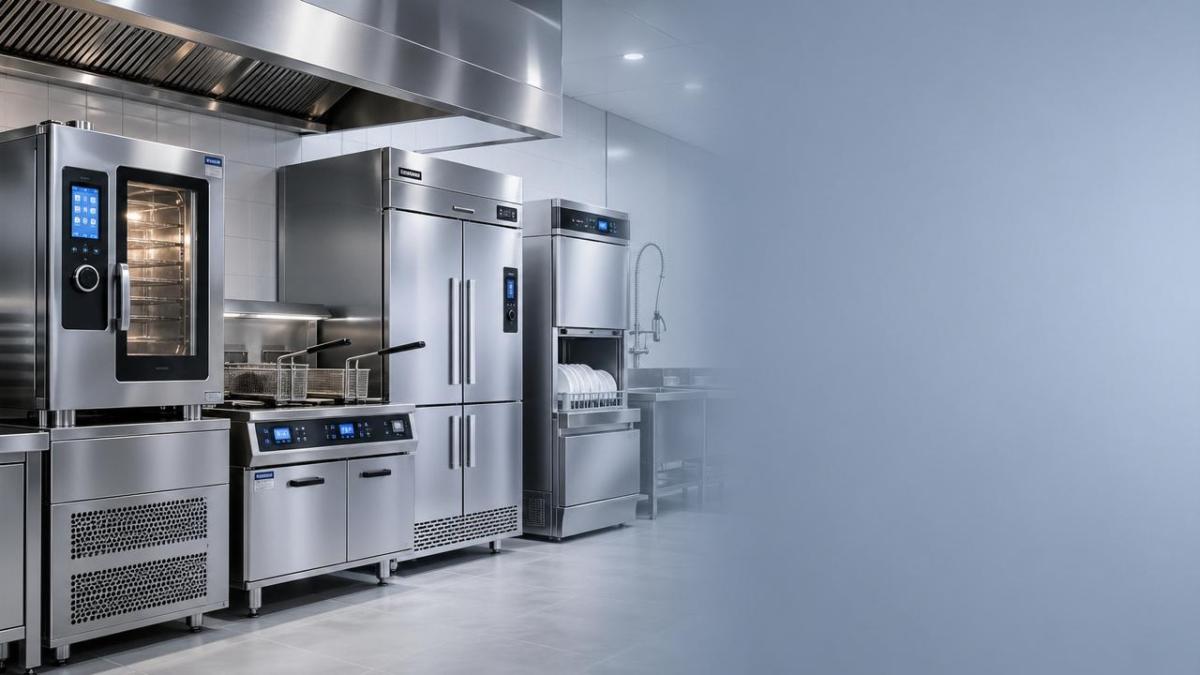
Automated frying systems, programmable combi ovens, smart refrigeration, and digitally controlled preparation equipment are becoming more common across commercial kitchens. As adoption increases, some functions once considered premium are becoming standard. This does not always reduce equipment prices immediately, but it changes the pricing structure: buyers may pay more upfront while receiving more integrated functionality as part of the base model.
2. Energy efficiency is influencing both price and payback
Energy-efficient motors, insulated cooking chambers, heat recovery systems, inverter compressors, and standby power optimization continue to add manufacturing value. As energy regulations tighten, restaurant kitchen equipment prices for certified high-efficiency units may remain above entry-level alternatives. However, for business evaluators, the correct comparison is not just purchase cost but lifetime operating cost.
3. Global supply chains remain more regionalized
China, Germany, Italy, and Japan remain major production centers, but sourcing strategies are diversifying. More importers are using multi-country supplier networks to reduce disruption risk. While this improves resilience, it may also increase coordination costs, quality audits, and inventory buffers. Those factors can affect restaurant kitchen equipment prices, especially for components such as controllers, compressors, stainless steel parts, and specialized burners.
4. Labor shortages are changing value perception
In many foodservice markets, labor remains expensive and difficult to stabilize. That is increasing demand for equipment that shortens training time, reduces manual adjustments, and improves output consistency. For evaluators, this means some higher-priced equipment categories now deserve stronger attention because they support operational continuity, not just production volume.
5. Freight and localization still matter
Ocean freight volatility has moderated compared with earlier peaks, but logistics costs still vary by route, packaging requirement, customs process, and local delivery complexity. In parallel, local assembly or regional warehousing can shorten lead times but may result in a different price profile than direct import purchasing. Buyers should not treat landed cost as a fixed percentage of factory price.
A practical checklist for comparing supplier quotations
Once the market background is understood, the next step is to normalize quotations. This is one of the most useful ways to assess restaurant kitchen equipment prices objectively.
- Check whether the quotation includes freight, duties, packaging, and local delivery.
- Verify the exact model configuration, power rating, and accessory package.
- Confirm certification status and whether testing documents are current for the destination market.
- Review warranty terms, spare parts coverage, and service response commitments.
- Ask for expected maintenance intervals and estimated annual service cost.
- Compare lead times and stock availability, not just list price.
- Check whether software updates, smart platform access, or remote diagnostics require subscription fees.
- Assess payment terms and currency exposure, especially for imported equipment.
This checklist often reveals why two quotations for apparently similar products can differ significantly. In many cases, the gap comes from service scope, compliance readiness, or operating features rather than from unjustified price inflation.
How pricing trends differ by equipment category
Business evaluators should avoid treating all categories the same. Restaurant kitchen equipment prices behave differently depending on technical complexity, energy use, and maintenance demands.
Cooking equipment
Ovens, fryers, ranges, grills, and steamers are seeing stronger pricing influence from automation and energy standards. Advanced control systems and consistency features are becoming central to value decisions, especially in chains and high-throughput kitchens.
Refrigeration equipment
Reach-in refrigerators, freezers, prep tables, and cold rooms are affected by compressor technology, refrigerant regulation, insulation quality, and temperature monitoring systems. Here, long-term utility savings often justify a higher initial quote.
Preparation and processing equipment
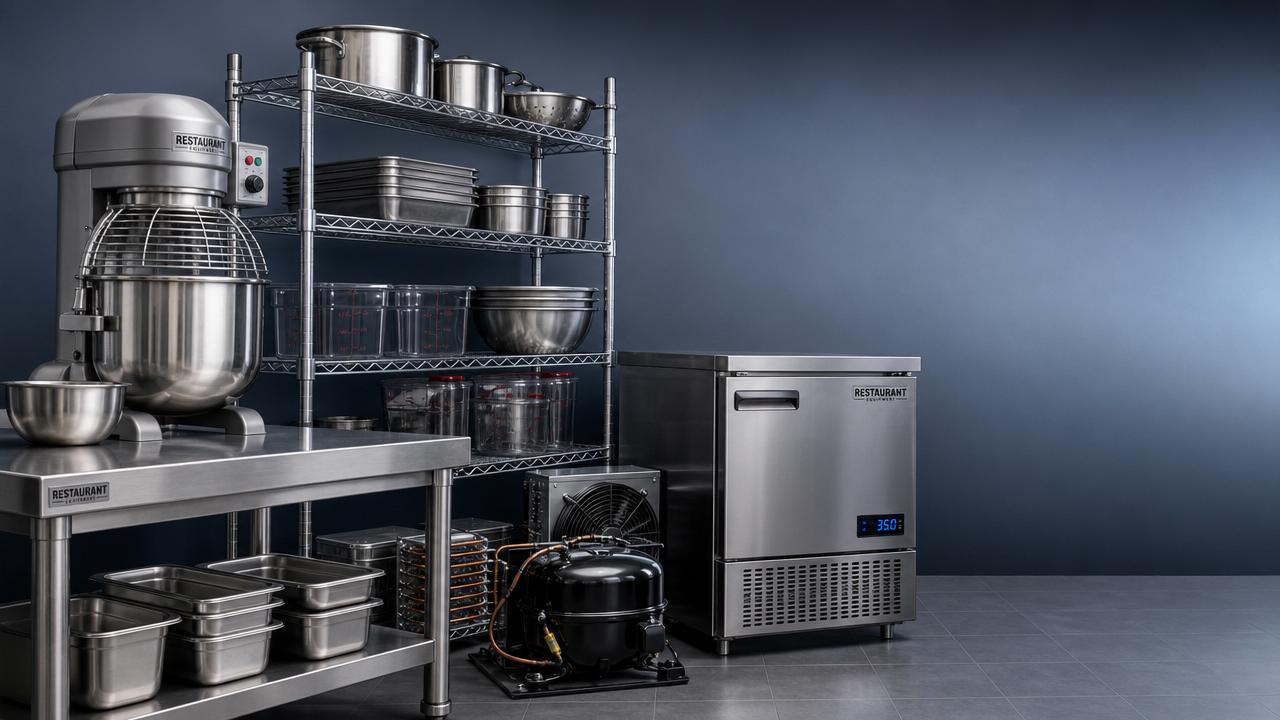
Mixers, slicers, cutters, peelers, and portioning machines depend heavily on motor quality, safety design, and throughput stability. Price movement in this category is often linked to productivity gains and hygiene engineering.
Washing and sanitation systems
Dishwashers, glasswashers, and sanitation stations are seeing cost pressure from water-saving systems, heat recovery, and hygiene compliance requirements. Their economic case should be reviewed in relation to labor, water, detergent, and downtime reduction.
Scenario-based evaluation: what different buyers should prioritize
Not every buyer should react to 2026 pricing trends in the same way. The right interpretation depends on operating model and purchase scale.
For independent restaurants
Focus on a balanced mix of entry price, reliability, and utility efficiency. Avoid overbuying advanced features that staff may not use, but do not ignore serviceability and warranty access. In this segment, restaurant kitchen equipment prices should be analyzed against cash flow sensitivity.
For restaurant chains and hotel groups
Standardization matters more. Even if equipment with digital controls costs more, the gains from training consistency, centralized monitoring, and easier replacement can justify the investment. Group buyers should also evaluate framework agreements and regional stocking support.
For central kitchens and foodservice processors
Capacity, uptime, cleaning efficiency, and integration with workflow are usually more important than the lowest visible price. In these settings, restaurant kitchen equipment prices should be linked to throughput economics and output consistency rather than simple unit cost.
Common blind spots that distort budget decisions
- Ignoring installation and commissioning costs until after purchase approval.
- Comparing imported and local products without adjusting for certification and freight.
- Focusing on equipment price while overlooking energy, water, and maintenance expense.
- Assuming all smart features create value, even when the operation lacks digital management discipline.
- Underestimating lead-time risk for specialized parts or custom-built systems.
- Approving low-price offers without checking service network strength in the destination market.
These blind spots explain why some projects exceed budget even when purchase prices look competitive at the start. For evaluators, the quality of the comparison process is often more important than the initial discount level.
Execution advice for 2026 procurement planning
To manage restaurant kitchen equipment prices effectively in 2026, companies should prepare a structured evaluation package before requesting quotations. This package should include target capacity, menu or process profile, utility conditions, compliance market, expected operating hours, preferred maintenance model, and budget range. The clearer the input data, the more useful the pricing response.
It is also wise to request pricing in comparable tiers: basic compliant model, efficiency-optimized model, and smart-connected model. This helps internal stakeholders understand whether added cost is tied to measurable business value. In parallel, build a simple total cost of ownership model covering purchase, freight, installation, energy, maintenance, expected lifespan, and residual replacement risk.
FAQ for business evaluators reviewing restaurant kitchen equipment prices
Are restaurant kitchen equipment prices expected to rise sharply in 2026?
Not uniformly. Some categories may remain relatively stable, while others will rise due to automation, compliance updates, or advanced energy-saving components. The key issue is not just overall inflation but changing feature baselines.
Should buyers prioritize low upfront pricing in uncertain markets?
Only if operating intensity is low and replacement flexibility is high. In many commercial settings, slightly higher restaurant kitchen equipment prices may be justified by lower downtime, better efficiency, and stronger supplier support.
What is the most important number beyond purchase price?
For most professional buyers, it is total cost of ownership. This figure gives a more accurate view of economic value than unit price alone.
What to prepare before the next supplier discussion
If your team needs to assess restaurant kitchen equipment prices with greater confidence, prepare five things before the next supplier conversation: required capacity, site conditions, compliance market, target investment horizon, and acceptable service response level. Then ask suppliers to explain which price elements are tied to automation, efficiency, certification, logistics, and after-sales support.
That approach turns price comparison into decision-quality analysis. It also helps identify which equipment choices are best suited for current budgets, future expansion, and long-term operational resilience.
Popular Tags
Kitchen Industry Research Team
Dedicated to analyzing emerging trends and technological shifts in the global hospitality and foodservice infrastructure sector.
Industry Insights
Join 15,000+ industry professionals. Get the latest market trends and tech news delivered weekly.
No spam. Unsubscribe anytime.
Contact With us
Contact:
Anne Yin (Ceramics Dinnerware/Glassware)
Lucky Zhai(Flatware)