
Glass storage containers for kitchen shelves: what fits better
Choosing the right glass storage container for kitchen shelves is less about finding the “best” container in general and more about matching shape, size, and lid style to your shelf depth, daily habits, and the foods you store most often. For most home kitchens, square or rectangular glass containers usually fit better than round ones because they waste less shelf space, stack more neatly, and make it easier to see what you have at a glance.
That said, not every kitchen needs the same setup. Deep shelves, narrow cabinets, meal-prep routines, leftovers, dry goods, and family-sized cooking all call for slightly different choices. If you want a kitchen that feels organized instead of crowded, the smartest approach is to compare containers by fit, visibility, stackability, and weight before you buy.
This guide explains what actually fits better on kitchen shelves, which container shapes work best in real homes, and how to choose a glass storage system that keeps your kitchen practical, tidy, and easy to use every day.
What fits better on kitchen shelves: round or rectangular glass containers?
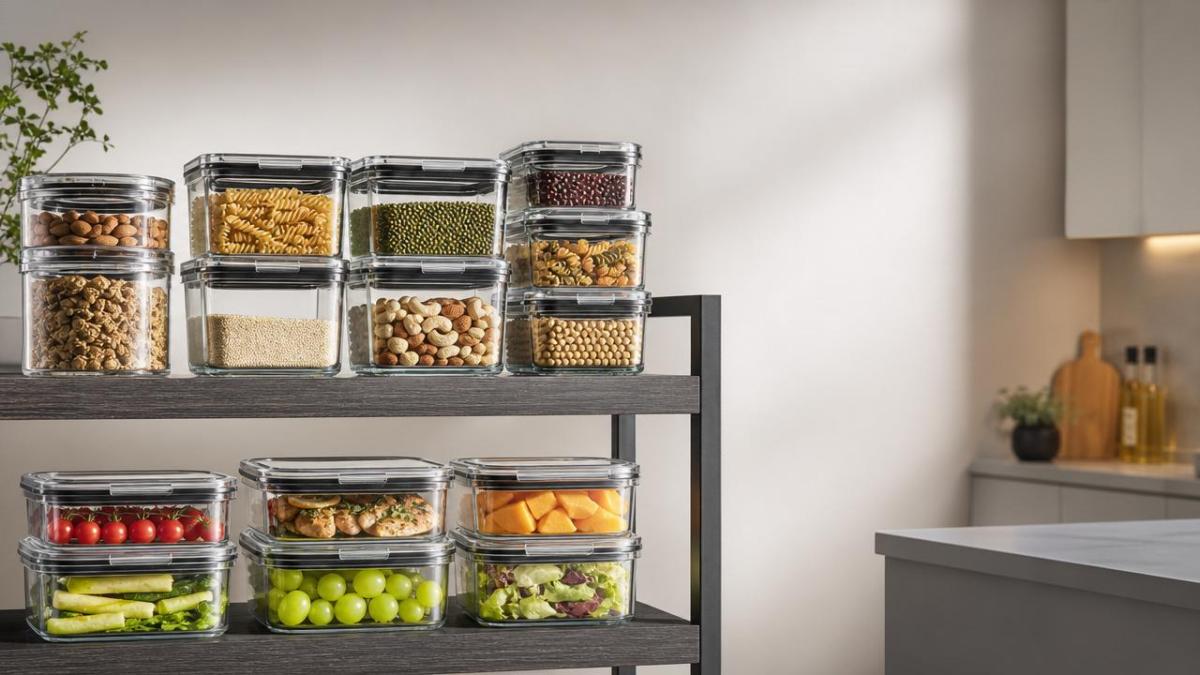
If your main goal is to maximize shelf space, rectangular and square containers usually win. They line up cleanly against flat cabinet walls, leave fewer empty gaps between containers, and create a more uniform storage layout. On a standard kitchen shelf, that means you can often store more food in the same footprint without the arrangement looking messy.
Round containers still have advantages. They are often easier for mixing, reheating soups, or storing sauces and leftovers with liquid. But on shelves, their curved edges create dead space. If you place several round containers side by side, you usually lose usable room between them. That can matter a lot in small kitchens where every inch counts.
Square containers are often the best compromise for many households. They use space efficiently like rectangular models, but they are also more flexible for portioning leftovers, chopped ingredients, fruit, and snacks. If you are building a versatile set of glass containers for everyday home use, square and rectangular shapes tend to offer the best shelf fit.
A simple rule works well here: choose rectangular containers for long shelves and meal prep, square ones for general food storage, and a few round ones only for foods that truly store better that way.
Why shelf dimensions matter more than container volume
Many shoppers focus first on how many cups or liters a container holds, but volume alone does not tell you whether it will fit well on your shelf. A container may have the right capacity yet still waste space because it is too tall, too wide, or awkwardly shaped for the cabinet.
Before buying a new glass storage container for kitchen organization, measure three things: shelf width, shelf depth, and shelf clearance height. Height is especially important if you plan to stack containers or place them under a low cabinet shelf. A container that looks compact online can become inconvenient if the lid adds extra height.
Depth matters just as much. On shallow shelves, wide rectangular containers may hang over the edge or force you to store them sideways. On deeper shelves, smaller containers can get lost in the back and lead to forgotten leftovers. In that case, longer containers or tiered organization may work better than simply buying more pieces.
The best-fitting container is not always the largest one. In many kitchens, a set of medium-sized containers creates a better balance of capacity and accessibility than oversized pieces. You want shelves that feel usable, not packed to the point where taking out one container disturbs everything else.
Which container sizes are most practical for everyday home kitchens?
For most end consumers, the most useful glass storage system includes a mix of small, medium, and large containers instead of all one size. Small containers are ideal for sauces, dips, chopped herbs, nuts, or a single serving of leftovers. Medium containers are usually the workhorses for lunch portions, cut vegetables, rice, pasta, and meal prep. Large containers are helpful for batch cooking, marinating, or storing family-size leftovers.
If you use only large containers, shelves can quickly feel heavy and crowded. If you buy only small ones, you may end up with too many pieces and too many lids to manage. A balanced set often fits better because it lets you assign the right container to the right task.
In practical terms, medium containers are often the best investment for shelf organization. They are easier to stack, less heavy than very large glass dishes, and more likely to be used daily. Many households discover that large containers look efficient at first but are used less often than expected.
When in doubt, start with a core set of medium square or rectangular containers, then add a few small and large pieces based on your cooking habits. That approach keeps your shelves more flexible and prevents overbuying.
Do stackable glass containers really save space?
Yes, but only when they are designed well. Not every stackable container performs equally on real kitchen shelves. Some stack securely with flat lids and stable bases, while others slide, wobble, or become difficult to separate when nested. Good stackability is one of the biggest differences between a tidy shelf and a frustrating one.
For shelf storage, containers with relatively flat lids and uniform footprints are easier to arrange. If every piece in a set follows a similar shape logic, you can stack them with more confidence and less wasted room. This is one reason matching sets often outperform random individual containers collected over time.
However, stacking has a limit. Tall stacks may save horizontal space but reduce convenience. If you need to lift two or three containers to reach one at the bottom, the shelf may look organized but function poorly. For everyday use, low and stable stacking is usually better than building vertical towers.
Also consider whether you plan to store containers with lids on or off. Nesting empty containers can save space, but it may become inconvenient if the matching lids are stored separately. For most home kitchens, a system with easy stacking and easy lid matching works better than one that looks compact only when unused.
How lid design affects shelf storage and daily convenience
Lids are often the hidden factor in whether a glass storage setup feels efficient. Even if the glass base fits beautifully on the shelf, bulky or uneven lids can create clutter. Some lids flare outward, some have raised vent components, and some do not stack neatly at all. These details affect how much usable shelf space you actually have.
The best lids for shelf organization are secure, flat enough to stack, and simple to store when not in use. If lids are too flexible, they may not seal well over time. If they are too bulky, they can turn a clean row of containers into an awkward pile. Consumers often underestimate how much frustration comes from mismatched or poorly stored lids.
Snap-lock lids can be excellent for leak resistance, especially for leftovers and meal prep, but they tend to be bulkier. Press-on lids can be slimmer and quicker to use, but sealing performance varies. Which is better depends on whether your priority is transport, refrigerator freshness, or shelf neatness.
If your kitchen shelves are limited, choose a container set with interchangeable lids across multiple sizes whenever possible. Fewer lid types make daily organization easier and reduce the “lid drawer chaos” that many households deal with.
What works better for different foods stored on kitchen shelves?
The best glass storage container for kitchen use also depends on what you keep in it most often. Dry goods such as pasta, grains, beans, baking ingredients, and snacks usually fit better in tall square or rectangular containers because they line up neatly and make the most of vertical shelf space.
Leftovers, chopped produce, and prepared meals often work best in medium, wide containers that let you see contents clearly. Visibility matters because food that is easy to identify is more likely to be used before it spoils. Transparent glass already helps, but shape also matters. A shallow rectangular dish often reveals contents better than a narrow deep one.
Liquids such as soups, broths, sauces, and dressings may still be easier in round or slightly deeper containers, particularly if you reheat directly from storage. For these foods, a perfect shelf fit is not the only goal. Ease of pouring, stirring, and cleaning can be just as important.
If you store pantry goods on open shelves, appearance may matter too. Uniform glass containers create a cleaner visual look than mixed plastic tubs or packaging. In that case, choosing matching square containers can improve both storage efficiency and kitchen style.
Common mistakes people make when choosing glass containers for shelves
One common mistake is buying a large mixed set without checking actual shelf measurements. A good deal is not always a good fit. Many people end up with containers that are too tall to stack, too wide for cabinets, or too heavy for convenient everyday use.
Another mistake is focusing only on food capacity instead of handling comfort. Glass is durable and easy to clean, but larger pieces can become heavy, especially when filled. If a container is difficult to lift from an upper shelf, it may not be practical no matter how much it holds.
People also often buy too many specialty shapes. Unusual designs may seem useful in theory, but standard shapes usually fit shelves better and are easier to arrange. A kitchen storage system becomes more efficient when most pieces share a consistent form.
Finally, many consumers ignore replacement and long-term use. If lids wear out or pieces break, can you replace individual parts? A container set that works well today but cannot be maintained later may create unnecessary waste and expense.
How to choose the best glass storage setup for your kitchen
If you want the simplest answer, start with this: for most households, the best setup is a coordinated set of medium square or rectangular glass containers with stackable, easy-to-match lids, plus a few small and large pieces for special uses. This arrangement fits better on shelves, supports everyday cooking, and keeps visual clutter low.
If you have narrow shelves, prioritize shorter containers with efficient footprints. If you have deep pantry shelving, choose shapes that prevent items from disappearing in the back. If you cook in batches, add a few large rectangular dishes. If you mainly store leftovers and lunches, focus on medium containers that are easy to grab and stack.
Think in terms of a system, not single products. The right glass storage container for kitchen organization should help you cook, store, find, and reuse food with less effort. When all pieces work together, your shelves feel more spacious even if the kitchen itself is small.
It is also worth considering your future habits. A well-chosen glass storage set can support meal prep, reduce food waste, improve pantry visibility, and make cleaning simpler. That long-term convenience usually matters more than saving a little money on a poorly matched assortment.
Final thoughts: what fits better is what works better for your routine
In most kitchens, square and rectangular glass containers fit shelves better than round ones because they use space more efficiently, stack more neatly, and make organization easier. But the best choice is still the one that matches your shelf size, storage habits, and the foods you use every day.
If you want a practical starting point, choose clear glass containers in a few core sizes, favor medium square or rectangular options, and pay close attention to lid design and stackability. That combination delivers the best balance of storage efficiency, visibility, and daily convenience for most home users.
When chosen thoughtfully, the right glass storage system does more than hold food. It helps your kitchen stay orderly, reduces wasted space, and makes everyday cooking feel smoother. In the end, what fits better on your shelf is also what fits better into your routine.
Popular Tags
Kitchen Industry Research Team
Dedicated to analyzing emerging trends and technological shifts in the global hospitality and foodservice infrastructure sector.
Industry Insights
Join 15,000+ industry professionals. Get the latest market trends and tech news delivered weekly.
No spam. Unsubscribe anytime.

Contact With us
Contact:
Anne Yin (Ceramics Dinnerware/Glassware)
Lucky Zhai(Flatware)