
High-quality kitchen tools: which features matter most?
When choosing high-quality kitchen tools, the most important features go far beyond appearance or price. From durability and ergonomic design to food-safe materials and ease of maintenance, the right tools can improve efficiency, consistency, and safety in both commercial and home kitchens. This article explores the key characteristics that matter most and helps information seekers identify practical, long-term value in today’s evolving kitchen equipment market.
Why a checklist is the smartest way to evaluate high-quality kitchen tools
For information seekers, the challenge is not finding kitchen tools; it is separating truly useful products from attractive but short-lived options. A checklist-based approach works because high-quality kitchen tools are judged by performance over time, not by packaging claims alone. In commercial kitchens, poor tools slow service, increase replacement costs, and create food safety risks. In household kitchens, they reduce comfort, precision, and everyday satisfaction.
Using a structured evaluation method also reflects how the wider kitchen equipment industry is evolving. Buyers today are comparing durability, hygienic design, sustainability, maintenance requirements, and compatibility with modern workflows. Whether the tools are for restaurants, hotels, food processing areas, or home use, the same practical question applies: which features actually matter most before buying?
Start with this core checklist before you compare brands
If you want to identify high-quality kitchen tools efficiently, prioritize these key checks first. They provide a reliable foundation for shortlisting products and avoiding common mistakes.
- Material quality: confirm stainless steel grade, food-safe silicone, hardwood treatment, or BPA-free polymer standards instead of relying on generic wording.
- Structural durability: inspect joints, welds, rivets, molded edges, and stress points where breakage usually begins.
- Ergonomic design: check handle comfort, grip security, balance, and whether prolonged use causes wrist strain.
- Food safety and hygiene: prioritize non-reactive, non-porous, easy-to-clean surfaces with minimal crevices.
- Heat and corrosion resistance: essential for tools exposed to dishwashers, steam, acids, oils, and frequent temperature changes.
- Maintenance simplicity: good tools should be easy to sanitize, dry quickly, and resist odor retention or staining.
- Task suitability: a tool can be well made and still be the wrong choice if it does not match the actual cooking process.
- Lifecycle value: compare expected service life, replacement frequency, warranty, and performance consistency, not just purchase price.
The features that matter most, explained in practical terms
1. Material quality is the first non-negotiable standard
Among all buying criteria, material quality is often the clearest signal of high-quality kitchen tools. Stainless steel is preferred for many utensils because it resists rust, staining, and flavor transfer. For cutting boards or wooden handles, moisture resistance and finish quality matter as much as the wood species itself. Silicone tools should withstand high heat without warping, cracking, or releasing odor. Plastic components should be food-safe and robust enough to avoid brittleness.
A practical tip: if the manufacturer does not clearly specify materials, that is already a warning sign. Transparent specifications usually indicate stronger quality control and better product confidence.
2. Durability depends on construction, not just appearance
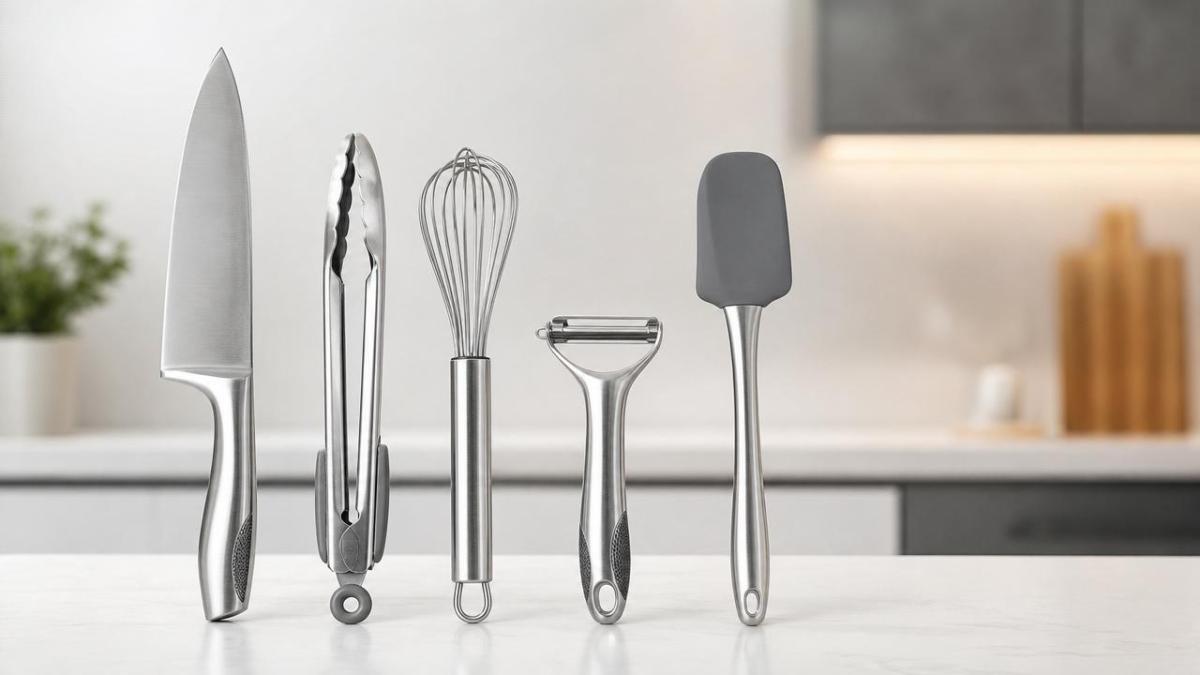
Many tools look premium when new, but true durability comes from how they are built. Tongs should keep their spring tension. Knives should maintain edge stability. Whisks should not loosen at the handle. Peelers and graters should hold alignment under repeated use. In professional environments, even a small structural weakness becomes expensive when multiplied across daily volume.
Check whether moving parts are tight but smooth, whether seams are clean, and whether the tool feels solid without unnecessary weight. High-quality kitchen tools are designed to survive repetitive handling, washing, storage, and impact.
3. Ergonomics directly affects speed, comfort, and safety
Ergonomic design is sometimes treated as a secondary benefit, but it has a direct impact on efficiency. In a restaurant kitchen, awkward tools increase fatigue and reduce consistency. In home use, uncomfortable grips can make simple prep tasks frustrating. Good handle shape, non-slip texture, balanced weight distribution, and appropriate tool length all contribute to better control.
This is especially important for cutting, stirring, turning, and repetitive prep tasks. A well-designed tool supports the natural movement of the hand instead of forcing compensation through extra pressure.
4. Hygiene and easy cleaning are essential, not optional
High-quality kitchen tools must support sanitation standards. This matters across the broader kitchen equipment industry because food safety regulations and consumer expectations are rising globally. Tools with deep seams, unsealed wood, rough edges, or hard-to-clean hinges can trap residue and bacteria. By contrast, smooth surfaces, dishwasher-safe materials, and fewer dirt-retention points reduce cleaning time and contamination risk.
For food processing and hospitality settings, sanitation-friendly design may be more important than decorative styling. For home users, it still affects tool lifespan and kitchen health.
5. Heat, corrosion, and chemical resistance add long-term value
Kitchen environments are demanding. Steam, salt, acids, detergents, high temperatures, and repeated washing all test product quality. A spoon that softens near heat or a blade that pits after acidic contact will not deliver long-term value. High-quality kitchen tools should be selected with their operating environment in mind, especially in commercial kitchens and foodservice operations where exposure is constant.
How priorities change by user type and kitchen scenario
The best buying decision depends on where and how the tools will be used. The table below helps information seekers compare priorities across different settings.
Commonly overlooked issues that weaken buying decisions
Even experienced buyers can miss small details that have major consequences later. When evaluating high-quality kitchen tools, watch for these overlooked points:
- Overemphasis on price: the cheapest tool often costs more through frequent replacement, poor performance, or staff frustration.
- Ignoring grip conditions: a handle that feels fine when dry may become unsafe with oil, water, or gloves.
- No check for cleaning compatibility: not all materials handle dishwashers, chemical cleaners, or high-temperature sanitation equally well.
- Choosing style over workflow: visually appealing tools may not fit storage systems, prep lines, or service speed needs.
- Lack of replacement planning: if a tool uses special parts or non-standard sizes, future maintenance may become inconvenient.
- Not verifying supplier consistency: one excellent sample does not guarantee stable production quality across larger orders.
A practical evaluation method you can use before purchase
To compare high-quality kitchen tools more effectively, use a simple step-by-step method instead of relying on impressions alone.
- Define the task first: chopping, turning, scraping, measuring, plating, or processing all require different performance priorities.
- List the exposure conditions: heat, moisture, acids, repeated washing, or heavy-volume use.
- Request material and manufacturing details: this is essential for commercial sourcing or bulk procurement.
- Test handling if possible: grip, weight, control, and balance should be assessed in realistic conditions.
- Compare total cost of ownership: include lifespan, maintenance effort, breakage risk, and replacement frequency.
- Check supplier support: warranty terms, lead times, batch consistency, and communication quality matter for long-term purchasing.
What current industry trends mean for tool selection
The kitchen equipment sector is moving toward smarter, more efficient, and more sustainable solutions, and these changes affect even small tools. Buyers increasingly value tools that support efficient kitchen systems, reduce waste, and align with hygiene-focused operations. In commercial settings, standardization and compatibility with organized workflows are growing priorities. In consumer markets, interest is shifting toward durable, multifunctional tools rather than disposable, trend-driven purchases.
This means high-quality kitchen tools should be judged not only as isolated items, but also as part of a broader kitchen performance strategy. The best tools contribute to consistency, labor efficiency, food safety, and responsible long-term use.
FAQ: quick answers for information seekers
How can I tell if kitchen tools are truly high quality?
Look for clear material specifications, strong construction, comfortable handling, hygienic design, and resistance to heat, corrosion, and repeated cleaning. Reviews help, but technical details matter more.
Are expensive tools always better?
No. Price alone does not guarantee value. The best high-quality kitchen tools justify their cost through durability, safety, and performance in the intended use scenario.
What matters most for commercial kitchens?
Durability, ergonomic efficiency, sanitation, and consistent performance under high-frequency use usually matter more than appearance or packaging.
Final checklist and next-step guidance
In the end, high-quality kitchen tools should be selected through evidence-based checks, not assumptions. The most important features usually come down to material quality, durable construction, ergonomic design, food safety, easy maintenance, and suitability for the real kitchen environment. These factors matter across home kitchens, restaurants, hotels, and food processing operations.
If you need to move from research to supplier comparison, prepare a short requirement list first: intended use, preferred materials, cleaning method, expected service life, budget range, order quantity, and any compliance or workflow needs. Then ask targeted questions about specifications, testing, lead times, warranty, and consistency across batches. That approach will make it much easier to identify high-quality kitchen tools with genuine long-term value.
Popular Tags
Kitchen Industry Research Team
Dedicated to analyzing emerging trends and technological shifts in the global hospitality and foodservice infrastructure sector.
Industry Insights
Join 15,000+ industry professionals. Get the latest market trends and tech news delivered weekly.
No spam. Unsubscribe anytime.

Contact With us
Contact:
Anne Yin (Ceramics Dinnerware/Glassware)
Lucky Zhai(Flatware)