
Glass storage containers with lids are not all equal
Not every glass storage container with lid delivers the same level of safety, durability, and convenience. For everyday consumers, the right choice can make a big difference in food freshness, kitchen organization, and long-term value. Understanding the key differences between materials, sealing performance, and practical design features helps you choose smarter for both home cooking and modern food storage needs.
Why are glass storage containers with lids not all the same?
At first glance, many products look nearly identical. A rectangular bowl with a transparent body and a snap-on top may seem interchangeable with any other glass storage container with lid. In reality, the differences can be significant. The quality of the glass, the lid material, the sealing ring, the locking design, and the temperature resistance all affect daily use.
For end consumers, these differences matter because storage containers are used repeatedly in real kitchen routines: meal prep, leftovers, refrigerator organization, freezer storage, and sometimes oven reheating. A poorly made product may chip, leak, stain around the lid, or lose its seal after only a short period. A better glass storage container with lid can stay reliable for years, preserve flavor more effectively, and reduce food waste.
The wider kitchen equipment industry has also pushed higher standards in food safety and user convenience. As households adopt habits once associated with professional foodservice efficiency, consumers are paying more attention to stackability, airtight performance, and compatibility with microwave, freezer, dishwasher, and oven use. That is why this category is receiving more attention than ever.
What should consumers check first when choosing a glass storage container with lid?
The first thing to evaluate is not the shape or the price. It is the combination of safety, sealing, and durability. These three factors determine whether the product will actually support everyday food storage.
Start with the glass itself. Borosilicate glass is usually preferred because it handles temperature changes better and is less likely to crack under normal kitchen use. Soda-lime glass can still be useful, but it may not offer the same level of thermal shock resistance. If you plan to move food between refrigerator, microwave, freezer, or oven, the type of glass becomes especially important.
Next, inspect the lid system. A quality glass storage container with lid should seal evenly around the edge. Silicone gaskets generally improve airtightness and leak resistance, but they should be removable enough for cleaning if possible. Lids with secure locking clips can help when transporting soups, sauces, or cut fruit, though the clips should feel firm rather than fragile.
Then consider how the container fits your routine. A container designed only for storage may not be ideal for reheating. A stylish set may look attractive, but if the sizes are impractical, the purchase becomes less useful over time. The best buying decision usually comes from matching features to actual habits rather than choosing by appearance alone.
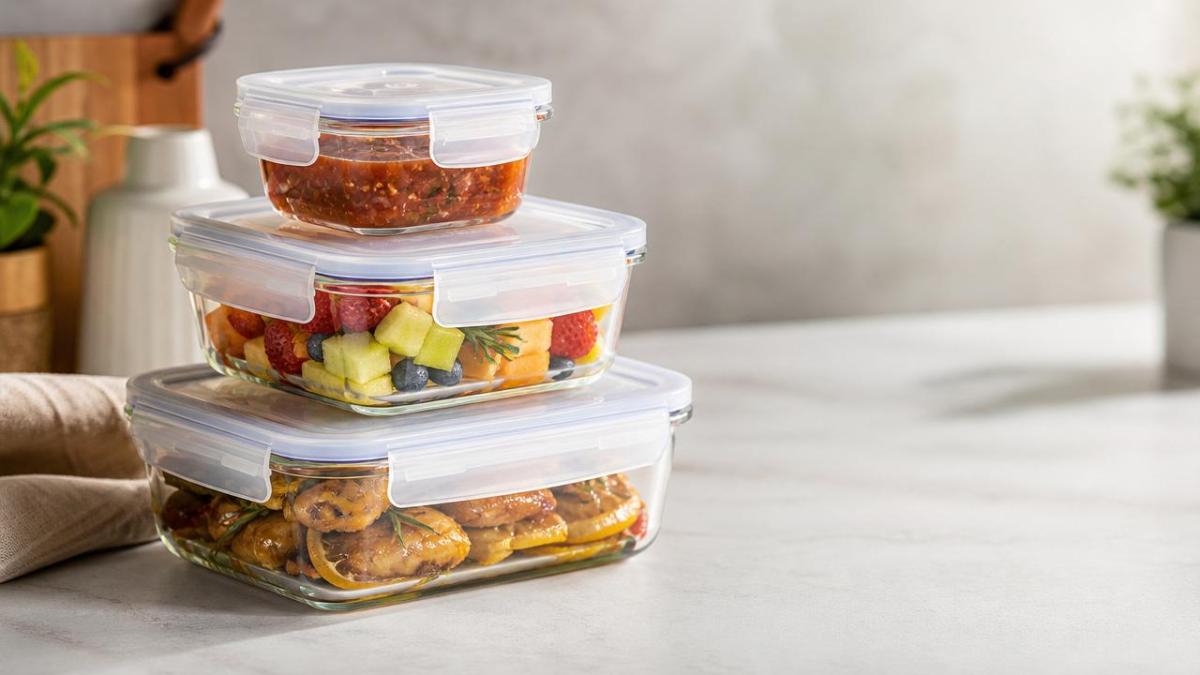
How do material and lid design affect food safety and freshness?
Food safety is one of the strongest reasons many households switch from plastic to glass. Glass is non-porous, so it is less likely to absorb odors, stains, or oily residue. It also gives consumers more confidence when storing acidic foods such as tomato sauce, citrus-based meals, pickles, and marinades. A high-quality glass storage container with lid helps keep flavors clean and storage conditions stable.
However, the lid deserves equal attention. Even excellent glass cannot preserve freshness if the lid warps, the gasket loosens, or the snap closures weaken. If air enters the container too easily, fresh produce dries out faster, leftovers lose moisture, and refrigerated smells spread more easily. This is especially noticeable in meal prep, where consistency over several days matters.
Consumers should also watch for food-contact safety in lid materials. BPA-free claims are common, but build quality still matters. Thin plastic lids can become brittle over time, especially after repeated dishwasher cycles. Silicone seals should not retain strong food odors after normal cleaning. If they do, it may be a sign of lower material quality.
In short, freshness depends on the whole system, not only on the glass body. A dependable glass storage container with lid protects food best when the container and lid are engineered to work together.
Which features matter most for different home kitchen scenarios?
Not every household uses storage containers in the same way. A single person preparing weekday lunches has different needs from a family storing batch-cooked meals or fresh ingredients. That is why the “best” glass storage container with lid depends heavily on use case.
For meal prep, portion-friendly sizes and stackability are major advantages. Containers that nest when empty and stack securely when full save cabinet and refrigerator space. For leftovers, medium rectangular formats are often more practical than large round bowls because they organize shelves more efficiently.
For transporting food, leak resistance becomes critical. Office lunches, school snacks, and road-trip meals need lids that stay sealed during movement. For freezer storage, space efficiency and crack resistance matter more. A freezer-friendly glass storage container with lid should tolerate low temperatures without compromising the seal.
For home cooks who reheat frequently, oven-safe and microwave-safe labeling should be verified carefully. Some glass containers are oven safe but the lids are not. Others can go in the microwave only with the lid vented or removed. Reading product instructions is not a minor detail; it is essential to safe and effective use.
Quick comparison table for everyday buyers
The table below summarizes what to prioritize based on common household needs.
What are the most common mistakes people make when buying glass storage containers with lids?
One of the biggest mistakes is treating all “airtight” claims as equal. Some products are fine for dry snacks but not reliable for liquids. Others seal well at first but wear down quickly. If you need dependable transport, test how the lid closes, how the gasket sits, and whether the closure points feel balanced.
Another mistake is ignoring long-term maintenance. A glass storage container with lid should be easy to clean thoroughly. Deep grooves, fixed seals, and hard-to-reach corners can trap moisture or food residue. This can lead to unpleasant odors or hygiene concerns, especially in busy family kitchens.
Price-only shopping is another common issue. The cheapest set may look attractive upfront, but replacement costs rise if lids crack, clips snap, or the sizes prove inconvenient. On the other hand, buying the most expensive set without evaluating practical needs can also waste money. Value comes from frequency of use, lifespan, and fit with your cooking habits.
Consumers also often overestimate durability. Even a premium glass storage container with lid is not indestructible. Sudden temperature changes, impact on hard counters, and improper stacking can still cause damage. Good products reduce risk, but careful use remains important.
How can you tell whether a glass storage container with lid offers real long-term value?
Long-term value is a balance of performance, durability, and convenience. A useful way to judge this is to think beyond the first week of ownership. Will the lid still close firmly after months of dishwasher use? Will the glass body resist staining and maintain clarity? Will the size assortment actually match how you cook and store food?
A strong indicator of value is versatility. A glass storage container with lid that works for refrigerator storage, meal prep, and table serving reduces the need for multiple types of containers. This supports a more organized kitchen and aligns with the larger industry shift toward efficient, integrated food handling solutions at both commercial and household levels.
Replacement support can matter too. Some brands offer spare lids or expandable sets. This is useful because the lid is often the first part to wear out. If one broken top means replacing the entire container set, the value proposition becomes weaker. Consumers looking for sustainable buying decisions should consider whether the product ecosystem supports longer use.
Reviews can help, but they should be read carefully. Look for comments about seal performance after months of use, dishwasher durability, ease of cleaning, and how the container performs with both dry and wet foods. Those details are often more informative than early impressions focused only on appearance.
What questions should you ask before you buy or compare options?
Before buying any glass storage container with lid, it helps to ask a short list of practical questions. These questions reduce the chance of purchasing a set that looks appealing online but disappoints in real use.
First, what foods will you store most often? Soups, sauces, cooked grains, chopped vegetables, and baked leftovers all place slightly different demands on shape and seal performance. Second, will you mainly use the containers at home, or transport them often? Third, do you need freezer-to-microwave flexibility, or just refrigerator organization?
You should also confirm whether the lid is dishwasher safe, whether the seal is removable, whether the glass is borosilicate or another type, and whether replacement parts are available. For families and frequent cooks, mixed-size sets usually provide better utility than multiple containers of the same size. For small kitchens, nesting and stacking efficiency may be more important than total piece count.
In the end, choosing a glass storage container with lid is less about finding a universally perfect product and more about finding the right combination of food safety, sealing reliability, thermal performance, and everyday convenience. If you need to confirm a specific option, product parameter, lid type, usage scenario, pricing range, or supply comparison, the best next step is to ask clear questions about material grade, seal structure, temperature limits, cleaning method, and replacement support before making a final decision.
Popular Tags
Kitchen Industry Research Team
Dedicated to analyzing emerging trends and technological shifts in the global hospitality and foodservice infrastructure sector.
Industry Insights
Join 15,000+ industry professionals. Get the latest market trends and tech news delivered weekly.
No spam. Unsubscribe anytime.

Contact With us
Contact:
Anne Yin (Ceramics Dinnerware/Glassware)
Lucky Zhai(Flatware)