
How to Evaluate Kitchen Equipment Manufacturers for Restaurant Projects
Choosing among kitchen equipment manufacturers shapes far more than a project budget. It affects kitchen workflow, compliance, maintenance costs, food quality, and the pace of restaurant opening. In a market moving toward automation, digital control, and energy efficiency, supplier evaluation has become a strategic decision rather than a basic sourcing task.
Why manufacturer selection matters more now
Restaurant projects now demand equipment that supports speed, consistency, hygiene, and lower operating costs. That pressure is increasing across independent restaurants, hotel kitchens, cloud kitchens, and central production facilities.
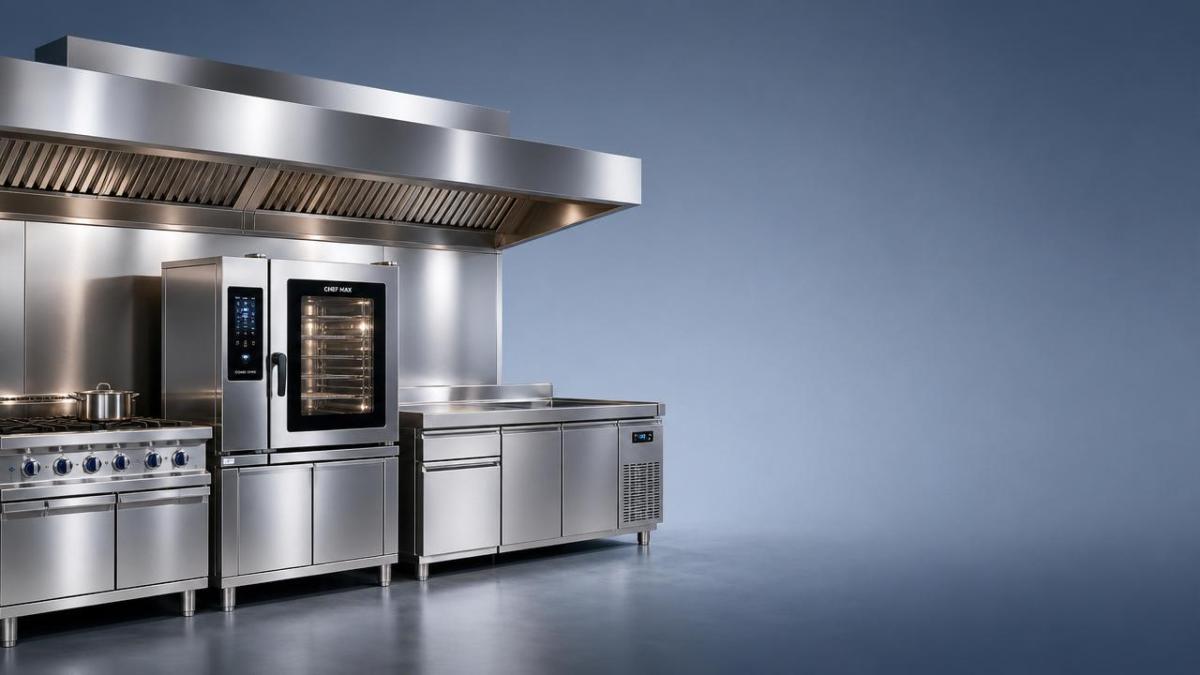
The kitchen equipment industry is also changing quickly. Smart cooking systems, automated preparation lines, and connected monitoring tools are no longer niche options in many commercial environments.
At the same time, global sourcing has expanded buyer choice. China, Germany, Italy, and Japan remain important production centers, but wider access also makes comparison more complex.
That is why evaluating kitchen equipment manufacturers requires a broader lens. Price still matters, but long-term fit matters more.
What should be evaluated before shortlisting suppliers
A reliable review starts with understanding the manufacturer, not only the product catalog. Some suppliers are strong in standardized lines, while others are better at project-based customization.
Commercial kitchens often combine cooking equipment, refrigeration, ventilation, washing systems, preparation tools, and holding units. A manufacturer may perform well in one area and weakly in another.
This is especially relevant for restaurant projects that must coordinate front-of-house timing, back-of-house throughput, and utility constraints in the same build.
Core dimensions to compare
Product quality is more than material thickness
Many buyers begin with stainless steel grade, insulation, burners, compressors, or control panels. Those details matter, but they only tell part of the story.
Better kitchen equipment manufacturers show consistency in welding, finishing, sealing, temperature stability, and component sourcing. These signs often reveal whether the equipment will perform reliably during peak service.
It also helps to ask how the equipment is tested before shipment. Functional testing, leak checks, electrical inspection, and calibration records are practical indicators of process discipline.
In actual use, durable equipment lowers replacement frequency and protects kitchen rhythm. A unit that fails during busy hours creates costs beyond repair invoices.
Useful proof points
- Third-party certifications and valid test reports
- Documented quality inspection procedures
- Reference projects in similar restaurant formats
- Clarity on key branded components and parts sources
- Evidence of stable packaging for export shipments
Compliance, safety, and local fit
Restaurant equipment must match more than menu requirements. It also needs to fit local power supply, gas type, ventilation rules, sanitation standards, and installation conditions.
Some kitchen equipment manufacturers are experienced in export markets and design products around destination requirements. Others mainly serve domestic channels and adapt only when asked.
That distinction matters. A technically strong product can still become a project problem if voltage, certification, or utility assumptions are wrong.
For multi-country restaurant rollouts, consistent documentation becomes even more valuable. Manuals, parts lists, wiring diagrams, and cleaning instructions should be available and easy to review.
Customization and system thinking
Restaurant projects rarely operate as isolated equipment purchases. Cooking lines, preparation areas, refrigeration, and washing zones need to work together as one system.
The stronger kitchen equipment manufacturers understand this early. They ask about menu mix, service volume, labor model, utility access, cleaning routines, and future expansion.
This matters even more when evaluating smart kitchen solutions. Connected ovens, automated holding systems, and digital monitoring tools can improve consistency, but only if they integrate with the operating model.
A good supplier does not simply offer more features. It helps decide which features support operational reality and which add unnecessary complexity.
Questions that reveal project fit
- Can layouts be adjusted for workflow and safety?
- Are controls intuitive for mixed-skill kitchen teams?
- Can equipment support menu expansion later?
- Are energy-saving functions measurable, not only claimed?
- Will replacement parts remain available for several years?
Lead time, logistics, and execution risk
A restaurant project can be delayed by one missing item, one wrong utility specification, or one damaged shipment. That is why delivery reliability deserves the same attention as product quality.
Kitchen equipment manufacturers should be able to explain production schedules, critical components, packing standards, and shipment coordination. Vague answers usually create pressure later.
Imported equipment adds another layer. Customs documentation, palletization, moisture protection, and labeling standards can influence installation timing and landed cost.
For larger rollouts, phased delivery planning is often more useful than one-time shipment promises. It helps match site readiness and reduces storage or damage risk.
After-sales support often decides long-term value
The real performance of kitchen equipment manufacturers becomes visible after installation. Fast-moving restaurant operations need quick troubleshooting, predictable parts access, and practical maintenance guidance.
Warranty terms should be read carefully. Coverage duration matters, but response procedure matters just as much. Delayed service can erase any savings gained during purchasing.
It is also worth checking whether service manuals, training videos, and commissioning support are available. Clear technical support reduces the learning curve for both operators and service teams.
In many cases, the best supplier is not the one with the lowest quote. It is the one that keeps the kitchen running smoothly over time.
A practical way to compare kitchen equipment manufacturers
A structured review helps avoid decisions based on catalogs or presentations alone. Shortlists become much clearer when technical, commercial, and operational factors are scored together.
Turning evaluation into a better sourcing decision
The most useful assessment framework connects equipment performance with business reality. It asks whether the supplier can support kitchen speed, food safety, service continuity, and total cost over time.
That approach is increasingly important as restaurant projects adopt intelligent equipment, energy-efficient systems, and integrated production models. Technical features only create value when the manufacturer can deliver, support, and adapt them properly.
Before moving forward, it helps to refine the project brief, rank non-negotiable requirements, and compare kitchen equipment manufacturers against the same operational criteria. A careful shortlist today usually prevents expensive corrections after opening.
Popular Tags
Kitchen Industry Research Team
Dedicated to analyzing emerging trends and technological shifts in the global hospitality and foodservice infrastructure sector.
Industry Insights
Join 15,000+ industry professionals. Get the latest market trends and tech news delivered weekly.
No spam. Unsubscribe anytime.
Hot Articles
 How to Size a Commercial Oven for Peak Production Without Wasting Energy
- How to Evaluate Foodservice Equipment Suppliers for Reliability, Service, and Total Cost
- How to Choose a Cutlery Set for Restaurants: Material, Durability, and Cost
- How to Evaluate Restaurant Supplies Distributors for Reliable Multi-Location Delivery
Contact With us
Contact:
Anne Yin (Ceramics Dinnerware/Glassware)
Lucky Zhai(Flatware)