
How to Choose Restaurant Kitchen Supplies for New Openings and Daily Operations
How to Choose Restaurant Kitchen Supplies for New Openings and Daily Operations
Choosing the right restaurant kitchen supplies is one of the most important decisions for new openings and stable daily operations.
Every item affects speed, food safety, labor use, repair costs, and the guest experience.
A smart buying decision is not only about price.
It is about matching equipment performance with menu needs, kitchen layout, service volume, and long-term operating goals.
In practice, the best restaurant kitchen supplies support both launch readiness and day-to-day consistency.
That means looking at durability, workflow, compliance, energy use, and supplier support as one connected decision.
Start with the Kitchen’s Real Operating Model
Before comparing restaurant kitchen supplies, define how the kitchen will actually run.
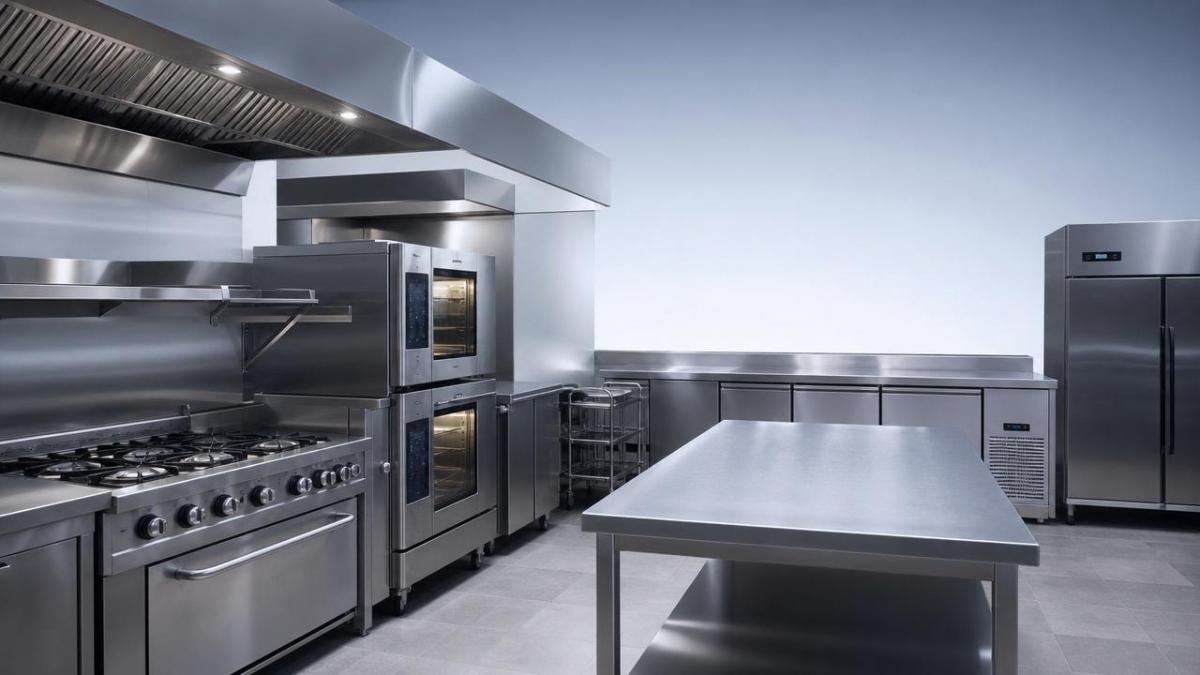
A fine dining kitchen needs different tools than a quick-service concept or a central production site.
The menu should shape the equipment list first.
If the menu changes often, flexible restaurant kitchen supplies become more valuable than highly specialized machines.
It also helps to estimate peak covers, prep hours, delivery demand, and storage turnover early.
These numbers reveal whether standard-capacity equipment is enough or if heavier-duty units are necessary.
From a cost control view, oversizing can waste energy and floor space.
Undersizing creates bottlenecks, overtime, and service delays that are much harder to fix later.
Prioritize Core Categories of Restaurant Kitchen Supplies
Most buying decisions become easier when restaurant kitchen supplies are grouped by operational function.
This keeps the evaluation practical and reduces missed items during a new opening.
- Cooking equipment: ranges, ovens, fryers, griddles, steamers, and induction units.
- Refrigeration: reach-ins, undercounter units, walk-ins, blast chillers, and prep tables.
- Preparation tools: mixers, slicers, food processors, worktables, and cutting systems.
- Washing and sanitation: dishwashers, sinks, grease systems, and hygiene accessories.
- Storage and handling: shelving, bins, mobile racks, ingredient containers, and carts.
- Smallwares: knives, pans, utensils, trays, measuring tools, and serving support items.
Not every category deserves the same budget weight.
High-frequency and failure-sensitive restaurant kitchen supplies usually deserve stronger specifications.
Smallwares may cost less per item, but poor quality there still creates daily frustration and hidden replacement costs.
Evaluate Durability, Materials, and Food Safety Standards
Restaurant kitchen supplies work under heat, moisture, grease, chemicals, and constant handling.
That is why material quality matters more than a polished catalog photo.
Stainless steel remains a common choice because it is durable, cleanable, and corrosion resistant.
Still, not all steel grades perform the same in heavy commercial kitchens.
Weld quality, edge finishing, insulation design, hinges, and seals often determine real service life.
For food-contact items, safe surfaces and easy cleaning are essential.
Look for compliance with local and export market requirements, including NSF, CE, or other relevant standards.
This is especially important when restaurant kitchen supplies come from multiple international suppliers.
A cheaper item that fails hygiene checks or wears out quickly rarely stays cheap for long.
Match Equipment Size to Workflow and Space
One common mistake is buying restaurant kitchen supplies without mapping workflow in detail.
A kitchen may have excellent equipment and still operate poorly if movement paths are awkward.
Receiving, storage, prep, cooking, plating, washing, and waste flow should connect smoothly.
This becomes even more important in compact kitchens and high-turnover service models.
Measure door access, utility points, ventilation limits, and maintenance clearance before final selection.
Undercounter and modular restaurant kitchen supplies often help when flexibility is needed.
For multi-station kitchens, consider whether shared equipment creates delays during peak periods.
A layout that saves a few square feet but slows labor every day is usually a poor trade.
Look Beyond Purchase Price to Total Cost of Ownership
For buying decisions, the smartest question is not “What is the lowest quote?”
It is “Which restaurant kitchen supplies deliver the best long-term value?”
Total cost of ownership includes energy use, water use, cleaning time, spare parts, downtime, and replacement cycles.
In many operations, utility costs can quietly outweigh the original purchase difference.
Energy-efficient restaurant kitchen supplies are becoming more attractive as operating costs rise worldwide.
This trend is even stronger in facilities with long production hours.
A simple comparison table can help organize decisions:
Assess Supplier Reliability and After-Sales Support
Even the best restaurant kitchen supplies can become a problem without solid supplier support.
This is where many sourcing decisions succeed or fail over time.
Check production consistency, lead times, documentation quality, installation guidance, and spare parts availability.
Ask how quickly support teams respond to urgent breakdowns.
For imported restaurant kitchen supplies, verify certifications, packaging protection, and replacement part planning.
Recent market shifts also make supplier transparency more important.
A supplier that can discuss smart equipment, automation, and energy-saving options usually brings stronger industry awareness.
That does not mean choosing the most complex solution, but it does mean choosing a partner prepared for future needs.
Consider Smart and Efficient Solutions Where They Add Real Value
The kitchen equipment industry is moving toward automation, digital control, and energy efficiency.
Still, not every kitchen needs advanced features across every category.
The most useful restaurant kitchen supplies are the ones that solve a real operational problem.
For example, programmable cooking, temperature tracking, and automated cleaning can improve consistency and labor efficiency.
In higher-volume kitchens, digital monitoring can also support food safety records and preventive maintenance.
At the same time, simpler restaurant kitchen supplies may be better in kitchens with limited technical support.
The key is to balance innovation with ease of use, repair access, and staff training capacity.
Build a Practical Selection Checklist Before Ordering
A clear checklist helps turn broad evaluation into better buying decisions.
It also keeps restaurant kitchen supplies aligned with budget, timeline, and operational priorities.
- Confirm menu structure, expected volume, and service style.
- List essential restaurant kitchen supplies by function and priority.
- Check dimensions, utilities, ventilation, and installation conditions.
- Compare materials, certifications, and cleaning convenience.
- Estimate total cost of ownership, not just invoice price.
- Review lead time, warranty, service coverage, and spare parts support.
- Test whether smart features bring measurable value.
This approach is especially useful for new openings, where timing pressure can lead to rushed purchases.
A few extra checks before ordering often prevent expensive corrections after launch.
Final Takeaway for Better Buying Decisions
Choosing restaurant kitchen supplies is really about protecting performance across the full life of the kitchen.
The best choices fit the menu, support workflow, meet safety standards, and stay reliable under pressure.
They also reflect where the industry is heading, with more efficient, connected, and flexible solutions.
When restaurant kitchen supplies are selected with long-term operations in mind, new openings become smoother and daily execution becomes more stable.
The most effective next step is simple.
Review your menu, map your workflow, rank critical equipment, and compare suppliers using clear operating criteria.
That process leads to restaurant kitchen supplies that are easier to justify, easier to maintain, and better suited for real business demands.
Popular Tags
Kitchen Industry Research Team
Dedicated to analyzing emerging trends and technological shifts in the global hospitality and foodservice infrastructure sector.
Industry Insights
Join 15,000+ industry professionals. Get the latest market trends and tech news delivered weekly.
No spam. Unsubscribe anytime.

Contact With us
Contact:
Anne Yin (Ceramics Dinnerware/Glassware)
Lucky Zhai(Flatware)