
Kitchen Shelf Export Opportunities in Emerging Markets
As foodservice demand rises across emerging markets, Kitchen Shelf solutions are becoming a key opportunity within kitchen equipment wholesale. From stainless steel kitchen equipment and kitchen shelving system designs to catering kitchen equipment for restaurants, hotels, and central kitchens, buyers are seeking durable, efficient, and scalable products. This article explores how exporters can capture growth by aligning product quality, pricing, and market needs.
Why are emerging markets becoming a strong growth channel for Kitchen Shelf exports?
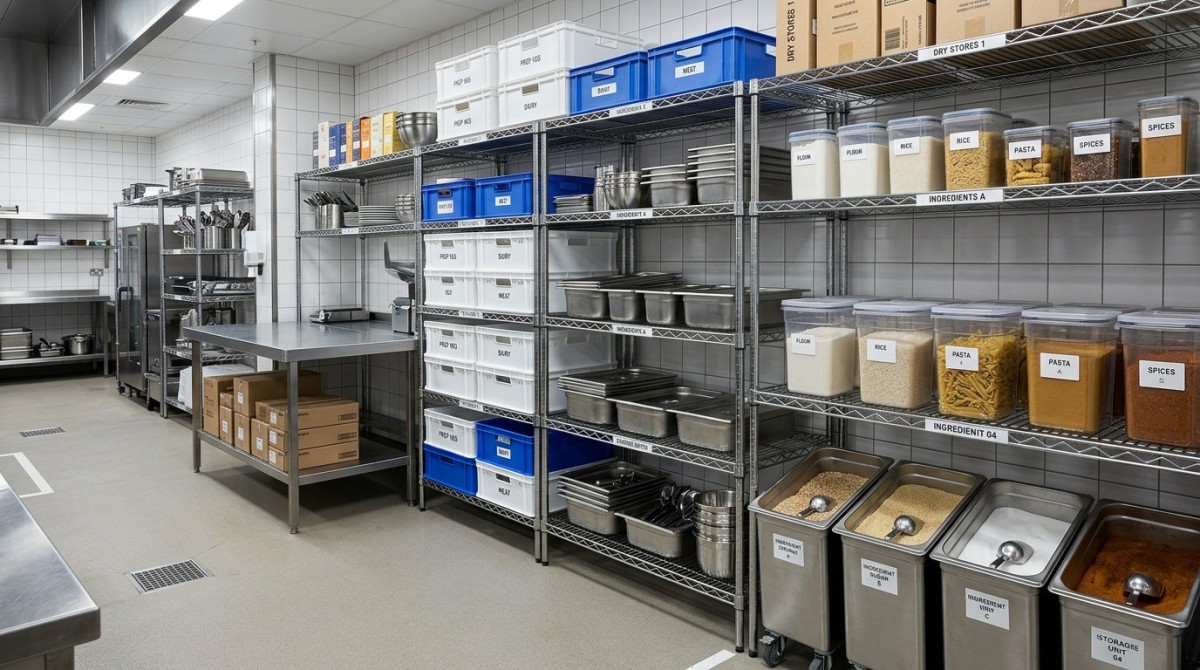
Emerging markets are expanding their restaurant, hotel, institutional catering, and food processing capacity at a steady pace. In many cities, new supermarkets, cloud kitchens, school canteens, and hospital kitchens need practical storage solutions before they invest in more advanced automation. That makes the Kitchen Shelf category attractive because it is essential, visible, and relatively easy to standardize for export.
For buyers, kitchen shelving systems solve immediate operational problems: poor workflow, limited floor space, hygiene risk, and low storage efficiency. For exporters, these products are less complex than many powered appliances, yet they still require engineering discipline in load capacity, corrosion resistance, weld quality, and dimensional consistency. This balance creates a practical entry point for kitchen equipment wholesale in developing regions.
Typical demand comes from projects that must be delivered within 2–6 weeks, especially for restaurant openings, hotel renovations, and central kitchen upgrades. Procurement teams often compare 3 core factors first: shelf material, price stability, and delivery reliability. Enterprise decision-makers then look deeper at lifecycle cost, compliance fit, and whether the supplier can support repeat orders across multiple sites.
In the broader kitchen equipment industry, the move toward smarter and more integrated kitchen systems also raises the value of storage. A shelf is no longer only a rack. It supports zoning, ingredient rotation, food safety practices, and compatibility with stainless steel kitchen equipment layouts. When exporters understand those operational goals, they can sell solutions rather than just metal structures.
What demand signals should exporters watch first?
- Fast growth in chain restaurants and franchise kitchens, where shelf dimensions and repeatable configurations matter more than one-off fabrication.
- Expansion of food processing and central kitchen facilities, which usually require heavier-duty kitchen shelving systems with clear zoning and cleaning access.
- Hotel and institutional catering projects, where procurement teams often bundle Kitchen Shelf orders with catering kitchen equipment and utility tables.
- Importers seeking mid-range products with stable quality, where the target is not the lowest price but the lowest failure rate over 12–24 months.
Which Kitchen Shelf products fit different commercial kitchen scenarios?
Not every market needs the same Kitchen Shelf configuration. A compact quick-service kitchen may prefer wall-mounted or narrow-depth shelving to save floor area. A central kitchen may need 4-tier or 5-tier heavy-duty racks for dry storage, preparation zones, and packaging lines. Export success depends on matching product form to operating conditions instead of offering a generic catalog.
Material selection is a major decision point. Stainless steel kitchen equipment is often preferred in humid, high-cleaning, or food-contact-adjacent environments because it supports washdown routines and has better corrosion resistance. Powder-coated or galvanized alternatives may be considered for dry storage, back-room logistics, or projects with tight budget limits, but the application boundary should be clearly defined.
Dimensions also affect usability more than many buyers expect. Common shelf depths may range from 300mm to 600mm, while shelf lengths often fall between 900mm and 1800mm. If aisle spacing, reach range, and cleaning access are ignored, operators may overload front edges, block circulation, or create hygiene blind spots. These errors reduce product value even when the shelf itself is structurally sound.
For information researchers and procurement teams, it helps to compare products by scenario rather than by brochure language. The following table shows how common Kitchen Shelf types align with operational use, budget sensitivity, and maintenance expectations in commercial kitchen equipment projects.
This comparison helps both operators and buyers narrow the shortlist faster. Instead of asking which shelf is “best,” ask which shelf matches moisture exposure, loading pattern, and cleaning frequency. In many projects, using 2–3 shelf types within one kitchen layout delivers better results than forcing one format into every area.
Application details that buyers often overlook
Restaurants and quick-service outlets
These kitchens usually value compact dimensions, quick installation, and easy cleaning. Shelf depth and edge design matter because operators move fast and work in confined spaces. A small dimensional error can affect prep line flow during peak hours.
Hotels and institutional catering
These buyers often need consistency across multiple rooms or floors. Repeatability in finish, assembly hardware, and load rating becomes important, especially when 20–100 units are ordered under one project schedule.
Central kitchens and food processing support
The priority shifts to durability, zoning, and handling of bulk ingredients. Shelving should support orderly stock rotation and allow regular sanitation. In these settings, a slightly higher unit cost can reduce maintenance interruptions over time.
What technical specifications and compliance points matter most in export orders?
Technical evaluation should start with structure, not appearance. For Kitchen Shelf exports, buyers usually review material grade, sheet or tube thickness, weld consistency, edge finishing, load capacity per tier, and stability under uneven floor conditions. In practical procurement, 5 key checks are common: corrosion resistance, load performance, assembly simplicity, cleanability, and packaging protection for transit.
Stainless steel kitchen equipment is often specified for wet or hygiene-sensitive areas, but buyers still need to verify details. Surface finish quality affects cleaning. Sharp corners affect safety. Adjustable feet affect leveling. In export projects, packaging is not a minor issue either. A shelf that performs well in production can still arrive with deformation if carton reinforcement, corner protection, and pallet planning are weak.
Compliance expectations vary by destination market, application, and buyer type. Some importers mainly require general product consistency and safe materials. Others ask for documentation related to food-contact-adjacent use, factory inspection routines, or regional conformity requirements. Exporters should communicate clearly what is standard, what is optional, and what needs additional lead time of 1–3 weeks.
The table below gives a practical way to discuss technical performance and export readiness with procurement managers. It avoids vague claims and helps align engineering teams, purchasing departments, and end users before samples or mass production begin.
For many buyers, the real value of technical clarity is reduced procurement risk. When the supplier defines dimensions, load class, finish, and packing method early, the project team can compare quotations more accurately and reduce costly revisions after order confirmation.
A practical 4-step technical review process
- Confirm use environment: dry storage, wet prep, dish area, or bulk ingredient holding.
- Match dimensions to site layout, usually using aisle width, wall spacing, and operator reach range.
- Review structural details such as tier support, leg stability, caster option, and assembly method.
- Align documents and packaging requirements before final quotation and sample approval.
How should buyers compare cost, sourcing model, and long-term value?
Price is important, but in Kitchen Shelf procurement the lowest unit quotation is rarely the lowest total cost. Buyers need to consider replacement cycle, freight efficiency, installation labor, damage rate, and compatibility with other commercial kitchen equipment. A shelf that saves 8% at purchase may cost more later if it bends under normal loading or requires early replacement within 12 months.
Emerging markets often show a three-layer buying pattern. Entry-level projects focus on budget control and standard sizes. Mid-range buyers want stable quality and cleaner finishing for restaurants, hotels, and institutional kitchens. Large project buyers look for coordinated supply with catering kitchen equipment, utility tables, sinks, and fabrication items. Exporters should position offers accordingly instead of forcing one pricing logic on all customers.
Sourcing model also affects cost. Standard products can usually move faster and support container consolidation. Semi-custom products may require 7–15 extra days for drawing confirmation or production adjustment. Fully project-based fabrication can be justified for high-volume hotel, hospital, or central kitchen contracts, but only when site dimensions, installation sequence, and approval flow are stable enough.
The cost comparison below helps procurement teams evaluate Kitchen Shelf offers beyond headline price. It is especially useful when two quotations look similar on paper but differ in usable life, loading confidence, and export handling quality.
A balanced value option is often the most competitive in emerging markets. Buyers there are price-sensitive, but they also face real costs from delays, damaged cargo, difficult installation, and weak shelf performance. Exporters that explain total value clearly are more likely to win repeat orders instead of one-time deals.
Procurement checklist for purchasing teams
- Check whether the Kitchen Shelf will be placed in dry, humid, or washdown conditions before choosing material.
- Request clear dimensional drawings and confirm if tolerances affect on-site installation.
- Ask whether the quoted load rating applies per tier or per full unit, and under what loading pattern.
- Review packaging type, assembly method, spare hardware supply, and expected lead time.
- For projects with 50 units or more, discuss batch consistency and reorder planning in advance.
What common mistakes delay Kitchen Shelf projects in emerging markets?
One common mistake is treating Kitchen Shelf products as simple accessories with no engineering impact. In reality, wrong depth, poor load planning, or improper placement can disrupt the entire workflow of a commercial kitchen. Operators may start stacking goods on top of units, blocking air movement or cleaning access, which increases both safety and hygiene concerns.
Another mistake is selecting material only by price. Stainless steel kitchen equipment may seem more expensive at quotation stage, but in humid or high-cleaning environments it can reduce corrosion problems and improve service life. On the other hand, overspecifying stainless steel for every dry storage area can also waste budget. Good sourcing depends on matching material to scenario, not following one rule for all zones.
A third issue is poor alignment between importer, distributor, and end user. The buyer may order based on a catalog, but the operator cares about tray size, ingredient bins, and cleaning routines. When those needs are not captured within the first 1–2 rounds of technical communication, revisions appear late and create avoidable delays.
Exporters can reduce these problems by using a structured inquiry process. Ask for site photos, rough layout, target load category, environment type, preferred assembly mode, and required delivery window. Even 6 basic data points can improve quotation accuracy and reduce negotiation friction substantially.
FAQ for researchers, users, buyers, and decision-makers
How do I choose between standard and customized Kitchen Shelf products?
Choose standard products when the site uses common dimensions, the delivery schedule is tight, or budget control is the first priority. Choose customized or semi-custom options when aisle width, wall spacing, or storage items are unusual. In many export orders, a semi-custom approach with standard frames and adjusted dimensions offers the best balance between 2–4 week production speed and site fit.
What should operators check after installation?
Operators should check 4 points immediately: level stability, correct hardware tightening, clear cleaning access below or around the shelf, and safe loading practice. It is also useful to verify whether the actual stored items match the intended load category. Overloading the front edge or mixing heavy sacks with light-duty shelving is a frequent cause of deformation.
How long is the usual lead time for export orders?
For standard Kitchen Shelf products, production may often fit within a normal 2–4 week window, depending on order volume and packing method. Semi-custom projects may need an extra 7–15 days for drawing approval and adjustment. Shipment time then depends on route, consolidation, and destination customs process, so buyers should separate production lead time from total landed time.
Are Kitchen Shelf products relevant if buyers are moving toward smart kitchens?
Yes. Smart kitchens still rely on well-organized physical storage. Digital inventory, automated food preparation, and integrated kitchen systems work better when the surrounding shelf layout supports zoning, labeling, stock rotation, and predictable access. Storage is a basic layer of efficiency, not an outdated category.
Why choose a supplier that can support selection, compliance discussion, and delivery planning?
A reliable Kitchen Shelf export partner should do more than send a price list. Buyers need support in parameter confirmation, product selection, packaging planning, and documentation alignment. This is especially important when Kitchen Shelf orders are combined with commercial kitchen equipment, stainless steel kitchen equipment, or broader catering kitchen equipment packages for restaurants, hotels, and central kitchens.
Our approach is practical and procurement-oriented. We help customers review application scenarios, compare standard and semi-custom options, clarify dimensions and load expectations, and discuss realistic lead times. If your project includes multiple zones or mixed kitchen shelving system requirements, we can help organize the configuration so that the final quotation reflects operational use rather than only unit price.
You can contact us to discuss 6 specific topics: product parameters, material selection, quantity planning, delivery schedule, certification or compliance expectations, and sample support. If you are still evaluating suppliers, we can also help you compare different shelf types, packaging methods, and sourcing models based on your market, budget, and kitchen layout.
For importers, distributors, project contractors, and foodservice operators entering emerging markets, early technical communication reduces risk and speeds up decision-making. If you need a quotation, drawing review, sample arrangement, or a tailored kitchen equipment wholesale proposal, reach out with your target dimensions, use scenario, and order volume so the discussion can move quickly and accurately.
Popular Tags
Kitchen Industry Research Team
Dedicated to analyzing emerging trends and technological shifts in the global hospitality and foodservice infrastructure sector.
Industry Insights
Join 15,000+ industry professionals. Get the latest market trends and tech news delivered weekly.
No spam. Unsubscribe anytime.

Contact With us
Contact:
Anne Yin (Ceramics Dinnerware/Glassware)
Lucky Zhai(Flatware)