Stoneware Mug Lead Times Are Changing for 2026 Orders
Stoneware mug lead times for 2026 orders are shifting as buyers across foodservice and retail adjust sourcing plans amid broader kitchen innovation and kitchen automation trends. For procurement teams, operators, and decision-makers comparing products like ceramic breakfast bowl, porcelain mug, or glass tea server lines, understanding these changes early can help reduce risk, improve inventory timing, and support smarter purchasing decisions.
This matters far beyond one product category. In the wider kitchen equipment market, tableware and beverage service items are now affected by the same forces influencing commercial kitchen equipment, food processing systems, and restaurant appliances: more automated production scheduling, tighter energy management, changing freight windows, and stronger demand forecasting. As a result, stoneware mug sourcing for 2026 is becoming a planning issue, not just a purchasing task.
For information researchers, daily users, procurement teams, and business leaders, the key question is no longer simply “How long does production take?” It is “What combination of design, order quantity, decoration process, packaging, and supplier readiness will determine realistic lead times in 2026?” The answer often ranges from 30 to 120 days depending on complexity, season, and factory loading.
The article below examines the main drivers of changing stoneware mug lead times, compares typical order scenarios, and outlines practical sourcing strategies for foodservice, hospitality, retail, and kitchen supply businesses that want better delivery control in 2026.
Why Stoneware Mug Lead Times Are Changing for 2026
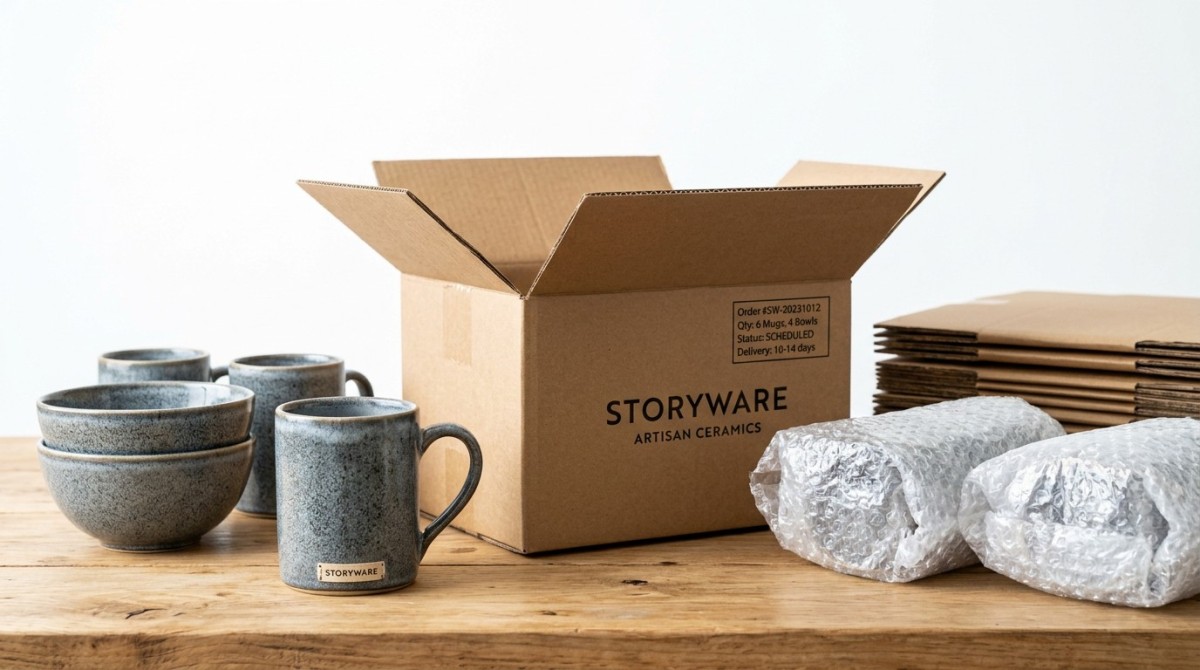
Stoneware mugs sit at the intersection of tabletop supply and the broader kitchen equipment ecosystem. While they are not heavy machinery, their production depends on coordinated raw material preparation, forming, drying, glazing, firing, decorating, inspection, and export packing. A delay at any one stage can add 5 to 15 days, and peak-season congestion can extend total lead times by 3 to 6 weeks.
One major factor is production balancing inside ceramic factories that also make related lines such as ceramic breakfast bowl sets, porcelain mug assortments, plates, and serving pieces. When factories allocate kiln capacity across multiple product families, custom stoneware mug orders may no longer move in a simple first-in, first-out sequence. Kiln utilization, decoration queues, and carton printing schedules increasingly shape delivery timing.
Another driver is the wider move toward smart manufacturing in kitchen-related industries. More suppliers are using digital scheduling tools, semi-automated glazing, barcode-based batch control, and energy-optimized firing plans. This can reduce variability over the long term, but in the short term it also means suppliers may enforce firmer cut-off dates, more accurate forecasts, and stricter MOQ policies such as 500, 1,000, or 3,000 pieces per design.
Freight planning is also changing. Buyers that once accepted a 2- to 3-week booking window are now working with broader buffers of 4 to 8 weeks, especially for mixed containers that include mugs, bowls, glass tea server items, and kitchen utensils. If one SKU misses final packing by even 7 days, the shipment may roll to the next vessel or truck schedule.
Key timing pressures affecting 2026 orders
- Higher customization rates, including embossed logos, reactive glaze finishes, matte coatings, and gift-box packing.
- Longer sample approval cycles, often 10 to 21 days for new shapes or new decoration artwork.
- More frequent mixed-product procurement across kitchen equipment and tabletop categories.
- Energy-sensitive firing schedules that may reduce rush-order flexibility during peak demand months.
- Tighter quality control expectations for hospitality and foodservice buyers who require lower breakage rates and batch consistency.
Typical sources of delay by production stage
The table below shows where lead times tend to expand. These are common planning ranges used in B2B sourcing discussions rather than fixed guarantees, but they are useful when evaluating supplier promises for 2026 orders.
The main takeaway is that production alone does not explain total lead time. Buyers often focus on factory days, but sample confirmation, packaging approval, and logistics coordination may account for 30% to 40% of the full order cycle. For 2026 sourcing plans, these front-end and back-end stages deserve as much attention as kiln output.
How Lead Times Differ by Order Type, Volume, and Market Channel
Not all stoneware mug orders move at the same speed. A standard white or solid-color mug for a restaurant chain may be scheduled very differently from a seasonal retail collection with gift-ready packaging. Buyers comparing stoneware with porcelain mug or glass tea server programs should evaluate the entire order profile, not just the base material.
For operators and end users, the biggest difference is often between stock-supported designs and fully customized models. Stock-supported items can sometimes ship in 15 to 35 days if warehouse inventory or semi-finished inventory is available. A custom body shape with special glaze, logo decal, and retail carton may require 60 to 100 days, especially when a new sample must be approved before bulk production.
For procurement managers, order volume creates a second timing layer. Very small orders can be delayed because factories prefer to combine them with similar runs. Very large orders can also extend timelines because they occupy more kiln cycles and require more inspection, more pallets, and more export documentation. In practice, medium-volume orders between 1,000 and 5,000 units per design often get the most stable scheduling.
Channel strategy matters too. Foodservice buyers usually prioritize repeatability, durability, and replenishment timing. Retail buyers may prioritize launch dates, color trends, and presentation quality. This means the same mug may have a shorter lead time for a hotel replenishment order than for a boxed promotional launch in a chain store.
Lead time comparison by order scenario
The table below helps compare common sourcing cases. These ranges can support internal planning, budget approvals, and supplier discussions when placing 2026 orders.
These differences show why a single “average lead time” is often misleading. The real decision depends on whether the business is launching a new collection, replenishing a standard line, or combining mugs with other tabletop and kitchen equipment products in one sourcing program.
What buyers should confirm before approving schedules
- Whether the mug uses an existing mold or a new tooling process.
- Whether the glaze is standard, reactive, hand-finished, or color-sensitive.
- Whether the carton is standard export packaging or customized retail display packaging.
- Whether the order is shipped alone or combined with ceramic breakfast bowl, porcelain mug, or kitchen accessories.
- Whether inspection occurs in-line, pre-packing, or as a final random check, which can add 2 to 5 days.
When these five points are clear, internal planning becomes more reliable. Many sourcing problems come from treating a customized order like a stock order and then discovering schedule gaps only after purchase order confirmation.
Procurement Risks and Practical Ways to Reduce Delays
In 2026, the biggest procurement risk is not necessarily a single dramatic disruption. More often, it is the accumulation of smaller timing errors: a 4-day artwork revision, a 6-day carton approval wait, a 1-week production queue change, and a missed booking window. Together, these can shift delivery by 20 to 30 days and affect menu rollouts, retail promotions, or hospitality opening schedules.
For kitchen operators and corporate buyers, one of the most effective safeguards is to separate “required arrival date” from “ideal factory completion date.” If goods must arrive by a fixed date, work backward with at least three buffers: production buffer, packing buffer, and logistics buffer. For many stoneware mug programs, a total contingency of 15% to 25% on the schedule is reasonable.
Another common mistake is evaluating suppliers only on quoted production days. A factory that quotes 28 days but takes 14 days to finalize samples may be slower overall than a supplier quoting 35 days with faster pre-production control. Procurement teams should assess the total order cycle from concept to shipment release.
Risk reduction also depends on specification discipline. Missing data on mug capacity, bottom diameter, handle clearance, packaging drop test expectations, or finish tolerance can trigger rework. Even a small variation, such as a 10 to 15 ml capacity deviation, may force a buyer to recheck usability in cafés, hotels, or retail gift sets.
A practical delay-control checklist
- Lock product specifications before mass production, including capacity, color reference, decoration area, and carton mark details.
- Approve pre-production samples within 48 to 72 hours whenever possible to avoid line rescheduling.
- Ask for milestone dates: sample completion, production start, first firing, final inspection, packing finish, and shipment booking.
- Use split orders when appropriate, such as 70% standard mugs and 30% custom seasonal designs, to protect replenishment needs.
- Align internal finance, marketing, and operations teams early so purchase orders are not delayed by non-production approvals.
Risk matrix for 2026 mug sourcing
The following matrix can help buyers prioritize where intervention is most valuable. It is especially useful for procurement teams managing multiple kitchen equipment and tabletop categories at the same time.
The strongest pattern is clear: most delays are manageable when buyers define milestones early and avoid tying all products to a single final shipping event. In practical terms, delivery control improves when stoneware mug sourcing is treated as a coordinated supply project, not a last-minute reorder.
How to Build a Smarter 2026 Sourcing Plan for Stoneware Mugs
A smart sourcing plan starts with demand visibility. Businesses should map forecast volume by quarter, by market, and by product type. If a buyer expects 12 months of demand but places only one large order without flexibility, they may increase exposure to storage cost, design obsolescence, and delivery pressure. A staged procurement model often works better.
For example, a foodservice distributor may place an initial 3,000-piece order for a standard stoneware mug and then hold a 2,000-piece replenishment option based on real sales. A retail brand may approve base packaging first, then release a seasonal color run 6 to 8 weeks later. These structures allow better alignment between factory planning and market uncertainty.
Supplier communication should also become more operational. Rather than asking only for a final delivery date, buyers should request a 5-step timeline: sample approval, material preparation, forming and firing, decoration and packing, and shipment handover. This is especially important if the order is bundled with other kitchen equipment products such as bowls, serving pieces, or beverage accessories.
Finally, decision-makers should compare suppliers using both speed and predictability. A supplier with a 50-day stable lead time may be more valuable than one promising 35 days but often missing milestones. For restaurants, hotels, central kitchens, and retail chains, service continuity usually matters more than optimistic quotations.
Recommended sourcing model by buyer type
Different buyer groups should use different planning methods. The table below shows a practical approach based on common B2B procurement behavior.
This comparison highlights an important point: the “right” lead time is the one that matches the business model. Procurement efficiency improves when scheduling logic reflects real usage, inventory pressure, launch cadence, and the broader kitchen supply chain.
Four implementation steps for 2026 orders
- Forecast demand by quarter and identify which SKUs are standard, seasonal, or experimental.
- Confirm supplier capacity, MOQ, and sample timelines before issuing the final purchase order.
- Build a schedule with milestone reviews every 7 to 14 days for larger or more complex orders.
- Use contingency options such as partial shipment, split production, or alternate packaging when timing is critical.
With these four steps, buyers can improve visibility, reduce avoidable waiting time, and create more resilient ordering cycles for stoneware mugs and related tabletop products in 2026.
Frequently Asked Questions About 2026 Stoneware Mug Orders
How early should buyers place 2026 stoneware mug orders?
For standard repeat orders, 8 to 12 weeks ahead is often workable. For custom designs, new molds, or retail launch programs, 4 to 6 months is a safer planning window. If the order is part of a broader kitchen equipment sourcing package, earlier coordination is even more important because other product lines can influence the final shipping date.
What specifications most often affect lead times?
The most common factors are mug shape, glaze finish, printed or embossed logo requirements, packaging type, inspection rules, and whether the product uses an existing mold. Capacity changes, such as moving from 300 ml to 420 ml, can also affect tooling and packing plans. Even handle design or stacking requirements may require additional sample validation.
Are stoneware mugs slower to source than porcelain mug products?
Not always. Lead time depends more on process complexity and factory workflow than on material alone. A standard porcelain mug with multiple decal positions may take longer than a simple stoneware mug, while a reactive-glaze stoneware program may take longer than a plain porcelain line. Buyers should compare actual production steps, not only material labels.
How can operators protect against stockouts if lead times increase?
The most effective method is to keep a safety stock based on consumption rate and replenishment cycle. Many hospitality buyers aim for 4 to 8 weeks of buffer inventory for core mug SKUs. Standardizing 1 or 2 high-rotation shapes, instead of using too many low-volume designs, can also improve reorder speed and simplify sourcing.
What should decision-makers ask suppliers before approving a 2026 order?
They should ask for the total order cycle, not just factory production days. Key questions include sample timing, MOQ, capacity allocation, decoration queue, packaging approval deadline, inspection method, and earliest realistic shipment window. A supplier that can explain these stages clearly is usually easier to plan with than one offering only a broad promise.
Stoneware mug lead times for 2026 are changing because sourcing is becoming more integrated with automation, energy management, packaging control, and multi-category kitchen supply planning. Buyers that understand the full order cycle, define specifications early, and build realistic buffers will be in a stronger position to control inventory, avoid launch delays, and improve procurement reliability.
If your business is evaluating stoneware mugs alongside ceramic breakfast bowl, porcelain mug, glass tea server, or broader kitchen equipment programs, now is the right time to review lead-time assumptions and sourcing structure. Contact us to discuss your product requirements, get a tailored procurement plan, and explore practical solutions for more dependable 2026 delivery performance.
Popular Tags
Kitchen Industry Research Team
Dedicated to analyzing emerging trends and technological shifts in the global hospitality and foodservice infrastructure sector.
Industry Insights
Join 15,000+ industry professionals. Get the latest market trends and tech news delivered weekly.
No spam. Unsubscribe anytime.
Contact With us
Contact:
Anne Yin (Ceramics Dinnerware/Glassware)
Lucky Zhai(Flatware)