
How to compare a restaurant supplies producer beyond price
Choosing a restaurant supplies producer should never come down to price alone. For business evaluators, the real difference lies in product quality, compliance, production capacity, innovation, delivery reliability, and long-term service value. In a fast-changing kitchen equipment market, comparing suppliers through a broader strategic lens helps reduce risk, improve operational efficiency, and support smarter purchasing decisions.
Why is price-only comparison a weak way to evaluate a restaurant supplies producer?
Price is easy to compare, but it rarely reflects the full business impact of a supplier relationship. A restaurant supplies producer may offer a low unit cost while creating hidden expenses through inconsistent quality, delayed shipments, short product life, poor packaging, weak documentation, or slow after-sales support. For procurement teams and business evaluators, those factors often affect total cost far more than the original quotation.
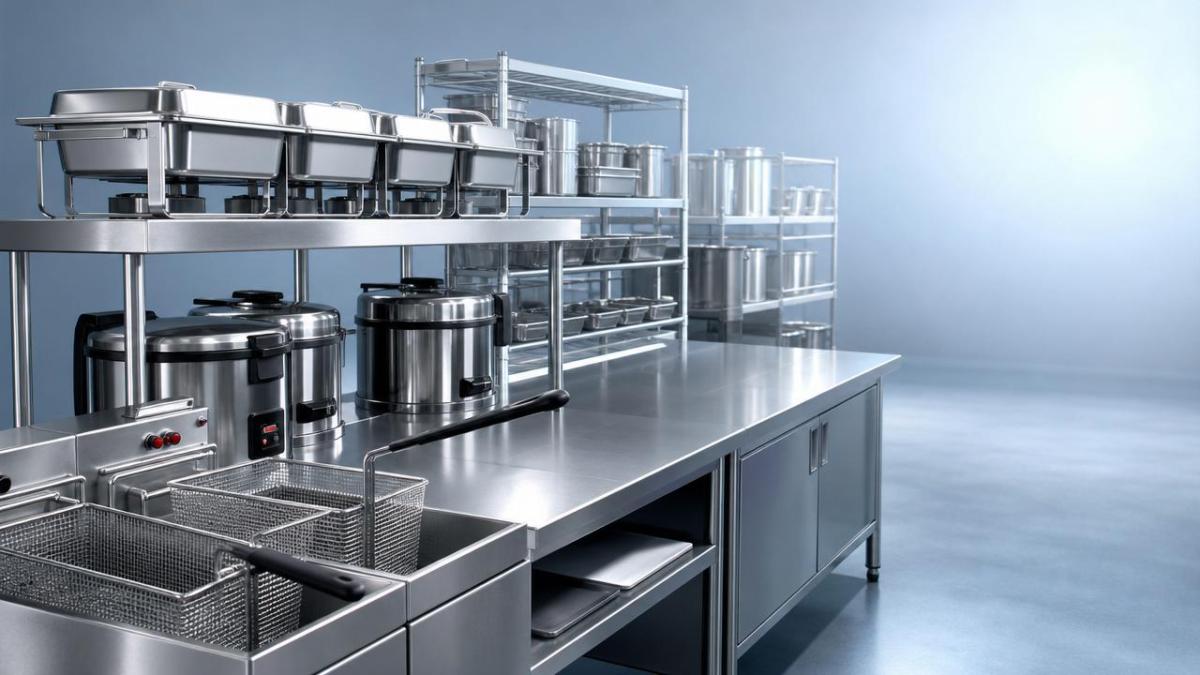
In the kitchen equipment industry, purchasing decisions influence food safety, workflow efficiency, energy use, and maintenance planning. A cheaper fryer basket, stainless steel worktable, food warmer, or storage rack may require earlier replacement, more repairs, or more staff time. If a producer cannot keep specifications stable across batches, even simple supplies can create operational disruption in restaurants, hotel kitchens, central kitchens, or food processing environments.
That is why experienced buyers compare a restaurant supplies producer on total value, not simply invoice value. The stronger question is not “Who is cheapest?” but “Who can support performance, continuity, and lower long-term risk?”
What should business evaluators examine first when screening a restaurant supplies producer?
The first stage should focus on supplier fundamentals. Before discussing discounts, confirm whether the restaurant supplies producer has the operational strength to meet your business requirements. This means reviewing manufacturing capability, product range, compliance systems, quality control process, export experience, and communication efficiency.
A capable producer should be able to explain its materials, production flow, inspection checkpoints, packaging method, lead times, and customization options clearly. In a market increasingly shaped by automation, smart kitchen systems, and energy-efficient equipment, suppliers should also demonstrate how they keep up with changing user expectations and regulatory demands.
Key early screening questions include:
- Does the producer manufacture directly, or mainly trade through third parties?
- Can it provide stable supply for your target order volume?
- Are food-contact materials, electrical parts, and metal finishes traceable?
- Does it understand destination market standards and documentation needs?
- Can it support OEM, private label, or product adaptation if required?
If a restaurant supplies producer struggles to answer these basic questions with evidence, low pricing should not be treated as a competitive advantage.
How do product quality and compliance reveal the real strength of a restaurant supplies producer?
Product quality is not just about whether an item looks acceptable when it arrives. It includes material grade, fabrication precision, durability under commercial use, resistance to corrosion, cleaning convenience, and performance consistency. In restaurant and hospitality settings, supplies must survive repeated use, exposure to heat, moisture, grease, and frequent sanitation. A qualified restaurant supplies producer should build products for those real conditions rather than for showroom appearance alone.
Compliance matters just as much. Buyers should verify whether the producer can meet relevant food safety, electrical, environmental, and market access requirements. Depending on the product and destination, this may involve FDA-related material expectations, CE-related electrical considerations, RoHS awareness, LFGB-oriented food-contact needs, or other regional standards. Even when formal certification is not mandatory for every item, the producer’s understanding of compliance reflects its professionalism and export readiness.
Ask for test reports, inspection standards, material certificates, and quality records. Also check whether the producer has a clear process for handling nonconforming products. The best restaurant supplies producer will not only present certificates but explain how quality is controlled before, during, and after production.
How can you compare production capacity, delivery reliability, and supply continuity?
A supplier may produce excellent samples and still fail as a long-term partner if it cannot deliver on time at scale. This is especially important in commercial kitchen equipment and restaurant operations, where project openings, replacement cycles, and seasonal demand often depend on strict timing. A delayed shipment from a restaurant supplies producer can affect store launches, maintenance schedules, menu expansion, and distributor commitments.
To evaluate delivery reliability, look beyond stated lead time. Ask about actual monthly output, peak-season performance, backup sourcing for core materials, equipment utilization, labor stability, and warehouse management. If the producer supplies multiple markets, confirm whether your orders may compete with larger accounts during busy periods.
Useful signs of supply continuity include standardized production planning, documented inventory control, clear shipment scheduling, and packaging designed for export protection. A reliable restaurant supplies producer should also communicate delays early rather than after deadlines are missed. Forecast alignment and demand planning support are increasingly valuable, especially for importers, chain buyers, and project-based procurement teams.
What role do innovation and product development play in supplier comparison?
In today’s market, a restaurant supplies producer should not be assessed only as a maker of standard items. The kitchen equipment industry is moving toward automation, intelligent controls, energy efficiency, ergonomic design, and easier sanitation. Even for basic restaurant supplies, buyers increasingly expect improved usability, modularity, and compatibility with modern kitchen workflows.
A producer with product development capability can help buyers respond faster to changing market needs. That may include adjusting dimensions for local kitchen layouts, improving energy performance, upgrading stainless steel finishes, optimizing storage systems, or developing products for central kitchen and food processing applications. Innovation does not always mean complex technology. Sometimes it means solving practical problems such as faster cleaning, easier assembly, or better packing efficiency.
For business evaluators, innovation is a sign that the restaurant supplies producer is likely to remain relevant over time. It also suggests stronger internal engineering, better customer feedback loops, and more strategic cooperation potential.
How should you compare service, communication, and post-sale support?
Service quality often separates average suppliers from dependable partners. When problems happen, buyers need fast and structured support, not excuses. A professional restaurant supplies producer should provide accurate quotations, consistent technical information, timely responses, and practical problem resolution. Slow replies before the order usually become slower replies after the order.
Post-sale support can include spare parts planning, warranty handling, replacement procedures, quality claims process, user manuals, installation guidance, and packaging feedback. For distributors and project contractors, marketing files, product images, barcode support, and specification sheets may also matter. If your market involves commercial appliances or powered kitchen systems, technical troubleshooting ability becomes even more important.
A good restaurant supplies producer treats communication as part of product value. Clear communication reduces misunderstanding, speeds approval cycles, and improves purchasing confidence.
What comparison table can simplify supplier evaluation?
When several suppliers appear similar, a structured scoring method helps remove bias. The table below highlights practical evaluation dimensions for comparing a restaurant supplies producer beyond price.
What are the most common mistakes when comparing a restaurant supplies producer?
One common mistake is using only quotation sheets to compare suppliers. If specifications are not fully aligned, the lowest offer may reflect thinner materials, lower-grade components, simplified finishing, or excluded services. Buyers should standardize product requirements before judging price competitiveness.
Another mistake is trusting samples too quickly. A polished sample from a restaurant supplies producer does not guarantee batch consistency. Ask how the sample compares with mass production, who approved raw materials, and what controls prevent variation. Factory audits, video inspections, or third-party checks can be worthwhile for strategic orders.
A third mistake is ignoring logistics and packaging. Restaurant supplies often include metal items, electrical products, fragile accessories, or bulky equipment. Weak packaging design can increase damage rates and erase any savings. Also, some buyers overlook the cost of communication friction. If a supplier repeatedly causes confusion over specifications, labeling, or shipping terms, internal management costs rise quickly.
Finally, many teams underestimate supplier adaptability. In a changing market, the best restaurant supplies producer is often the one that can adjust product mix, improve features, and support future business expansion.
How can business evaluators make a final decision with more confidence?
A confident decision usually combines evidence from several layers: document review, sample evaluation, factory capability assessment, reference checks, and trial-order performance. Instead of selecting a restaurant supplies producer based on one strong point, compare how each candidate performs across the full procurement lifecycle.
A practical approach is to create a weighted scorecard. For example, quality and compliance may carry the highest weight for food-contact or electrical products, while delivery reliability may matter most for rollout projects. Innovation may deserve more weight if you serve premium hospitality or modern foodservice concepts. The goal is not to find a perfect supplier, but to choose the restaurant supplies producer whose strengths best match your operating model and risk tolerance.
Before confirming cooperation, it is wise to align on product specifications, quality standards, inspection method, packaging details, lead time commitment, claim handling, and future development support. If you need to confirm a specific solution, parameters, timeline, quotation, or cooperation model, start by discussing target applications, expected order volume, compliance needs, customization scope, and service expectations. Those conversations will tell you far more than price alone ever can.
Popular Tags
Kitchen Industry Research Team
Dedicated to analyzing emerging trends and technological shifts in the global hospitality and foodservice infrastructure sector.
Industry Insights
Join 15,000+ industry professionals. Get the latest market trends and tech news delivered weekly.
No spam. Unsubscribe anytime.
Contact With us
Contact:
Anne Yin (Ceramics Dinnerware/Glassware)
Lucky Zhai(Flatware)