
Restaurant Kitchen Equipment Repair Issues That Raise Hidden Costs
Restaurant kitchen equipment repair is often treated as a controllable line item, but for finance leaders, the real risk is not the invoice itself. The bigger cost sits in repeat failures, emergency labor, food loss, excess energy use, slower ticket times, and shortened asset life. In many operations, the most expensive repair issue is not the one with the highest single bill. It is the one that quietly creates ongoing operational drag.
For financial approvers, the practical question is simple: which repair issues deserve immediate investment, which can be monitored, and when is repair no longer the lowest-cost option? The answer depends on total cost of ownership, not just service call pricing. A low-priced fix on a failing refrigeration unit, combi oven, or dishwasher can become more expensive than replacement when downtime, utility waste, and labor disruption are included.
This article looks at the hidden-cost repair problems that matter most in restaurant environments and explains how to evaluate them from a budget, risk, and ROI perspective. If you approve maintenance spend, capital replacement, or service contracts, understanding these patterns will help you reduce avoidable costs and make more defensible decisions around restaurant kitchen equipment repair.
Why Some Restaurant Kitchen Equipment Repair Issues Cost Far More Than They First Appear
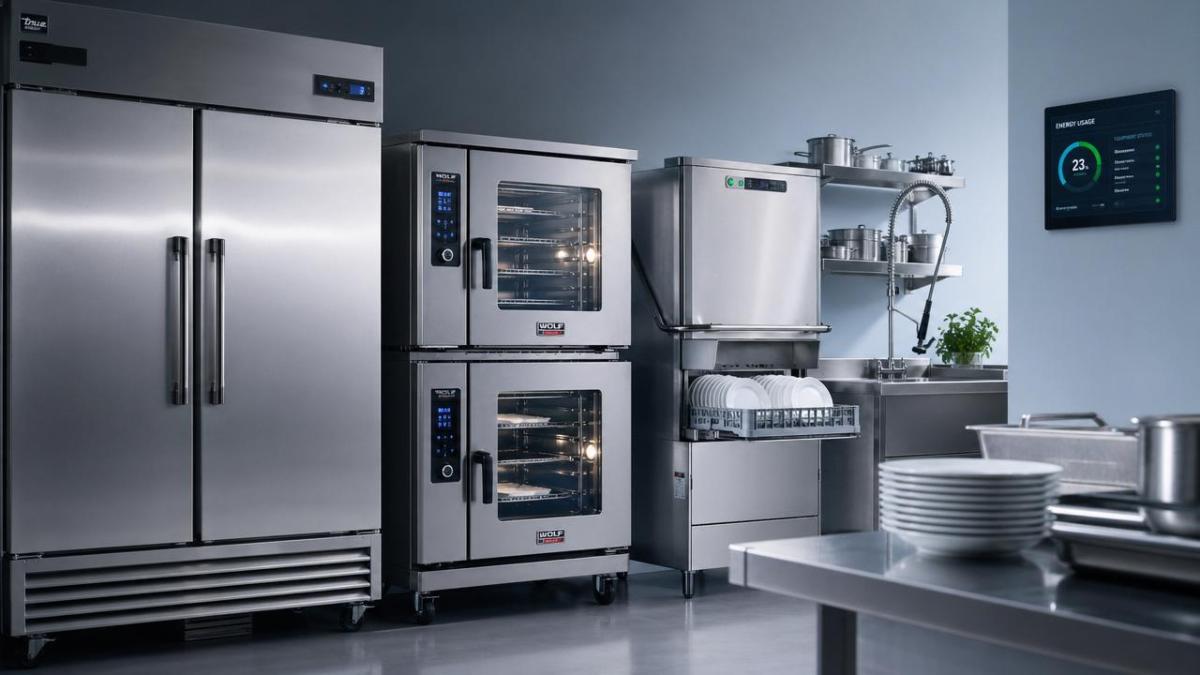
Most kitchens do not fail because of one catastrophic event. They lose money through recurring small failures that trigger a chain reaction. A faulty thermostat may cause temperature inconsistency, which increases cook times, reduces product quality, creates rework, and frustrates staff. A leaking refrigeration gasket may look minor, yet it can force compressors to work harder, raise electricity consumption, and shorten component life.
For finance teams, hidden cost typically shows up in five places: unplanned downtime, energy inefficiency, overtime labor, inventory loss, and accelerated replacement cycles. These costs rarely appear on a single service invoice, which is why they are often underestimated. In practice, the invoice may represent only a fraction of the actual business impact.
Another reason repair costs become distorted is fragmented reporting. Maintenance vendors track service events. Operations teams track throughput problems. Accounting tracks invoices. Procurement monitors replacement quotes. If these data points are not connected, repeated low-level equipment failures may never be recognized as a strategic cost problem.
This is why restaurant kitchen equipment repair decisions should be evaluated at the equipment-system level rather than by isolated service incidents. Financially sound maintenance oversight starts with a broader view of what the failure is doing to labor, energy, quality control, compliance exposure, and revenue continuity.
Repair Problems That Commonly Drive Hidden Costs in Commercial Kitchens
Not all equipment issues have the same financial effect. The following repair categories tend to produce the highest hidden costs because they affect core kitchen flow or create ongoing inefficiency.
1. Refrigeration performance issues. Walk-ins, reach-ins, prep tables, and freezers are among the most financially sensitive assets in a restaurant. Compressor stress, refrigerant leaks, damaged door seals, clogged coils, and temperature control failures can lead to food spoilage, health-code risk, and rising utility bills. Even when the unit still runs, poor performance often means the business is already paying a penalty.
2. Heating inconsistency in ovens, grills, fryers, and ranges. A burner that cycles incorrectly or an oven that does not hold temperature may not stop service entirely, but it reduces output quality and speed. That means more discarded food, more remakes, slower table turns, and a heavier burden on experienced staff. These losses are operationally significant but often invisible in maintenance accounting.
3. Warewashing failures. Dishwashers and glasswashers affect labor flow more than many approvers realize. Recurrent heating element problems, pump issues, drainage faults, or scale buildup can create sanitation bottlenecks and force manual washing. The resulting labor cost and service disruption can exceed the repair bill very quickly, especially in high-volume operations.
4. Ventilation and exhaust system degradation. Fan motor wear, airflow imbalance, grease accumulation, and control failures increase fire risk, reduce comfort, and can affect kitchen productivity. Poor ventilation may also increase cooling loads in adjacent spaces, raising energy costs across the facility rather than just in the kitchen.
5. Electrical and control board failures. Modern smart or semi-automated kitchen equipment often depends on sensors, digital controls, and integrated boards. These faults can produce intermittent shutdowns that are difficult to diagnose, leading to repeated technician visits. In these cases, the hidden cost is often diagnostic inefficiency and prolonged uncertainty, not just parts replacement.
How Downtime Multiplies the Cost of a “Manageable” Repair
Downtime is where hidden cost becomes most severe. A restaurant may absorb one repair invoice, but it struggles to absorb lost production during peak hours. When a fryer, oven, holding cabinet, or refrigeration line goes down in service, the result is not only reduced equipment availability. It can affect menu capacity, ticket pacing, customer satisfaction, and labor utilization all at once.
Consider a simple example. A modest repair on a primary fryer may cost less than a rush replacement part. However, if failure occurs on a Friday evening and the restaurant must limit menu offerings, the lost contribution margin from unavailable items may exceed the cost difference between emergency and preventive action. For finance leaders, that makes timing and failure probability part of the repair decision.
Downtime also creates hidden overtime and staffing inefficiency. Employees are still on the clock even when throughput drops. Managers spend time coordinating workarounds, calling service providers, handling customer complaints, and adjusting prep plans. In foodservice, repair-related downtime is rarely isolated to one machine. It usually spreads across labor and service performance.
This is why high-use, single-point-of-failure equipment deserves priority in repair budgeting. If there is no practical backup and the asset directly supports revenue-generating menu items, repair urgency should be assessed differently from lower-impact equipment.
Energy Waste: The Hidden Expense That Keeps Growing After the Repair Is Delayed
One of the most overlooked costs in restaurant kitchen equipment repair is energy loss from underperforming equipment that still appears functional. A refrigeration system with dirty coils or a weak seal may not trigger immediate alarm, but it can run longer cycles and consume significantly more power. Likewise, scaled heating components and inefficient burners require more energy to deliver the same output.
For operations with multiple sites, this issue becomes especially expensive because it scales quietly. A small monthly increase per unit may look insignificant at one location, yet across dozens of appliances and multiple branches, annual excess utility spend can become substantial. Since these costs are mixed into general utility bills, they are often not connected back to maintenance decisions.
From a financial standpoint, delayed repair should be compared not just against service cost but against the energy penalty of doing nothing. In many cases, coil cleaning, seal replacement, recalibration, burner optimization, or component replacement delivers measurable payback through lower utility consumption alone.
This matters even more as the industry moves toward smarter and more energy-efficient kitchen systems. Equipment designed for efficiency only delivers that value if sensors, controls, motors, and heat-transfer components remain in proper condition. Deferred maintenance gradually erodes the efficiency assumptions behind the original investment.
When Repeated Repairs Signal That Replacement Is the Better Financial Decision
Financial approvers are often asked the same difficult question: should we repair this unit again or replace it? The wrong answer usually comes from focusing only on the next invoice. The better answer comes from evaluating the full pattern of failure.
Several warning signs suggest that replacement may now be cheaper than continued repair. One is increasing repair frequency. Another is parts obsolescence or long lead times. A third is when the unit’s efficiency, output quality, or reliability no longer matches operational requirements. A fourth is when the equipment causes recurring compliance or food-safety concerns.
A useful internal decision framework includes these questions: How many repair events has the asset had in the past 12 months? What was the total spend including emergency premiums? How much downtime did it cause? Did it create product loss? Is performance still below standard after repair? Is the unit near the end of expected life? If the answer to several of these is yes, ongoing repair may be false economy.
For many organizations, setting a replacement threshold improves discipline. For example, when annual repair spend exceeds a defined percentage of replacement value, or when downtime breaches a service tolerance for a critical asset, the issue is escalated from maintenance approval to capex review. This creates a clearer path for financially rational decisions instead of defaulting to another short-term fix.
How Service Model Choices Affect Total Cost of Ownership
The cost of restaurant kitchen equipment repair is shaped not only by the fault itself but also by how the business manages service. Reactive repair is the most expensive model over time because it concentrates cost in emergencies, after-hours labor, rushed shipping, and operational disruption. It also gives the business little control over timing.
Preventive maintenance programs usually reduce hidden costs when they are targeted at high-risk assets rather than applied generically. Refrigeration checks, calibration, coil cleaning, deliming, ventilation inspection, and wear-part replacement can prevent the kinds of failures that generate both direct and indirect cost. The financial value is strongest in high-volume kitchens where downtime has outsized business impact.
Service contract quality matters as much as contract existence. Finance leaders should look beyond annual price and ask: Are response times guaranteed? Are common parts stocked? Are repeat-call rates tracked? Does the vendor provide failure trend data? Is there support for digital maintenance records across locations? A cheap contract that does not reduce repeat incidents may not lower total spend.
There is also growing value in digitally connected equipment and maintenance monitoring. Smart kitchen systems can flag temperature drift, abnormal run times, or declining performance before complete failure occurs. While not every operation needs advanced monitoring, multi-site businesses can gain meaningful savings by identifying problem assets earlier and standardizing decision-making.
What Financial Decision-Makers Should Track Before Approving Another Repair Budget
To make better approvals, finance teams need more than maintenance invoices. They need a small set of operational and asset-level metrics that reveal whether repair spending is protecting value or merely postponing bigger cost.
Start with repair frequency per asset. A low-cost repair repeated several times is not low-cost anymore. Next track downtime hours, especially during peak periods. Then review energy consumption trends where available, particularly for refrigeration and heat-producing equipment. Add food loss incidents, emergency service premiums, and equipment age versus expected useful life.
It is also helpful to classify equipment by business criticality. A backup microwave and a primary walk-in cooler should not be evaluated with the same approval logic. High-criticality assets deserve tighter thresholds, faster escalation, and more structured preventive maintenance because the hidden costs of failure are much greater.
Finally, require post-repair review on repeat issues. If the same asset receives multiple service calls for related faults, someone should determine whether the root cause is unresolved, the equipment is oversized or undersized for use, staff operation is contributing to failure, or replacement is overdue. This simple review process often reveals why maintenance budgets keep rising without improving reliability.
A Practical Approval Mindset: Spend to Prevent Loss, Not Just to Fix Breakdowns
The most effective finance approach to kitchen maintenance is not to minimize each repair invoice. It is to minimize total economic loss. That means approving the right spending at the right time, especially when it prevents downtime, preserves food safety, reduces utility waste, and extends the life of critical assets.
In the kitchen equipment industry, where systems are becoming smarter, more automated, and more energy-efficient, maintenance decisions increasingly affect more than mechanical uptime. They affect data accuracy, process consistency, labor productivity, and the ability to realize the expected value of modern equipment investments.
For that reason, restaurant kitchen equipment repair should be viewed as part of asset management strategy, not just facilities overhead. The operations that control hidden repair costs best are usually the ones that connect finance, maintenance, and kitchen leadership around the same question: what is the cheapest path to reliable performance over time?
Hidden costs in restaurant kitchen equipment repair come from what happens around the failure, not just the repair bill itself. For financial approvers, the key is to identify which issues create recurring downtime, energy waste, food loss, and labor inefficiency, then act before those costs compound. When repair decisions are based on total cost of ownership rather than short-term price alone, budgets become more predictable, assets last longer, and operational risk drops.
Popular Tags
Kitchen Industry Research Team
Dedicated to analyzing emerging trends and technological shifts in the global hospitality and foodservice infrastructure sector.
Industry Insights
Join 15,000+ industry professionals. Get the latest market trends and tech news delivered weekly.
No spam. Unsubscribe anytime.

Contact With us
Contact:
Anne Yin (Ceramics Dinnerware/Glassware)
Lucky Zhai(Flatware)