
When eco-friendly kitchen tools cost less over time
At first glance, eco-friendly kitchen tools may seem like a premium purchase, but for financial decision-makers, the long-term numbers often tell a different story. Lower energy use, reduced replacement frequency, and improved operational efficiency can turn sustainable equipment into a smarter investment. Understanding where these savings come from is essential for evaluating cost, performance, and return over time.
For budget owners, procurement leads, and finance approvers, the key question is not whether sustainable products sound better on paper. It is whether they reduce total cost over the life of the asset. In many cases, the answer is yes. Eco-friendly kitchen tools often cost less over time when they cut utility bills, last longer, lower waste, and support smoother operations with fewer interruptions.
This is especially relevant in today’s kitchen equipment market, where energy efficiency, automation, and durability are reshaping buying decisions across restaurants, hotels, food processing facilities, central kitchens, and even residential projects with higher usage demands. The most useful evaluation is not upfront price alone, but lifecycle value.
Why finance decision-makers are reconsidering eco-friendly kitchen tools
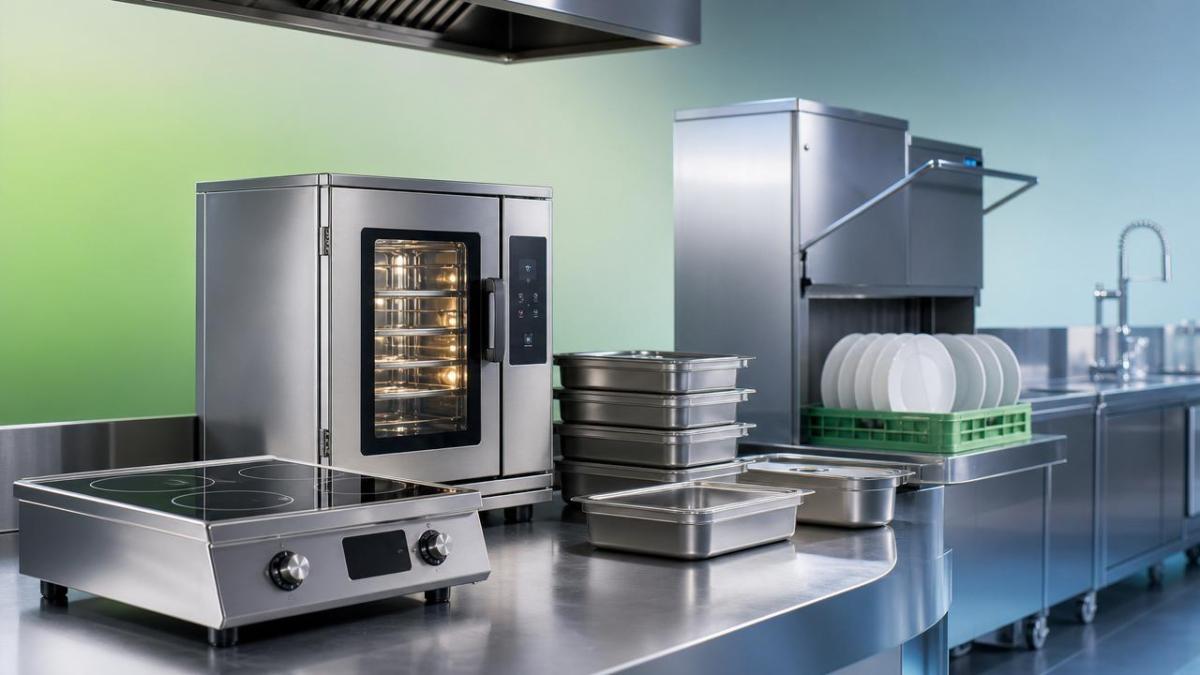
The core search intent behind this topic is practical and financial: buyers want to know when eco-friendly kitchen tools are actually cheaper in real terms, not just better for sustainability goals. They are looking for evidence, cost logic, and decision criteria they can use in purchasing discussions.
For financial approvers, the main concern is usually simple: will a higher initial purchase price produce measurable savings later? That means the most important factors are payback period, maintenance costs, replacement cycles, labor impact, energy use, and risk reduction. Environmental positioning may matter, but it rarely justifies a purchase on its own in a cost-sensitive approval process.
That is why eco-friendly kitchen tools should be assessed as operational assets. If a product lowers electricity or water use, reduces downtime, improves food safety consistency, or avoids frequent replacement, it can create a stronger business case than a cheaper alternative with weaker long-term performance.
What “cost less over time” really means in kitchen purchasing
When people compare kitchen tools, they often focus on invoice price. Finance teams, however, need a broader cost framework. “Cost less over time” usually means a lower total cost of ownership, which includes purchase price, operating expense, maintenance, replacement frequency, waste generation, and even training or workflow impact.
For example, a low-cost appliance may require more electricity every day, fail sooner under heavy use, and need more service visits. A more efficient model may cost more initially but recover that difference through lower monthly utility use and longer service life. The same logic applies to non-electric tools if material durability and waste reduction are part of the equation.
In commercial settings, small differences add up quickly. A modest reduction in daily energy use across multiple units, or a longer replacement cycle across a chain of kitchens, can have a meaningful effect on annual operating costs. Over three to seven years, this often matters more than the initial pricing gap.
Where the long-term savings usually come from
The first major source of savings is energy efficiency. Many eco-friendly kitchen tools and appliances are designed to perform the same task with less electricity or gas. In high-volume kitchens, continuous operation magnifies the impact. Refrigeration, cooking, holding, washing, and food prep equipment all offer opportunities for lower energy consumption.
The second source is water efficiency. Dishwashing systems, pre-rinse tools, steam equipment, and certain cleaning solutions can reduce water use significantly. For businesses paying both water and wastewater charges, the savings are not limited to one utility line item.
Third, better materials and build quality often extend product life. Tools made from durable recycled metals, long-lasting composites, or corrosion-resistant components may cost more upfront, but they are replaced less often. That reduces direct purchasing costs and lowers indirect costs tied to ordering, delivery, setup, and disruption.
Fourth, waste reduction matters more than many buyers expect. Reusable, durable, or precision-designed tools can reduce food waste, packaging waste, and consumable usage. In foodservice operations, even modest improvements in portion control, storage performance, or product handling can create recurring savings.
Fifth, maintenance and downtime can be lower. Well-designed sustainable equipment is often built around efficiency and system optimization, which may result in fewer breakdowns or easier cleaning. For operations where service interruptions affect output, labor scheduling, or customer experience, reliability has real financial value.
Which types of eco-friendly kitchen tools often deliver the clearest ROI
Not every sustainable product offers the same return, so finance teams should focus first on categories where savings are measurable. Energy-efficient cooking equipment is one of the clearest examples. Induction systems, efficient ovens, and heat-retaining equipment can reduce energy waste while improving speed and temperature control.
Refrigeration is another strong category. High-efficiency compressors, better insulation, smart controls, and improved door sealing often reduce power consumption substantially. Since refrigeration runs continuously, even modest gains can produce visible annual savings.
Water-saving dishwashing and cleaning tools also deserve close attention. Efficient spray valves, optimized dishwashers, and lower-water sanitation systems can reduce operating expenses every day. In facilities with high wash volumes, these tools may have relatively short payback periods.
Food preparation and storage tools can also be cost-effective if they reduce spoilage and waste. Airtight reusable storage systems, durable cutting tools, precision dispensers, and measurement-based prep solutions improve consistency and reduce avoidable material loss. For finance teams, this shifts the discussion from “green product” to “waste control asset.”
In residential or light-commercial settings, the same principle applies, though savings accumulate more slowly. Products with long service life, low standby energy use, and reduced disposable dependency tend to be the best candidates for long-term value.
How to evaluate the business case without relying on marketing claims
Financial approvers should ask for a lifecycle comparison, not a product brochure. A strong evaluation starts with five numbers: purchase cost, expected useful life, annual energy or water use, annual maintenance cost, and likely replacement timing. These inputs allow a more realistic comparison than sticker price alone.
It also helps to quantify expected usage. A tool used for several hours a day in a restaurant kitchen may justify a premium model much faster than the same tool used occasionally in a low-volume setting. Utilization rate is one of the biggest drivers of ROI.
Third-party certifications and performance data can help validate claims. Depending on the equipment type, buyers may look for recognized efficiency standards, food safety compliance, or manufacturing quality benchmarks. These do not replace financial analysis, but they reduce uncertainty.
Procurement teams should also ask suppliers for scenario-based savings estimates. For example: what is the projected annual electricity reduction versus a standard model under a given workload? What is the expected lifespan in a commercial environment? What maintenance intervals are typical? Serious suppliers should be able to support this discussion with data.
If internal approval requires a simple model, calculate total cost of ownership over three, five, or seven years. Include utility costs, service costs, replacement assumptions, and disposal or waste-related costs if relevant. A product with a 15% higher purchase price may still be the cheaper option over the evaluation period.
Common concerns that delay approval—and how to assess them
One of the most common objections is the higher upfront cost. This concern is valid, especially in organizations with tight capital controls. The solution is to separate budget pressure from asset value. If the payback period is reasonable and the savings are credible, a higher purchase price may still be the financially conservative choice.
Another concern is uncertainty around actual savings. Not all kitchens operate the same way, and projected efficiency gains can be overstated. To manage this, buyers can pilot equipment in one site, compare utility and maintenance data, and then scale the purchase based on real operating results.
Compatibility and staff adoption are also practical issues. A highly efficient tool that disrupts workflow or requires extensive retraining may reduce expected benefits. Finance teams should therefore consider implementation friction, not just technical specifications.
Durability claims can be another gray area. Some products are labeled eco-friendly based mainly on materials, while their actual service life is unproven. For that reason, buyers should prioritize products with commercial references, warranty support, and track records in similar operating environments.
Finally, some organizations worry that sustainability-focused purchases are harder to defend if savings are indirect. This is why the approval case should be built around measurable business outcomes: utility reduction, fewer replacements, less waste, stronger compliance, and improved operational consistency.
How the value differs across commercial and residential use cases
In commercial kitchens, the economics are often strongest because usage intensity is high. Restaurants, hotels, central kitchens, and food processing operations run equipment frequently, so energy and water savings accumulate quickly. Replacement and downtime costs are also more significant, which increases the value of durability and reliability.
In food processing and large-scale prep environments, eco-friendly kitchen tools may also support consistency, hygiene, and automated workflows. That can reduce labor inefficiency and product loss, creating a broader return than utility savings alone.
In residential kitchens, the financial payoff may depend more on longevity and reduced consumable dependence than on dramatic utility savings. A durable reusable system, efficient small appliance, or longer-lasting cookware set may still be cost-effective, but the timeline is usually longer.
For mixed portfolios, such as hospitality groups managing both guest-facing and back-of-house spaces, the best approach is to prioritize high-usage applications first. That creates the fastest visible return and provides internal data for future purchasing decisions.
A practical checklist for approving eco-friendly kitchen tools
Before approving a purchase, ask whether the product solves a real cost problem. Does it reduce energy, water, waste, maintenance, or replacement frequency? If the answer is no, the sustainability angle alone may not be enough.
Next, review expected usage intensity. High-frequency use makes efficiency gains more valuable. Then compare total cost of ownership over a realistic timeframe, not just the first-year budget effect.
Check whether the supplier can provide performance data, warranty details, and examples from comparable operations. Confirm that the tool fits existing workflows and does not introduce avoidable implementation costs.
Finally, rank options by financial impact rather than by environmental messaging. The best eco-friendly kitchen tools are not simply the greenest products on a catalog page. They are the ones that improve cost efficiency while supporting operational performance and long-term asset value.
Conclusion: when eco-friendly kitchen tools truly cost less
Eco-friendly kitchen tools cost less over time when they do more than signal sustainability. They must reduce operating expense, last longer, cut waste, or improve reliability in a way that can be measured. For finance decision-makers, that is the real standard.
In many kitchen environments, especially commercial ones, the long-term economics are compelling. Higher-efficiency equipment, durable reusable tools, and waste-reducing systems can outperform cheaper alternatives once energy, maintenance, and replacement costs are included. The purchase decision becomes even stronger when operational continuity and compliance are part of the equation.
The smartest approach is to treat sustainability as a financial lens, not a branding label. When buyers evaluate eco-friendly kitchen tools through total cost of ownership, usage intensity, and risk reduction, they are more likely to identify investments that are both responsible and economically sound.
Popular Tags
Kitchen Industry Research Team
Dedicated to analyzing emerging trends and technological shifts in the global hospitality and foodservice infrastructure sector.
Industry Insights
Join 15,000+ industry professionals. Get the latest market trends and tech news delivered weekly.
No spam. Unsubscribe anytime.

Contact With us
Contact:
Anne Yin (Ceramics Dinnerware/Glassware)
Lucky Zhai(Flatware)