
How to compare glass beverage dispenser spout durability
Choosing a durable glass beverage dispenser starts with understanding how its spout performs over time. When comparing a glass beverage dispenser, factors like spout material, leak resistance, corrosion protection, and ease of use can make a big difference in daily serving. This guide will help you identify reliable features and avoid common quality issues before you buy.
Why spout durability matters in different serving scenarios
A glass beverage dispenser may look simple, but the spout is the part that handles the most repeated stress. It is turned on and off, exposed to acidic drinks, cleaned frequently, and sometimes bumped during service. For end consumers, this means durability should not be judged by appearance alone. A stylish glass beverage dispenser can still disappoint if the spout starts leaking, sticking, rusting, or loosening after a short period of use.
The right spout also depends on where and how the dispenser will be used. A family using it for weekend lemonade has different needs from someone hosting outdoor parties, setting up a holiday buffet, or serving infused water every day in a busy shared kitchen. In each case, durability is linked to frequency of use, drink type, cleaning routine, and user handling. That is why comparing spout durability through real application scenarios is more useful than relying only on product photos or general descriptions.
Common situations where a glass beverage dispenser spout is tested the most
Before comparing models, think about the situations in which a glass beverage dispenser will actually operate. The spout may face very different kinds of wear depending on the setting.
- Daily home use: repeated opening and closing for water, iced tea, or juice.
- Party and event use: heavier traffic, more hurried users, and a higher chance of accidental impact.
- Outdoor gatherings: exposure to heat, dust, moisture, and uneven table surfaces.
- Kids or family-friendly settings: rougher handling and more force applied to the lever or knob.
- Infused or acidic drinks: lemon water, sangria, fruit punch, and vinegar-based beverages can challenge corrosion resistance.
If you compare a glass beverage dispenser without matching these real-world uses to spout design, you may buy a model that looks premium but wears out quickly in your own environment.
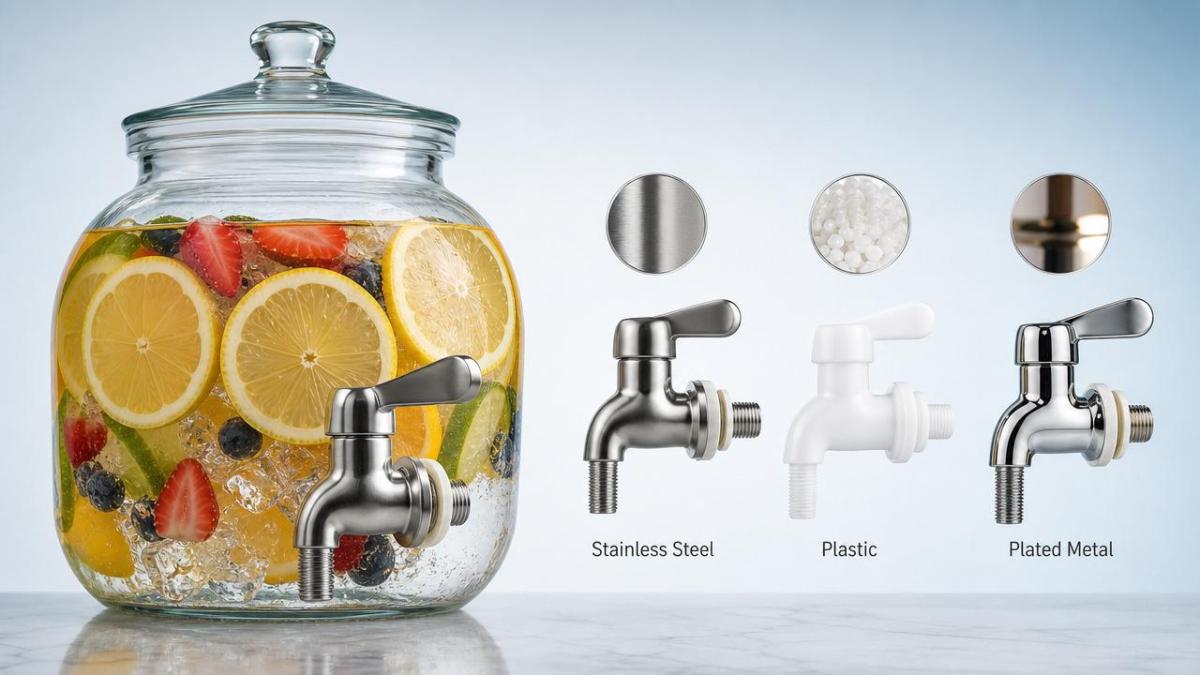
How to compare spout materials by use case
Material is the first durability checkpoint. Most spouts for a glass beverage dispenser are made from plastic, stainless steel, or metal alloys with surface coatings. Each option performs differently depending on the scenario.
Plastic spouts: suitable for light, occasional use
Plastic spouts are common in budget models. They are lightweight and often good enough for occasional indoor use. If you bring out a glass beverage dispenser only for a few parties a year, a quality plastic spout may be acceptable. However, cheap plastic can crack around the threads, deform under pressure, or become brittle over time. It is also more likely to feel loose after repeated use.
Stainless steel spouts: better for frequent use and acidic drinks
A stainless steel spout is usually the best choice for people who use a glass beverage dispenser regularly. It offers stronger resistance to corrosion, better structural stability, and a more solid feel during dispensing. This is especially important if you serve citrus drinks, cold brew tea, or fruit-infused water often. Not all stainless steel is equal, though. Well-finished food-grade stainless steel generally lasts longer than thin, mixed-metal parts marketed as steel.
Coated metal spouts: attractive but worth checking carefully
Some spouts have brass-tone, black, or chrome-like finishes that match kitchen or party decor. These can work well, but the coating quality matters. In a humid environment or with frequent washing, poor coatings may chip or fade. For buyers focused on durability, appearance should come after corrosion resistance and sealing performance.
Scenario-based comparison table for choosing the right spout
The table below helps compare a glass beverage dispenser spout based on common end-user scenarios rather than general product claims.
What to inspect before buying a glass beverage dispenser
When comparing a glass beverage dispenser in a store or online, focus on specific structural details. These tell you more about long-term spout durability than brand slogans do.
Check the sealing system
Look for durable silicone or rubber washers that create a tight seal on both sides of the glass. Poor washers cause slow drips, especially when the container is full. In a home kitchen or buffet setting, even a small leak can leave sticky residue and damage the user experience. If replacement washers are available, that is a practical advantage.
Examine thread quality and fit
The thread area is a common failure point. If the threading is rough, shallow, or made from weak plastic, the spout can loosen over time. For a glass beverage dispenser used frequently, secure threading reduces movement and helps preserve the seal.
Test the handle action
A durable spout should open smoothly and return cleanly without sticking. If the handle feels overly stiff, users may force it, increasing wear. If it feels too loose, the valve may not close fully. For family gatherings or self-service stations, easy one-hand operation is especially important.
Review cleaning access
In many homes, the glass beverage dispenser is used for sugary drinks that can leave residue inside the spout. Designs that can be disassembled and cleaned more easily usually last longer because buildup is less likely to damage the mechanism or affect flow.
Different user needs: which spout features matter most
End consumers do not all judge a glass beverage dispenser the same way. Matching product features to user type can prevent overbuying or underbuying.
- For casual hosts: prioritize leak resistance, easy cleaning, and a finish that matches table presentation.
- For large families: choose a tougher stainless steel spout with dependable washers and smooth operation.
- For outdoor entertainers: focus on impact resistance, stable mounting, and corrosion protection.
- For health-focused users making infused water daily: emphasize food-safe materials and easy internal cleaning.
- For gift buyers: do not be distracted by decorative packaging alone; inspect the spout construction as carefully as the glass body.
Common mistakes people make when comparing spout durability
One common mistake is assuming heavy glass automatically means the entire glass beverage dispenser is durable. In reality, the spout is a separate component with its own material and manufacturing quality. Another mistake is focusing only on finish color or vintage style while ignoring washer quality and valve design.
Buyers also often underestimate drink type. Sweet tea, citrus juice, and fruit mixes place more demands on the spout than plain water does. If your usual serving pattern includes acidic or sticky beverages, low-grade metal and cheap plastic can fail much sooner. Finally, some people choose a dispenser with a very long or decorative handle, thinking it will be easier to use. In practice, these handles may create extra leverage and stress, especially in high-traffic serving situations.
Practical ways to extend spout life after purchase
Even the best glass beverage dispenser benefits from proper care. Rinse the spout soon after serving sugary or acidic drinks. Avoid over-tightening the mounting nut, since too much pressure can stress the glass and sealing parts. If the dispenser is stored between uses, dry the spout thoroughly before putting it away. For seasonal or party use, checking the washers before the next event can prevent unexpected leaks.
If the spout design allows disassembly, occasional deep cleaning helps maintain flow and reduces internal wear. For consumers who rely on a glass beverage dispenser regularly, choosing a model with replaceable seals or a replaceable spout can also improve long-term value.
FAQ: durability questions consumers often ask
Is stainless steel always better than plastic?
For most frequent-use situations, yes. A stainless steel spout usually offers better durability, especially for a glass beverage dispenser used with acidic drinks or in busy serving settings. However, a well-made plastic spout can still be sufficient for light, occasional use.
How can I tell if a spout will leak?
Check for dual washers, firm threading, and a smooth closing action. Reviews mentioning drips, loose handles, or seal problems are warning signs when comparing a glass beverage dispenser online.
Does drink type really affect spout lifespan?
Yes. Citrus, fruit infusions, and sugary beverages can increase corrosion risk and residue buildup. If these drinks are common in your home, choose a glass beverage dispenser with a food-grade metal spout and easy-clean design.
Final buying guidance based on your real scenario
The best way to compare glass beverage dispenser spout durability is to start with your own usage pattern. If you want a dispenser for occasional entertaining, basic reliability and leak control may be enough. If you expect daily use, self-service by children, outdoor entertaining, or frequent fruit-based drinks, invest in stronger spout materials, better seals, and a cleaner internal design. A durable glass beverage dispenser is not just about the thickness of the jar or the beauty of the stand. It is about how the spout performs after dozens or even hundreds of pours.
Before you buy, compare the spout material, washer structure, valve feel, and cleaning access side by side. By matching those details to your serving scenario, you can choose a glass beverage dispenser that stays functional, attractive, and dependable for far longer.
Popular Tags
Kitchen Industry Research Team
Dedicated to analyzing emerging trends and technological shifts in the global hospitality and foodservice infrastructure sector.
Industry Insights
Join 15,000+ industry professionals. Get the latest market trends and tech news delivered weekly.
No spam. Unsubscribe anytime.
Hot Articles
 ASEAN FTA Upgrade Enters Text Verification Phase; Smart Kitchen Controls Added to Zero-Tariff List
- Electronics Manufacturing Leads with 13.6% Output Growth; Kitchen Appliance Chip Supply Stabilizes
- OpenCLAW-like Agent Deployment Risk Management Guidelines Released
- Green Power Stocks Rally; Overseas Buyers Prioritize Green Electricity Usage

Contact With us
Contact:
Anne Yin (Ceramics Dinnerware/Glassware)
Lucky Zhai(Flatware)