
How glass storage container manufacturers compete on sealing
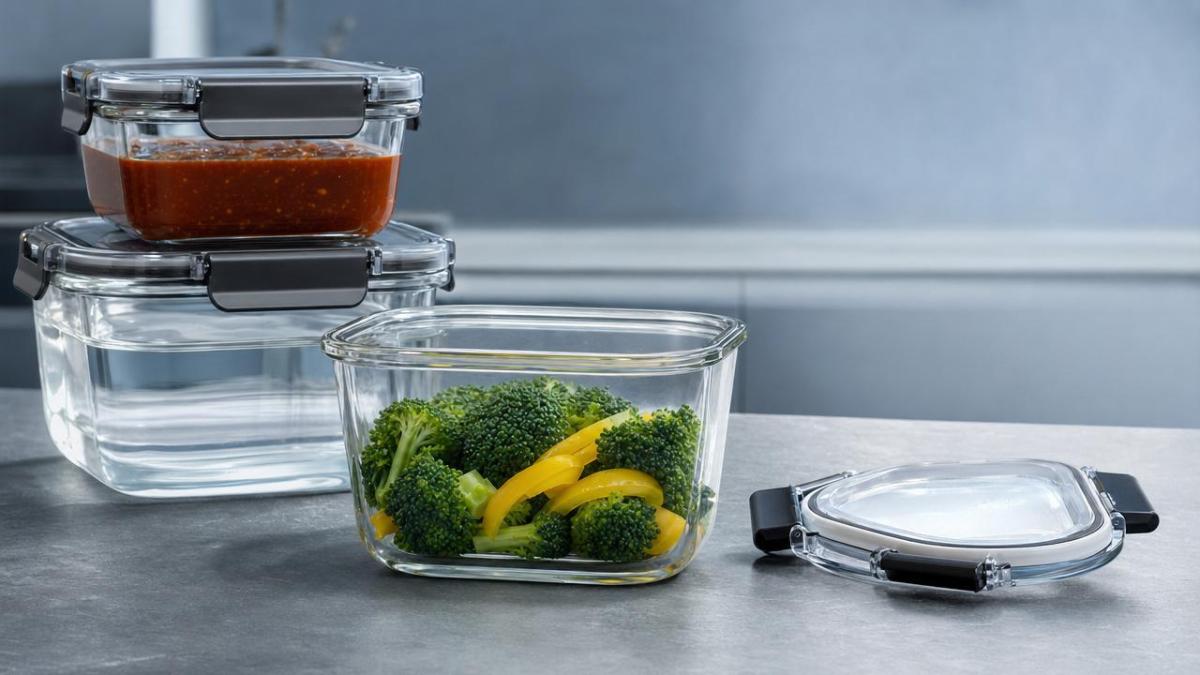
For technical evaluators, sealing performance is often the key factor that separates one glass storage container manufacturer from another. Beyond basic leak prevention, manufacturers compete through gasket materials, lid-locking structures, pressure resistance, thermal stability, and long-term durability. Understanding how these sealing technologies differ helps buyers assess product reliability, food safety, and lifecycle value in both household and commercial kitchen applications.
What sealing competition means in glass storage containers
In practical terms, sealing competition refers to how effectively a glass storage container manufacturer can design a closure system that preserves food quality, resists leakage, survives repeated use, and remains stable across changing temperatures and handling conditions. The container body may be glass, but the seal is a system made of several interdependent parts: lid geometry, gasket elasticity, locking force, dimensional tolerance, venting behavior, and the contact interface between lid and rim.
For the kitchen equipment industry, this topic matters because storage containers are no longer judged only as simple household items. They now serve in meal prep, ingredient staging, cold storage, transport between prep zones, and food preservation workflows. In commercial kitchens, central kitchens, and food processing support functions, a poor seal can lead to contamination risk, waste, odor transfer, liquid spills, and shortened shelf life. As a result, the sealing capability of a glass storage container manufacturer increasingly reflects its engineering maturity rather than just its price position.
Why the industry pays close attention to sealing performance
The broader kitchen equipment sector is evolving toward food safety, efficiency, intelligent workflow, and sustainable use. Within that context, storage systems must support repeatable sanitation, reduced food loss, and compatibility with modern handling practices. A glass storage container manufacturer that delivers reliable sealing can align better with these industry priorities because containers remain functional across refrigeration, freezer storage, microwave reheating where applicable, and repeated cleaning cycles.
Sealing has also become a competitive issue because user expectations are more sophisticated. Buyers now evaluate whether a lid resists staining, whether a gasket can be removed for cleaning, whether locking tabs lose force over time, and whether the seal remains stable after thermal shock. Technical evaluators are therefore not just looking for “airtight” claims. They are trying to determine whether a manufacturer can support real operating conditions in restaurants, hotels, foodservice distribution, and premium household kitchens.
The core sealing elements manufacturers compete on
A capable glass storage container manufacturer usually competes on a combination of material science, tooling precision, and validation methods. The most important elements include the following:
- Gasket material: Silicone is widely preferred for elasticity, temperature resistance, and low odor retention. Lower-grade materials may harden, deform, or absorb food smells over time.
- Lid structure: Snap-lock, clamp-lock, and press-fit systems generate different compression forces. Better designs maintain uniform pressure around the rim.
- Rim precision: Even small variations in the glass edge can weaken sealing consistency. Manufacturing tolerance is therefore a hidden but critical differentiator.
- Pressure and vacuum behavior: Some applications require resistance to internal pressure changes from hot filling or cooling cycles.
- Durability under repeated cycles: The best sealing systems maintain performance after hundreds of openings, wash cycles, and stack-load events.
This is where many products that appear similar at first glance begin to differ significantly in long-term value.
A practical industry overview for technical evaluators
When comparing suppliers, technical evaluators can treat sealing as an intersection of product design, food-contact compliance, and operational fit. The table below summarizes the most common areas of assessment for a glass storage container manufacturer.
How sealing design creates application value
The value of a strong sealing system changes by use case. In household kitchens, sealing quality supports freshness, convenience, and confidence during transport. In restaurant and hotel environments, the same feature contributes to mise en place discipline, reduced spills in refrigerated storage, and cleaner shelving conditions. In food processing support areas or central kitchens, a reliable seal supports partial batch handling, ingredient segregation, and improved traceability when paired with labeling practices.
A high-performing glass storage container manufacturer therefore competes not only on the seal itself but on the business outcomes created by that seal. Better sealing can reduce food waste, lower replacement frequency, support safe storage of sauces and liquids, and improve handling predictability for staff. These are operational gains that matter to technical evaluators because they influence lifecycle cost and usability, not just product specifications.
Typical application categories and sealing priorities
Not every environment requires the same type of sealing performance. The following categories help technical evaluators align supplier claims with real demand.
Where manufacturers differentiate beyond marketing claims
Many brands use similar words such as airtight, leakproof, or secure-locking, but technical evaluators should look past those claims. A serious glass storage container manufacturer often demonstrates differentiation in test discipline and process control. This may include compression set testing on gaskets, thermal cycling, hinge fatigue tests, drop-impact review, and verification of food-contact material compliance. Manufacturers with stronger engineering teams also tend to provide clearer limits of use, such as temperature guidance, microwave recommendations, and gasket care instructions.
Another important differentiator is design for maintenance. Containers that allow easy gasket removal without distortion, minimize crevices around the seal, and preserve locking accuracy after cleaning are generally more suitable for demanding kitchens. In other words, sealing competition is not just about how tightly a container closes on day one. It is about whether the closure system remains dependable after real-world wear.
Key risks evaluators should not overlook
Several sealing-related risks can be underestimated during product review. First, the gasket may perform well when new but degrade quickly under detergents, oils, acids, or repeated high-temperature washing. Second, a lid may feel secure in manual testing while still producing uneven compression around the perimeter. Third, the glass rim may have enough variance to create occasional sealing failures within a production batch. Finally, the product may be technically leak resistant but difficult to sanitize thoroughly, which can compromise food safety objectives.
For this reason, technical evaluators should review not only pass-fail test claims but also consistency data, maintenance guidance, replacement part policy, and batch-level quality assurance methods from the glass storage container manufacturer.
Practical evaluation suggestions for technical teams
A structured evaluation process helps separate superficial product similarity from meaningful performance differences. Technical teams can improve decisions by focusing on these practical steps:
- Request detail on gasket material type, compliance certifications, and expected service life.
- Test sealing under actual use conditions, including liquid storage, refrigeration, dishwasher cycles, and repeated opening.
- Inspect the uniformity of the lid-to-rim contact area across multiple samples, not just one unit.
- Review whether replacement gaskets or lids are available, especially for commercial or semi-commercial use.
- Compare total lifecycle value, including durability, cleaning labor, breakage risk, and storage reliability.
These steps are especially relevant in the kitchen equipment industry, where equipment and storage accessories increasingly need to fit into broader systems of efficiency, hygiene, and sustainable operation.
Conclusion and next-step perspective
Sealing has become one of the clearest ways a glass storage container manufacturer proves technical capability. It connects directly to freshness protection, spill prevention, sanitation, durability, and user confidence across household and commercial settings. For technical evaluators, the most useful approach is to assess sealing as a full performance system rather than a single marketing feature.
As the kitchen equipment industry continues moving toward smarter, safer, and more efficient operations, the role of dependable food storage will only become more important. Buyers who evaluate gasket quality, locking structure, tolerance control, and long-term maintenance will be better positioned to identify a glass storage container manufacturer that delivers consistent value over time. If the goal is reliable storage performance rather than short-term appearance, sealing should remain at the center of technical review.
Popular Tags
Kitchen Industry Research Team
Dedicated to analyzing emerging trends and technological shifts in the global hospitality and foodservice infrastructure sector.
Industry Insights
Join 15,000+ industry professionals. Get the latest market trends and tech news delivered weekly.
No spam. Unsubscribe anytime.
Hot Articles
 ASEAN FTA Upgrade Enters Text Verification Phase; Smart Kitchen Controls Added to Zero-Tariff List
- Electronics Manufacturing Leads with 13.6% Output Growth; Kitchen Appliance Chip Supply Stabilizes
- OpenCLAW-like Agent Deployment Risk Management Guidelines Released
- Green Power Stocks Rally; Overseas Buyers Prioritize Green Electricity Usage

Contact With us
Contact:
Anne Yin (Ceramics Dinnerware/Glassware)
Lucky Zhai(Flatware)