
Ceramic plate thickness affects durability more than expected
When choosing a ceramic plate or a full ceramic dinner set, thickness often matters more than buyers expect. It directly influences durability, heat resistance, and long-term performance in both home and commercial kitchens. For purchasers comparing dinner plate, ceramic bowl, coffee mug, and even stoneware dinnerware options, understanding how thickness affects breakage risk and usability can lead to smarter, more cost-effective decisions.
Why ceramic plate thickness matters in real kitchen use
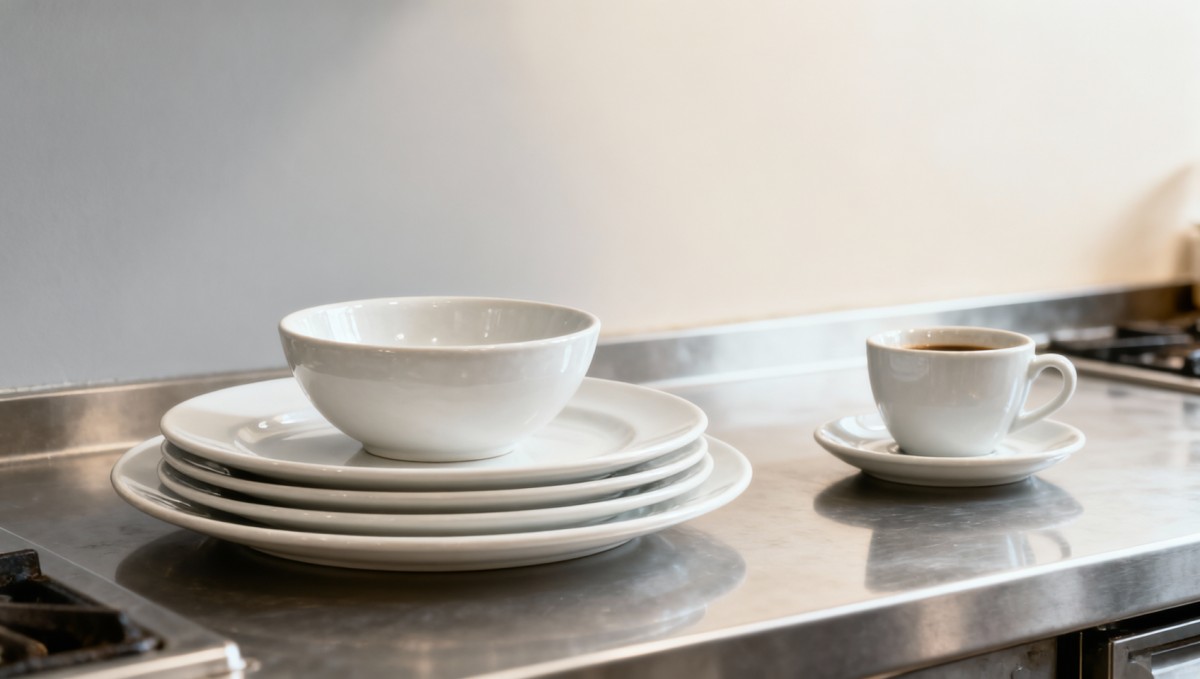
In kitchen equipment purchasing, ceramic plate thickness is not just a visual detail. It affects how a dinner plate performs under stacking pressure, repeated washing, thermal change, and daily handling. In restaurants, hotels, central kitchens, and household kitchens, these stress points appear every day, often 3–10 times per service cycle depending on usage frequency.
A very thin ceramic plate may look refined and reduce weight during service, but it can become more vulnerable at the rim and base when exposed to impact. A thicker ceramic plate usually offers better structural support, especially when staff move trays quickly, stack plates in batches of 12–24 pieces, or wash them repeatedly in commercial dishwashers.
However, thicker is not automatically better in every scenario. Excessive thickness can increase product weight, raise transport cost, slow drying after washing, and reduce handling comfort for operators. For procurement teams, the right question is not “thin or thick,” but “which thickness range suits the intended operating environment, breakage tolerance, and budget target?”
This is particularly relevant in the evolving kitchen equipment industry, where buyers increasingly evaluate total lifecycle value rather than unit price alone. A ceramic dinner set used in a boutique café has different durability needs than stoneware dinnerware used in a high-turnover hotel breakfast line or a foodservice canteen serving hundreds of meals per shift.
The three forces acting on a ceramic dinner plate
- Mechanical impact: edge contact, tray loading, shelf storage, and accidental drops from approximately 0.7–1.0 meters during normal service handling.
- Thermal stress: movement from room temperature to hot food service, dishwasher cycles, or warming cabinet use, often within 10–30 minutes.
- Long-cycle wear: repeated washing, utensil scratching, stacking friction, and storage pressure over 6–24 months of use.
Thickness interacts with all three forces. If the product body is too thin for its diameter, stress concentration often increases near the rim. If the body is properly proportioned, the plate can better distribute impact and reduce crack propagation. That is why thickness should always be reviewed together with material density, firing quality, glaze consistency, and plate geometry.
How thickness affects durability, heat resistance, and operating efficiency
For information researchers and operators, the most practical issue is performance in use. A ceramic plate is expected to survive repeated contact with cutlery, hot meals, cleaning chemicals, and occasional mishandling. Thickness becomes one of the easiest visible indicators, but it should be interpreted correctly. It influences strength, yet it also changes thermal behavior and handling speed.
In many commercial kitchens, operators want a balance between resistance and convenience. Plates that are too light may feel elegant but can break more easily during fast-paced service. Plates that are too heavy may reduce breakage from minor bumps, but they can increase labor fatigue when staff handle 30–60 covers per hour. This trade-off matters in both front-of-house and back-of-house operations.
Heat retention is another factor. A thicker ceramic dinner plate usually retains heat longer, which may support plated meal presentation. At the same time, thicker walls can require longer cooling time after dishwashing or warming. In environments where turnaround speed matters, such as cafés, hotel buffets, and institutional kitchens, this can affect workflow over multiple service windows.
The table below summarizes how common thickness tendencies affect practical performance. These are general industry observations rather than fixed specifications, because final durability still depends on clay formulation, firing temperature, design shape, and manufacturing consistency.
For buyers, the key lesson is that durability is multi-factor. Thickness improves safety margins, but only when matched with sound production quality. A medium-thickness dinner plate made under consistent firing control may outperform a very thick but poorly produced plate. This is why serious procurement should request not only dimensions, but also sample review, dishwasher-use confirmation, and batch consistency checks.
What operators notice first during daily use
Operators usually judge a ceramic bowl, coffee mug, or plate by four points within the first 2–4 weeks: comfort in hand, edge chipping frequency, drying speed, and stacking stability. These observations often reveal whether the selected thickness matches the service environment. Procurement teams should include operator feedback early instead of waiting for a 6-month replacement report.
Practical checks during pilot use
- Track edge chips per 100 pieces during the first 30–60 days of operation.
- Compare handling comfort across lunch and dinner shifts with different staffing intensity.
- Review whether stacked height and shelf load remain practical in storage areas.
- Check compatibility with existing dishwasher racks, warming units, and serving trolleys.
This type of structured trial helps enterprise decision-makers move from aesthetic preference to measurable operational suitability. In kitchen equipment projects, the best-performing product is usually the one that supports workflow, lowers replacement frequency, and fits the broader service system.
Which thickness range fits restaurants, hotels, and household kitchens?
Different users need different thickness priorities. A restaurant serving plated fine dining may prefer a lighter ceramic plate to support appearance and service elegance. A hotel buffet may need stronger plate durability because of higher turnover, frequent stacking, and mixed handling by guests and staff. Household kitchens usually fall somewhere in between, with lower daily intensity but greater concern about versatility and storage space.
The same logic applies to a full ceramic dinner set. Dinner plate, side plate, ceramic bowl, and coffee mug should not all be judged by one visual standard. A mug may benefit from thicker walls for thermal comfort and grip stability, while a plate may need a more balanced body to avoid excess weight. Procurement teams should evaluate each piece according to function, not only collection design.
In B2B projects, there are usually 4 core scenario variables: service speed, breakage tolerance, washing frequency, and replacement budget. Once these are defined, thickness decisions become clearer. For example, a canteen with high-volume service may choose more robust stoneware dinnerware, while a premium restaurant may accept a higher replacement rate for thinner, presentation-focused items.
The following table can help compare scenario fit more systematically. It is useful for purchasing teams preparing supplier discussions, sample reviews, or internal product approval meetings.
This comparison shows why thickness selection should be context-based. There is no universal “best” ceramic plate thickness. The correct choice depends on service intensity, staffing conditions, and how often the tableware moves through washing, storage, and transport during a normal 24-hour operating cycle.
Stoneware dinnerware versus standard ceramic dinnerware
Stoneware dinnerware is often associated with a thicker body and a more substantial feel, making it popular in casual dining and rustic presentation concepts. Standard ceramic dinnerware may allow a wider range of profiles, from thinner contemporary designs to more robust commercial forms. Buyers should assess not only style, but also porosity control, glaze finish, and expected service life.
If the operation values ruggedness and consistent replacement planning, thicker stoneware may be attractive. If visual lightness and modern plating are priorities, a medium-profile ceramic plate may offer a better balance. The decision should always be tested against operational realities, not trend alone.
What procurement teams should check before ordering ceramic plates in volume
For procurement personnel and enterprise decision-makers, the risk is not simply buying the wrong plate. The real risk is buying a visually acceptable product that creates hidden costs over 3–12 months through chipping, inconsistent dimensions, freight loss, or mismatch with kitchen systems. Thickness review should therefore be part of a broader sourcing checklist.
A good procurement process usually includes sample validation, technical confirmation, packaging review, and delivery planning. In international trade, ceramic products may travel long distances from manufacturing centers such as China, Germany, Italy, or Japan to distributors, hotels, or project sites. Packaging strength and stacking method become especially important when thicker plates increase carton weight.
Lead time is another practical issue. Standard tableware programs may move faster, while customized ceramic dinner sets often require 2–6 weeks or more depending on decoration, glaze color, order quantity, and production scheduling. If buyers need logo application, shape modification, or export packaging adjustments, early confirmation is essential.
The checklist below can support more reliable supplier evaluation, especially when comparing multiple quotations for dinner plate, ceramic bowl, coffee mug, or coordinated stoneware dinnerware collections.
Five key checks before mass purchase
- Confirm actual dimensions and profile consistency, including rim thickness and base stability across sample units.
- Ask whether the product is intended for repeated dishwasher use and regular foodservice handling.
- Review carton packing quantity, divider protection, and pallet logic to reduce transport damage.
- Check whether replacement supply for the same series can be maintained over the next 6–12 months.
- Clarify any applicable food-contact, labeling, or market-entry requirements for the destination country.
In regulated markets, buyers may also request general food-contact compliance documents or routine product declarations where applicable. These should be handled carefully and case by case, as requirements vary by market, product category, and importer responsibilities. Sensible procurement is not only about price negotiation; it is also about reducing operational and compliance risk.
Cost thinking beyond the unit price
A cheaper thin plate can become more expensive if breakage causes frequent reorder cycles. A thicker ceramic plate may cost more to ship but save replacement expense over time. The right calculation includes at least 4 variables: purchase price, logistics cost, expected loss rate, and replacement continuity. This lifecycle view is especially important for multi-site operators and project purchasers managing annual budgets.
Common mistakes, FAQ, and the smarter buying path
Many buyers assume that all ceramic plates with a similar appearance will perform similarly. In practice, two products can look almost identical yet differ in thickness distribution, firing quality, edge strength, and long-term breakage behavior. That is why sample inspection and scenario-based evaluation remain essential in the kitchen equipment sector.
Another common mistake is judging a full ceramic dinner set only by the main dinner plate. The ceramic bowl, coffee mug, and side plate may face different stress conditions. Mugs handle repeated thermal cycling. Bowls often receive direct utensil contact. Plates endure stacking and transport. Each piece should be reviewed according to use frequency and operator behavior.
Below are several practical questions that often appear during product research and purchasing discussions. These answers can help users, buyers, and decision-makers narrow options faster and avoid costly mismatches.
Does a thicker ceramic plate always last longer?
Not always. Greater thickness can improve resistance to routine handling stress, but durability also depends on clay quality, firing control, design geometry, and glaze performance. A well-made medium-profile plate may last longer than a poorly produced thick plate. Buyers should compare samples under actual use conditions for at least 2–4 weeks whenever possible.
Is stoneware dinnerware better for commercial kitchens?
It can be a strong option for operations that want a substantial feel and a rugged presentation style. However, “better” depends on workflow. Stoneware dinnerware may be heavier, which affects transport, tray carrying, and dishwashing handling. It often suits casual dining, canteens, and concept restaurants, while lighter ceramic dinnerware may work better in refined service settings.
What should buyers ask suppliers before placing a bulk order?
At minimum, ask about dimensions, weight range, recommended use environment, packing method, lead time, replacement continuity, and any market-specific compliance documentation. If the project includes 500, 1,000, or more pieces, also ask for sample evaluation support and packing-drop protection details. These points often matter more than small price differences.
How often should commercial users review breakage performance?
A practical rhythm is monthly review during the first 3 months, then quarterly once usage patterns stabilize. Track chipped rims, base cracks, and transport losses separately. This makes it easier to identify whether the issue comes from thickness mismatch, operator handling, storage layout, or packaging weakness.
Why choose us for ceramic plate selection and project support
In the modern kitchen equipment industry, tableware selection should support efficiency, durability, foodservice practicality, and supply reliability. We help buyers evaluate ceramic plate thickness not as an isolated feature, but as part of a complete sourcing decision that includes application scenario, replacement planning, logistics, and long-term operating cost.
Whether you are comparing a dinner plate range for restaurant service, a ceramic bowl program for hotel breakfast use, a coffee mug line for café turnover, or a full stoneware dinnerware set for a new project, we can support technical discussion based on actual use conditions. This helps reduce uncertainty before bulk commitment and improves communication between procurement, operations, and management teams.
You can contact us for practical topics such as thickness and weight confirmation, sample comparison, recommended use scenarios, packing details, delivery cycle estimation, customization possibilities, and destination-market requirement review. If your project has a defined service model, order quantity, or budget range, we can help narrow the most suitable options in a more structured way.
If you are preparing a purchase plan in the next 7–30 days, send your target product list or usage scenario first. We can discuss ceramic plate sizing, durability priorities, ceramic dinner set matching, sample support, and quotation communication so that your next decision is based on operational fit rather than guesswork.
Popular Tags
Kitchen Industry Research Team
Dedicated to analyzing emerging trends and technological shifts in the global hospitality and foodservice infrastructure sector.
Industry Insights
Join 15,000+ industry professionals. Get the latest market trends and tech news delivered weekly.
No spam. Unsubscribe anytime.


Contact With us
Contact:
Anne Yin (Ceramics Dinnerware/Glassware)
Lucky Zhai(Flatware)