
Why glass beverage server lids start leaking over time
A leaking glass beverage server lid may seem minor at first, but over time it can affect pouring control, hygiene, and product lifespan. For buyers, operators, and decision-makers comparing drink dispenser solutions with items like a glass water dispenser, glass jar, or mason jar, understanding why lid seals fail is essential to choosing more durable kitchen equipment.
Why do glass beverage server lids start leaking after repeated use?
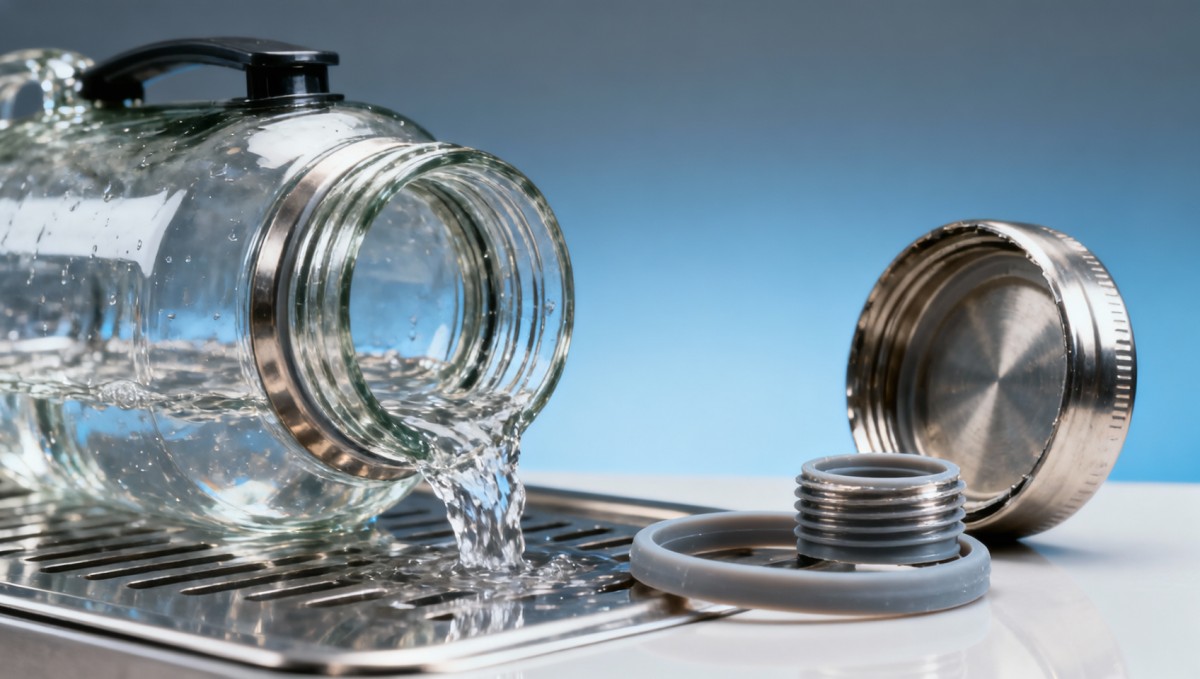
In commercial kitchens, hotel breakfast stations, cafes, and household beverage service, lid leakage usually develops gradually rather than appearing on day one. A glass beverage server often performs well during the first weeks or months, then begins to drip around the spout, rim, or lid-seat area after repeated opening, cleaning, and temperature changes. This pattern matters because it points to material fatigue and design mismatch, not only user error.
Most leaking problems come from 3 core factors: seal degradation, dimensional instability, and mechanical wear. The lid itself may remain visually intact while the silicone ring, threaded closure, or locking interface loses elasticity or alignment. In foodservice operations where a dispenser may be opened 20–50 times per day, even a small loss of compression can turn into visible leakage during pouring.
Another issue is thermal cycling. Beverage servers are often exposed to cold drinks at 4℃–10℃, warm tea service around 40℃–60℃, and dishwashing water that may be much hotter. Glass, metal, plastic, and silicone do not expand at the same rate. Over 6–12 months of regular use, these repeated temperature shifts can reduce the consistency of the sealing interface.
For procurement teams, the key insight is simple: leakage is rarely caused by one visible defect alone. It is usually the result of cumulative stress across materials, cleaning practices, assembly accuracy, and usage frequency. That is why product evaluation should go beyond appearance and capacity.
The most common root causes in kitchens and beverage service
A lid leak can start at different points depending on product construction. Some glass water dispenser designs rely on a compression-fit lid. Others use a threaded lid, clamp mechanism, or integrated spigot-top seal. Each design has different weak points, especially in restaurant and buffet environments where cleaning speed often takes priority over careful reassembly.
- Silicone gasket aging: after repeated washing, exposure to sugar, acid, and sanitizer can harden or swell the gasket, reducing contact pressure.
- Thread wear or cross-threading: common in mason jar and glass jar style lids when staff tighten quickly during peak service periods.
- Rim chipping or micro-abrasion: even minor edge damage can break the seal line and create slow leaks during pouring.
- Warped plastic lid components: lower-grade plastics may distort after repeated hot-water cleaning cycles.
Operators sometimes assume that tightening the lid more strongly will stop leakage. In reality, over-tightening can flatten the gasket unevenly or damage threads, making the leak worse within 2–8 weeks. This is especially common in mixed-use environments where the same server is handled by multiple shifts.
Where the leak usually appears
Leak locations tell buyers a lot about the likely failure mode. A leak at the center opening often points to seal wear or poor fit. A leak around the outer rim suggests uneven compression or a deformed lid. A side drip during pouring may indicate a mismatch between lid geometry and liquid flow path, especially when the server handles pulp drinks, infused water, or tea with suspended particles.
Which materials and designs fail faster in real operating conditions?
Not all beverage server lids age at the same speed. In the kitchen equipment industry, product life depends on the interaction between glass body thickness, lid material, gasket formulation, and cleaning workflow. For B2B buyers, comparing a glass beverage server with a glass jar or mason jar solution requires looking at sealing structure rather than only style or price.
As a general range, silicone seals tend to maintain flexibility better than many low-cost foam or rubber inserts, especially when units are cleaned daily. However, even silicone can fail early if exposed to aggressive chemicals, oil residues, or repeated manual stretching during removal. Stainless steel lids with separate food-contact seals often last longer than one-piece plastic lids, but only if thread tolerances are well controlled.
Design matters just as much as material. A wide-mouth lid is easier to clean but may require a larger sealing circumference, increasing the chance of uneven compression. A narrow-mouth design can seal more consistently, yet it may be less practical for fruit infusion or fast refill. In central kitchens and hotel service lines, this trade-off affects both leakage risk and labor efficiency.
The table below compares typical lid configurations used for beverage service equipment. These are common market patterns rather than brand-specific claims, and they can help users and buyers identify where leakage risk is most likely to appear over time.
This comparison shows why a lower initial price can create higher operating cost. If a lid starts leaking after 3–6 months in a high-turnover environment, the issue affects hygiene checks, tabletop appearance, customer experience, and replacement planning. For long-term procurement, replaceable seals and stable thread design usually deserve more weight than decorative finishing.
How usage intensity changes the service life of a glass beverage server lid
A household user opening the lid 1–3 times per day creates very different wear from a breakfast buffet station opening it 30 times before noon. In restaurants, hotels, and catering operations, the lid is part of a workflow, not just a container accessory. That means service life should be estimated by use cycles, wash cycles, and handling variation, not by calendar age alone.
When procurement teams compare products, they should ask suppliers whether wear-prone parts can be replaced separately. A server body may remain usable for years, while the lid seal may need inspection every 3 months and replacement at 6–12 month intervals depending on beverage acidity, cleaning chemicals, and operating frequency.
What should buyers and operators check before leakage becomes a recurring cost?
In the kitchen equipment sector, small failures often become hidden operating costs. A leaking glass beverage server can increase cleaning time, create sticky counter surfaces, trigger premature disposal, and weaken confidence in the supplier. For this reason, both operators and purchasing teams should use a structured inspection approach before and after purchase.
A practical check can be built around 5 points: rim integrity, gasket condition, lid alignment, thread smoothness, and liquid test performance. These checks take only 3–5 minutes per unit during incoming inspection, but they can prevent larger losses in bulk orders or multi-site deployments. This is especially relevant for hotels, chain stores, and central kitchen programs where consistency matters.
For users already experiencing leaks, the first response should be diagnosis rather than immediate replacement. If leakage appears only when pouring, the problem may be flow control. If it appears while standing still, the seal interface is more likely at fault. If it happens after dishwashing, thermal deformation or incomplete reassembly becomes more likely.
The following table can be used as a procurement and maintenance checklist for a glass water dispenser, glass jar beverage unit, or mason jar style server used in foodservice or retail beverage presentation.
This checklist supports both preventive maintenance and supplier evaluation. It also helps align technical staff, procurement teams, and business managers around measurable criteria instead of subjective impressions. In many cases, repeat leakage complaints can be reduced simply by standardizing inspection and replacement timing.
A simple 4-step prevention routine for daily operations
- Disassemble the lid carefully after each service cycle and remove sugar, pulp, or tea residue from grooves and threads.
- Dry the seal area fully before reassembly; trapped moisture can hide misalignment and accelerate wear.
- Avoid over-tightening. Close until stable contact is reached, then confirm seating visually.
- Run a short leak check every week in high-use environments and document parts that show early fatigue.
For multi-unit operations, this 4-step routine is often more effective than waiting for failure complaints. It also supports food safety management by keeping seals cleaner and more predictable during service.
How to choose a better long-term solution for restaurants, hotels, and distribution buyers
A smart purchasing decision balances leakage resistance, cleaning practicality, replacement support, and operating context. The best glass beverage server for a hotel breakfast buffet may not be the best choice for retail shelf display or household gifting. Buyers should first define whether the priority is presentation, pouring precision, storage, transport, or intensive daily use.
In commercial settings, the most durable solution is often not the most visually minimal one. A robust sealing system with spare gasket availability can reduce total cost over 12–24 months, even if the initial unit price is higher. This matters for procurement officers managing multi-branch replenishment and for decision-makers evaluating lifecycle cost instead of purchase price alone.
Compatibility with cleaning systems is another important factor. If the unit will be hand-washed, more designs are acceptable. If it will pass through frequent hot-rinse or semi-automated cleaning routines, material stability becomes more critical. For export and cross-border sourcing, buyers should also confirm food-contact material suitability and basic documentation for the destination market.
Before finalizing a supplier, it is useful to compare not only the product but also the support scope. A reliable kitchen equipment partner should be able to discuss replacement parts, recommended cleaning range, sample validation, packing method, and common lead times such as 2–4 weeks for standard orders or longer for customized configurations.
Selection priorities for different buyer types
Different decision roles evaluate leakage risk differently. Operators care about ease of cleaning and reliable pouring. Procurement cares about consistency, defect control, and reorder efficiency. Business leaders focus on service image, lifecycle value, and complaint reduction. A good specification sheet should therefore connect technical details to operational outcomes.
Recommended selection criteria
- Choose lids with replaceable seals if expected use exceeds daily service in restaurants, hotels, or catering lines.
- Request sample testing for at least 7–14 days when the beverage contains citrus, sugar syrup, tea, or fruit infusion.
- Confirm whether spare gaskets, lids, or closure parts can be ordered separately rather than replacing the whole glass beverage server.
- Assess closure stability after repeated open-close cycles, not just appearance during the first inspection.
- Check whether the design suits the intended scene: tabletop service, self-service station, retail display, or transport between prep and serving areas.
These criteria help buyers avoid one of the most common mistakes: selecting based on shape and capacity while ignoring closure durability. In practice, the lid system often determines whether the dispenser remains usable and hygienic over the full service period.
FAQ and practical next steps for reducing lid leakage risk
Many searchers looking into leaking beverage server lids are not just seeking a cause. They want to know whether the issue can be fixed, whether replacement is necessary, and what they should ask a supplier before buying again. The answers below address common decisions in household, hospitality, and B2B sourcing contexts.
This topic also reflects a broader shift in the kitchen equipment industry. Buyers increasingly expect products that combine food safety, easy maintenance, operational reliability, and support for smarter inventory and replacement planning. Even simple beverage presentation tools are now evaluated through a lifecycle lens.
If leakage has already affected service quality, the best path is usually to identify the failure point, compare lid structures, and validate a more suitable configuration with samples. That approach reduces replacement waste and supports better standardization across sites.
Can a leaking glass beverage server lid be repaired?
Sometimes yes, but only when the root cause is limited to the gasket, misalignment, or residue buildup. If the glass rim is chipped, the threads are damaged, or the lid has warped, repair is often temporary. In commercial use, replacing the seal or lid component is usually more reliable than improvised fixes, especially when the unit is opened many times per shift.
Are mason jar style lids more likely to leak?
Not always. Mason jar closures can perform well when the thread quality is stable and the gasket is properly installed. However, they are more vulnerable to cross-threading when staff work quickly. For low to medium frequency use, they may be sufficient. For higher-volume beverage service, buyers should compare seal replacement options and thread durability.
How often should seals be checked in a foodservice environment?
A common practice is monthly inspection for high-use units and quarterly inspection for moderate-use units. If the beverage contains acid, sugar, or pulp, checks may need to be more frequent. In buffet, cafe, or catering settings, documenting seal condition every 30 days can help prevent leaks before they affect customers.
What should buyers ask suppliers before placing an order?
Ask about lid material, gasket material, replacement part availability, recommended cleaning conditions, sample policy, packing method, and standard lead time. Also ask whether the supplier can support application-based selection for hotel service, restaurant self-service, household use, or export distribution. These points often matter more than surface appearance.
Why choose us for beverage server selection and project support
We support buyers, operators, and sourcing teams who need more than a basic product list. If you are comparing a glass beverage server, glass water dispenser, glass jar, or mason jar style solution, we can help you evaluate lid structure, seal replacement strategy, application suitability, and expected maintenance needs across different usage intensities.
Our support can cover key decision points such as parameter confirmation, sample selection, packaging discussion, spare-part planning, and delivery timing. If your project involves hospitality service, restaurant operations, retail beverage presentation, or distribution sourcing, we can help narrow the right configuration based on cleaning method, daily use frequency, and budget range.
You can contact us to discuss 6 practical topics: lid sealing structure, gasket material options, replacement-part availability, standard or custom capacity, typical lead time, and quotation details. If needed, we can also support sample evaluation so your team can compare leak resistance and usability before a larger order decision.
If your current beverage servers are showing repeated lid leaks, send your application scenario, target capacity, cleaning method, and expected order quantity. We can help you review suitable options, identify likely failure points, and plan a more durable kitchen equipment solution for long-term use.
Popular Tags
Kitchen Industry Research Team
Dedicated to analyzing emerging trends and technological shifts in the global hospitality and foodservice infrastructure sector.
Industry Insights
Join 15,000+ industry professionals. Get the latest market trends and tech news delivered weekly.
No spam. Unsubscribe anytime.

Contact With us
Contact:
Anne Yin (Ceramics Dinnerware/Glassware)
Lucky Zhai(Flatware)