
What food processors expect from industrial kitchen tools now
Today’s food processors expect more from industrial kitchen tools than basic durability. They need kitchen tools for food processing that improve efficiency, support food safety compliance, reduce labor pressure, and integrate smoothly with automated workflows. As production demands rise and technology advances, evaluating the right equipment has become a strategic task for technical teams seeking reliable, scalable, and energy-conscious solutions.
For technical evaluators, the core question is no longer whether a tool can perform a task, but whether it can perform that task consistently, hygienically, efficiently, and at the right total cost over time. In practice, that means industrial kitchen tools are now judged by their fit within broader production systems, maintenance requirements, traceability support, operator safety, and upgrade potential.
In other words, food processors are looking for tools that reduce operational risk while increasing throughput. Whether the application involves cutting, mixing, portioning, handling, washing, or packaging support, the expectations placed on equipment have become more demanding. Procurement decisions are now tied closely to engineering logic, compliance standards, and long-term plant performance.
What food processors really expect from industrial kitchen tools today
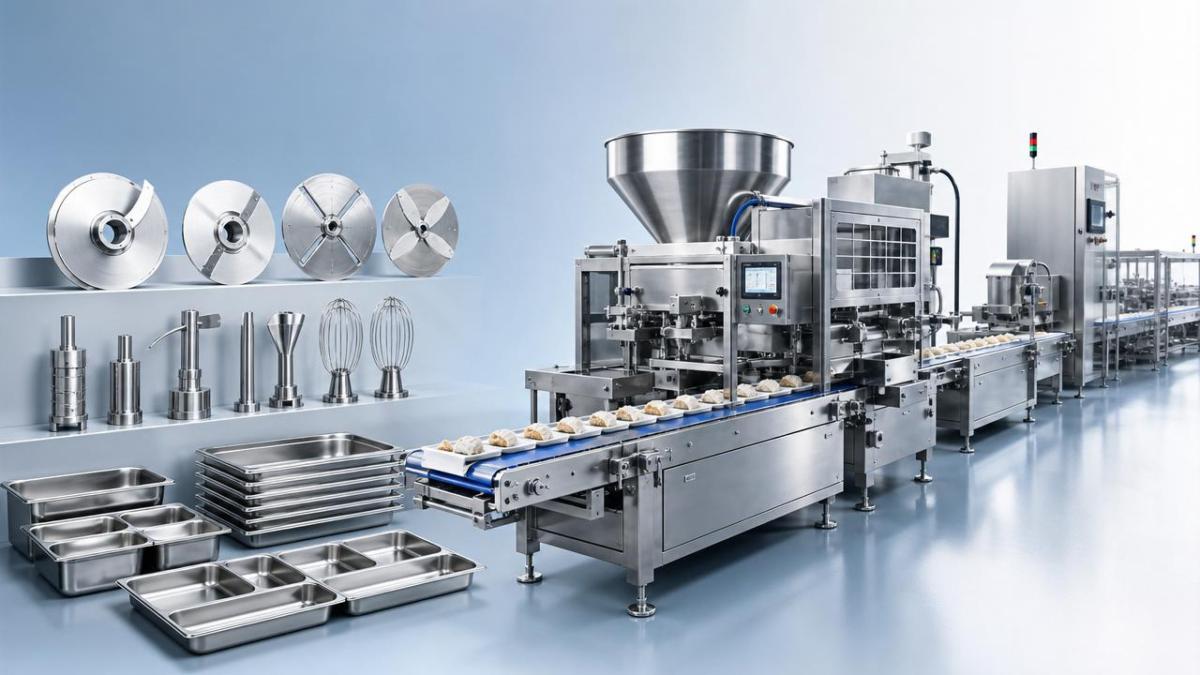
The most important shift in buyer expectations is that industrial kitchen tools are no longer treated as isolated accessories. Food processors increasingly view them as productivity assets. A slicer, mixer attachment, conveyor-compatible tray system, or handling tool must contribute to measurable performance outcomes such as lower waste, better repeatability, faster cleaning, and easier integration into semi-automated or automated lines.
Technical teams evaluating kitchen tools for food processing are typically trying to answer several practical questions. Will this tool improve output per labor hour? Can it withstand aggressive washdown and sanitation cycles? Does it reduce contamination risk? Is it compatible with current machinery, layout, and operator workflows? If production volume increases, will the same tool still be suitable, or will it quickly become a bottleneck?
These expectations are driven by multiple pressures across the food industry. Labor remains difficult to recruit and retain in many markets. Food safety requirements are becoming stricter. Production schedules are tighter, and downtime is more expensive. At the same time, energy use, water use, and material waste are now part of purchasing discussions, not just plant management concerns.
As a result, food processors expect industrial kitchen tools to be robust, but durability alone is only the baseline. The real value lies in a tool’s ability to support process stability, regulatory compliance, ergonomic handling, and lower lifetime operating costs.
Why efficiency is now a more important buying factor than simple tool lifespan
Long service life still matters, but technical evaluators are increasingly focused on operational efficiency. A lower-cost tool that lasts a long time may still be a poor investment if it slows changeovers, requires frequent manual adjustment, creates inconsistent output, or increases cleaning time between batches.
In many food processing environments, a few minutes saved during each sanitation cycle or product change can add up to substantial annual gains. The same is true for tools that improve cut accuracy, reduce over-portioning, or minimize product adhesion and residue. These are not small advantages. They directly affect yield, labor utilization, and line availability.
For example, a mixing or handling tool with a more sanitary design may reduce cleaning effort and shorten restart time. A portioning tool with tighter tolerances may improve package consistency and reduce giveaway. A better-designed preparation tool may lower operator fatigue and maintain higher throughput over a full shift. In these cases, the business value of the tool is much larger than its purchase price suggests.
This is why modern evaluations often include process mapping rather than simple product comparison. Technical teams want to understand where a tool fits in the workflow, what inefficiencies it removes, and whether it creates hidden constraints elsewhere in the system. The tool is not evaluated alone; it is evaluated as part of a production sequence.
Food safety and hygienic design have become non-negotiable
If there is one area where expectations have clearly hardened, it is hygienic design. Food processors cannot afford tools that are difficult to clean, contain hard-to-reach crevices, use unsuitable materials, or deteriorate under repeated sanitation. For technical evaluators, food safety is not a marketing feature. It is a screening criterion.
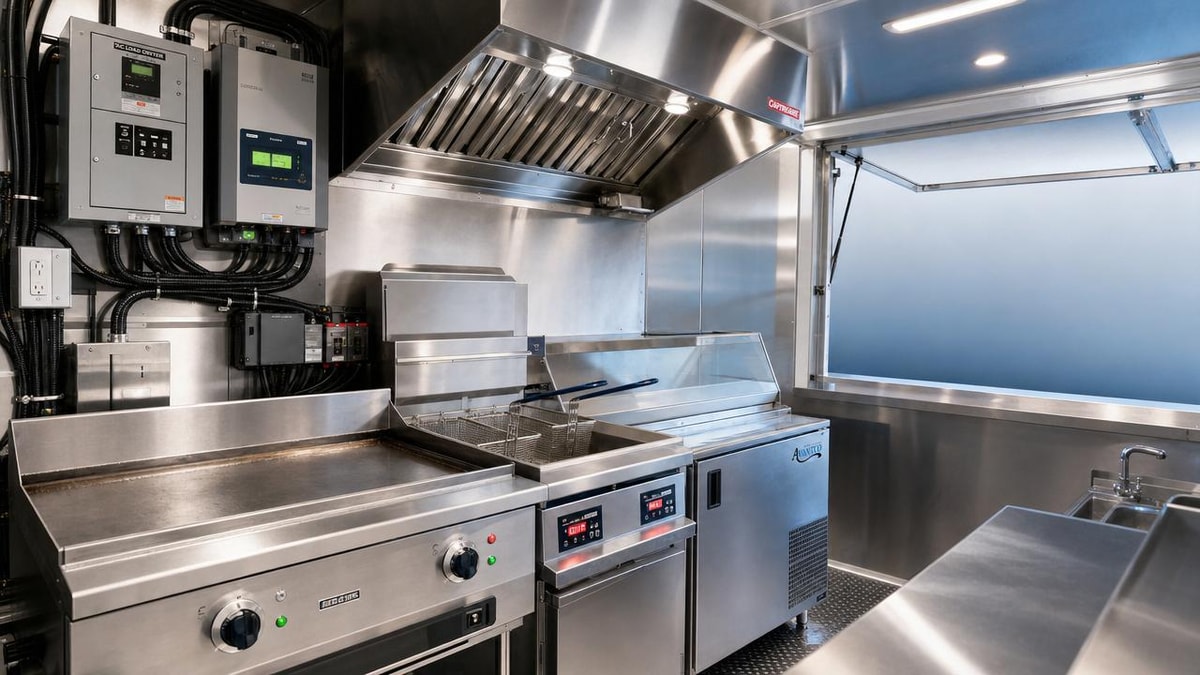
Industrial kitchen tools used in food processing must support sanitation protocols, material compatibility, and contamination control. Stainless steel remains a preferred material in many applications because of its corrosion resistance and cleanability, but material choice alone is not enough. Surface finish, weld quality, seal design, and component accessibility all influence whether a tool can be cleaned reliably.
Teams also look at how tools behave under real plant conditions. Do joints trap residue? Can components be disassembled without special effort? Are replacement parts easy to source so damaged pieces do not remain in service longer than they should? Does the design reduce the chance of foreign matter, bacterial growth, or allergen cross-contact?
For food processors handling multiple product types, allergen management is especially important. A tool that appears acceptable in a single-product environment may become a liability in mixed-production settings. This is why technical evaluations increasingly consider sanitation validation, washdown resistance, and ease of inspection as part of the procurement process.
Compatibility with automation and digital workflows is now a key requirement
Another major change is the expectation that industrial kitchen tools should work smoothly within increasingly automated facilities. Not every processor is fully automated, but many are moving toward higher levels of mechanization, line balancing, data visibility, and digital production control. In that context, tools that cannot adapt to modern workflows quickly lose value.
For technical teams, compatibility means more than physical fit. It includes whether the tool supports repeatable results required by automated systems, whether it aligns with conveyor speeds or handling routines, and whether it introduces variability that downstream equipment cannot tolerate. Even a manual tool may need to perform to a standard suitable for sensor-based checks or digital quality documentation.
Some processors are also looking for tools that support traceability and maintenance tracking. This may involve serialized components, documented material compliance, or compatibility with preventive maintenance systems. The trend is clear: buyers want equipment and tools that can be managed as part of a connected production environment.
This does not mean every tool needs advanced electronics. In many cases, the smartest design is mechanical simplicity combined with process compatibility. What matters is that the tool does not obstruct automation goals. Technical evaluators therefore increasingly favor standardized, modular, and scalable options over highly specialized tools that are difficult to adapt.
Labor shortages are changing what “good design” means in practice
Food processors are dealing with sustained labor pressure, and that is reshaping expectations around industrial kitchen tools. A technically sound tool is no longer enough if it is difficult to use, physically demanding, or too dependent on operator experience. Good design now includes ergonomics, intuitive handling, quick setup, and reduced training requirements.
From the perspective of technical assessment, this means asking whether a tool helps average operators achieve consistent results, not just skilled operators. If output quality depends heavily on individual technique, the tool may create instability across shifts. In contrast, well-designed kitchen tools for food processing help standardize operations and reduce variability caused by staffing changes.
Ergonomic factors can also have direct productivity benefits. Tools that are lighter, better balanced, easier to grip, or simpler to position can reduce fatigue and support safer work over long production runs. They may also reduce injury risk, which matters both operationally and financially. In facilities with high turnover, tools that shorten training time are particularly valuable.
Technical evaluators therefore often consider operator interaction alongside engineering performance. A tool that looks efficient on paper but causes handling difficulty or frequent misuse may fail in real production. Usability has become part of technical suitability, not a secondary concern.
Energy, water, and waste reduction are increasingly part of technical evaluation
Sustainability goals are no longer separate from equipment evaluation. Food processors increasingly expect industrial kitchen tools to contribute, directly or indirectly, to lower energy use, reduced water consumption, and less material waste. In many cases, this expectation is driven by cost control as much as environmental policy.
For example, a tool that reduces product loss during transfer or portioning improves raw material efficiency. A design that supports faster and more effective cleaning can reduce water and chemical consumption. A tool that works reliably at target speed may reduce unnecessary machine idling or rework. These savings can be meaningful over time, especially in high-volume operations.
Technical teams are therefore looking beyond the initial specification sheet. They want to understand actual operating impact. Does the tool help reduce rejected product? Does it support leaner cleaning cycles? Can it maintain performance without frequent replacement? Even simple tools can influence sustainability metrics when they are used repeatedly across multiple shifts and lines.
As reporting expectations increase across global supply chains, tools that support measurable resource efficiency may also strengthen the processor’s commercial position. This is especially relevant for suppliers serving large retailers, international brands, or export markets with rising sustainability requirements.
How technical evaluators should assess kitchen tools for food processing
To make better decisions, technical evaluators need a framework that goes beyond brochures and isolated product claims. The first step is to define the production context clearly: product type, batch size, sanitation regime, line speed, operator profile, compliance requirements, and expected future capacity. Without this context, it is difficult to judge whether a tool is truly fit for purpose.
The second step is to assess performance against real operating criteria. These usually include throughput contribution, consistency, hygienic design, material durability, maintenance needs, and ease of integration. Where possible, evaluators should request trial data, plant references, or application-specific demonstrations rather than relying only on generic specifications.
The third step is to analyze total cost of ownership. This includes purchase price, spare parts, cleaning time, downtime risk, replacement frequency, labor impact, and any effect on yield or compliance. In many cases, the lowest-priced option is not the most economical once these factors are considered.
It is also useful to involve cross-functional stakeholders early. Engineering, quality assurance, sanitation, production, and maintenance teams often identify different strengths and weaknesses. A tool that production likes may create cleaning issues. A tool that meets hygiene requirements may be harder to maintain. Good evaluation balances these realities instead of optimizing for only one department.
Finally, technical teams should consider scalability. If production expands, product mix changes, or automation increases, will the selected tool remain suitable? Future-readiness is now an important part of current purchasing logic. Short-term fit is not enough in a market where operational requirements change quickly.
What suppliers need to demonstrate to win technical trust
Food processors are not just buying a tool; they are buying confidence in performance. Suppliers that want to succeed in this market need to provide clearer technical evidence and stronger application support. Claims about durability or quality are no longer sufficient on their own.
Technical buyers respond better to specific, verifiable information: material grades, hygienic design details, cleanability features, operating tolerances, compatibility notes, maintenance guidance, and expected service conditions. Application examples are especially useful when they reflect similar products, similar line configurations, or similar sanitation demands.
Responsive after-sales support also matters. Processors expect spare parts availability, documentation, and practical help during installation or validation. If a tool is critical to throughput, even minor support delays can become costly. Suppliers that understand production realities and communicate in operational terms are more likely to be trusted by technical evaluators.
In a competitive market, trust is often built through engineering transparency. The more clearly a supplier can show how a tool improves performance, reduces risk, and fits into the processor’s actual workflow, the stronger the commercial case becomes.
Conclusion: the new standard is performance across the whole process
What food processors expect from industrial kitchen tools now is straightforward in principle, even if demanding in practice. They want tools that do more than survive daily use. They want tools that improve throughput, support food safety, reduce labor strain, fit modern automation strategies, and contribute to lower operating costs over time.
For technical evaluators, this means selection should focus on process value rather than simple product features. The best kitchen tools for food processing are those that perform reliably within the realities of sanitation, staffing, compliance, and production growth. They reduce friction in the system instead of adding hidden inefficiencies.
As the food industry continues moving toward smarter, more efficient, and more sustainable operations, industrial kitchen tools will play a more strategic role than many buyers once assumed. Evaluating them carefully is no longer a minor purchasing task. It is part of building a safer, more resilient, and more productive processing environment.
Popular Tags
Kitchen Industry Research Team
Dedicated to analyzing emerging trends and technological shifts in the global hospitality and foodservice infrastructure sector.
Industry Insights
Join 15,000+ industry professionals. Get the latest market trends and tech news delivered weekly.
No spam. Unsubscribe anytime.
Contact With us
Contact:
Anne Yin (Ceramics Dinnerware/Glassware)
Lucky Zhai(Flatware)