
Restaurant supplies for hospitals need stricter material choices
When evaluating restaurant supplies for hospitals, material choice matters far more than price alone. From stainless steel kitchen tools to durable kitchen tools for food processing, buyers need products that support hygiene, safety, and long-term performance. For procurement teams comparing restaurant supplies cost, restaurant supplies quotation, and kitchen tools wholesale options, stricter material standards can reduce risks, improve efficiency, and ensure reliable use in demanding healthcare catering environments.
Hospital foodservice is not the same as a standard restaurant operation. Kitchens may prepare 300 to 3,000 meals per day, serve patients with vulnerable immune systems, and manage strict cleaning cycles across hot, cold, and transport zones. In this environment, material selection affects contamination control, equipment lifespan, maintenance frequency, and staff safety.
For information researchers, operators, purchasing teams, and decision-makers, the key question is not simply which restaurant supplies are affordable. The better question is which materials can withstand repeated sanitation, moisture, chemicals, thermal shock, and high-volume handling without compromising hygiene or performance.
Why hospital kitchens require stricter material standards
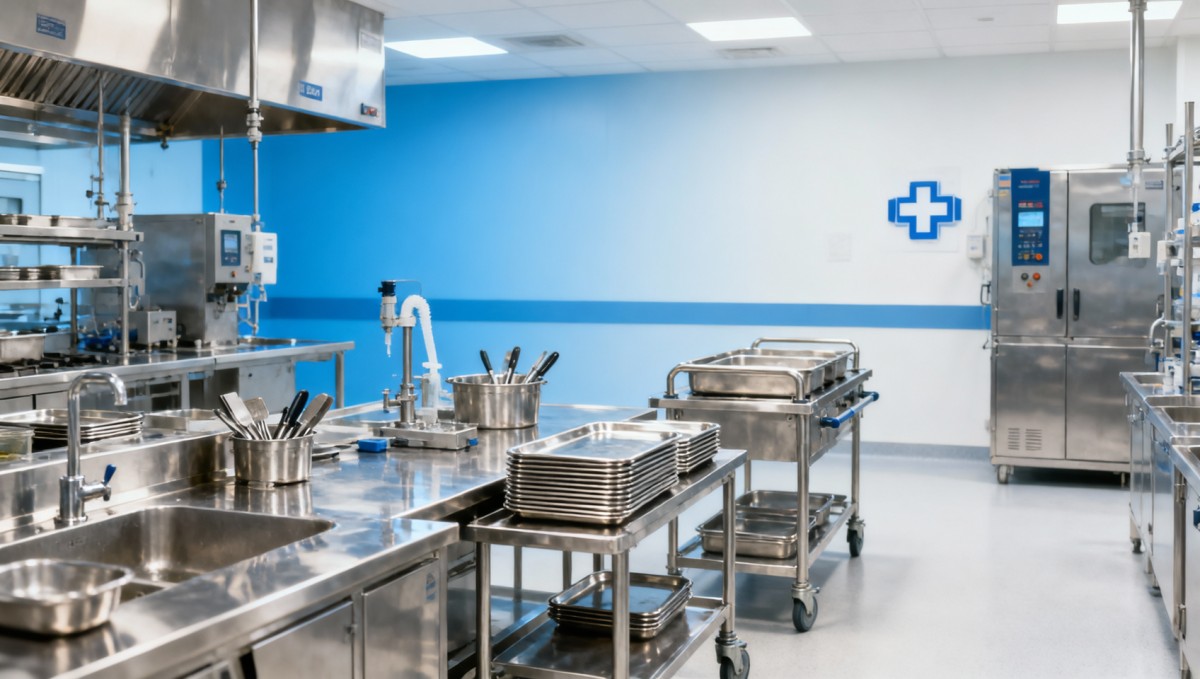
Hospitals operate under a higher risk profile than ordinary catering sites. A tray line, preparation bench, storage rack, or ladle used in a patient meal system may go through 2 to 6 cleaning cycles in a single day. Materials that perform adequately in a casual restaurant can fail early in a hospital kitchen because they are exposed to stronger detergents, chlorine-based sanitizers, steam, and continuous wet conditions.
Material failure in this setting rarely appears as a dramatic breakdown at first. More often, it begins with surface pitting, weld discoloration, coating flaking, cracked handles, or difficult-to-clean seams. These small defects can become cleaning blind spots, increase bacterial retention risk, and shorten replacement cycles from 5 years to less than 18 to 24 months in demanding use conditions.
For operators, stricter material choices mean smoother workflows. For procurement teams, they mean lower total ownership cost, even if the initial restaurant supplies quotation is 10% to 25% higher. For executives, they support compliance, reduce avoidable downtime, and protect service continuity in healthcare meal production.
The difference between purchase price and operating cost
A low-cost cart, pan, sink, or cutting tool may look competitive at the quotation stage, but hospitals should measure cost across at least 4 dimensions: cleaning resistance, repair frequency, contamination risk, and service life. If a lower-grade product needs replacement every 12 months while a higher-grade alternative lasts 36 to 60 months, the initial savings quickly disappear.
Key pressure points in hospital catering environments
- Frequent sanitation with alkaline, acidic, or chlorine-based chemicals.
- High humidity and standing moisture around washing and tray return zones.
- Repeated heat exposure from cooking, holding, and dishwashing processes.
- Round-the-clock operation in facilities serving breakfast, lunch, dinner, and therapeutic diets.
- Higher hygiene expectations for immunocompromised patients and special nutrition units.
The table below shows why material standards should be assessed by operating conditions rather than by catalog appearance alone.
The practical conclusion is clear: hospital-grade restaurant supplies should be evaluated as infrastructure, not disposable accessories. Material performance directly affects food safety control, labor efficiency, and replacement budgets over a 3- to 5-year horizon.
Which materials perform better in healthcare foodservice
Not all metals, plastics, and composites deliver the same results in hospital kitchens. Stainless steel remains the preferred option for many food-contact and cleaning-intensive applications, but the grade, finish, and fabrication method matter. In general purchasing practice, 304 stainless steel is widely used for benches, sinks, trolleys, pans, and utensils, while 316 stainless steel is often preferred in areas exposed to stronger chemical agents or saline conditions.
For non-metal components such as cutting boards, handles, seals, wheels, and storage bins, hospitals should focus on food-safe materials with low porosity, good chemical resistance, and stable performance across repeated cleaning cycles. A cheap polymer that absorbs odor, stains quickly, or becomes brittle after 6 to 12 months creates hidden costs and inconsistent hygiene outcomes.
Surface finish also matters. Smooth, easy-clean surfaces with well-finished welds reduce the chance of residue buildup. Rough edges, exposed joints, and decorative coatings may look acceptable in a showroom but become liabilities in a high-turnover tray assembly or wash-up area.
Material selection by application
The material should match the task. Prep tables need corrosion resistance and easy sanitation. Transport carts need frame strength and wheel durability. Food processing tools need edge retention, wash resistance, and a stable grip. There is no single universal material strategy for every station in a hospital kitchen.
The following comparison can help procurement teams assess suitable options when reviewing kitchen tools wholesale catalogs or comparing multiple restaurant supplies quotations.
In most hospital projects, specifying materials by zone is more effective than applying one price target to the entire procurement list. This reduces overspending in low-risk areas and under-specification in wash, transport, and patient meal production zones where failures are most expensive.
Common material warning signs
- Unknown stainless grade with no clear documentation.
- Visible rough welds or polishing inconsistencies in food-contact areas.
- Thin sheet structures that flex under moderate load.
- Painted or coated surfaces used where direct food splashes and repeated chemical cleaning occur.
- Mixed-material assemblies that are difficult to disassemble and sanitize.
How procurement teams should evaluate restaurant supplies for hospitals
A hospital purchasing process should go beyond unit pricing and include a structured review of usage, cleaning, durability, and service requirements. In many projects, the most effective method is to group products into 3 tiers: direct food-contact items, heavy-use support equipment, and lower-risk auxiliary supplies. Each tier should have a different threshold for material scrutiny and testing.
Procurement teams comparing restaurant supplies cost often focus first on quotations from multiple suppliers. However, a quotation is only useful when it includes material grade, fabrication details, thickness range where relevant, wheel specifications for mobile units, cleaning compatibility, and estimated lead time. Without these details, the price cannot be compared fairly.
For decision-makers, the goal is not to buy the most expensive option. It is to identify the specification level that fits the kitchen’s workload. A central hospital kitchen producing 1,500 meals daily has very different durability needs from a small care unit pantry serving 80 to 120 meals.
A practical 5-step evaluation process
- Map the application zone: prep, cooking, washing, cold storage, tray assembly, transport, or ward service.
- Define use intensity: number of cycles per day, expected load, chemical exposure, and heat exposure.
- Verify material and construction details in writing, not only in sales descriptions.
- Request sample review or pilot units for high-risk items such as carts, pans, and processing tools.
- Compare total cost over 24 to 60 months, including maintenance and replacement intervals.
The table below helps teams compare suppliers on criteria that matter in a healthcare environment.
A stronger procurement file also supports future audits and repeat orders. When material standards are documented from the beginning, hospital groups can standardize more effectively across multiple kitchens, reducing quality variation between sites.
Common purchasing mistakes
One common mistake is treating all kitchen tools wholesale offers as interchangeable. Another is approving samples without evaluating wash resistance, wheel performance, seam finishing, or edge condition after repeated cleaning. A third is selecting a material solely by appearance instead of by service environment. These mistakes often lead to complaints within the first 6 to 12 months.
Operational benefits of better materials for staff and management
The value of better material choices is not limited to durability. Operators benefit from easier handling, faster cleaning, and fewer workflow interruptions. Management benefits from more stable budgeting and fewer emergency replacements. In facilities where labor availability is tight, even a 10- to 15-minute reduction per cleaning cycle can create meaningful savings over a full week.
For example, smooth stainless surfaces with fewer exposed joints reduce scrubbing time. Reinforced carts with quality casters lower the effort needed to move meal trays across corridors and elevators. Better handle materials improve grip and reduce cracking under hot wash conditions. These improvements may appear small individually, but across 200 to 500 active tools and mobile units, the operational effect becomes significant.
Hospital catering also depends on consistency. If a trolley wheel fails during ward delivery or a food pan warps under repeated heating, the result is not just maintenance work. It can delay service, complicate portion control, and increase pressure on kitchen teams already working to narrow distribution windows of 30 to 90 minutes.
Where better materials improve daily performance
- Cleaning efficiency: fewer crevices and smoother surfaces reduce manual rework.
- Safety: stable grips, reliable caster brakes, and stronger frames reduce accident risk.
- Workflow continuity: fewer breakdowns mean fewer service delays during meal peaks.
- Inventory planning: longer replacement cycles improve budget predictability over 2 to 5 years.
Maintenance considerations
Even high-grade materials require proper care. Hospitals should define cleaning instructions, inspection frequency, and replacement thresholds by category. A practical rule is to inspect mobile units monthly, direct food-contact tools weekly, and structural items such as shelving or benches every quarter. This helps identify pitting, loose hardware, wheel wear, and surface damage before they affect service.
The maintenance burden is usually lower when the original material specification is correct. In contrast, under-specified products consume more labor through repeated tightening, refinishing, patch repair, and early disposal. This is why better materials often support both hygiene and leaner operations at the same time.
Implementation tips, risk control, and buying guidance
Hospitals planning new purchases or replacement programs should align kitchen operations, infection control expectations, and procurement documentation before requesting quotations. This is especially important when sourcing internationally, where identical-looking products may differ significantly in steel grade, caster specification, polymer quality, or weld treatment.
A useful implementation model is to begin with a priority list of 20 to 30 high-use items, validate material performance in the toughest zones, and then extend standards across the broader product mix. This phased method reduces risk and gives teams real operating feedback before larger purchasing commitments are made.
Suppliers should be asked to support not only with price, but with specification transparency, sample availability, lead time planning, and replacement part guidance. In most B2B kitchen projects, reliable communication during the first 2 to 4 weeks of evaluation prevents costly misunderstandings later in delivery and installation.
Hospital supply checklist before approval
- Confirm material grade and intended use area for each item category.
- Check cleaning compatibility with the hospital’s actual chemicals and temperatures.
- Review fabrication quality, especially welds, seams, corners, and joints.
- Verify load capacity, wheel quality, and handling ergonomics for mobile equipment.
- Set expected service life and inspection intervals before placing the order.
- Request a clear restaurant supplies quotation that reflects specification details, not only quantity and price.
FAQ: questions buyers often ask
How long should hospital-grade restaurant supplies last?
It depends on the item and usage intensity. Heavy-use mobile units may need wheel replacement earlier, but well-specified stainless structures often remain serviceable for 3 to 5 years or longer. Lower-grade alternatives may show performance problems within 12 to 24 months.
Is 304 stainless steel always enough?
Not always. For many benches, sinks, and utensils, 304 is a practical and widely accepted choice. But in high-chemical, high-salt, or especially aggressive cleaning environments, teams may consider 316 for selected applications where the cost of corrosion is higher than the material upgrade.
What should be included in a reliable quotation?
At minimum, buyers should expect item description, material grade, key construction details, load rating where relevant, unit quantity, lead time, and any cleaning or maintenance notes. A quotation without these details makes comparison difficult and increases purchasing risk.
Are kitchen tools wholesale options suitable for hospitals?
They can be, but only when specifications match healthcare use. Bulk supply is valuable for consistency and cost control, yet hospital buyers should still review materials, fabrication, sanitation resistance, and expected lifecycle before approving volume orders.
Material choice is one of the most important decisions in hospital foodservice procurement because it shapes hygiene performance, equipment life, labor efficiency, and replacement cost. Stricter standards for stainless steel kitchen tools, transport equipment, prep surfaces, and durable kitchen tools for food processing help hospitals reduce operational risk while supporting safer daily meal production.
If you are comparing restaurant supplies cost, reviewing restaurant supplies quotations, or planning kitchen tools wholesale procurement for healthcare projects, now is the right time to define stronger material criteria. Contact us to discuss your application, get a customized product recommendation, and learn more solutions for hospital kitchen supply planning.
Popular Tags
Kitchen Industry Research Team
Dedicated to analyzing emerging trends and technological shifts in the global hospitality and foodservice infrastructure sector.
Industry Insights
Join 15,000+ industry professionals. Get the latest market trends and tech news delivered weekly.
No spam. Unsubscribe anytime.


Contact With us
Contact:
Anne Yin (Ceramics Dinnerware/Glassware)
Lucky Zhai(Flatware)