
Energy efficient restaurant supplies facing wider adoption
Energy efficient restaurant supplies are seeing wider adoption as operators seek lower utility costs, better workflow, and more sustainable kitchens. From restaurant supplies for fast food, bars, bakeries, and cafeterias to restaurant supplies B2B sourcing, buyers now prioritize eco-friendly restaurant supplies that combine durability, compliance, and performance. For procurement teams, users, and decision-makers, understanding this shift is essential when evaluating suppliers, OEM options, and long-term investment value.
In the kitchen equipment industry, this shift is not limited to a few premium appliances. It now affects fryers, ovens, refrigeration units, dishwashers, food prep systems, holding cabinets, ventilation accessories, and even small operational tools that reduce waste, idle time, or water use. As energy prices remain volatile and foodservice businesses face tighter margins, even a 10% to 25% improvement in energy performance can influence purchasing priorities.
For operators and sourcing teams, the real question is no longer whether energy efficient restaurant supplies matter, but how to identify the right products, suppliers, and implementation path. The answer depends on kitchen format, service volume, local compliance requirements, maintenance capacity, and the expected payback period. A bakery with 12-hour oven cycles has different needs than a quick-service outlet with peak lunch demand or a hotel kitchen running multiple shifts.
Why energy efficient restaurant supplies are moving into the mainstream
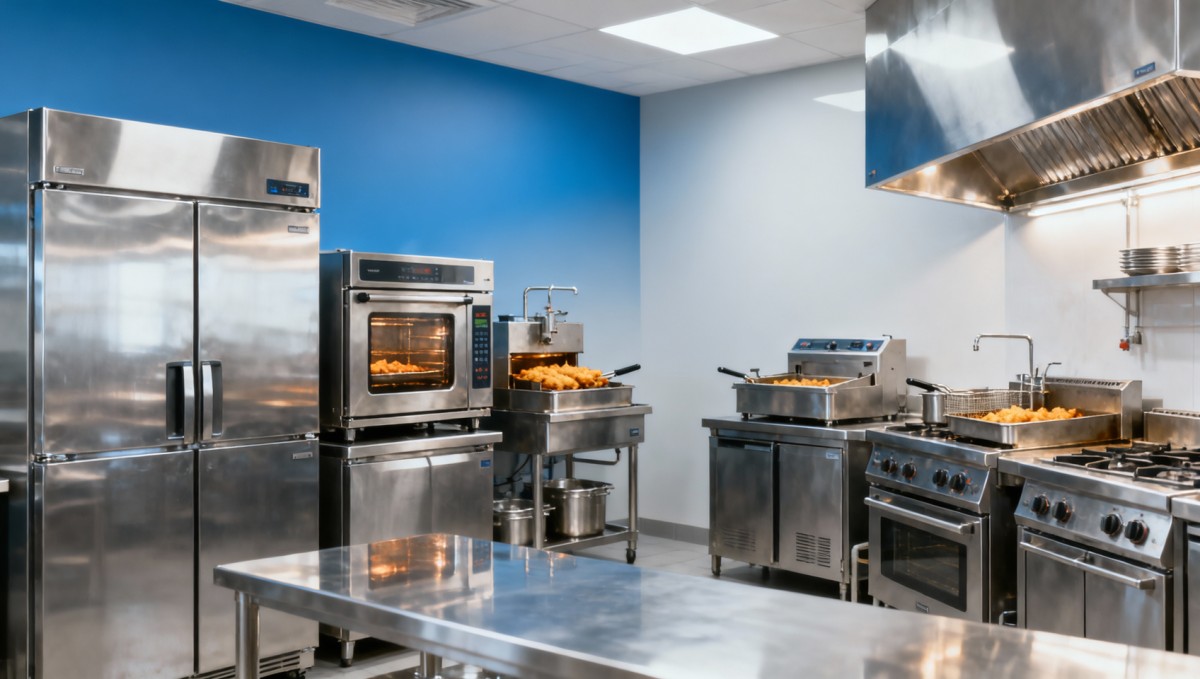
The wider adoption of energy efficient restaurant supplies is driven by three practical forces: cost control, operational consistency, and sustainability targets. In many foodservice settings, utilities account for 3% to 8% of total operating expenses, and high-load equipment such as refrigeration, cooking lines, and warewashing systems can represent the largest share. When businesses operate 10 to 16 hours per day, small efficiency gains compound quickly.
Restaurant owners and procurement managers are also under pressure to improve kitchen output without expanding labor or space. Efficient equipment often supports this goal indirectly. Better insulation, improved heat recovery, inverter-driven compressors, and optimized standby modes reduce wasted energy while helping maintain stable temperature performance. For users and operators, that can mean fewer temperature swings, shorter recovery times, and more predictable workflow during peak periods.
Another factor is global sourcing maturity. Suppliers in China, Germany, Italy, and Japan continue to expand options for commercial kitchen equipment with stronger efficiency profiles, digital controls, and modular system design. This gives B2B buyers more flexibility across OEM production, private label programs, and standard export models. Lead times for standard units may range from 2 to 6 weeks, while customized restaurant supplies B2B projects can take 6 to 12 weeks depending on voltage, material grade, and control requirements.
The change is especially visible in segments such as restaurant supplies for fast food, bakeries, cafeterias, and bars, where volume, speed, and repeatability directly affect profitability. A fryer with improved oil filtration and standby control can lower both energy use and consumable waste. A refrigerator with more stable compressor cycling can reduce temperature fluctuation and lower stress on products during busy service hours.
What buyers are prioritizing now
- Lower operating cost over 3 to 5 years, not just a lower purchase price.
- Compliance with regional electrical, hygiene, and food-contact requirements.
- Reliable parts availability and service response within 24 to 72 hours.
- Durable materials such as stainless steel structures suitable for heavy daily use.
- Controls that are simple enough for staff training in 1 to 3 sessions.
The result is broader acceptance across both large chains and independent operators. Energy efficiency is no longer treated as an optional premium feature. It is increasingly part of the standard evaluation checklist for restaurant appliances and kitchen systems.
Which products deliver the biggest operational impact
Not every product category contributes equally to savings. In most commercial kitchens, the largest impact usually comes from refrigeration, thermal cooking equipment, warewashing, and ventilation-related components. Buyers should focus first on units with long operating hours, high power draw, or significant idle loss. This approach makes capital budgeting more rational and helps decision-makers prioritize investments with measurable returns.
For example, reach-in refrigerators, undercounter chillers, and freezer systems work continuously, often 24 hours a day. Improvements in insulation thickness, door sealing, compressor control, and fan efficiency can therefore produce meaningful savings over the equipment lifecycle. Similarly, combi ovens, deck ovens, induction cooking units, and fryers benefit from better heat retention and faster recovery, especially in kitchens with repeated batch production.
Dishwashers and glasswashers are another area where eco-friendly restaurant supplies matter. Water-saving cycles, controlled rinse temperature, and efficient pumps help reduce both water and electricity use. In bars, cafés, and cafeterias, these savings are relevant because washing cycles can occur dozens or even hundreds of times per day. For high-turn operations, a 15% reduction in water usage can be operationally significant.
The table below highlights common categories and where buyers often see the strongest operational benefit.
The key conclusion is that buyers should match efficiency upgrades to real operating patterns. A low-use appliance may not justify a premium specification, but a high-duty appliance running every day often does. This is why energy efficient restaurant supplies should be assessed by total use hours, service load, and maintenance conditions rather than by label claims alone.
High-priority evaluation areas
For fast food and quick-service kitchens
Focus on fryers, griddles, holding units, refrigeration, and beverage systems. These categories typically experience rapid cycling and peak demand windows lasting 2 to 4 hours. Recovery speed and idle efficiency are often more important than maximum rated power alone.
For bakeries and cafeterias
Give extra attention to ovens, proofing systems, mixers with efficient motors, display refrigeration, and warewashing. In these environments, long production runs and early opening hours make thermal management and stable temperature control a top priority.
How procurement teams should evaluate suppliers and OEM options
B2B sourcing decisions should balance product performance, supply stability, service support, and long-term operating value. This is especially important when comparing direct manufacturers, trading companies, and OEM partners. The lowest ex-works quotation may not be the best outcome if spare parts are hard to source, technical drawings are incomplete, or warranty handling takes more than 10 working days.
For procurement teams, one practical method is to score suppliers across at least 5 dimensions: technical suitability, efficiency features, compliance readiness, delivery reliability, and after-sales support. This avoids overreliance on catalog claims and creates a more consistent purchasing process across multiple product categories. It is also useful when sourcing restaurant supplies for chains that require repeat ordering across several sites.
OEM and private label projects require additional checks. Buyers should confirm material thickness, electrical configuration, packaging standards, replacement part lead times, and whether product labeling, manuals, and cartons can be adapted for destination markets. For custom programs, a sample confirmation cycle may take 7 to 20 days, followed by 20 to 45 days for batch production depending on complexity and order volume.
The following table can help decision-makers build a more disciplined supplier comparison process for eco-friendly restaurant supplies.
A structured review process reduces hidden cost. It also helps enterprises compare suppliers on a lifecycle basis instead of a unit-price basis. For multi-site brands and institutional buyers, that discipline is essential because inconsistent equipment choices can increase training requirements, spare parts complexity, and service downtime across locations.
Recommended sourcing checklist
- Define daily throughput, service hours, and available utilities before requesting quotations.
- Ask for product drawings, operating logic, and maintenance points, not just specification sheets.
- Confirm whether replacement parts can be shipped within 7 to 15 days.
- Review packaging protection for international transport and warehouse handling.
- For OEM projects, approve samples and labels before mass production starts.
Implementation, maintenance, and common mistakes to avoid
Even well-designed energy efficient restaurant supplies will not deliver expected results if installation and daily operation are weak. Common issues include incorrect voltage setup, poor ventilation clearance, overloaded shelves in refrigeration units, irregular cleaning of filters, and failure to train staff on standby or shutdown procedures. In practice, these mistakes can reduce efficiency gains by a noticeable margin within the first 3 to 6 months.
Operators should treat efficient equipment as part of a system rather than a standalone purchase. A refrigerator placed too close to a heat source, an oven used with damaged door gaskets, or a dishwasher operated with unsuitable water conditions will not perform as intended. For restaurants, bars, bakeries, and cafeterias, maintaining the right layout and workflow is as important as selecting the right model.
Basic preventive maintenance can be scheduled at daily, weekly, and quarterly intervals. Daily checks may include surface cleaning, temperature verification, and seal inspection. Weekly checks often cover filter cleaning, drainage review, and control panel observation. Quarterly inspections may focus on compressor behavior, heating element wear, calibration, and general electrical safety. This structure helps reduce unplanned downtime and extends service life.
The table below outlines common implementation risks and practical countermeasures for foodservice operations.
The practical takeaway is simple: implementation discipline protects the value of the investment. Buyers who combine efficient products with clear installation standards, operator training, and routine maintenance are much more likely to achieve a useful payback window, often within 12 to 36 months depending on usage intensity and local utility cost.
Typical mistakes in B2B purchasing
Choosing by initial price only
A lower-priced unit may carry higher electricity consumption, shorter service life, or limited spare parts access. Over 3 to 5 years, the difference in total cost can outweigh the original price gap.
Ignoring user workflow
If controls are too complex or loading height is impractical, operators may bypass efficient settings. Usability and staff behavior should therefore be part of supplier evaluation, especially in high-turnover kitchens.
FAQ for buyers, operators, and decision-makers
The following questions reflect common search intent from information researchers, kitchen users, procurement teams, and business leaders evaluating restaurant supplies B2B options. Each answer is grounded in practical selection logic rather than generic claims.
How do I know whether energy efficient restaurant supplies are worth the higher purchase price?
Start with high-duty equipment that runs for long hours, such as refrigeration, ovens, or dishwashers. Estimate daily operating hours, monthly utility rates, and maintenance frequency. If a unit runs 10 to 24 hours per day, the payback period is usually easier to justify than for occasional-use equipment. Buyers should compare 3-year operating cost, not only upfront cost.
Which businesses benefit most from eco-friendly restaurant supplies?
Quick-service restaurants, bakeries, cafeterias, hotel kitchens, central kitchens, and beverage-focused outlets often benefit the most because of repetitive workflows and high equipment use. Businesses with multiple branches can gain additional value through standardization, easier training, and more consistent maintenance planning across locations.
What should procurement teams ask suppliers before placing an order?
Ask about power configuration, daily output suitability, cleaning method, spare parts lead time, warranty process, and packaging for export. For OEM orders, also confirm sample timing, carton labeling, and documentation. A supplier that can answer these points clearly is usually easier to work with over the full project cycle.
How long does delivery usually take for commercial kitchen equipment?
Standard models may ship in about 2 to 6 weeks, while customized projects often require 6 to 12 weeks. Timing depends on order quantity, material availability, electrical configuration, and whether branding or packaging changes are needed. Buyers should add extra time for international freight, customs handling, and local installation planning.
What is the best way to reduce risk after installation?
Use a simple 3-part plan: verify installation conditions, train operators, and schedule preventive maintenance. Even one short SOP for cleaning, shutdown, and temperature checks can improve consistency. This is especially useful for kitchens with shift rotation or seasonal staffing changes.
Energy efficient restaurant supplies are gaining wider adoption because they address real business needs: lower operating cost, steadier performance, better sustainability alignment, and improved workflow across foodservice environments. For users, the value lies in easier operation and more reliable output. For procurement teams and decision-makers, the value lies in lifecycle cost control, supplier consistency, and smarter investment planning.
Whether you source restaurant supplies for fast food outlets, bakeries, bars, cafeterias, hotels, or central kitchens, the best results come from matching product design to actual service conditions, then validating supplier capability beyond the quotation sheet. If you are reviewing commercial kitchen equipment, OEM supply options, or eco-friendly restaurant supplies for your next project, now is the right time to compare specifications, workflows, and long-term operating value.
Contact us today to discuss your sourcing needs, request a tailored product recommendation, or learn more about practical energy-saving kitchen solutions for your business.
Popular Tags
Kitchen Industry Research Team
Dedicated to analyzing emerging trends and technological shifts in the global hospitality and foodservice infrastructure sector.
Industry Insights
Join 15,000+ industry professionals. Get the latest market trends and tech news delivered weekly.
No spam. Unsubscribe anytime.


Contact With us
Contact:
Anne Yin (Ceramics Dinnerware/Glassware)
Lucky Zhai(Flatware)