
What makes one kitchen design supplier easier to work with
Choosing the right kitchen design supplier can save procurement teams time, reduce project risk, and improve long-term operational efficiency. In a market shaped by smart technology, energy-saving solutions, and global sourcing, buyers need more than attractive layouts—they need a supplier that communicates clearly, customizes effectively, and delivers reliable support from planning to installation.
Understanding the role of a kitchen design supplier
A kitchen design supplier is more than a company that sells equipment or produces floor plans. In practical terms, this supplier connects workflow design, equipment selection, utility planning, compliance needs, and project coordination into one workable solution. For procurement teams in restaurants, hotels, food processing facilities, central kitchens, and even premium residential projects, that role is critical because kitchen performance depends on how well space, people, and equipment function together.
An easier-to-work-with kitchen design supplier typically combines technical knowledge with responsive service. That means understanding production volume, menu type, storage flow, sanitation requirements, ventilation, power load, water access, and maintenance access before recommending a design. A supplier that only focuses on appearance may create avoidable operating problems later. A supplier that understands both design and kitchen operations usually creates better long-term value.
This matters even more in today’s kitchen equipment industry, where automation, smart monitoring, and energy-efficient systems are changing buyer expectations. Procurement teams are no longer evaluating isolated products. They are evaluating integrated kitchen solutions that support food safety, labor efficiency, and lifecycle cost control.
Why the industry pays attention to supplier collaboration
The kitchen equipment industry serves a wide range of users, from high-volume commercial kitchens to food processing plants and residential cooking spaces. Across these segments, the pressure is similar: improve productivity, reduce waste, meet safety standards, and control energy use. Because of these pressures, the working relationship with a kitchen design supplier becomes a strategic issue rather than a simple vendor choice.
In global sourcing environments, procurement teams often compare suppliers from major manufacturing hubs such as China, Germany, Italy, and Japan. Product availability may be broad, but ease of cooperation varies widely. Some suppliers provide clear drawings, organized quotations, and strong after-sales support. Others create delays through incomplete technical data, poor revisions, or weak communication between design and production teams.
A dependable kitchen design supplier reduces friction across the entire project timeline. This includes feasibility review, design updates, specification alignment, factory production, logistics, installation, staff training, and post-installation troubleshooting. When these stages connect smoothly, procurement teams gain better cost visibility and fewer last-minute surprises.
What makes one supplier easier to work with in real projects
Ease of cooperation is usually not about one single factor. It is the result of several capabilities working together. The most reliable kitchen design supplier tends to stand out in communication, technical depth, customization, project discipline, and service continuity.
Clear and fast communication
Procurement professionals value suppliers who answer directly, confirm assumptions, and translate operational needs into technical decisions. Fast response matters, but clarity matters more. A good supplier explains lead times, material options, utility requirements, and design limitations early, so buyers can plan with confidence.
Operational understanding, not just design skills
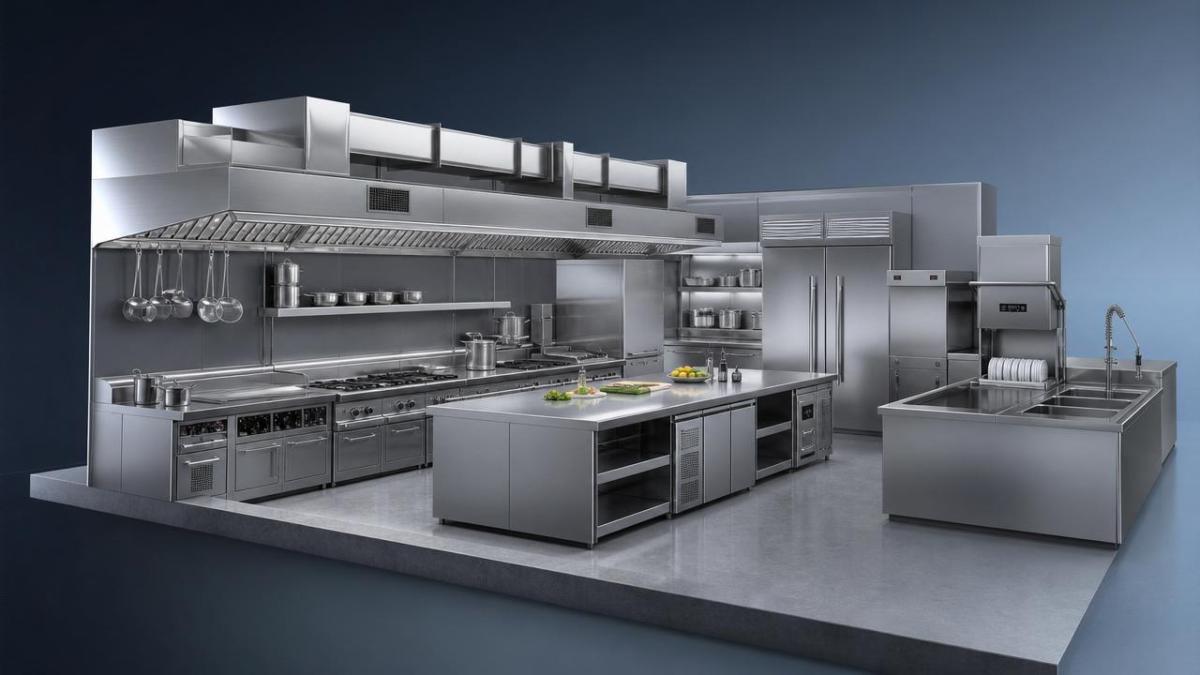
A practical kitchen layout must support receiving, storage, preparation, cooking, holding, cleaning, and waste handling. An easier-to-work-with kitchen design supplier understands how these zones interact. This reduces bottlenecks, cross-contamination risks, and unnecessary movement for staff.
Customization with discipline
Many projects require tailored sizes, modular equipment combinations, or local compliance adjustments. The right kitchen design supplier can customize without losing control of quality, timeline, or documentation. Procurement teams benefit when custom work is supported by accurate drawings, version tracking, and structured approvals.
Integrated support from concept to installation
A supplier becomes easier to manage when design, manufacturing, and implementation teams are aligned. If installation support is disconnected from design intent, project quality often suffers. Buyers should look for suppliers that provide coordinated handoff between planning, production, shipping, and site service.
After-sales reliability
Kitchen systems must continue performing after handover. Access to spare parts, maintenance guidance, troubleshooting, and warranty support is a major sign of supplier maturity. A kitchen design supplier that stays engaged after installation usually creates lower lifecycle risk.
Industry overview: the capabilities buyers should compare
For procurement teams, comparing suppliers is easier when capabilities are grouped into decision areas rather than judged only by price or visual presentation. The table below highlights the factors that often determine whether a kitchen design supplier will be efficient to work with.
Where this value is most visible
Not every buyer has the same priorities. However, the value of a capable kitchen design supplier becomes especially clear in environments where workflow complexity, hygiene standards, and equipment coordination are high.
How smart and energy-efficient trends affect supplier choice
Modern buyers increasingly expect a kitchen design supplier to understand more than stainless steel fabrication and appliance placement. Smart kitchen technologies, digital monitoring, and energy-efficient systems are now central to project value. Equipment that tracks temperature, energy use, or maintenance status can improve food safety and reduce downtime. Ventilation and cooking systems designed for lower energy consumption can also support sustainability goals and operating margin.
For procurement teams, this means supplier evaluation should include technical adaptability. Can the supplier integrate intelligent cooking equipment? Can they recommend layouts that support automated food processing systems? Can they align with digital kitchen management platforms? A future-ready kitchen design supplier helps buyers avoid short-term decisions that become expensive limitations later.
Practical signs that a supplier will be easy to manage
In day-to-day project work, small signals often reveal whether cooperation will be smooth. Procurement teams should pay attention to the supplier’s behavior before the order is placed, not only to the final quote.
- They ask about output volume, staffing, utility conditions, and cleaning process before proposing a layout.
- They provide organized drawings, bills of materials, and revision histories.
- They explain trade-offs between cost, durability, efficiency, and lead time.
- They can show relevant project references in similar kitchen environments.
- They identify possible site constraints early instead of ignoring them.
- They define service scope clearly, including installation support and after-sales response.
These indicators are useful because they show process maturity. A professional kitchen design supplier does not just promise flexibility; they demonstrate it through documentation, coordination, and realistic planning.
Common evaluation mistakes to avoid
One common mistake is selecting a kitchen design supplier based mainly on initial price. Lower pricing may hide weak design validation, incomplete accessory scope, or limited service support. Another mistake is treating equipment selection and kitchen design as separate tasks when they are deeply connected. Misalignment between the two often causes performance issues after installation.
Buyers also sometimes underestimate the importance of communication structure. If points of contact are unclear or technical approvals are informal, even a capable supplier can become difficult to manage. Finally, some projects focus too heavily on visual layout without enough attention to maintenance access, food safety workflow, or future expansion needs. A strong kitchen design supplier helps correct these risks early.
A balanced approach for procurement teams
The best approach is to evaluate a kitchen design supplier through both present project needs and future operational demands. Procurement teams should combine technical review, service review, and commercial review into one assessment. This creates a more accurate picture than comparing quotations alone.
A useful internal checklist may include workflow suitability, equipment compatibility, compliance awareness, smart technology readiness, export or logistics capability, installation coordination, and after-sales coverage. When a supplier performs well across these areas, they are usually easier to work with because their systems are already designed to reduce uncertainty.
Final perspective
What makes one kitchen design supplier easier to work with is not only product range or visual creativity. It is the ability to translate operational goals into a dependable, well-supported kitchen solution. In a market moving toward automation, energy efficiency, and integrated kitchen systems, buyers need suppliers who can combine design insight with manufacturing discipline and service reliability.
For procurement professionals, choosing the right kitchen design supplier means choosing a partner who reduces complexity, improves decision quality, and supports long-term kitchen performance. When evaluating your next project, look beyond the drawing and ask how the supplier communicates, documents, adapts, and supports the full lifecycle. Those are often the real reasons one supplier is easier to work with than another.
Popular Tags
Kitchen Industry Research Team
Dedicated to analyzing emerging trends and technological shifts in the global hospitality and foodservice infrastructure sector.
Industry Insights
Join 15,000+ industry professionals. Get the latest market trends and tech news delivered weekly.
No spam. Unsubscribe anytime.
Hot Articles
 ASEAN FTA Upgrade Enters Text Verification Phase; Smart Kitchen Controls Added to Zero-Tariff List
- Electronics Manufacturing Leads with 13.6% Output Growth; Kitchen Appliance Chip Supply Stabilizes
- OpenCLAW-like Agent Deployment Risk Management Guidelines Released
- Green Power Stocks Rally; Overseas Buyers Prioritize Green Electricity Usage

Contact With us
Contact:
Anne Yin (Ceramics Dinnerware/Glassware)
Lucky Zhai(Flatware)