
Kitchen Tools Wholesale: MOQ traps that raise total cost
Buying kitchen tools wholesale can look cost-effective at first, but hidden MOQ rules often inflate the real spend. Whether you source commercial kitchen tools, stainless steel kitchen tools, or kitchen tools for restaurants, understanding unit pricing, storage pressure, and replacement cycles is critical. This guide helps procurement teams, operators, and decision-makers avoid costly MOQ traps and compare suppliers with greater confidence.
In the kitchen equipment industry, MOQ is not just a purchasing term. It affects cash flow, warehouse turnover, product freshness, maintenance planning, and even frontline usability. For restaurants, hotels, central kitchens, and food processing facilities, a poor MOQ decision can lock capital into slow-moving stock for 3 to 12 months.
This matters even more in a market shaped by global sourcing, varying raw material costs, and increasing demand for durable, food-safe, energy-conscious equipment and tools. Buyers comparing suppliers in China, Germany, Italy, Japan, or regional distribution hubs need a framework that goes beyond the headline unit price.
Why MOQ Becomes a Hidden Cost Driver in Kitchen Tools Wholesale
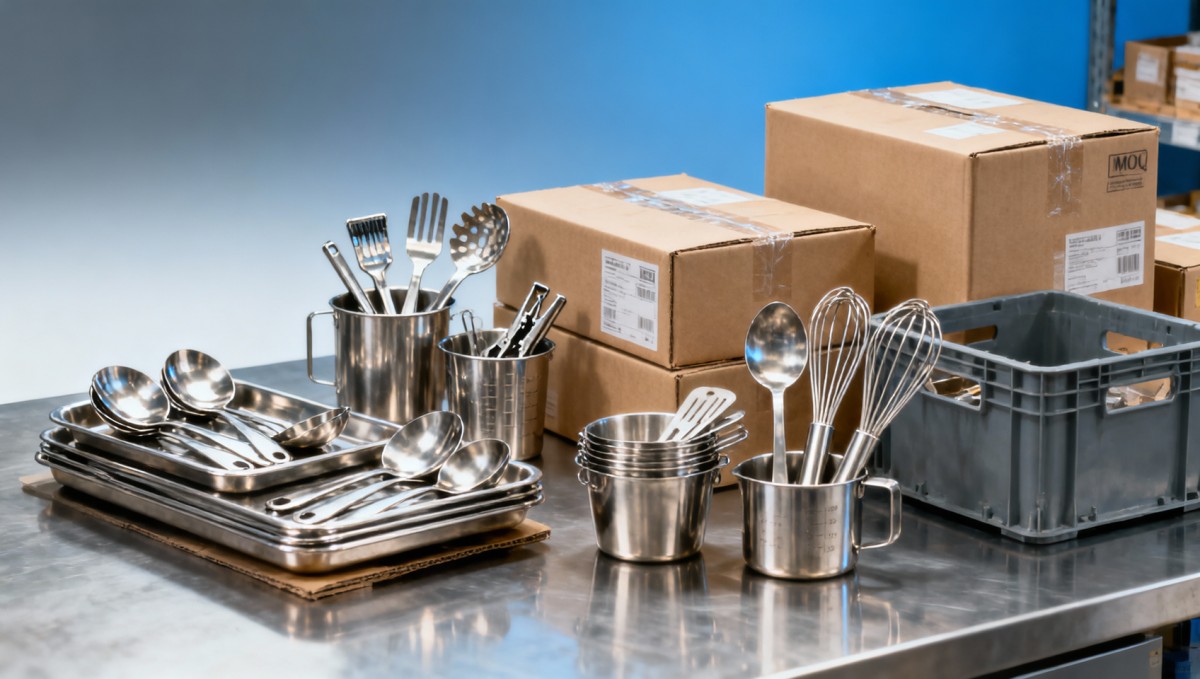
Minimum order quantity is often presented as a simple production requirement, but in wholesale kitchen tools it usually reflects several cost layers at once. These include tooling setup, packaging configuration, export carton efficiency, labor allocation, and supplier margin protection. A quote that looks 8% lower at first can become 15% to 25% more expensive after surplus inventory, handling, and replacement mismatch are added.
The risk is highest for product lines with broad SKU variation. A procurement team may need 12-inch tongs, 14-inch tongs, perforated ladles, solid spoons, whisks, peelers, and measuring cups in different finishes. If each item carries a separate MOQ of 500 to 1,000 pieces, total spend rises faster than expected, even when only 80 to 150 pieces of each SKU are immediately needed.
Operators also face practical issues after the purchase order is placed. Kitchen tools for restaurants are high-touch items with uneven wear rates. Tongs and spatulas may require replenishment every 2 to 4 months in heavy-volume kitchens, while specialty utensils may last 9 to 18 months. A large MOQ often creates overstock for slow-use items and under-planning for fast-failure items.
Another hidden factor is storage and handling. Stainless steel kitchen tools are durable, but they still need organized storage, carton identification, and periodic stock counts. Warehousing costs are not limited to rent. They include labor time, shelf space, internal transport, and the loss risk from mixed cartons, damaged packaging, or outdated labeling standards.
Common Cost Layers Behind an MOQ
Before approving any wholesale order, buyers should map MOQ against the total landed and operational cost. The table below shows how a low quoted unit price can mislead buyers when the order volume exceeds realistic usage.
The key lesson is simple: MOQ should be evaluated as a supply-chain variable, not just a pricing variable. In B2B kitchen tools sourcing, the cheapest unit price is rarely the cheapest decision if the order quantity does not align with real consumption, replenishment frequency, and storage capability.
How Buyers Should Calculate the Real Cost of Wholesale Kitchen Tools
A practical evaluation starts with annual usage, not supplier minimums. If one site uses 40 ladles per quarter and operates 4 quarters a year, annual demand is 160 units. Ordering 1,000 pieces to meet MOQ may reduce unit price by a few cents, but it multiplies stock age and reduces flexibility to adapt if design, handle grip, or kitchen workflow changes.
For multi-site restaurant groups and hotel chains, the next step is to classify SKUs into A, B, and C categories. A items are high-turn tools such as tongs, turners, spoons, peelers, and measuring cups. B items are moderate-turn utensils. C items are specialty or seasonal tools. Each category deserves a different order logic and safety stock level.
Procurement should also factor in total landed cost. This includes ex-factory pricing, freight, duty where applicable, inner carton requirements, label changes, inspection fees, and internal receiving time. For imported kitchen tools, a 20- to 45-day lead time is common depending on route, consolidation, and port schedule, so the reorder model must reflect actual shipping rhythm rather than catalog assumptions.
An effective cost model usually compares at least 3 scenarios: supplier MOQ order, negotiated split delivery, and mixed-SKU consolidated order. This comparison helps decision-makers see whether saving 5% on unit price is worth accepting 6 months of extra stock and lower responsiveness.
A Simple 4-Step Cost Review
- Estimate 6-month and 12-month consumption by SKU, location, and operating intensity.
- Separate fast-replacement tools from long-life tools, especially in high-heat and high-wash environments.
- Add freight, storage, inspection, and internal handling costs to quoted unit price.
- Test whether MOQ still makes sense if demand drops by 10%–20% or if one site changes menu format.
Illustrative Comparison of Three Sourcing Approaches
The following table gives a practical way to compare purchasing models for commercial kitchen tools. The figures are planning ranges rather than fixed market rates, but they show how total cost behaves across different order structures.
For many buyers, the best answer is not to eliminate MOQ completely, but to redesign it. A supplier willing to combine 5 to 10 related utensils into one production batch can often reduce total cost more effectively than a supplier offering a lower unit rate on rigid single-SKU thresholds.
Supplier Questions That Expose MOQ Traps Early
The best time to challenge MOQ is before sampling approval and before packaging artwork is finalized. Once buyers approve a specific handle design, finish, logo treatment, or export carton layout, flexibility often decreases. Procurement teams should ask whether MOQ is based on material purchase, production line setup, finishing process, or packaging specification. Those are very different constraints.
For stainless steel kitchen tools, one supplier may quote a 1,000-piece MOQ because of polishing and packing efficiency, while another may allow 300 pieces if multiple SKUs share the same steel gauge and packaging format. Without asking the basis of MOQ, buyers may compare quotes that look similar but operate under completely different production logic.
It is also important to separate product MOQ from customization MOQ. A standard ladle with neutral packaging may be available at 200 units, but the same item with laser logo, barcode labeling, or private label carding may require 500 or 1,000 units. This distinction is crucial for importers, distributors, and restaurant groups testing new supplier relationships.
From a decision-maker perspective, questions should extend beyond manufacturing. Ask about carton split options, defect replacement policy, acceptable quantity tolerance, and whether the supplier can hold finished goods for 30 to 60 days before final shipment. These conditions may reduce total cost more than negotiating another 2% off unit price.
Key Questions for RFQ and Supplier Review
- Is MOQ calculated per SKU, per finish, per carton design, or per total order value?
- Can several commercial kitchen tools share one MOQ if they use the same steel grade, handle material, and packing style?
- What is the standard production lead time: 15–25 days, 30–45 days, or longer during peak season?
- What overproduction or underproduction tolerance is accepted, such as ±3% or ±5%?
- Can the supplier support phased delivery, reserve stock, or mixed container loading?
- How are warranty claims or defects handled for bent handles, weak welds, or finish issues discovered after receiving?
Operational Signals of a Safer Supplier
A reliable wholesale partner usually shows more than good pricing. They provide clear specification sheets, define material thickness or gauge where relevant, explain packaging logic, and communicate realistic replenishment cycles. They can often suggest order structures that fit restaurant, hotel, or food processing usage instead of pushing maximum quantity immediately.
For buyers handling 50 to 200 SKUs, supplier flexibility has measurable value. It reduces stock fragmentation, simplifies receiving, and makes future standardization easier. In practical terms, a supplier who offers consolidated MOQ, 2-stage delivery, or neutral stock availability may support better long-term purchasing performance even if the initial quote is not the lowest.
Balancing MOQ, Product Life, and Kitchen Operations
Different kitchen environments consume tools at different rates. A quick-service chain with high washing frequency and constant line pressure may replace utility tongs, turners, and prep spoons far more often than a hotel banquet kitchen using specialty tools only for scheduled events. That is why wholesale planning must connect MOQ with actual operating intensity.
Frontline users should be part of the review process. If operators report grip fatigue, heat transfer issues, or weak spring tension after 6 to 10 weeks, buying 12 months of the same design can be costly. In a sector moving toward smarter, more efficient kitchens, even simple hand tools need to support ergonomic use, cleaning consistency, and safe handling.
The right order size often depends on three planning windows: immediate deployment stock, safety stock, and scheduled replenishment stock. For many restaurant groups, keeping 1 to 2 months of fast-moving kitchen tools and 2 to 3 months of moderate-turn items is more efficient than placing oversized annual buys. This reduces obsolete inventory and supports controlled standardization.
Another issue is compatibility. Tools purchased across different production lots should maintain consistent dimensions, hanging formats, and storage fit. Even a 5 mm variation in handle width or bowl depth can affect drawer systems, rail hanging, and workflow speed in compact commercial kitchens.
Recommended Planning by Usage Pattern
The table below offers a practical framework for aligning MOQ strategy with operating reality. It helps procurement teams, site managers, and business leaders plan purchases that match actual replacement cycles.
The practical takeaway is that a good MOQ strategy is linked to usage intensity, not supplier preference alone. When kitchen tools are aligned with replacement cycles and location-level demand, businesses improve stock turnover, reduce storage waste, and maintain more consistent kitchen performance.
Procurement Checklist, Common Mistakes, and FAQ
Many wholesale mistakes happen because buyers focus on quote sheets before defining internal standards. A better process starts with usage data, specification clarity, and supplier dialogue. In the kitchen equipment sector, even relatively low-cost utensils influence workflow speed, food safety, replacement planning, and brand consistency across multiple kitchens.
The strongest procurement teams usually use a 5-point review before order confirmation: product fit, MOQ logic, packaging structure, replenishment rhythm, and defect handling. This approach works for importers, foodservice operators, and enterprise purchasing departments because it translates supplier offers into operational reality.
Below are frequent mistakes to avoid when sourcing kitchen tools wholesale for restaurants, hotels, food processing environments, and centralized kitchen operations.
- Approving a low unit price without checking if MOQ exceeds 6 to 12 months of realistic demand.
- Comparing suppliers only by piece price rather than landed cost, packaging, and handling effort.
- Ignoring the difference between standard MOQ and customized packaging MOQ.
- Ordering mixed-use tools without confirming dimension consistency, cleaning performance, and frontline acceptance.
- Failing to reserve budget for replacement cycles in high-use stations.
How do I know if an MOQ is too high?
A practical threshold is whether the order covers more than 6 to 9 months of expected use for fast-moving items, or more than 12 months for slower tools. If it does, the buyer should request consolidated MOQ, staged delivery, or a mixed-SKU arrangement. Oversized inventory is rarely efficient unless demand is highly stable and storage is already planned.
Are stainless steel kitchen tools better for wholesale buying?
They are often a strong choice for commercial environments because of durability, wash resistance, and broad application. However, buyers should still check thickness consistency, finish quality, handle construction, and packaging protection. Material alone does not solve MOQ risk if the order size is disconnected from actual usage.
What lead time should buyers expect?
For standard wholesale kitchen tools, production commonly falls within 15 to 35 days, while customized orders may require 30 to 45 days or longer during peak periods. International shipment can add another 1 to 6 weeks depending on route and consolidation. That timeline should be built into reorder planning early.
What is the safest way to compare suppliers?
Use a side-by-side review including MOQ basis, unit price, carton structure, defect tolerance, sample consistency, and replenishment options. Ask at least 6 questions before placing volume orders, and test 1 to 3 representative SKUs first if the relationship is new. This reduces risk without slowing procurement unnecessarily.
Kitchen tools wholesale should support operational efficiency, not create silent cost buildup through inflexible MOQ rules. When buyers connect purchasing volume with replacement cycles, storage capacity, packaging logic, and site-level demand, they make stronger decisions across restaurants, hotels, food processing facilities, and central kitchens.
If you are reviewing commercial kitchen tools, stainless steel kitchen tools, or restaurant utensil programs, a structured supplier comparison can quickly reveal where total cost is rising behind the quoted price. To reduce inventory risk and improve purchasing accuracy, contact us to discuss your sourcing goals, request a tailored product plan, or learn more about practical kitchen equipment solutions.
Popular Tags
Kitchen Industry Research Team
Dedicated to analyzing emerging trends and technological shifts in the global hospitality and foodservice infrastructure sector.
Industry Insights
Join 15,000+ industry professionals. Get the latest market trends and tech news delivered weekly.
No spam. Unsubscribe anytime.


Contact With us
Contact:
Anne Yin (Ceramics Dinnerware/Glassware)
Lucky Zhai(Flatware)